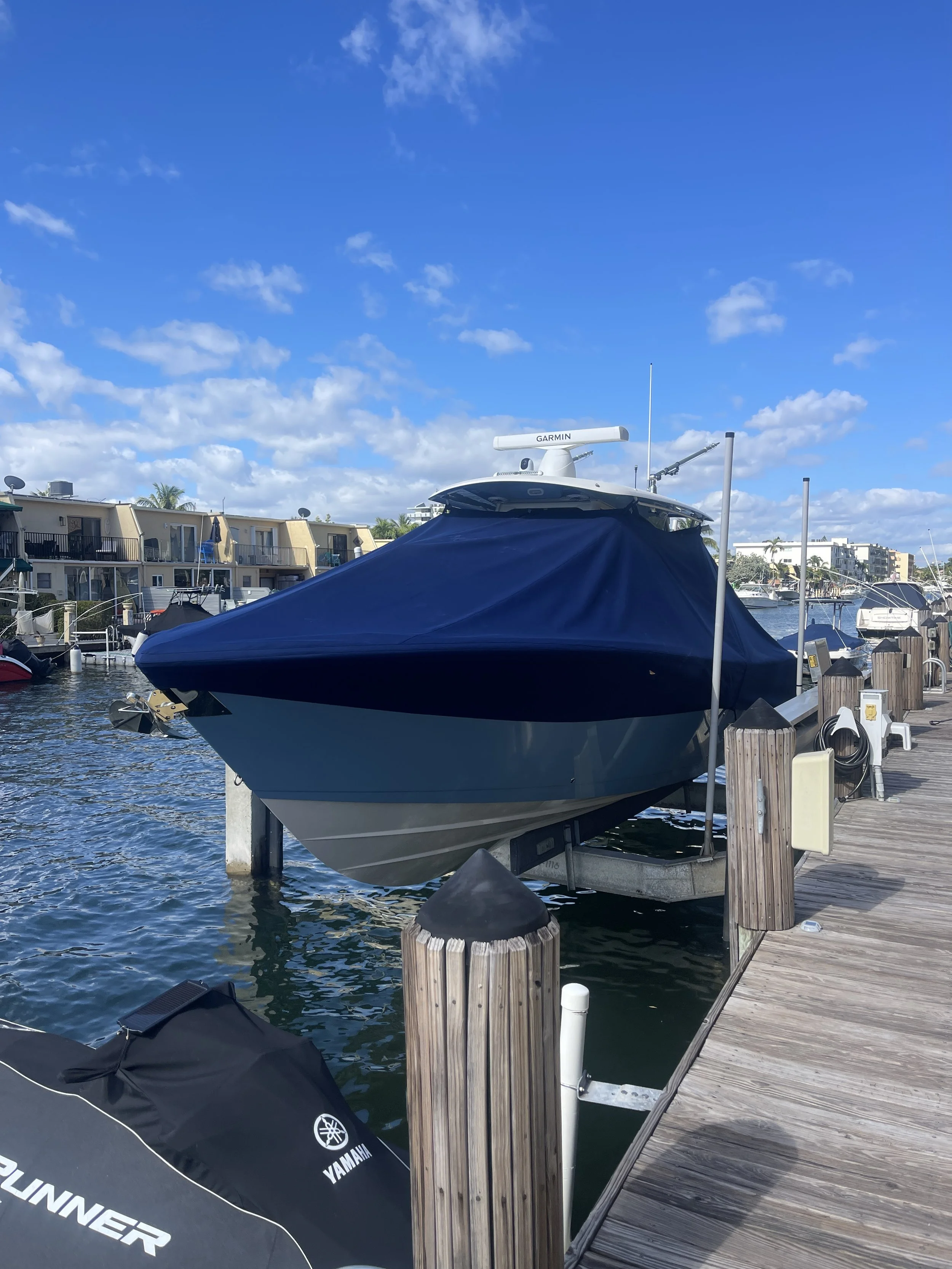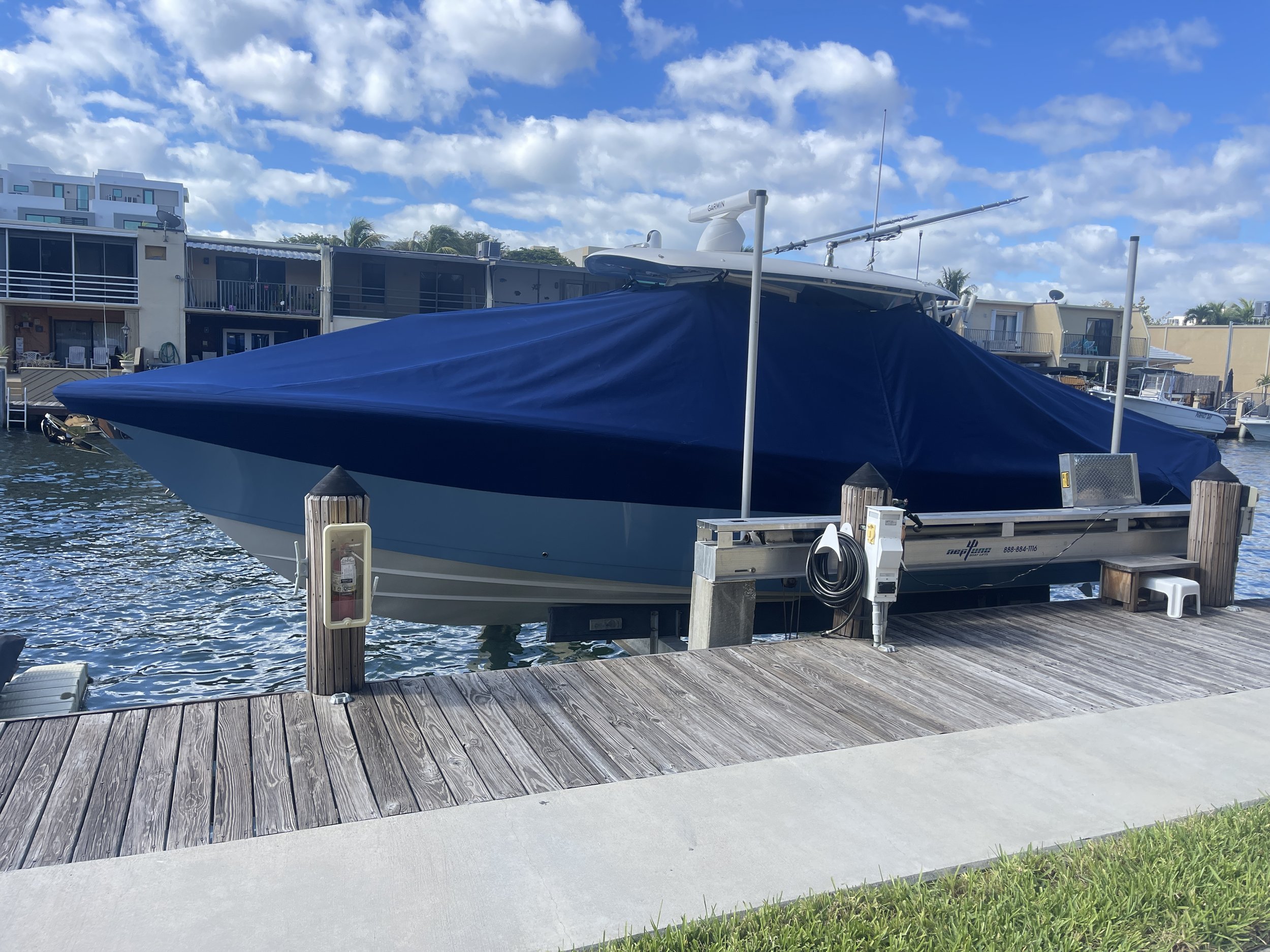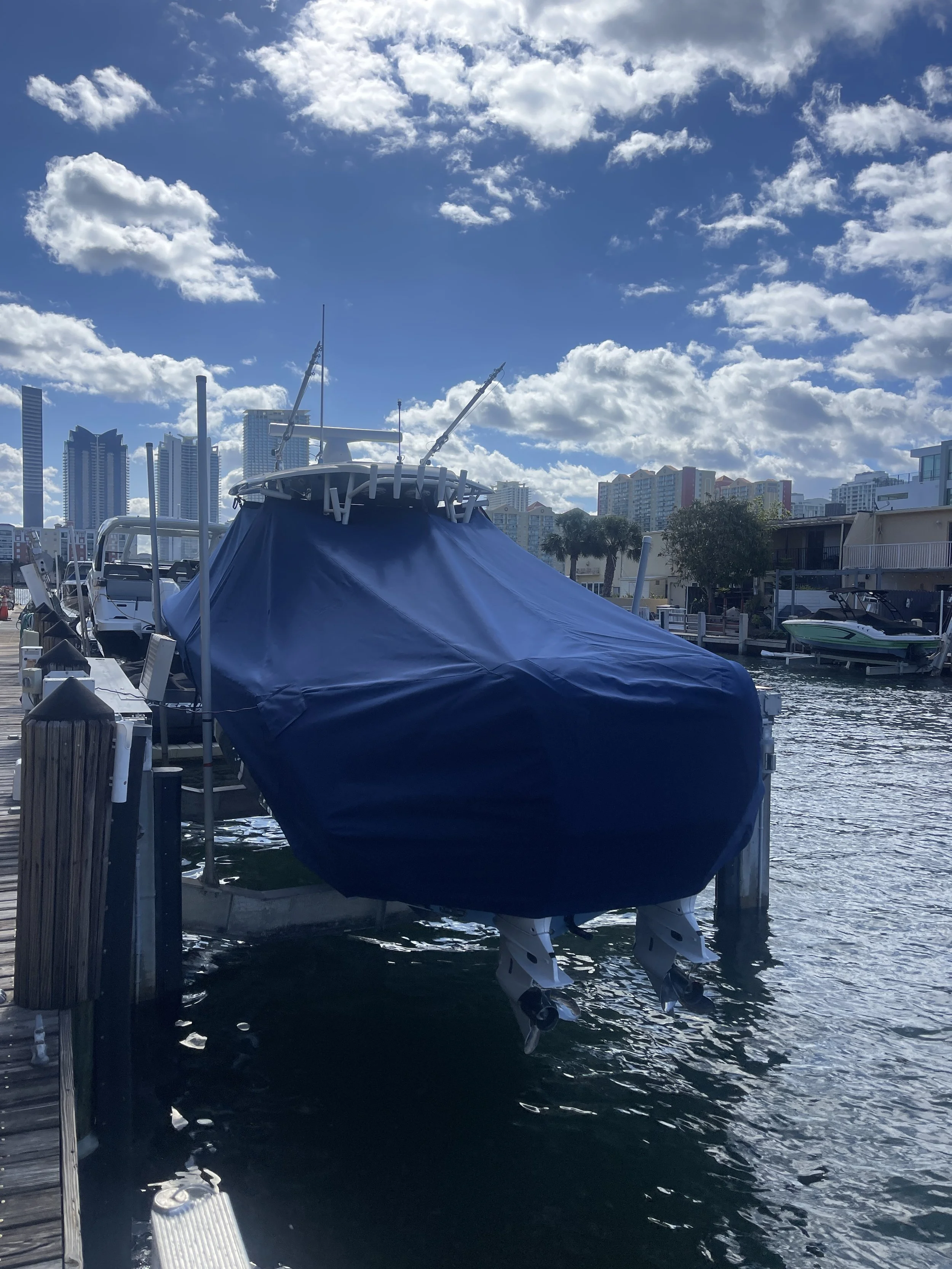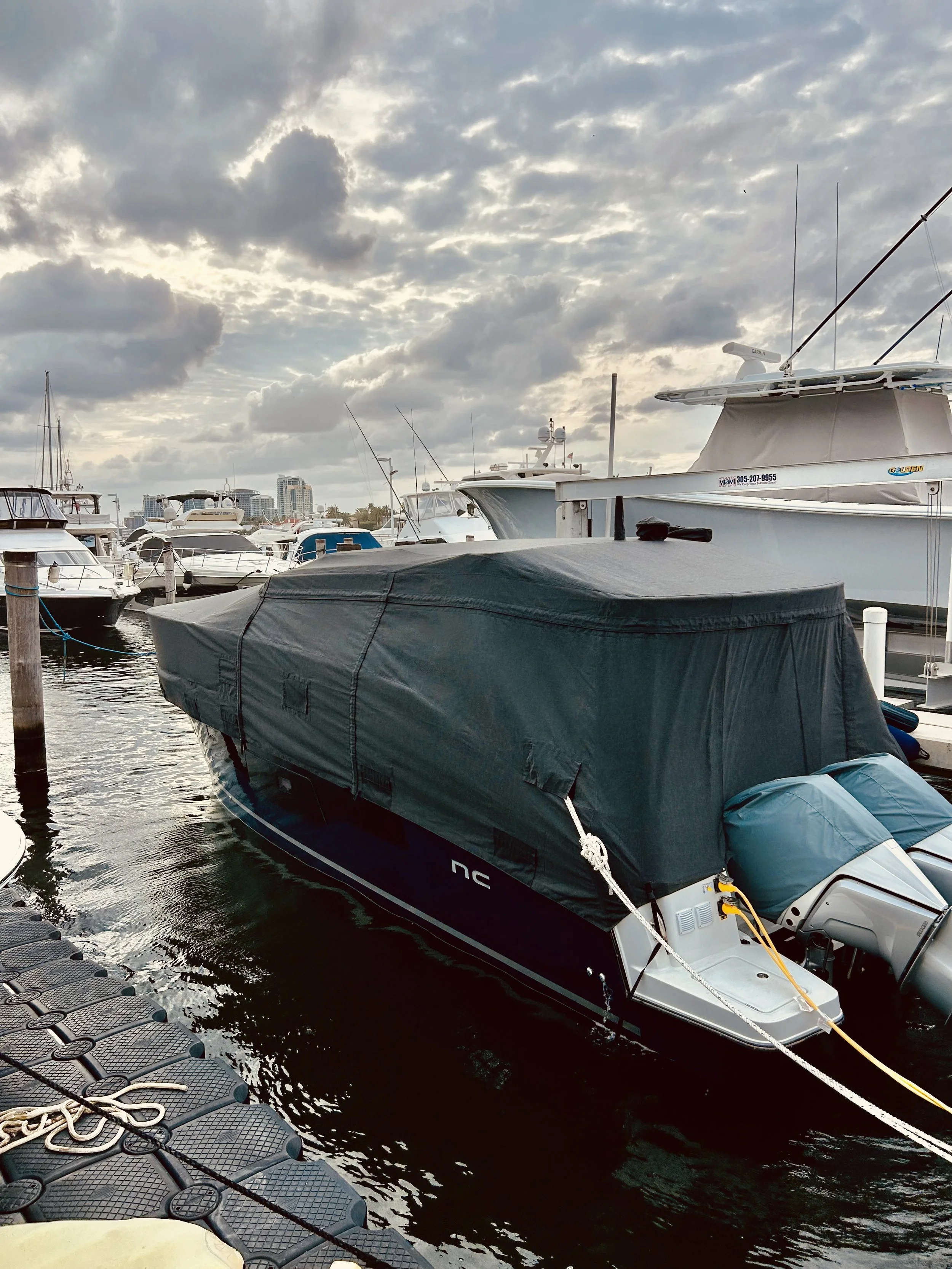
Beyond the Basics: Choosing the Perfect Canvas Boat Cover

Why Canvas Boat Covers Matter for Large Yacht Operations

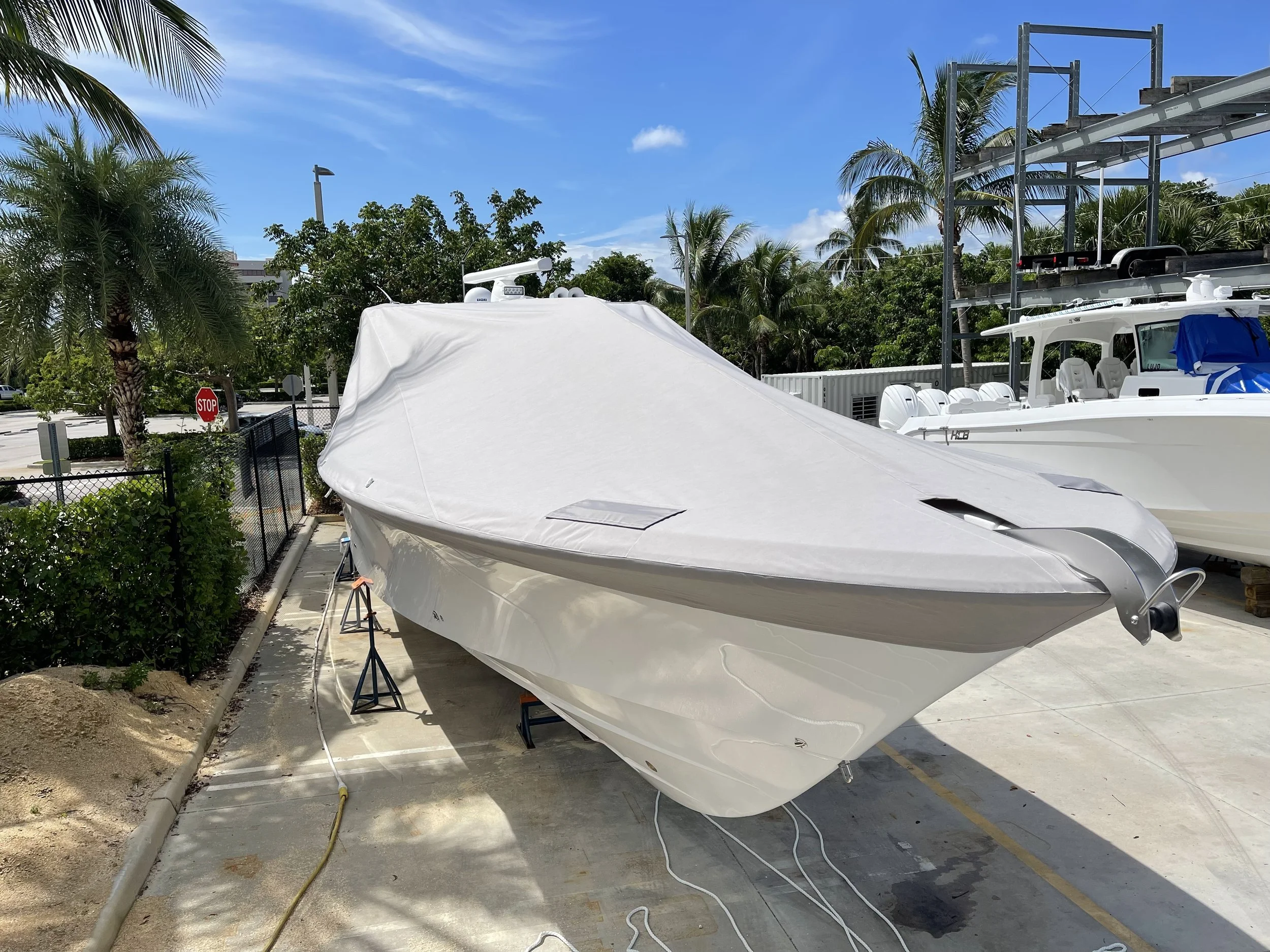
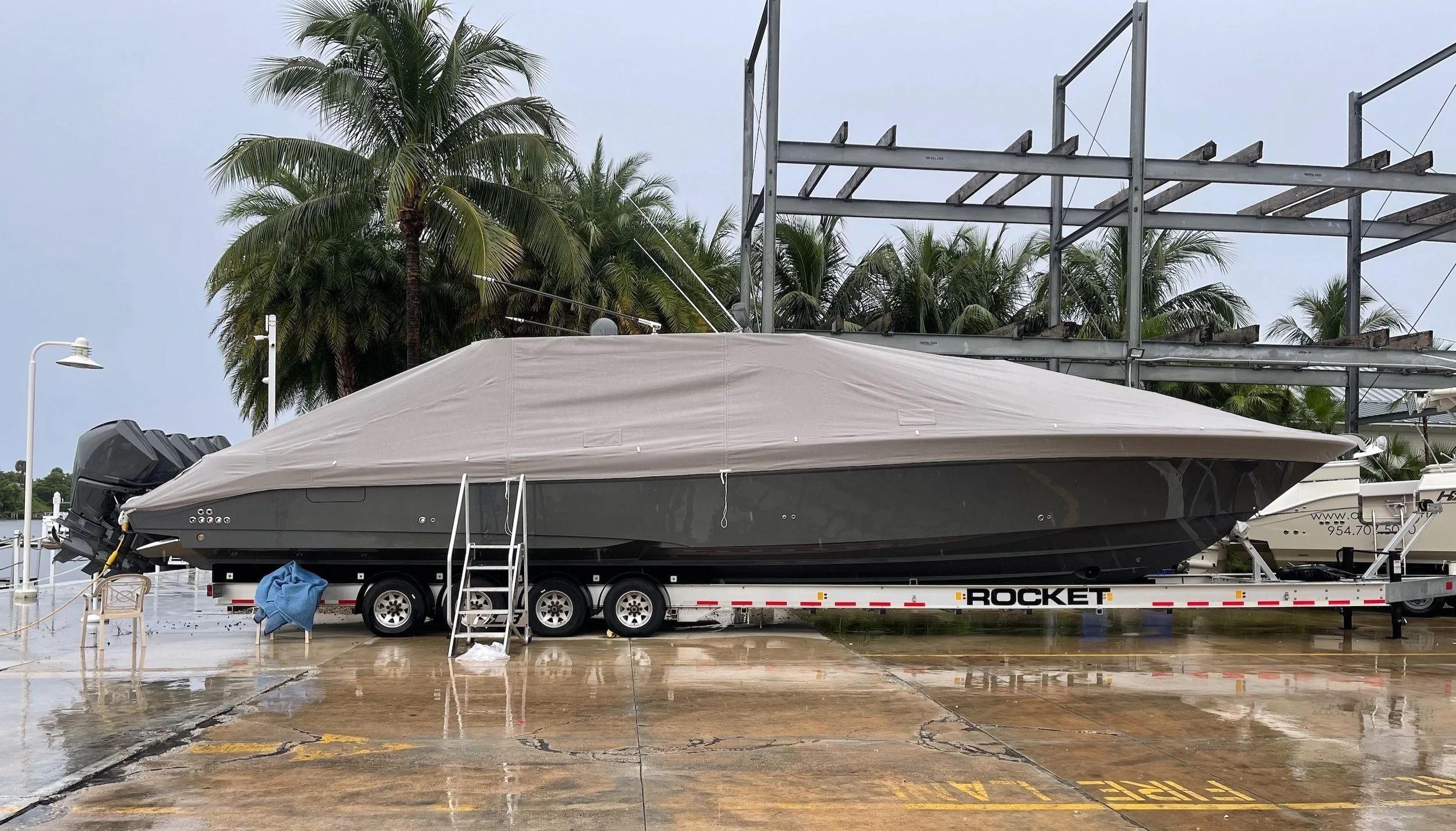
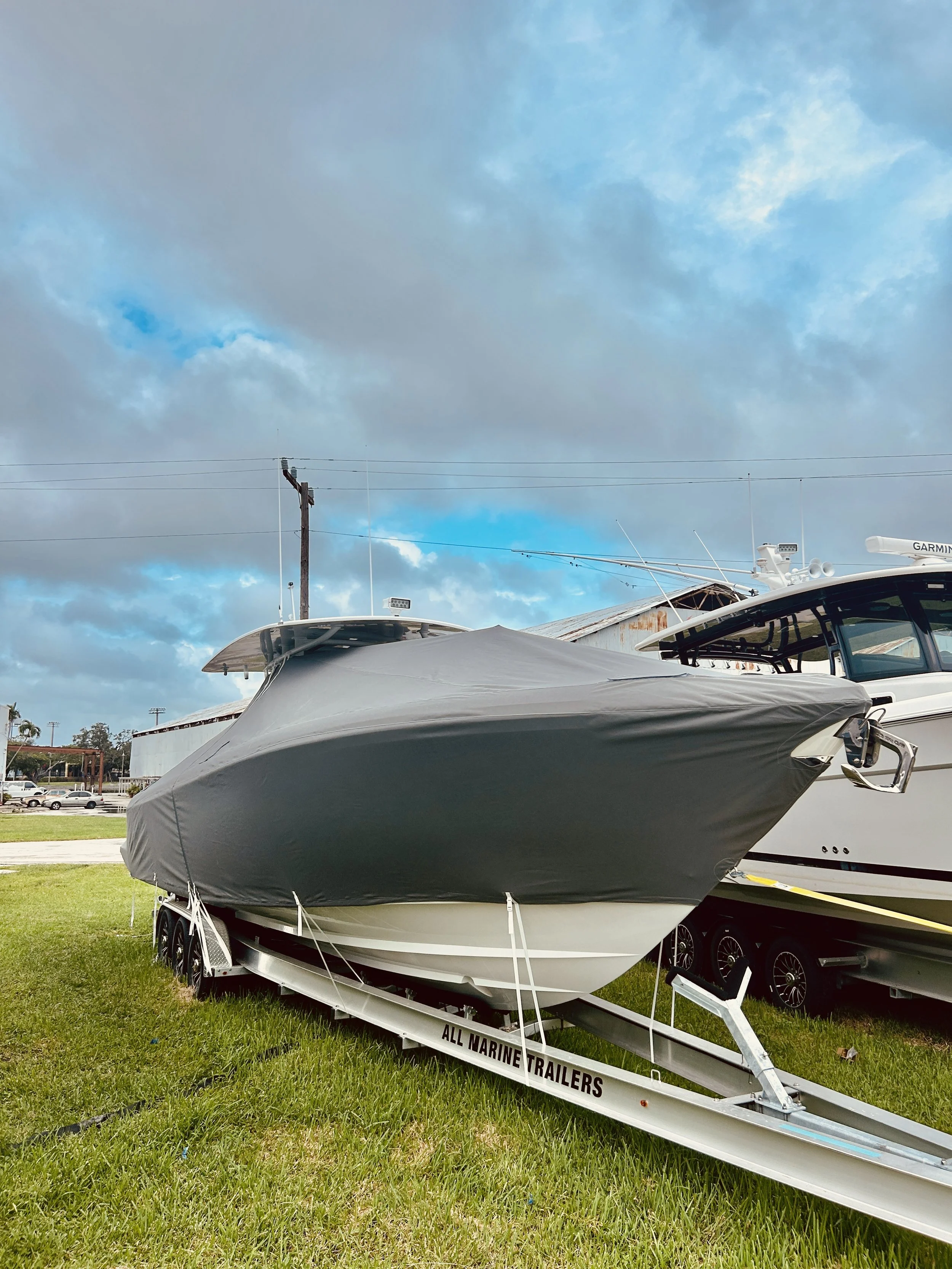
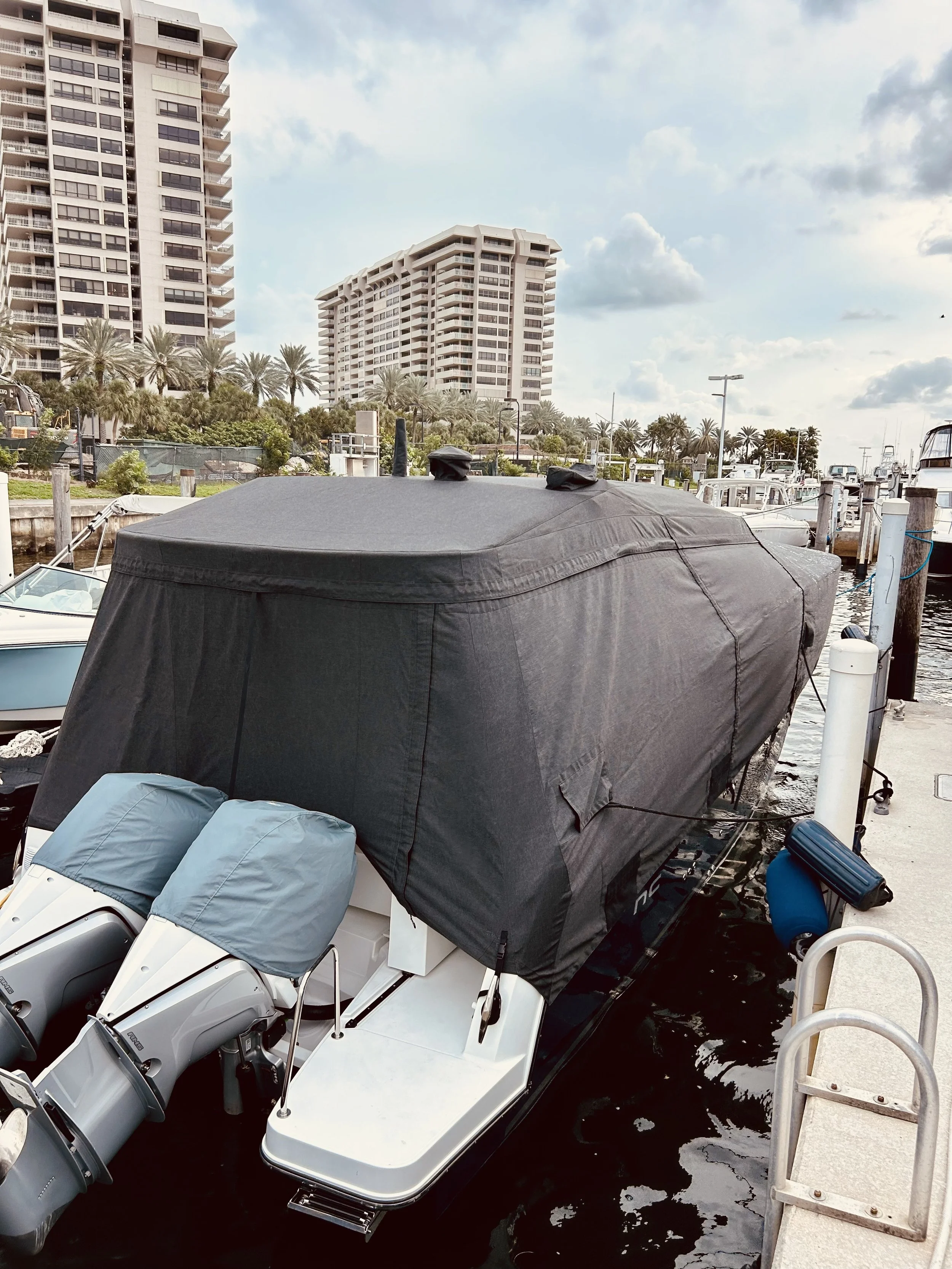
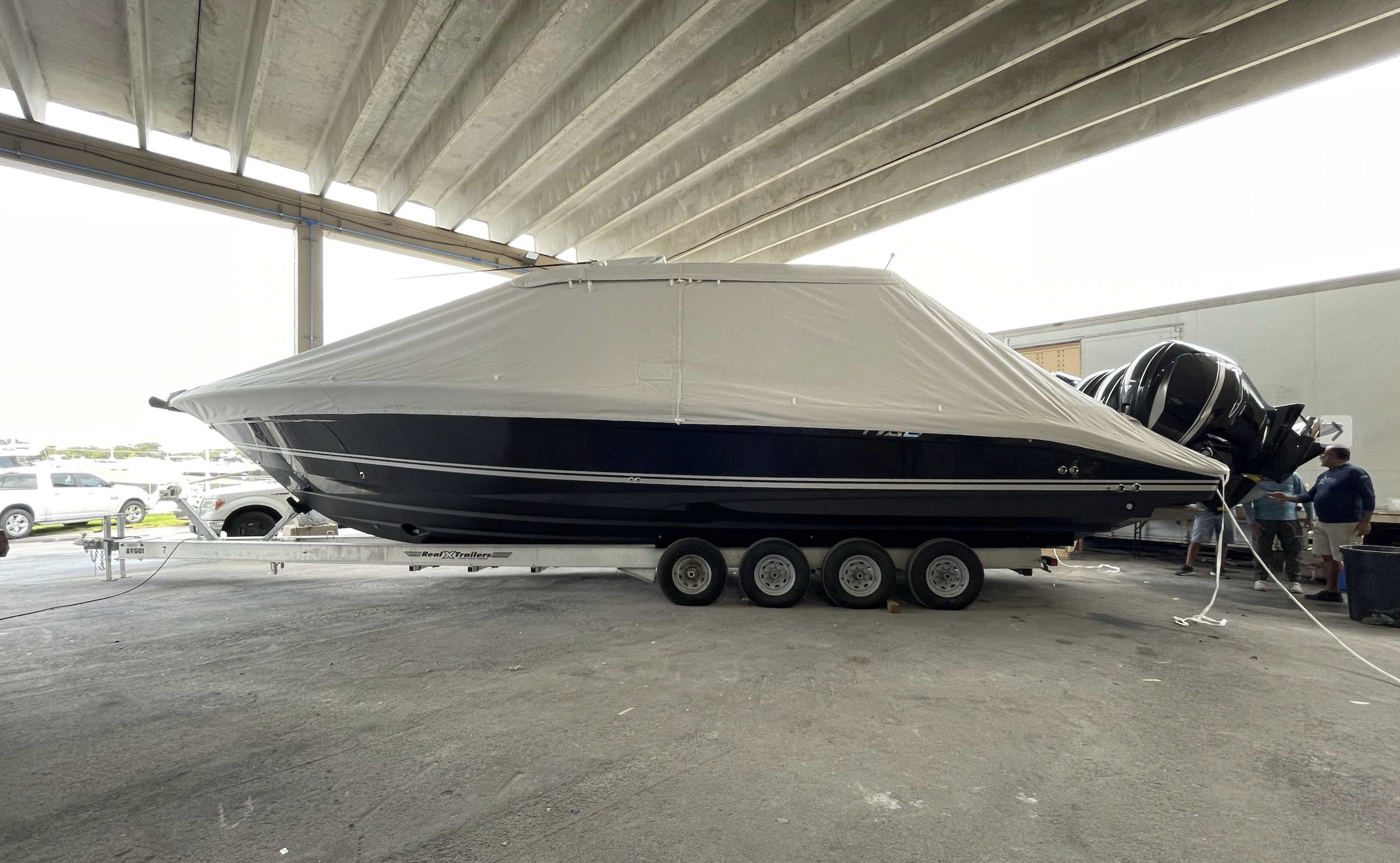
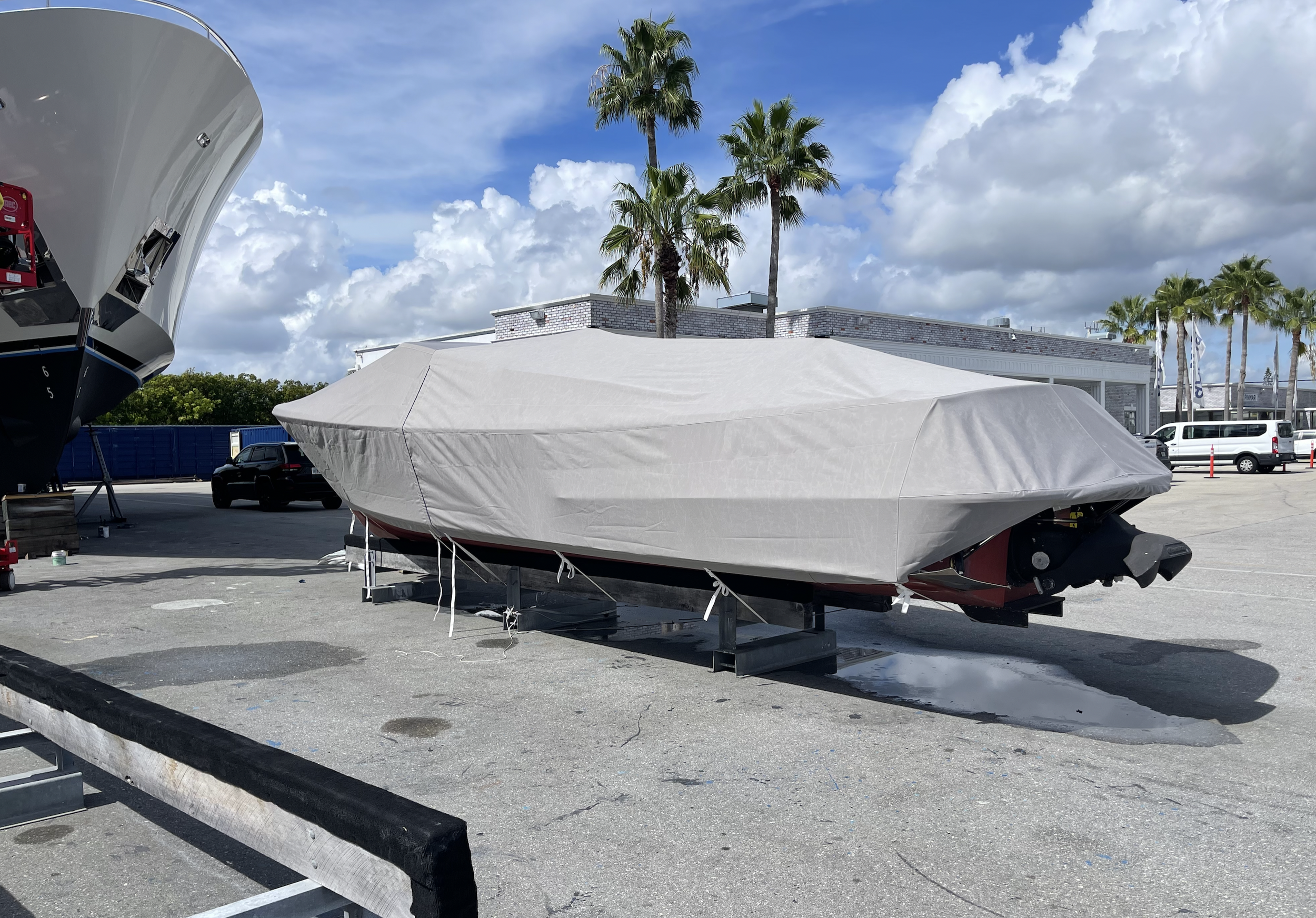
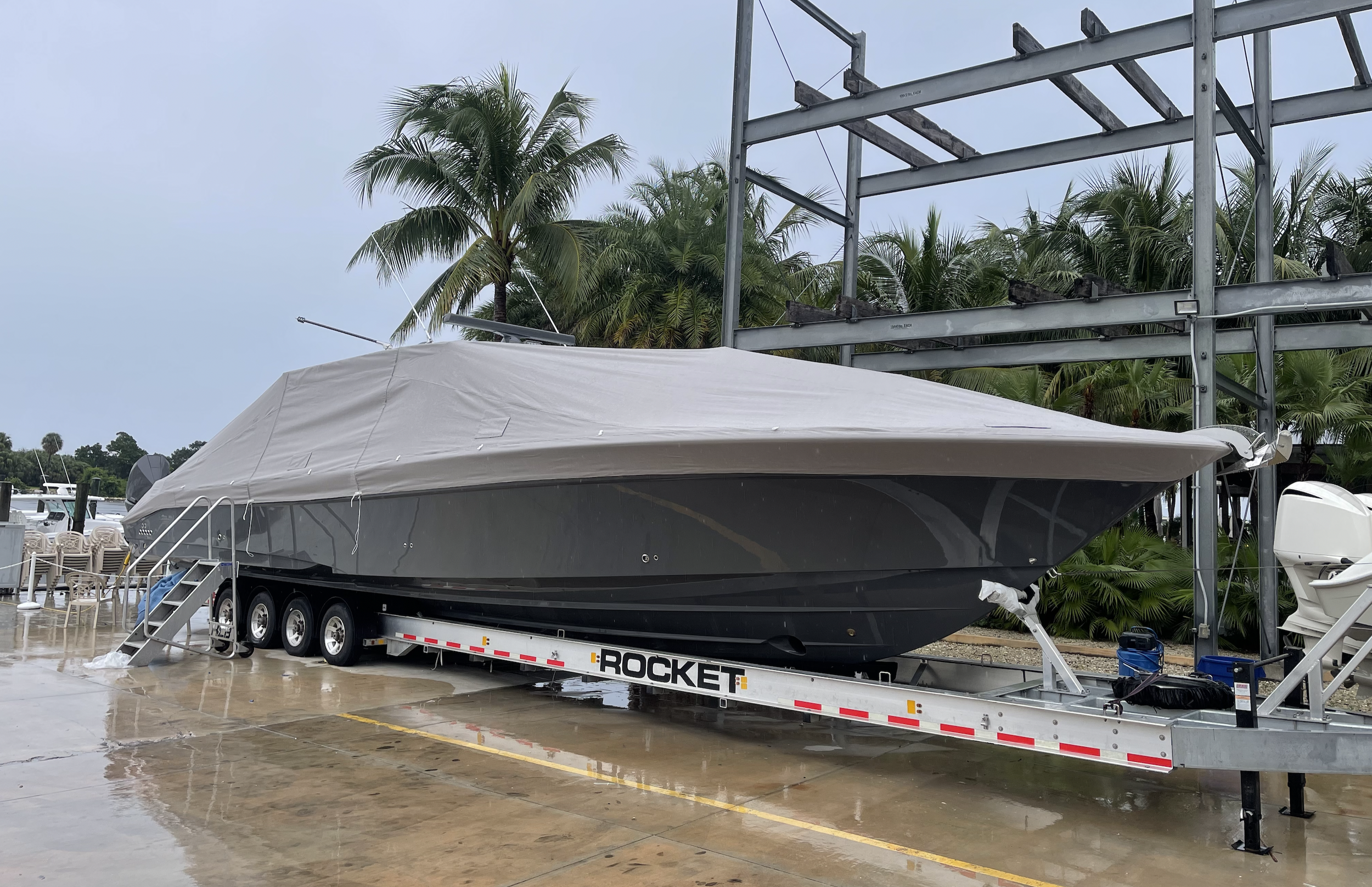
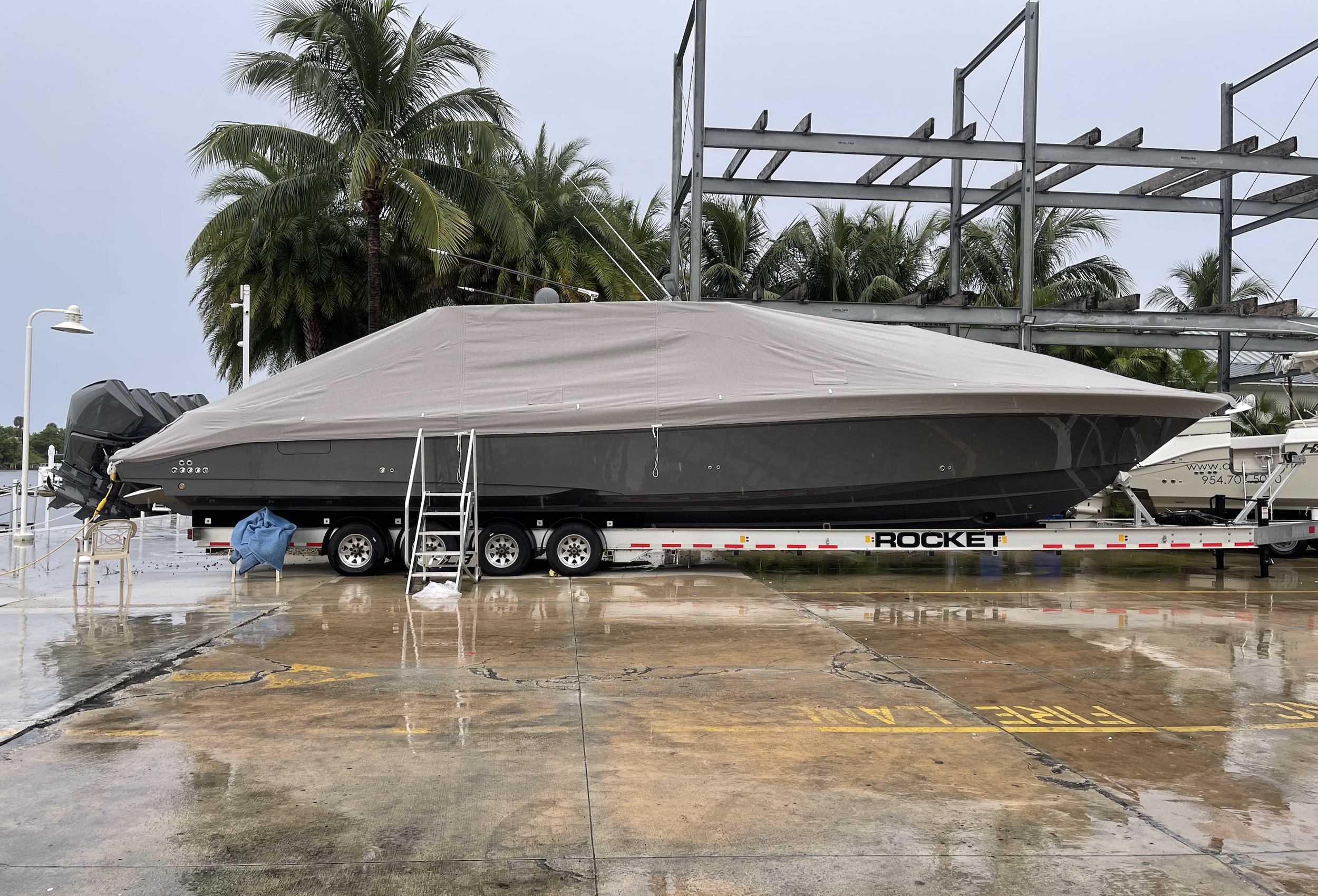
custom canvas yacht cover - canvas boat covers

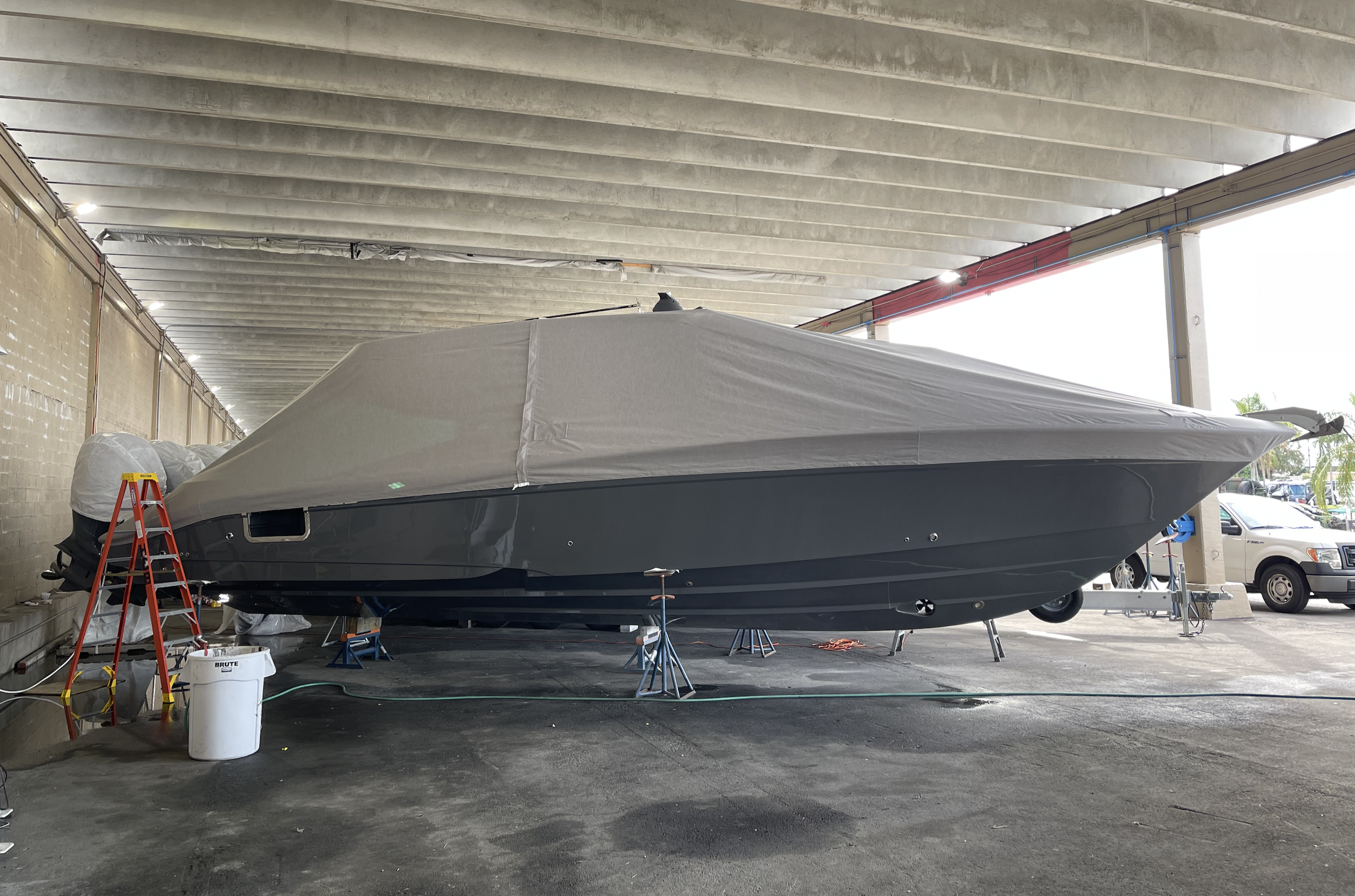
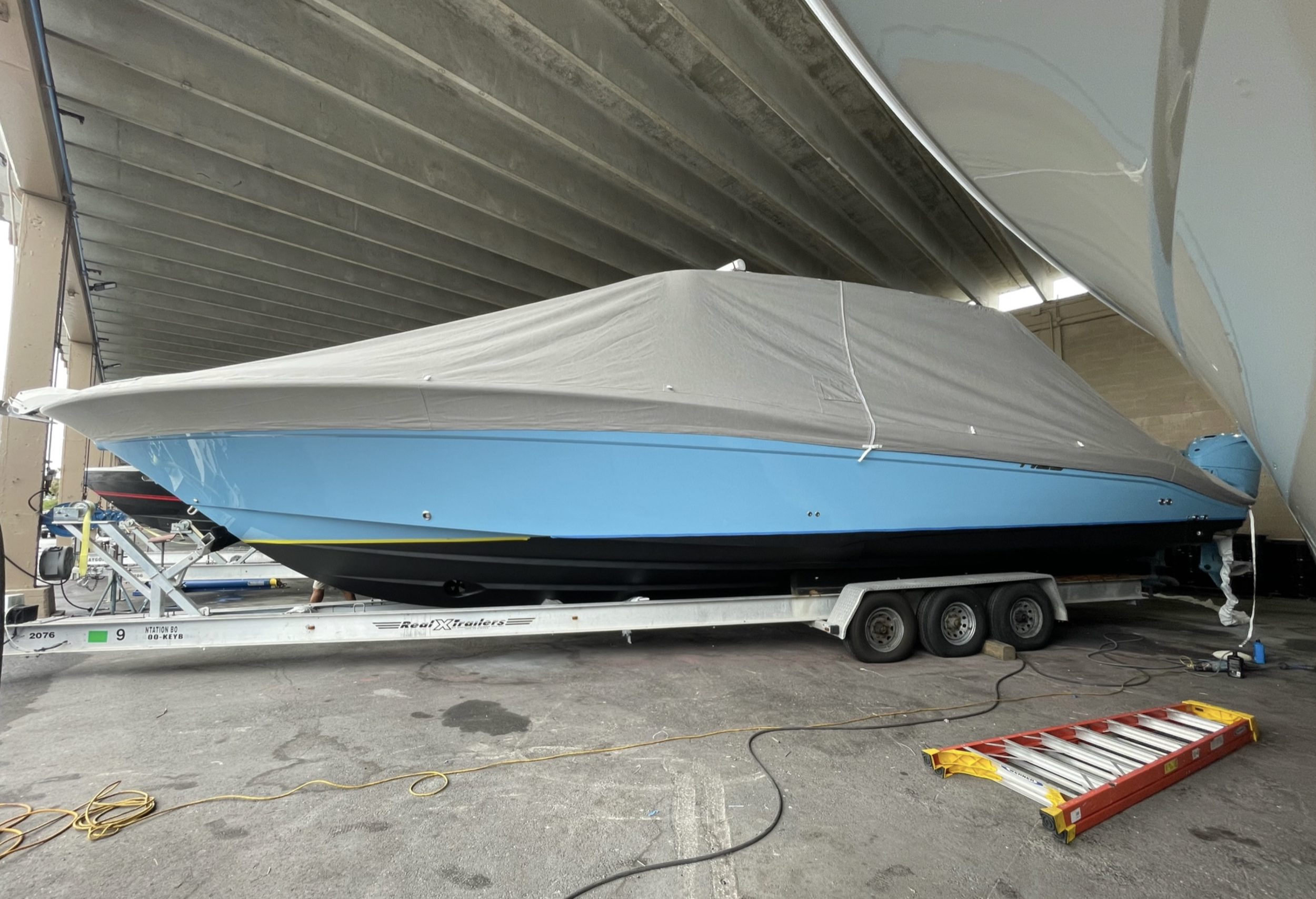
Canvas boat covers are engineered barriers that protect vessels from UV degradation, moisture intrusion, and environmental contaminants when not in operation. For yachts over 40 feet, the right cover prevents finish deterioration, extends component lifespan, and maintains resale value through precise fit and marine-grade material construction.

Key considerations for large yacht canvas covers:

  • Material specification – Solution-dyed acrylic or polyester with breathability ratings that prevent condensation while blocking UV and water
  • Fabrication method – 3D-measured, CNC-cut patterns ensure repeatable fit across complex hull geometries and deck structures
  • Configuration type – Mooring covers, cockpit enclosures, bimini tops, and winter storage covers serve distinct operational needs
  • Hardware integration – Reinforced attachment points, zipper access panels, and ventilation systems designed for large-scale installation
  • Maintenance protocol – Professional-grade canvas requires systematic cleaning and inspection to maintain performance over multi-year service life

The difference between a canvas boat cover that performs and one that fails comes down to three factors: material quality, fabrication precision, and proper specification for the vessel's size and exposure environment. Small-boat canvas techniques don't scale to 60-foot yachts. Generic covers create gaps, chafe points, and water pooling that accelerate the damage they're meant to prevent.

Professional yacht operations—whether builder partnerships, refit projects, or fleet management—require canvas solutions that meet tight tolerances, integrate with existing systems, and deliver consistent results across multiple vessels. This is where CNC fabrication, digital templating, and marine-grade material selection separate precision work from approximation.

I'm Jeremy Bottau, and I've spent years working with builders, captains, and yacht owners throughout South Florida to deliver custom canvas boat covers that meet the operational demands of large vessels. At American Marine, we use 3D patterning and elite marine-grade materials to fabricate covers that balance durability, fit, and project repeatability for yachts and superyachts.

infographic showing canvas boat cover system layers: outer marine-grade fabric layer with UV inhibitors, breathable membrane for moisture vapor transmission, reinforced stress points at attachment zones, ventilation panel placement for airflow, and hardware integration points for secure installation - canvas boat covers infographic

Technical Advantages of Canvas Boat Covers

For vessels operating in South Florida, the environmental load on exterior surfaces is extreme. The primary technical advantage of professional canvas boat covers is the mitigation of UV degradation. Marine finishes, upholstery, and electronics are susceptible to solar radiation, which can cause irreparable fading and structural brittleness in polymers.

Thermal regulation is another critical factor. A precisely fitted cover reduces the ambient temperature of the deck and interior spaces by reflecting solar energy. This reduces the load on HVAC systems during storage and prevents the "greenhouse effect" that often leads to interior material failure.

Crucially, professional canvas must balance hydrostatic pressure—the ability to repel water—with moisture vapor transmission. If a cover is entirely waterproof but lacks breathability, it traps humidity against the hull, creating a microclimate for mold and mildew. High-end textiles like solution-dyed acrylics provide the necessary air exchange while maintaining high water resistance.

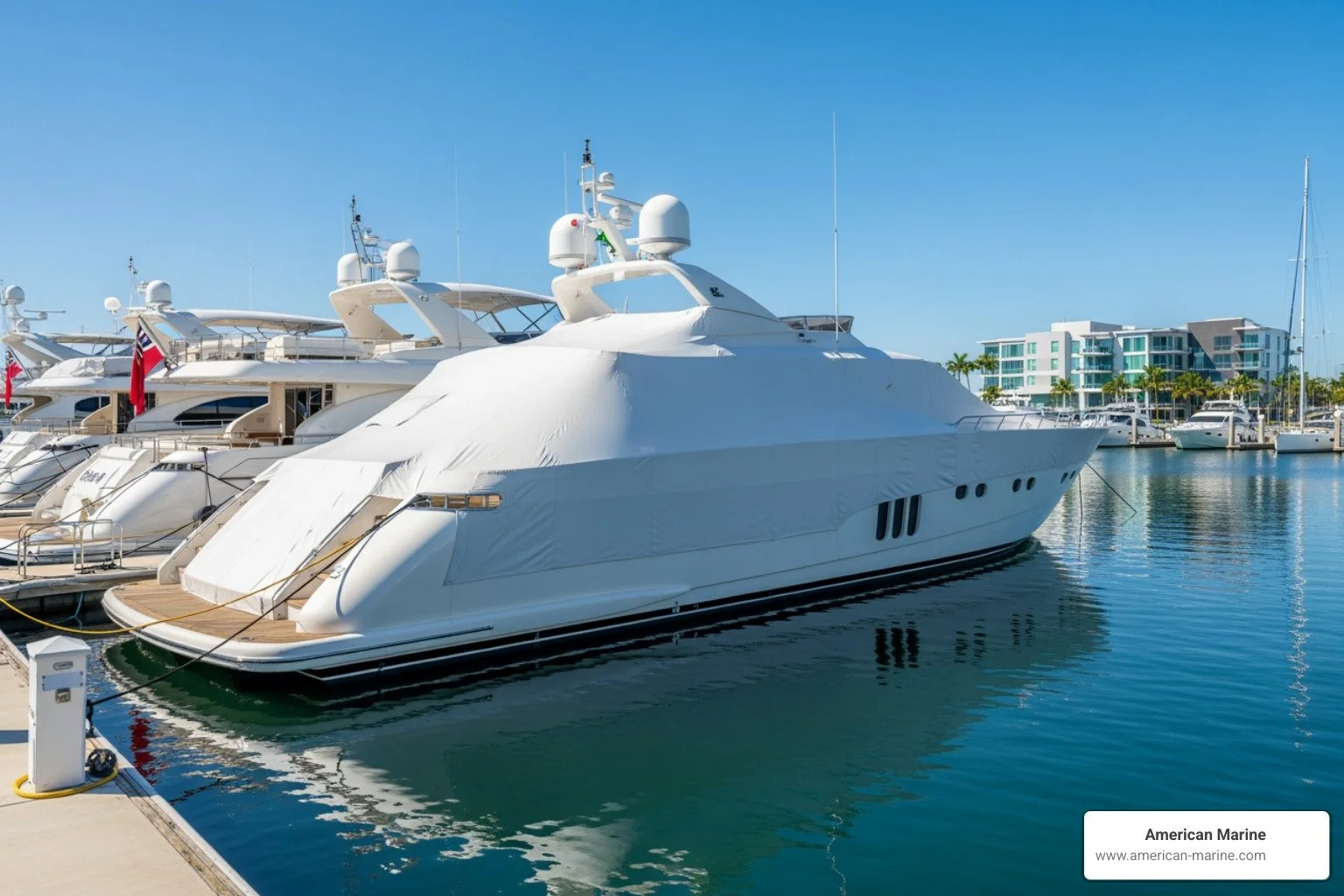
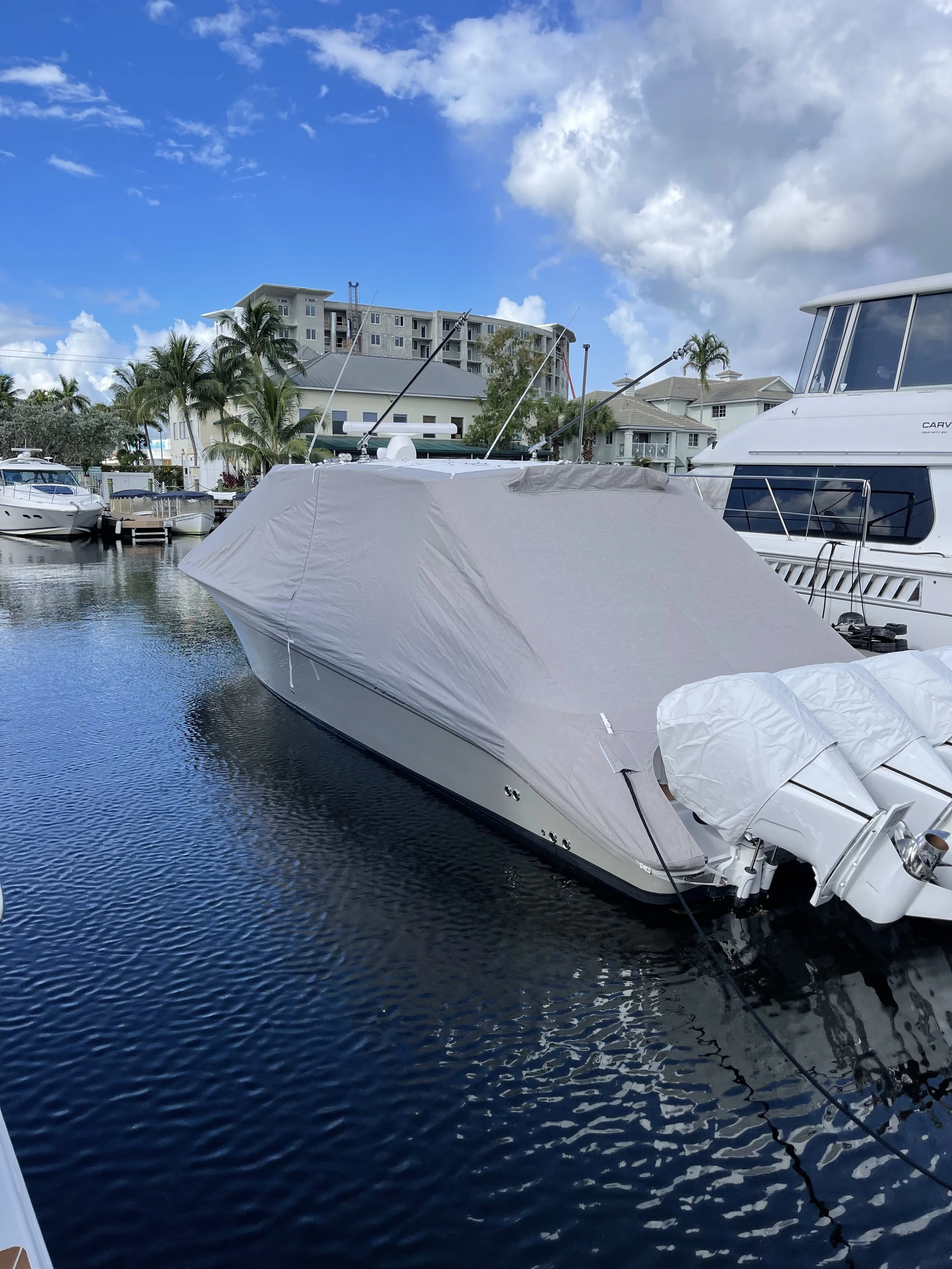
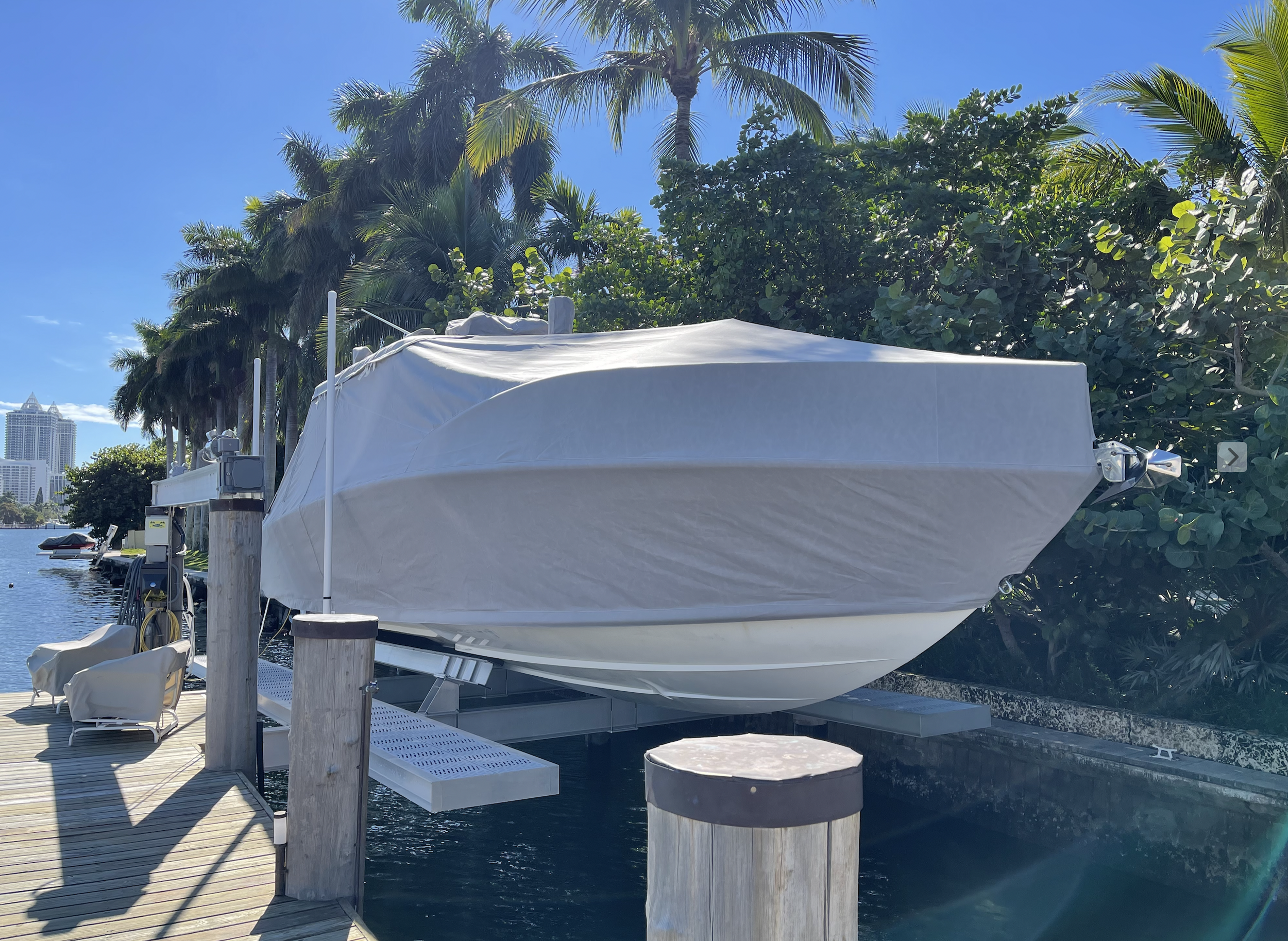
precision-fitted yacht cover on a 70ft motor yacht showing seamless integration with the radar arch and stanchions - canvas boat covers

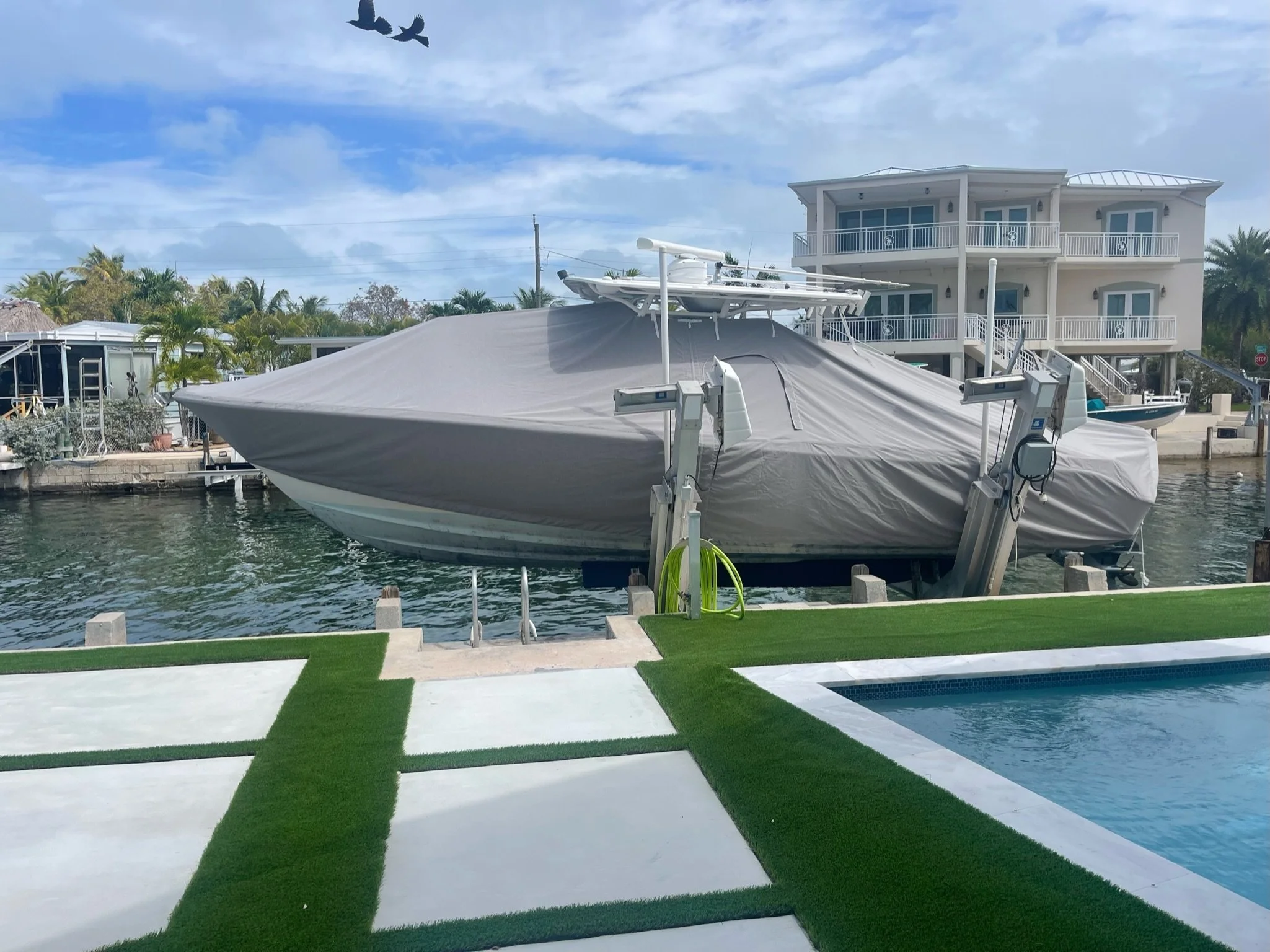
When we discuss precision canvas yacht protection in Broward County, we are referring to covers that eliminate the common pitfalls of inferior products, such as water pooling and wind-induced chafe. A cover that fits like a second skin ensures that water sheds immediately, preventing the weight of puddles from stretching the fabric or compromising the support structure.

Specialized Configurations for Large Vessels

Large yachts require a modular approach to protection. Unlike smaller boats that might use a single "tarp-style" cover, superyachts utilize specialized configurations designed for specific zones and operational requirements.

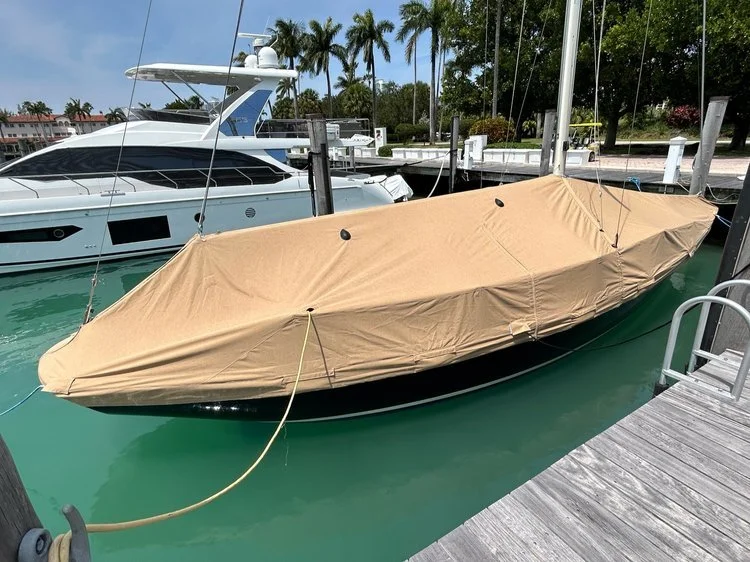
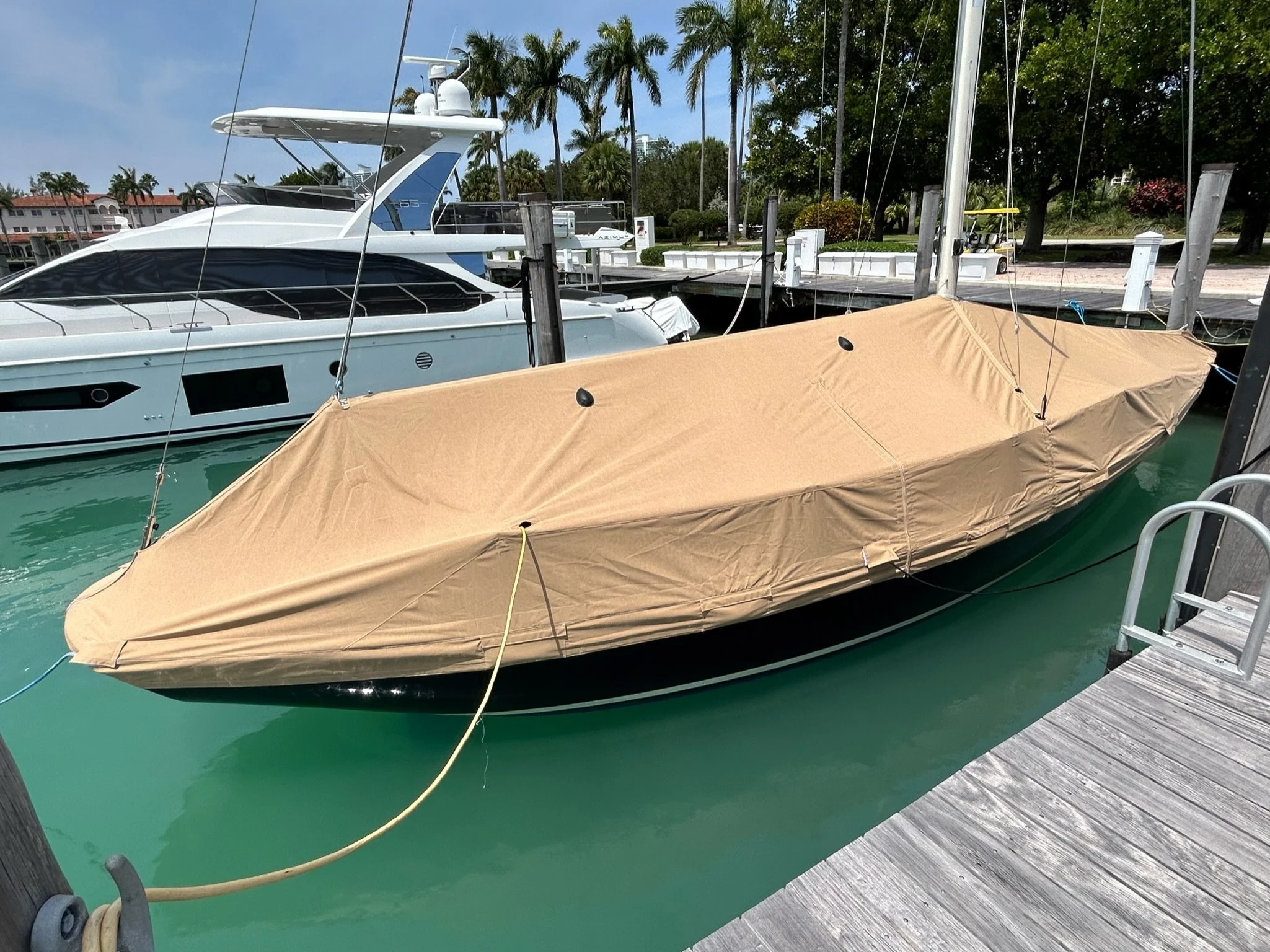
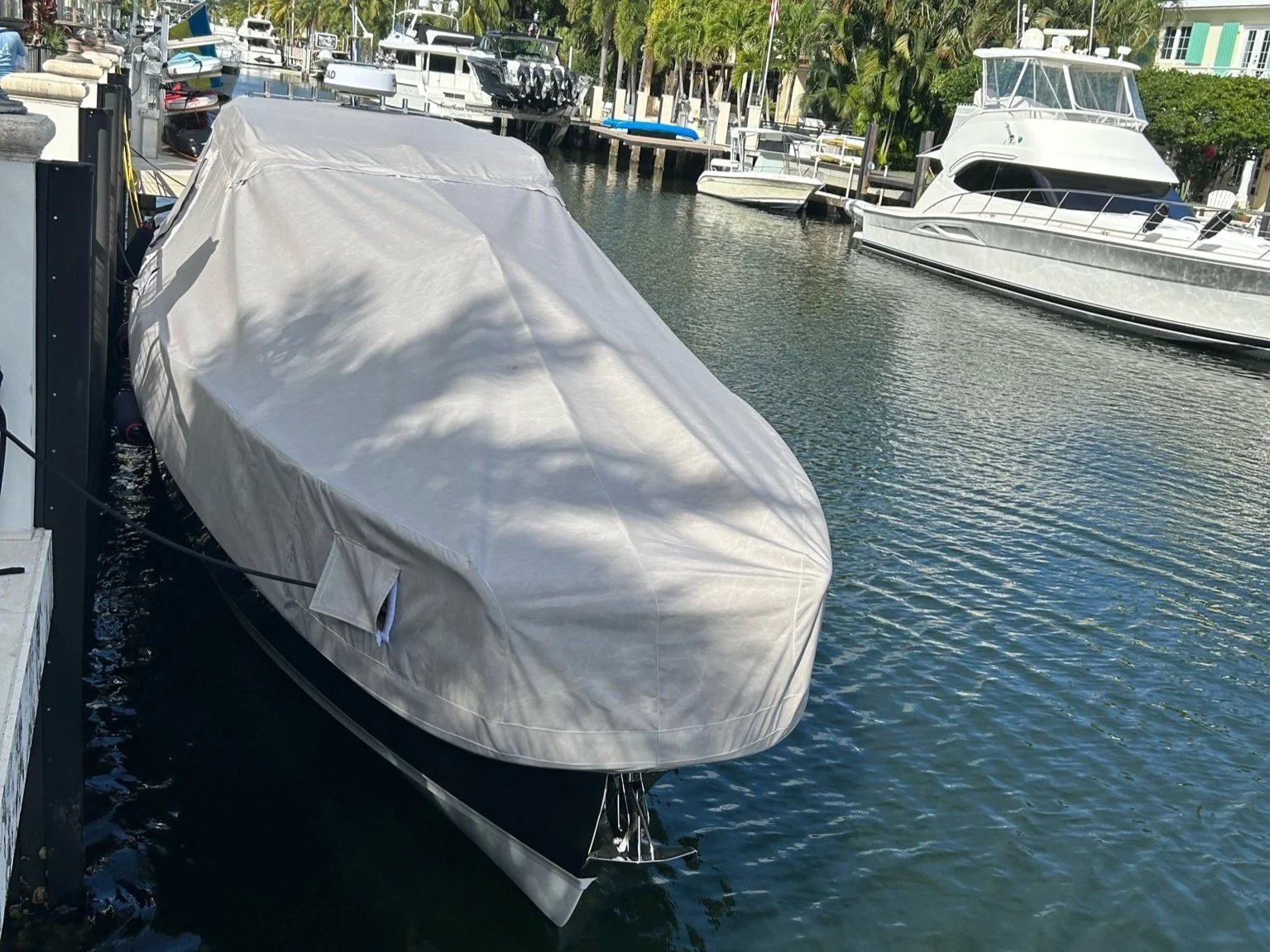
  • Mooring Covers: Designed for vessels in the water, these covers typically extend to the rub rail or waterline to protect the hull finish.
  • Bimini Enclosures: These provide weather protection for flybridges and cockpits, often incorporating clear vinyl windows for visibility.
  • Cockpit Covers: Focused on protecting the aft social areas, these are often designed for quick deployment between uses.
  • Winter Covers: Heavy-duty solutions for vessels undergoing seasonal storage or refit, often requiring internal frame support for snow or heavy rain loads.

The complexity of these canvas boat covers necessitates a high degree of technical accuracy. For example, a cockpit enclosure for a 60-foot sportfish must account for outriggers, tuna towers, and complex curves that standard patterns simply cannot accommodate.

Selecting Canvas Boat Covers for Trailering

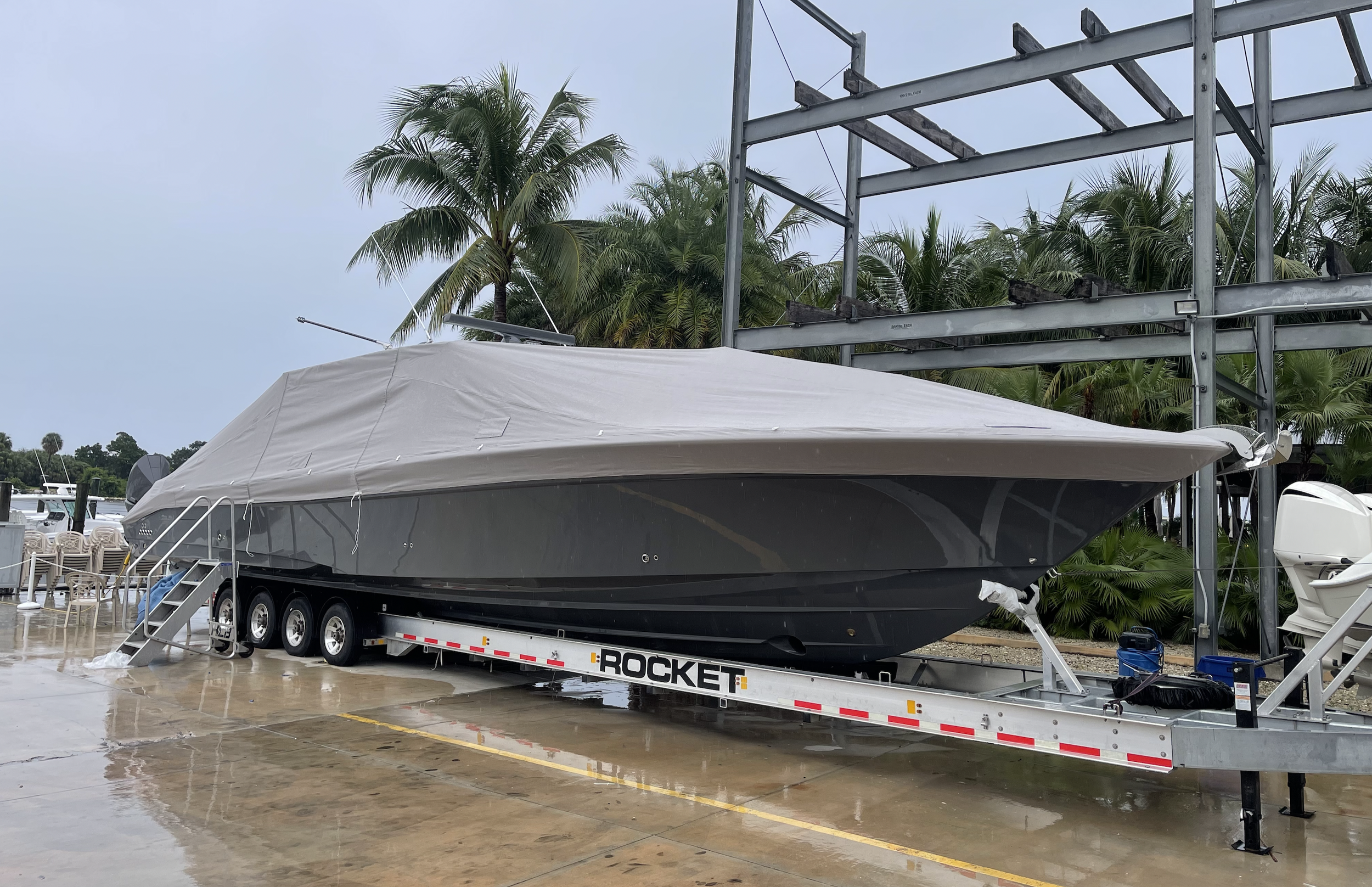
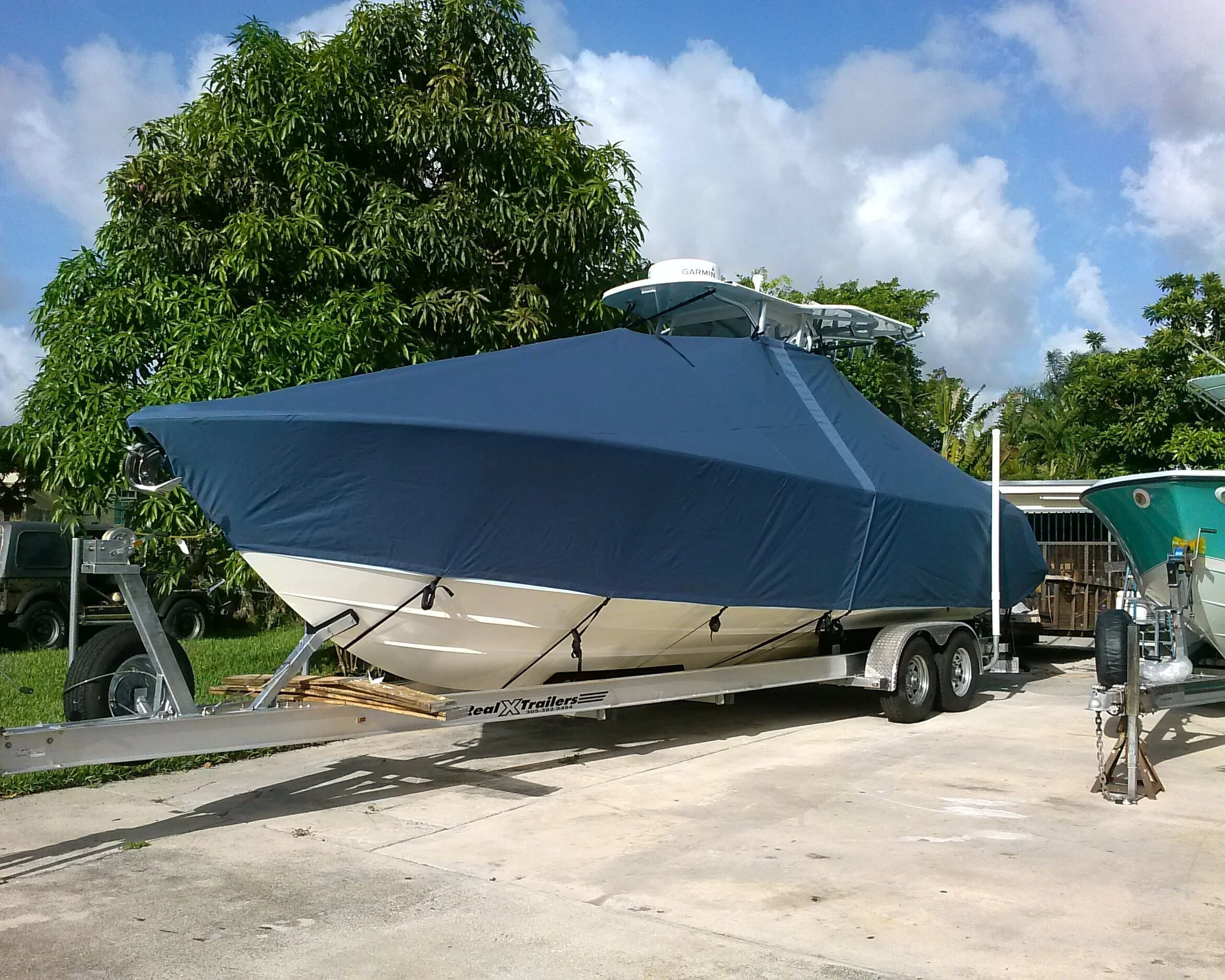
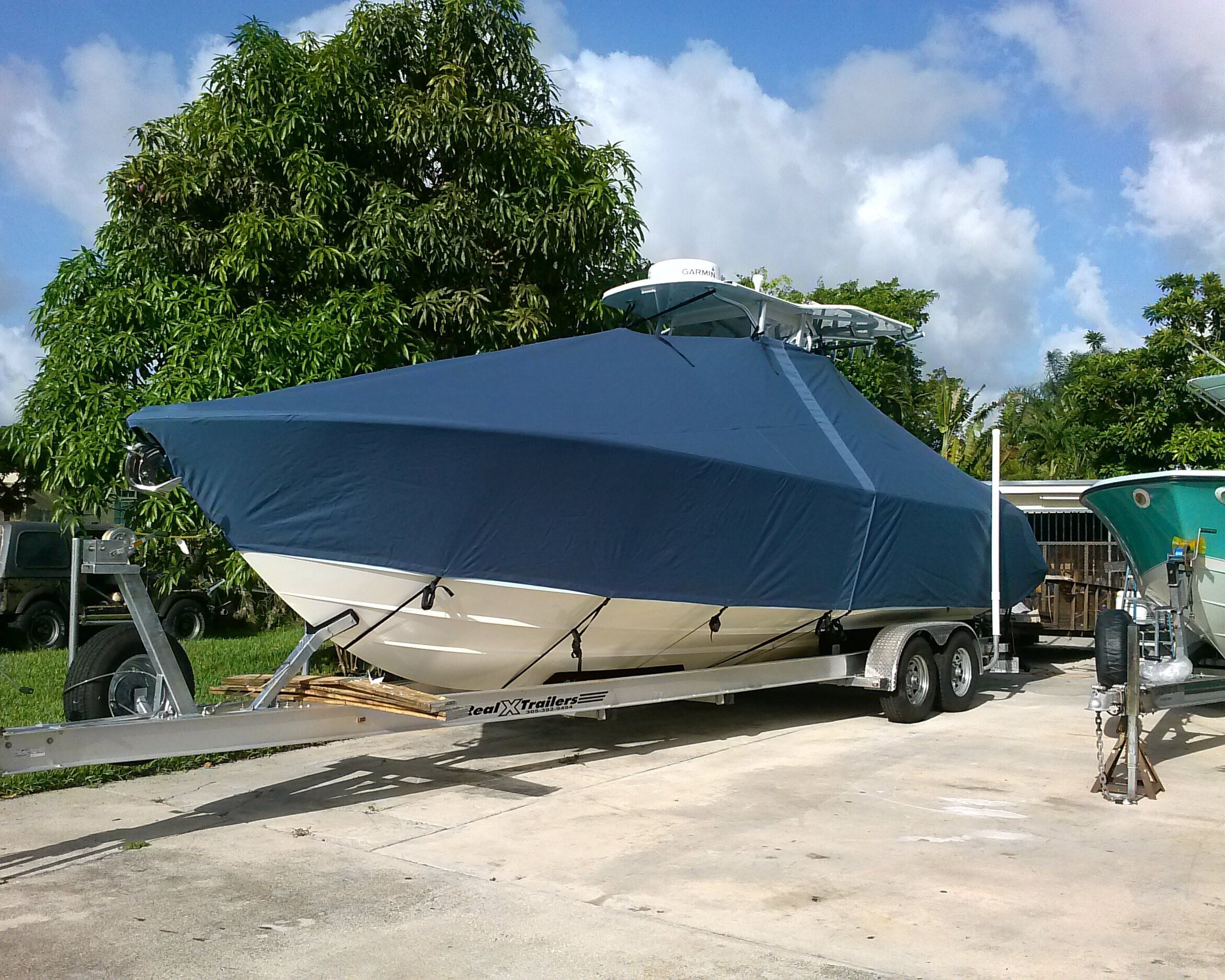
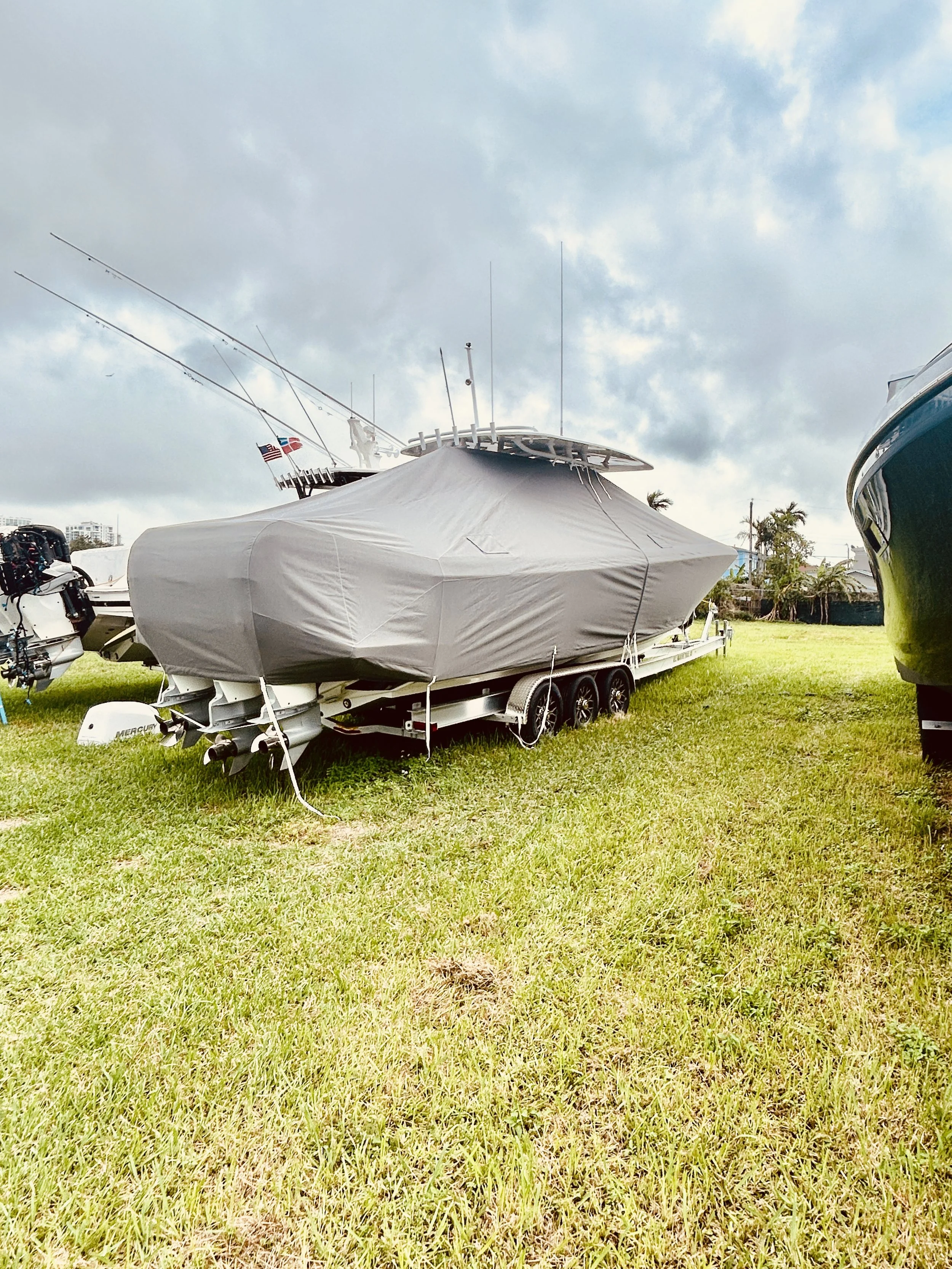
While most yachts over 60 feet are not trailered in the traditional sense, smaller tenders and chase boats often are. Selecting custom-fitted boat covers for transport requires an understanding of windage and aerodynamics. At highway speeds, a loose cover acts like a sail, creating immense stress on attachment points and potentially scratching the gelcoat through vibration.

Professional travel covers feature reinforced tensioning systems and heavy-duty straps designed to minimize movement. We prioritize reinforcement at high-wear zones—such as windshield corners and bow rails—to ensure the cover survives the rigors of transit without tearing.

Custom Sail and Rigging Protection

For sailing yachts, canvas work extends to the rigging. Luxury custom-made yacht covers are essential for protecting mainsails, pedestals, and winches. A mainsail cover (or stack pack) must be UV-resistant and easy to operate, ensuring the sailcloth is protected from the sun when the vessel is at anchor or in the slip. Pedestal and winch covers prevent salt and grit from infiltrating mechanical components, reducing maintenance intervals and ensuring operational reliability.

Marine-Grade Material Specifications

The selection of fabric is the foundation of any marine project. In the yachting industry, we primarily utilize two categories of high-performance textiles: solution-dyed acrylics and solution-dyed polyesters.

  1. Solution-Dyed Acrylic: Materials like Sunbrella Marine Textiles are the industry standard. Because the pigment is added during the fiber creation process (rather than printed on top), the color is consistent throughout the fabric and highly resistant to fading. It is naturally breathable and offers excellent UV resistance.
  2. Solution-Dyed Polyester: Fabrics such as WeatherMAX provide higher tensile strength and better dimensional stability (less stretching) than acrylics. They are often treated with silicone for enhanced water repellency while maintaining breathability.

Performance Characteristics of Elite Fabrics

When evaluating boat cover materials, we look for specific performance data:

  • Hydrostatic Head: The measure of how much water pressure a fabric can withstand before leaking.
  • Dimensional Stability: The ability of the fabric to maintain its shape under tension and temperature fluctuations.
  • Breathability: Measured in grams per square meter, this determines how effectively moisture can escape from beneath the cover.
  • Weight: Typically measured in ounces per square yard (e.g., 9 oz Sunbrella vs. 14.5 oz heavy-duty polyester).

For South Florida yacht owners, dimensional stability is paramount. A cover that sags after three months of humidity will begin to pool water, leading to the very damage it was designed to prevent.

Precision Fabrication for Professional Yachts

The era of "measuring by hand and hoping for the best" is over for large-scale marine projects. At American Marine, our workflow is built on digital precision. We utilize 3D scanning and ProLiner technology to create a digital twin of the vessel's geometry.

This digital data is processed through CAD software to create custom-fit boat covers that account for every stanchion, cleat, and radar arch. Once the design is finalized, the patterns are sent to a CNC cutting table. This ensures that every panel is cut to within a fraction of a millimeter, providing a level of fit and finish that manual cutting cannot replicate.

Why Builders and Captains Choose Custom-Fit Canvas

For project managers and builders, the primary benefit of this technology is repeatability and scale. If a builder is producing a series of 80-foot motor yachts, they need the canvas for the fifth hull to fit exactly like the first. Digital templating allows us to store these patterns and reproduce them on demand, ensuring consistency across a fleet.

Furthermore, custom vs. off-the-shelf covers is not just a question of aesthetics; it is a question of technical accuracy. A custom-fabricated cover integrates with the boat's existing hardware, using tracks, snaps, or specialized pin systems that are designed for the specific load requirements of a large vessel.

Operational Maintenance and Care

Even the highest quality canvas boat covers require a systematic maintenance protocol to reach their full service life. In the South Florida climate, salt and environmental pollutants can accumulate quickly, leading to abrasive wear and potential mold growth if left unchecked.

The baseline for care is regular rinsing with fresh water. For deeper cleaning, we recommend a soft-bristle brush and a pH-neutral marine soap. Harsh detergents can strip the fluorocarbon or silicone treatments from the fabric, compromising its water repellency.

When installing a boat cover, it is vital to ensure the vessel is dry. Trapping moisture under a cover is a recipe for mold. Additionally, covers should never be stored while wet; they must be allowed to air dry completely before being folded or bagged.

Cleaning and Maintaining Canvas Boat Covers

To prevent thread degradation and maintain seam integrity, inspect the stitching annually. UV rays eventually break down standard threads, which is why we utilize PTFE (Teflon) or high-strength polyester threads in our fabrication.

If you notice water is no longer "beading" on the surface, it may be time to re-treat the fabric with a recommended water repellent. This restores the fabric's ability to shed water while maintaining its essential breathability.

Frequently Asked Questions

Can I fabricate a yacht cover myself?

While DIY projects are popular for small runabouts, fabricating a cover for a large yacht requires industrial-grade equipment and specialized skills. A standard home sewing machine cannot handle the multiple layers of 9oz acrylic or the heavy V-69 polyester thread required for marine durability.

Feature DIY Approach American Marine Fabrication
Measurement Manual tape measure / chalk 3D Scanning / Digital Templating
Cutting Manual shears CNC Precision Cutting
Sewing Machine Portable walking foot Industrial long-arm / CNC Stitching
Thread Standard polyester UV-resistant PTFE / V-69
Fit Approximate / Loose Tight tolerances / Zero chafe

How long should professional marine canvas last?

The lifespan of Sunbrella boat covers and other high-end materials typically ranges from 5 to 10 years, depending on exposure and maintenance. In South Florida, where UV indices are consistently high, a cover that is cleaned regularly and treated with UV-protectant can easily last a decade. Conversely, a neglected cover exposed to constant salt spray may begin to show signs of wear in half that time.

Are canvas covers waterproof or water-resistant?

Most high-end custom marine covers are technically water-resistant, not 100% waterproof. This is an intentional design choice. A 100% waterproof material (like heavy vinyl) does not breathe, which leads to condensation and mold. Premium canvas uses a tight weave and chemical treatments to provide a high "hydrostatic head," allowing it to shed heavy rain while still letting air circulate.

Conclusion

Protecting a luxury yacht requires more than just a piece of fabric; it requires a precision-engineered solution designed for the specific challenges of the marine environment. From the initial 3D scan to the final CNC cut, every step in our process is focused on delivering a product that fits perfectly and lasts for years.

Whether you are a builder looking for a reliable production partner or a captain managing a refit in West Palm Beach or Fort Lauderdale, American Marine provides the technical expertise and scale necessary for large-vessel operations.

Plan an Offseason Canvas Project with our team to ensure your vessel is protected with the highest standards of South Florida craftsmanship.

Previous
Previous

Superyacht Style: A Deep Dive into Interior Design and Marine Fabrics

Next
Next

Snap, Crackle, Cover: Why Custom Snap-On Boat Covers are a Game Changer