
PREMIUM MARINE CANVAS & UPHOLSTERY FOR LUXURY YACHTS
Specializing in luxury yachts and superyachts
Custom enclosures, upholstery, covers, and shade systems for luxury yachts
Fort Lauderdale, West Palm Beach, Miami, & Broward County locations.
3D digital patterning.
Dockside service at your marina or private location.
Servicing South Florida’s Elite Yachting Community:
★ 4.9 Stars from Google Reviews
“The absolute best. Digital CAD-CAM measurements were flawless, just perfect fit.” — Kip C., 118ft vessel owner
The Yachts That Demand Excellence Rely on American Marine
-
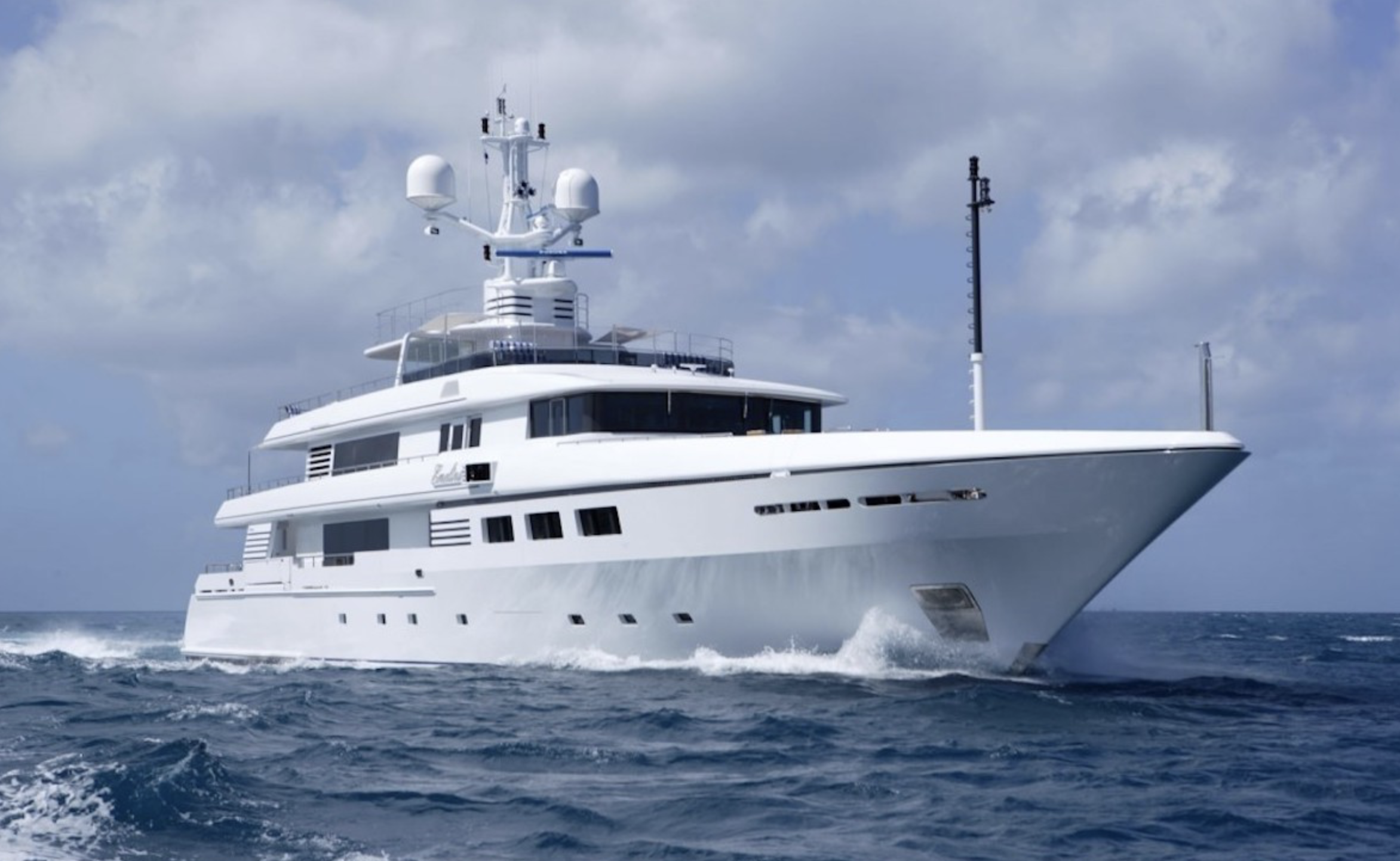
![A large white luxury yacht sailing on the ocean with a partly cloudy sky in the background.]()
M/Y EMELINA
-
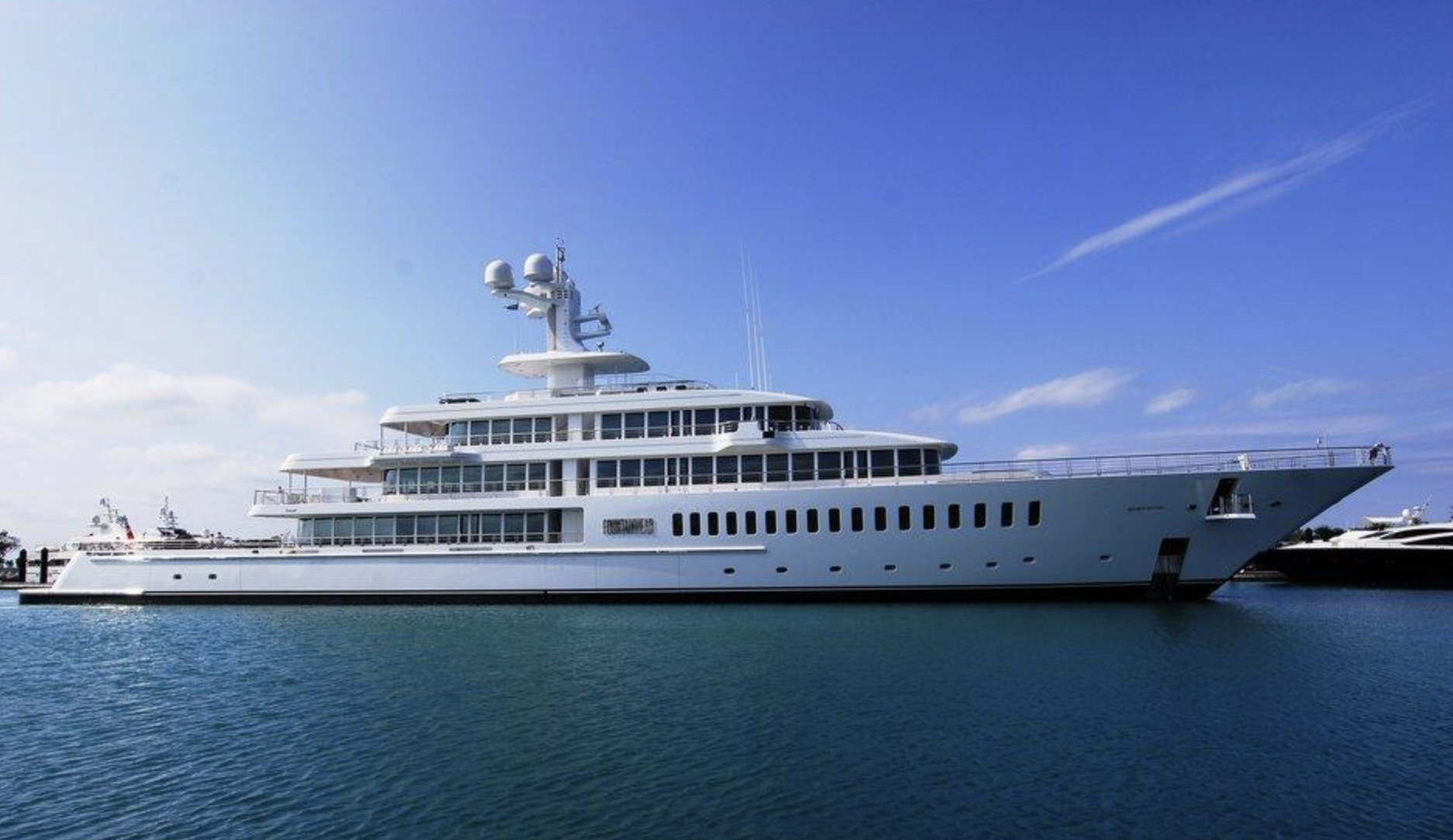
![A large white luxury yacht docked in a marina on a clear day with blue sky and some clouds.]()
M/Y FOUNTAINHEAD
-
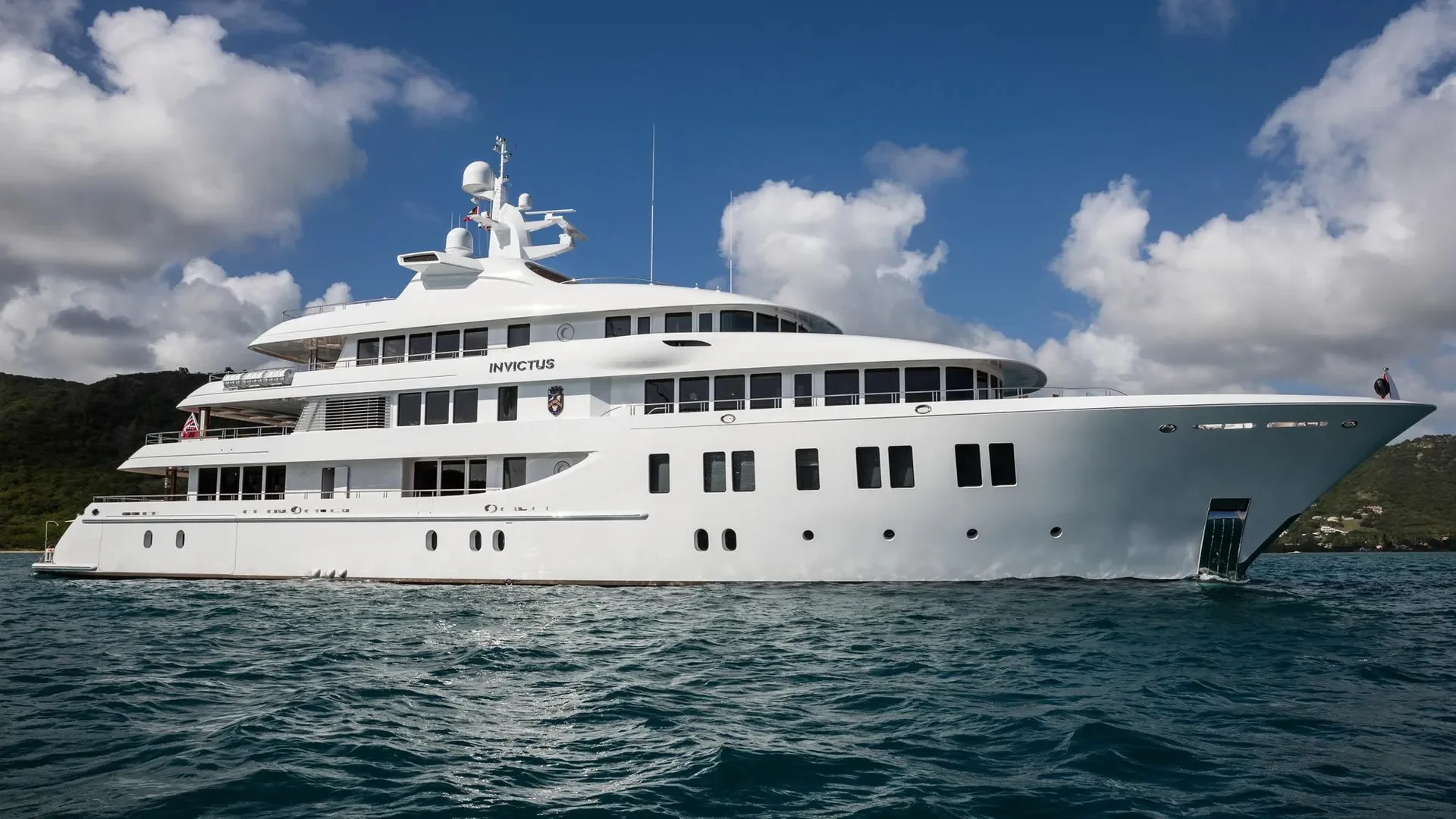
![A large white luxury yacht named Invictus sailing on the water with a green hilly landscape and a partly cloudy sky in the background.]()
M/Y INVICTUS
-
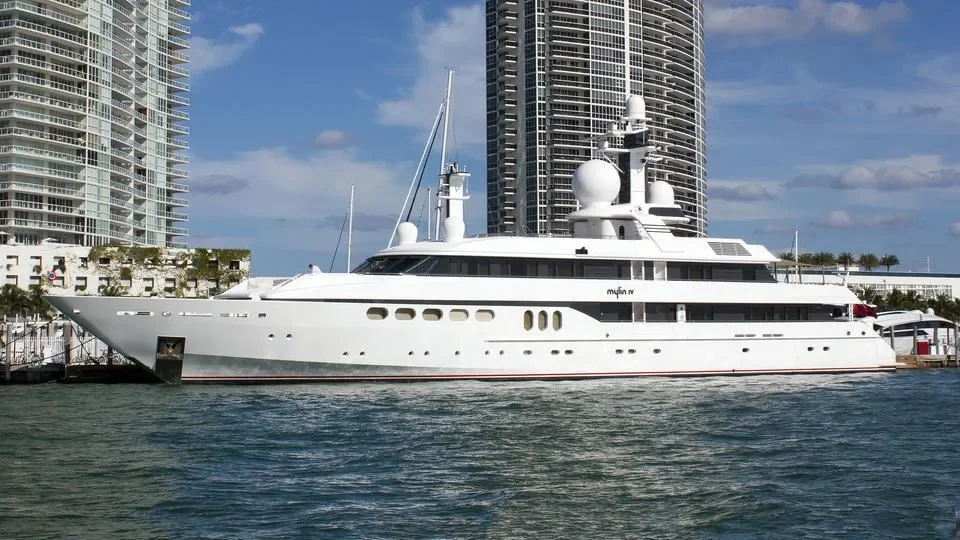
![Luxury white yacht docked at a marina with high-rise buildings in the background under a partly cloudy sky.]()
M/Y MYLIN IV
-
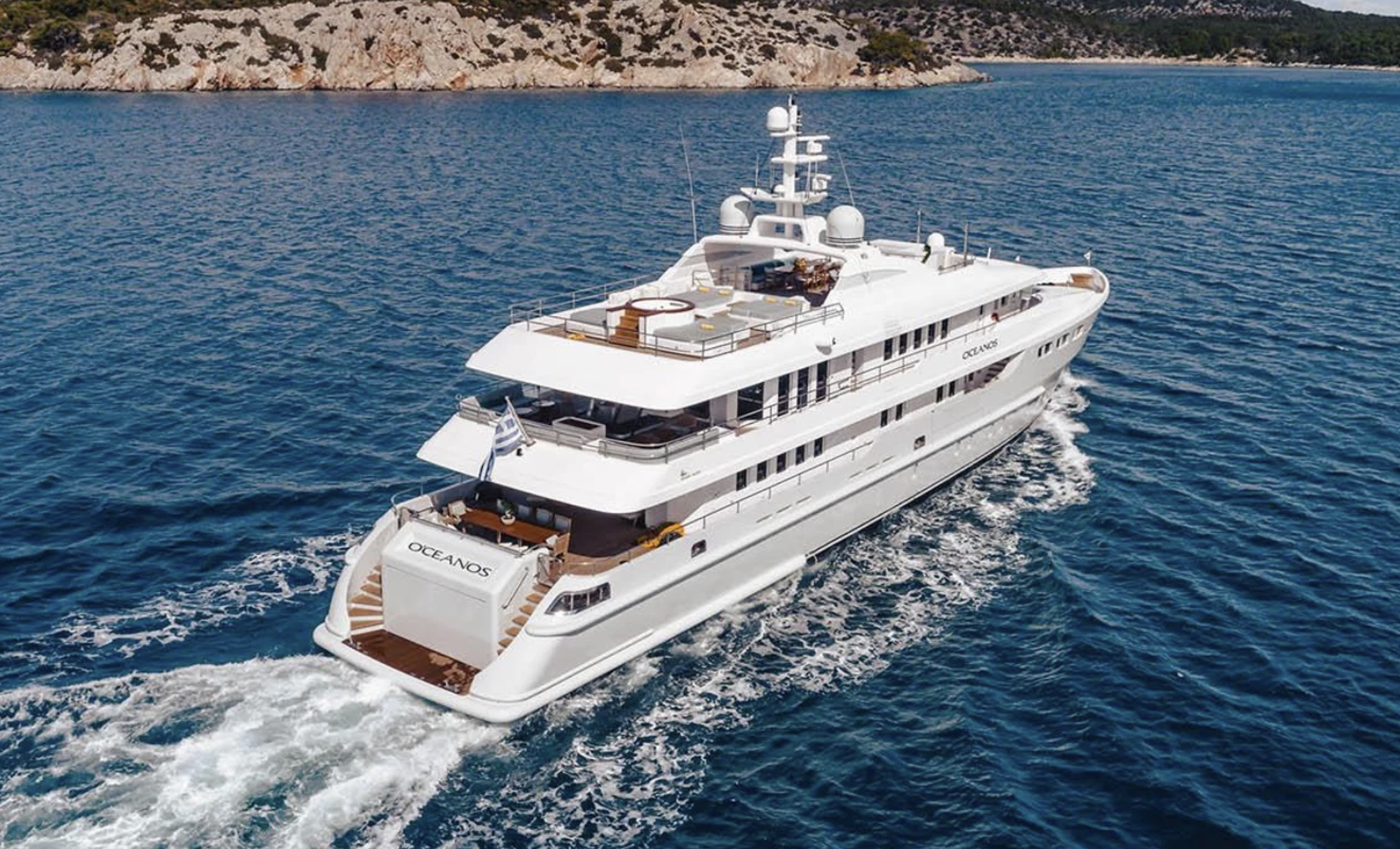
![A large white yacht labeled 'Oceanos' sailing on blue water near a rocky, sparsely vegetated coastline.]()
M/Y OCEANOS
-
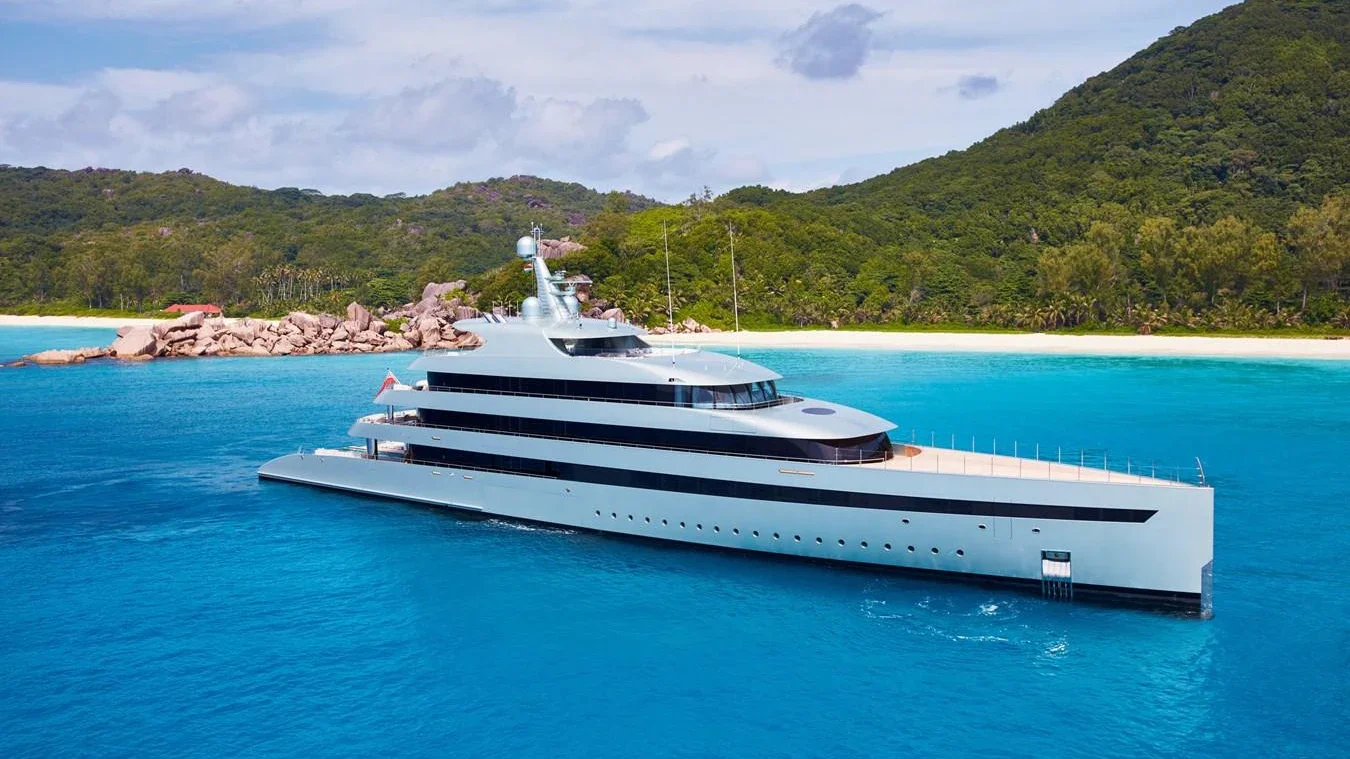
![A luxury yacht near an island with sandy beaches and green hills]()
M/Y SAVANNAH
-
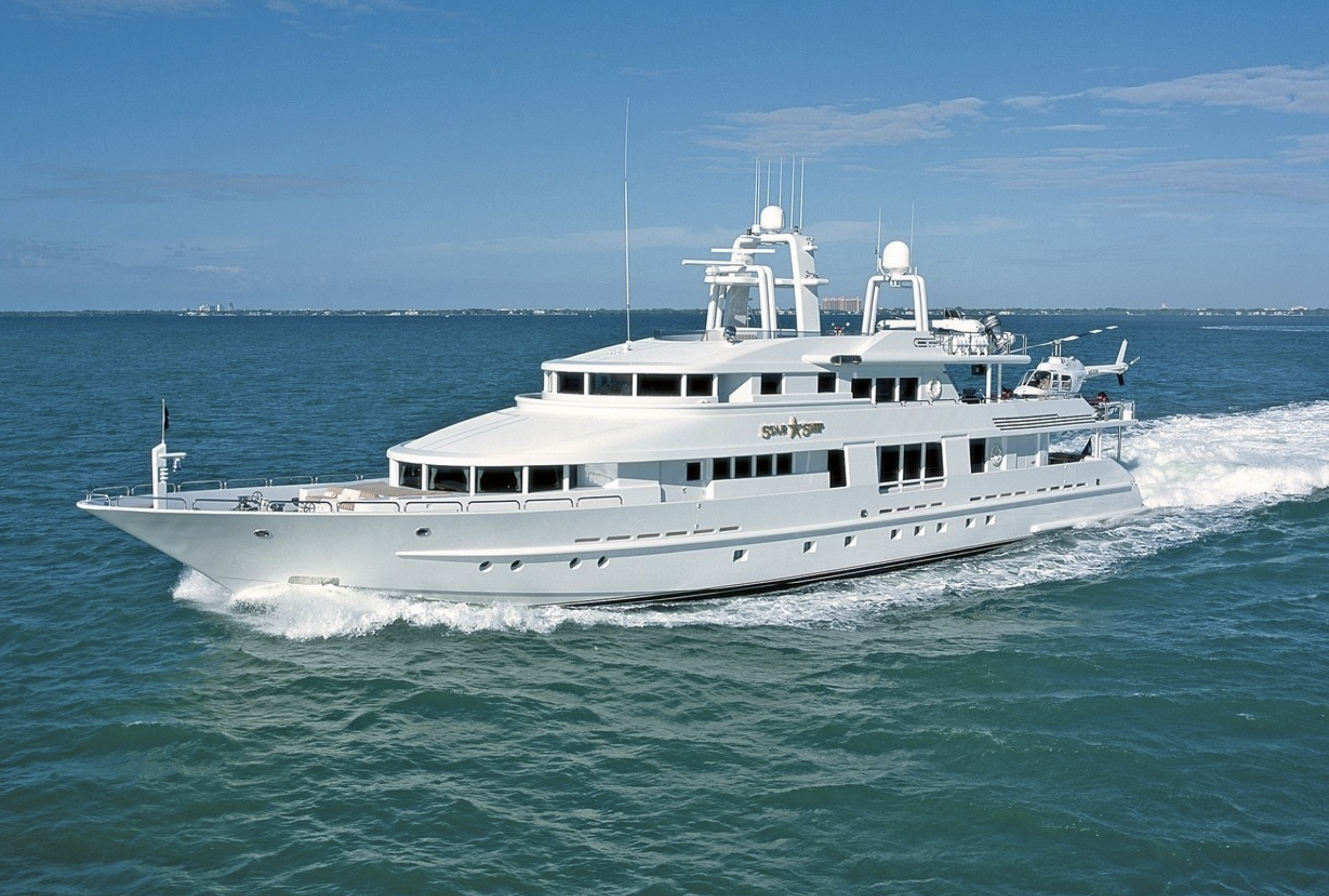
![A large white yacht cruising on calm blue ocean waters with a city skyline in the distance under a partly cloudy sky.]()
M/Y STARSHIP
-
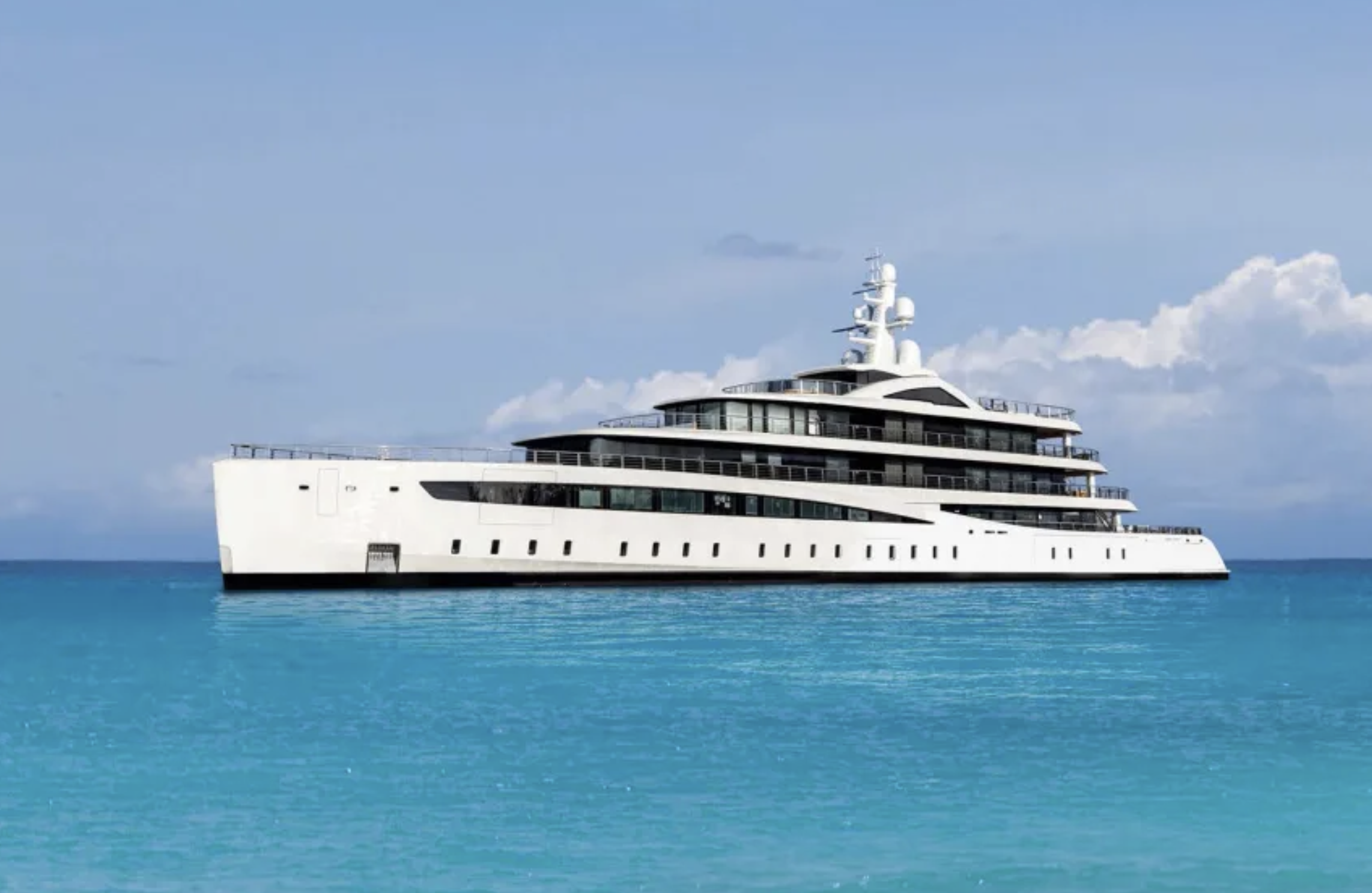
![A large white luxury yacht floating on calm turquoise water under a blue sky with some clouds.]()
M/Y VIVA
-
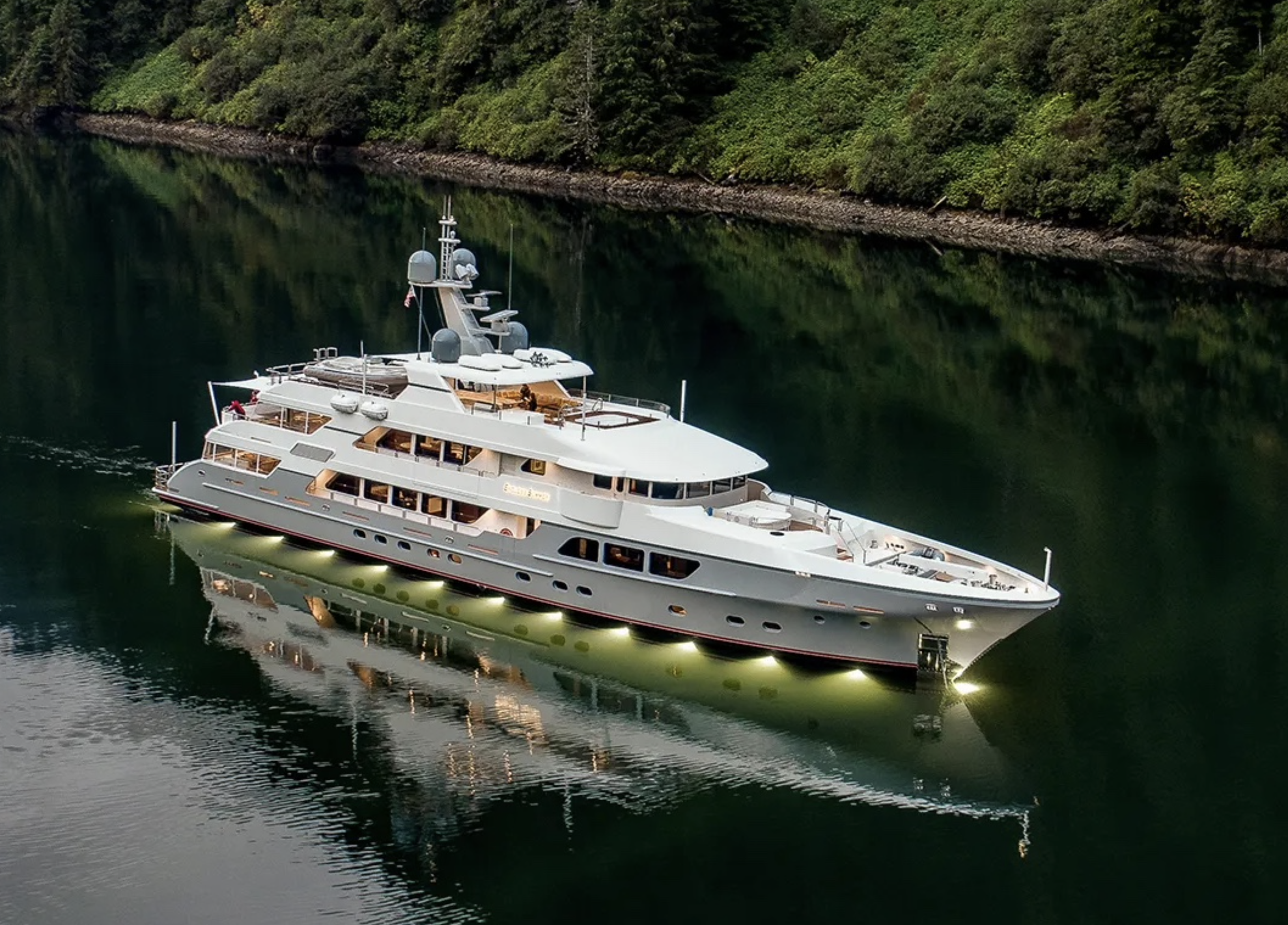
![]()
M/Y ENDLESS SUMMER
-
![A large white yacht sailing on the ocean with sunlight reflecting off the water.]()
M/Y PREDICTION
-
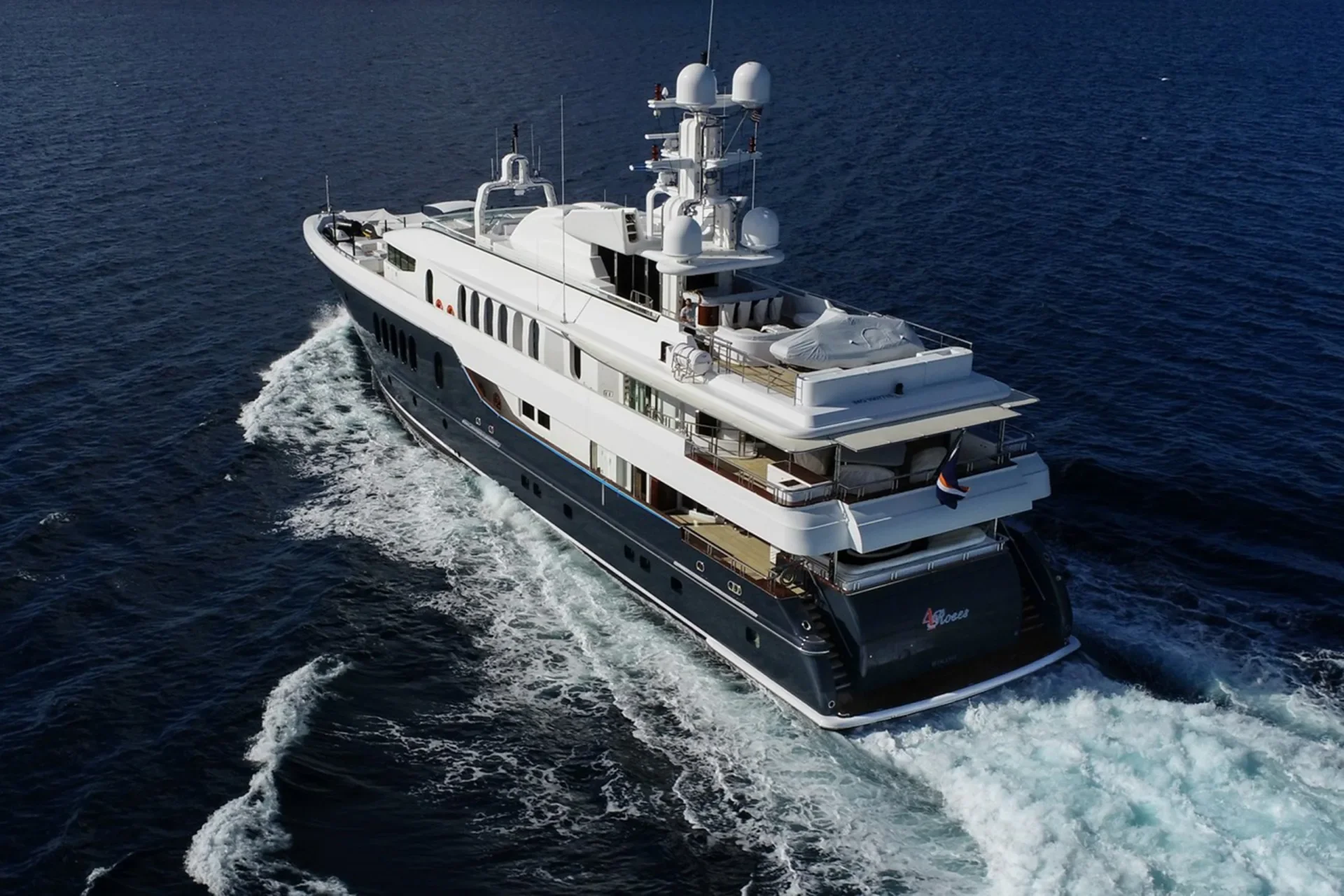
![A large white luxury yacht sailing on dark blue ocean water, creating white wake behind it.]()
M/Y 4ROSES
-
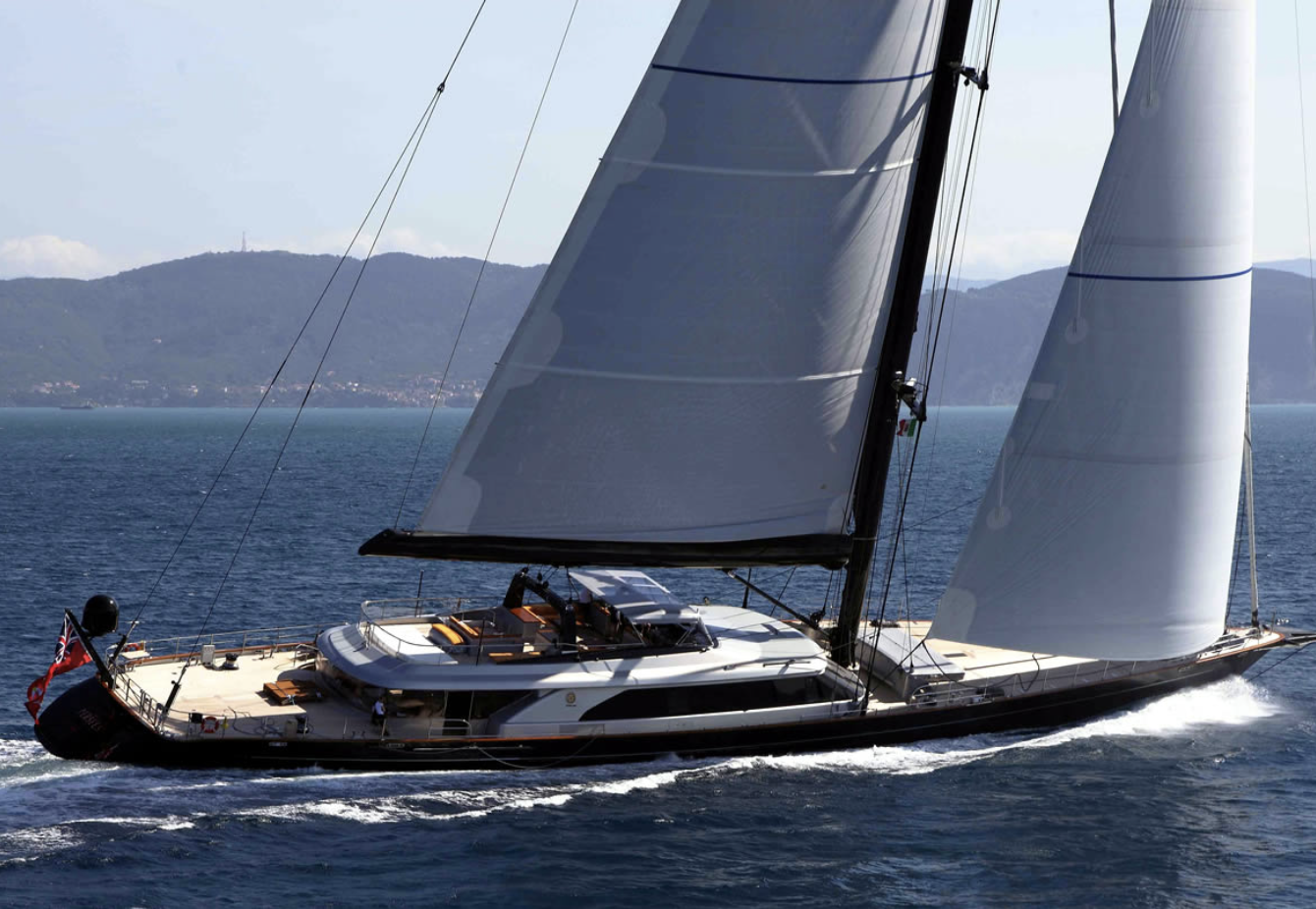
![A large sailing yacht with black and white sails on open water, with mountains in the background.]()
S/Y PERSEUS^3
-
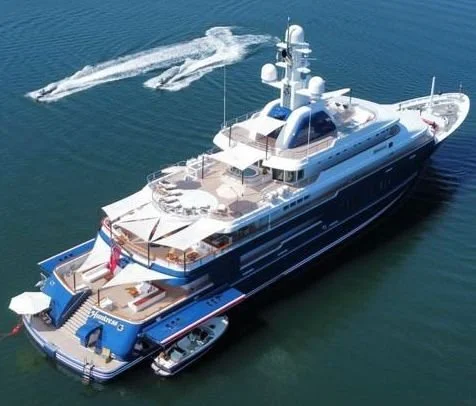
![A large white yacht with multiple decks and a pool, sailing in the ocean with a speedboat nearby]()
M/Y HUNTRESS
-
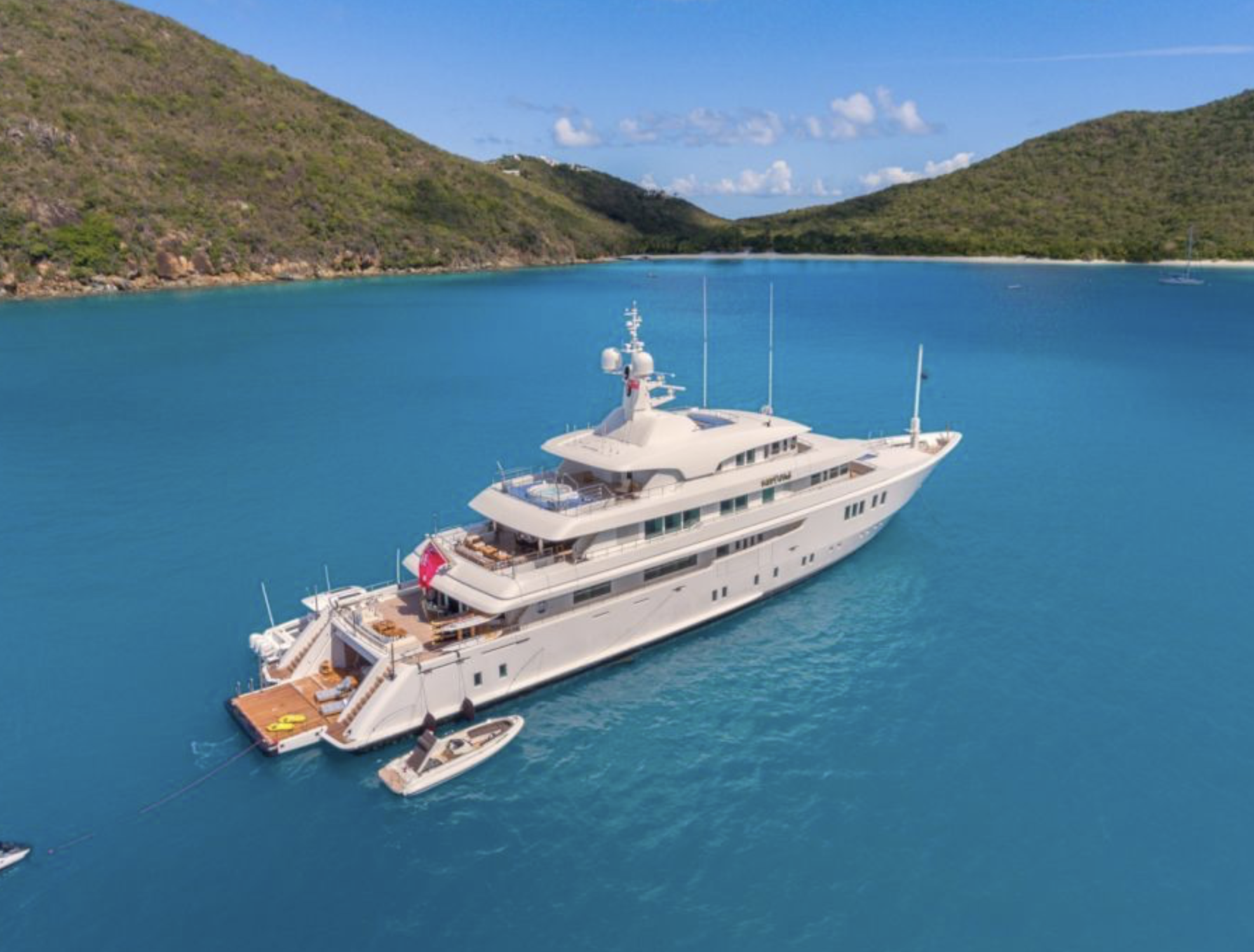
![A white luxury yacht anchored in a calm, bright blue ocean near lush green, hilly coastline under a clear blue sky with clouds.]()
M/Y PARTY GIRL
-
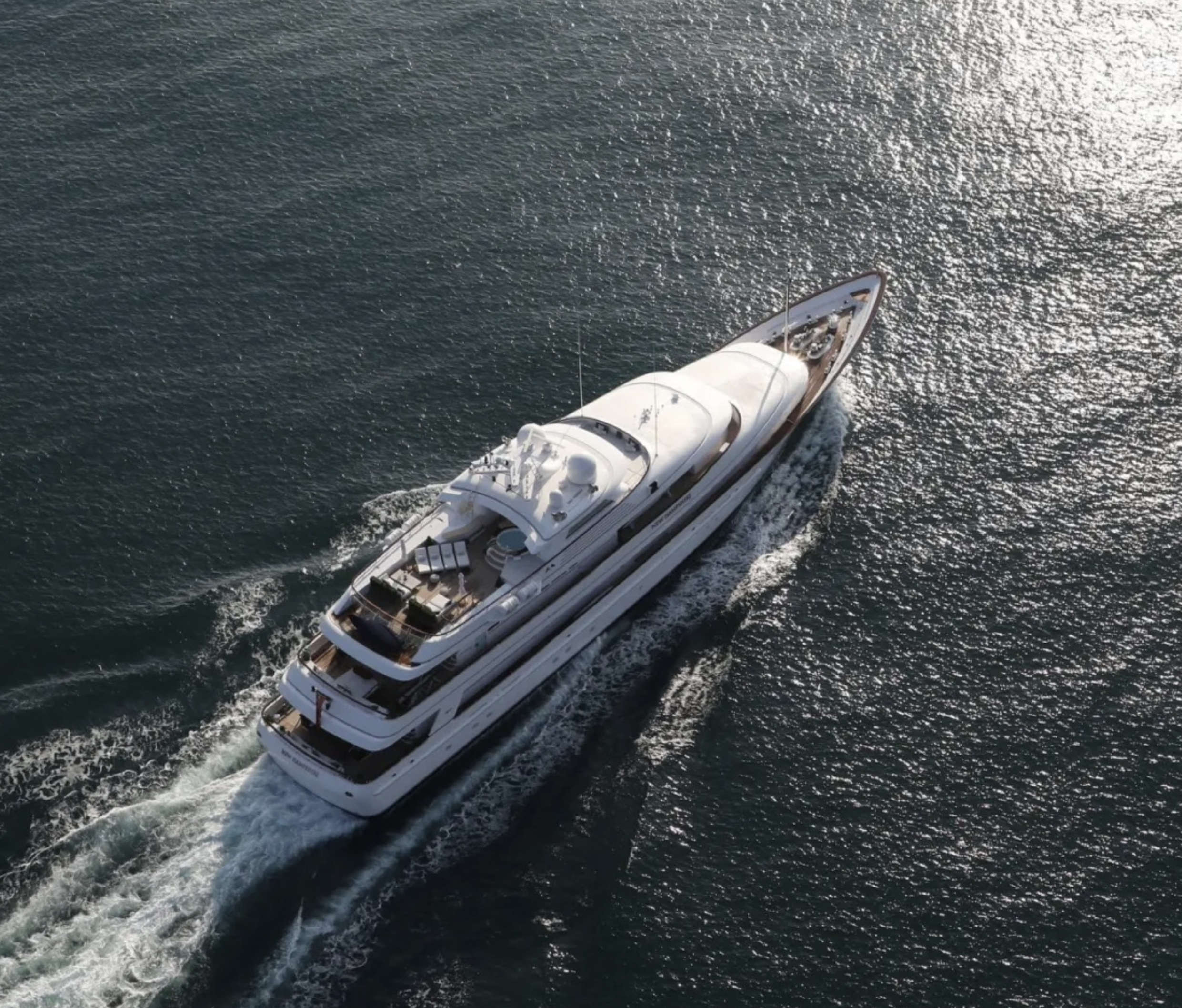
![]()
M/Y SAMURAI
-
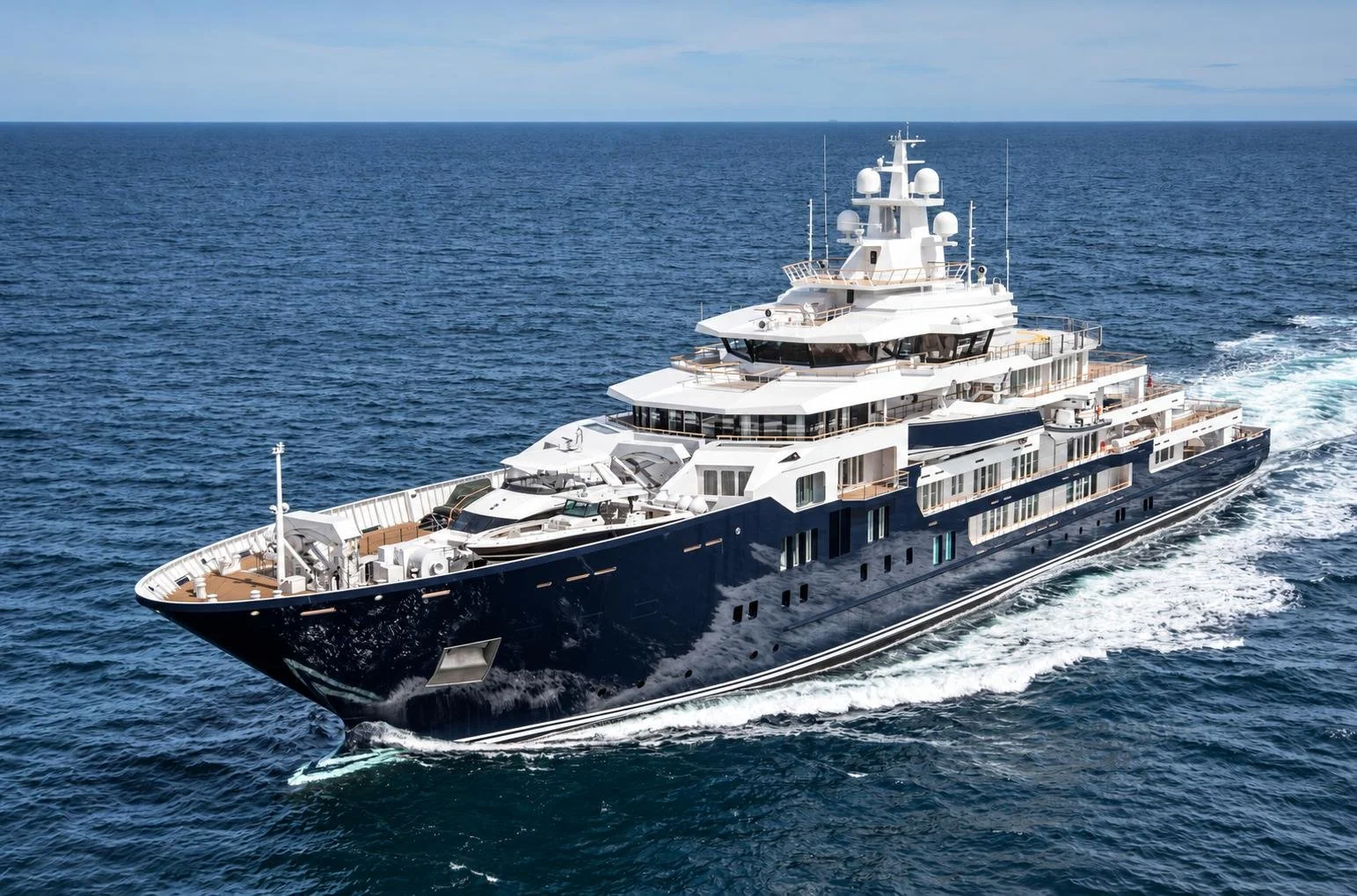
![]()
M/Y ULYSSES
WELCOME TO AMERICAN MARINE
Precision Fabrication for Vessels Where Quality Isn’t Negotiable
American Marine delivers custom marine canvas and upholstery for superyachts and large luxury yachts throughout West Palm Beach, Fort Lauderdale, Miami, Jupiter, Boca Raton, and South Florida. Every project is measured dockside with 3D digital patterning, then fabricated with elite marine-grade materials built for offshore durability, UV resistance, and daily charter or owner use.
Whether your yacht is docked at a private marina, a yacht club, or a major yard such as Rybovich, Lauderdale Marine Center, Derecktor, or Island Gardens, you receive the same precision and attention to detail at your slip.
American Marine is trusted by captains, vessel managers, and yacht management companies across South Florida's most demanding fleets. Discover why the region's yachting community chooses American Marine for lasting quality and a flawless fit.

TIMELY DELIVERY IS OUR COMMITMENT.
Our collaborative team works closely to meet your needs.
We ensure your deadlines are consistently achieved.
TOP-TIER CUSTOM YACHT UPHOLSTERY CRAFTSMANSHIP.
Trusted by yacht builders, owners, and marinas. We ensure every job is executed to perfection.

TAILORED DESIGN EXPERTISE DEFINES US.
We excel in meticulous attention to detail, crafting every aspect of your project with care.
Our versatile team of canvas specialists sets us apart from the rest.
OUR SERVICES: CUSTOM SUPERYACHT UPHOLSTERY, ENCLOSURES & COVER SYSTEMS
-
![]()
SUPERYACHT UPHOLSTERY
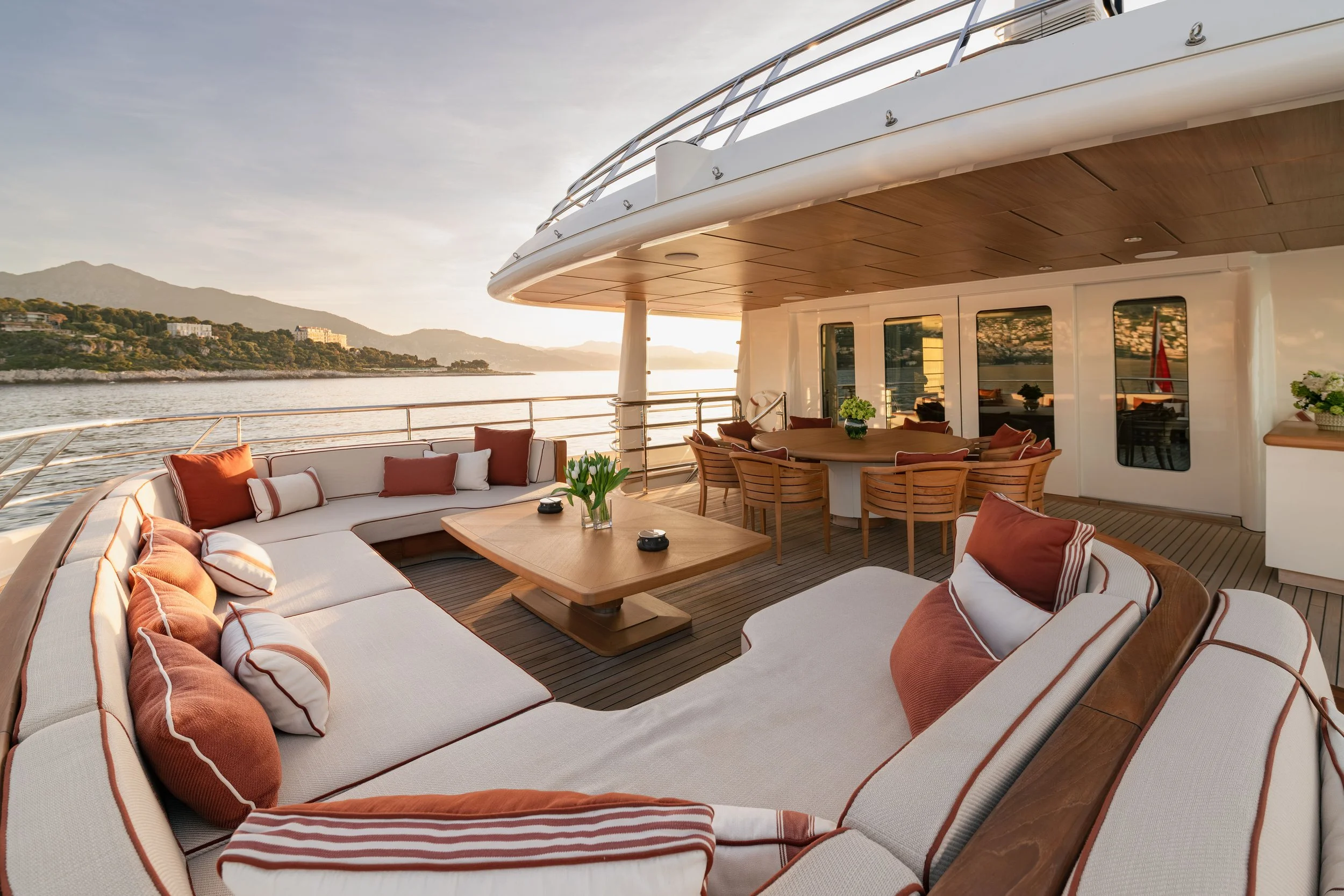
Interior and exterior upholstery, custom cushions, and crew quarters refitting for superyachts, using premium marine-grade fabrics. Built for complete refits, owner upgrades, and charter fleet maintenance.
-
![]()
SUPERYACHT ENCLOSURES
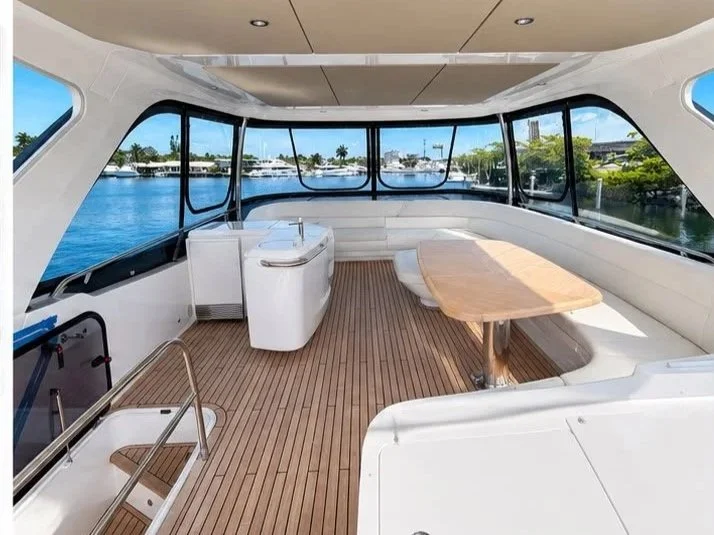
Custom polycarbonate and Strataglass enclosures for flybridge, pilothouse, bridge, and aft deck applications. Digitally patterned for exact fit, engineered for offshore durability
-
![]()
SUPERYACHT COVERS
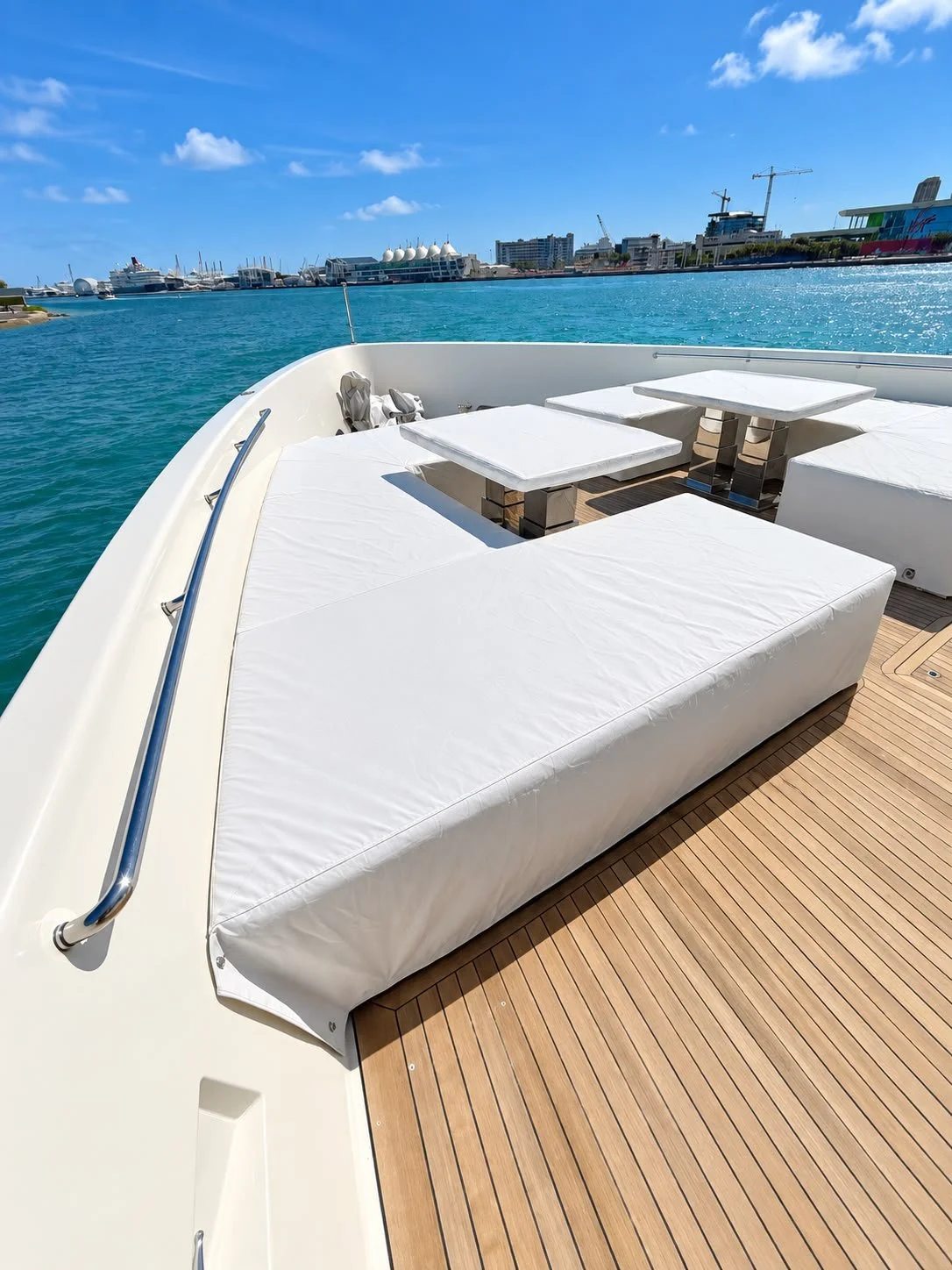
Precision-fit covers for helm stations, electronics, and deck equipment, built for the rapid deployment high-use areas demand.
-
![]()
SUPERYACHT SHADE SYSTEMS
Custom yacht sun shades and sail awnings for sundeck, flybridge, and cockpit applications. Built for stability and daily use in South Florida conditions.
WHY LUXURY YACHT OWNERS & CAPTAINS CHOOSE AMERICAN MARINE
-
![Close-up of a yacht's front windshield with digital overlays highlighting structural features, docked at a marina with other yachts and palm trees in the background.]()
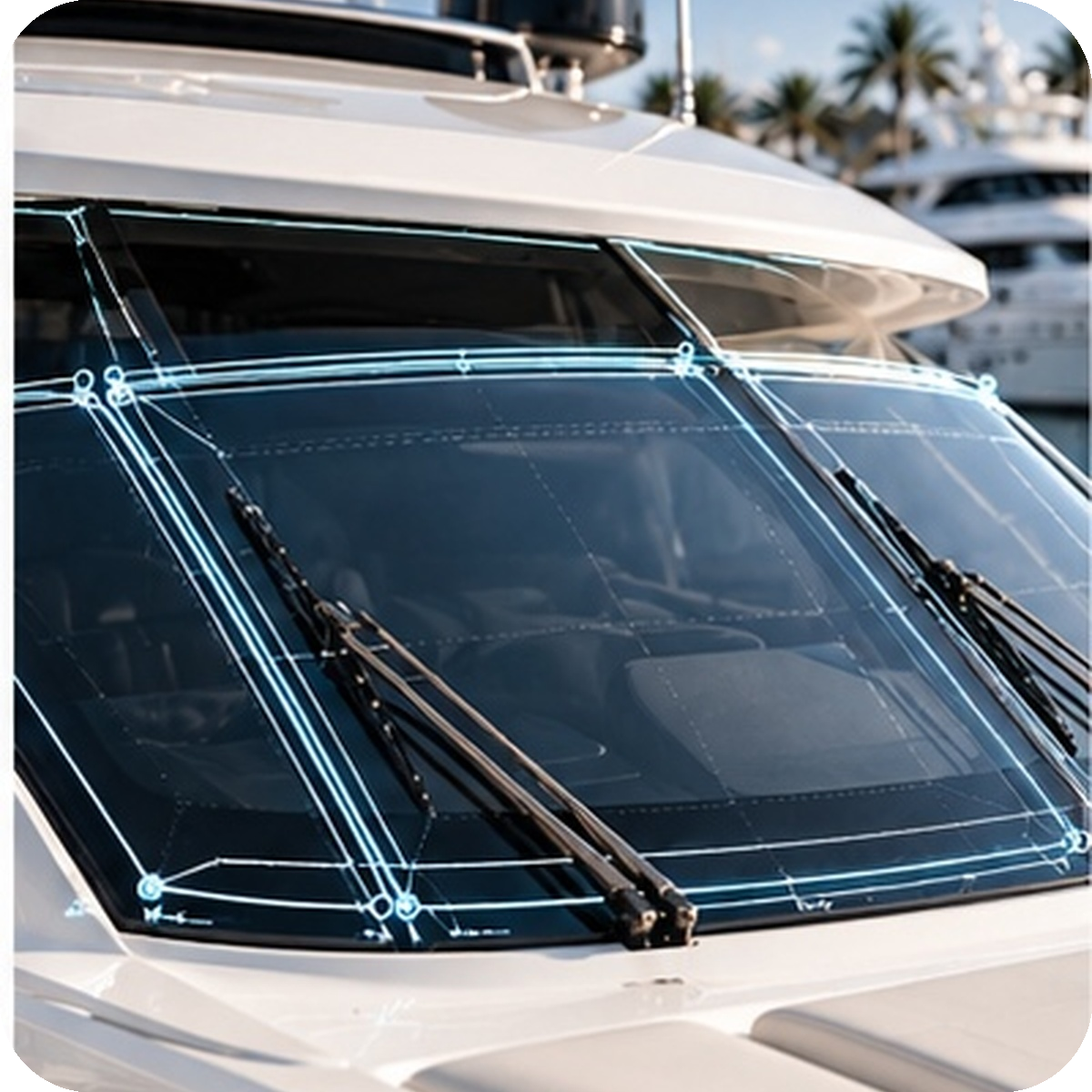
3D DIGITAL PATTERNING
Ensures exact fit and repeatable results for every enclosure, cover, and upholstery project—no matter the vessel’s complexity.
-
![Stacked fabric swatches in shades of blue, white, and gray with various textures and patterns, including woven, textured, and striped designs.]()
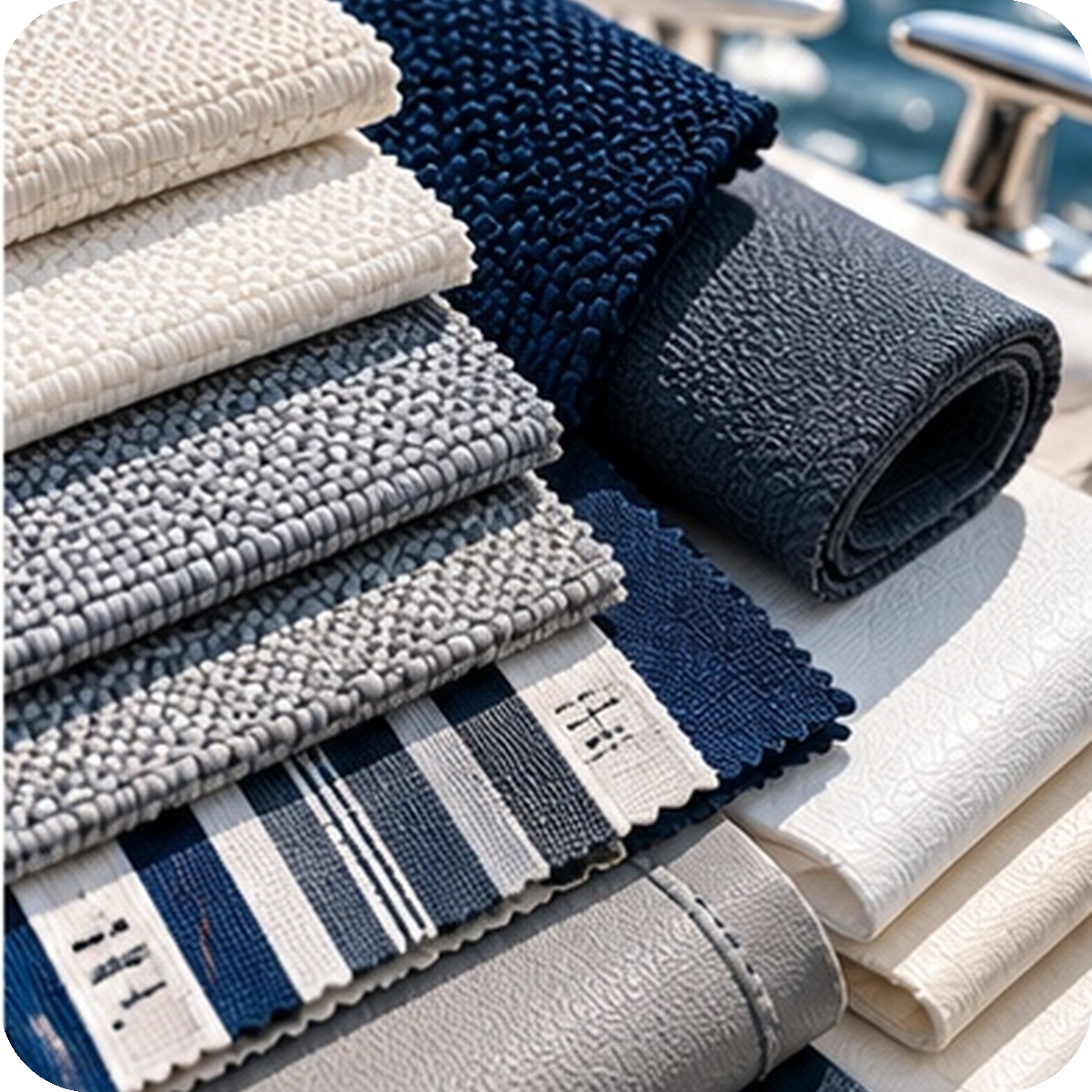
ELITE MATERIALS ONLY
Only yacht-grade fabrics, foams, and hardware from brands like Makrolon Marine, Strataglass, Stamoid, Sunbrella, Serge Ferrari, Sattler, and Tenara PTFE Thread
Chosen for offshore performance, clarity, and longevity.
-
![Laptop screen displaying various 3D models or diagrams of outdoor furniture and canopy shades related to planning or design interface.]()
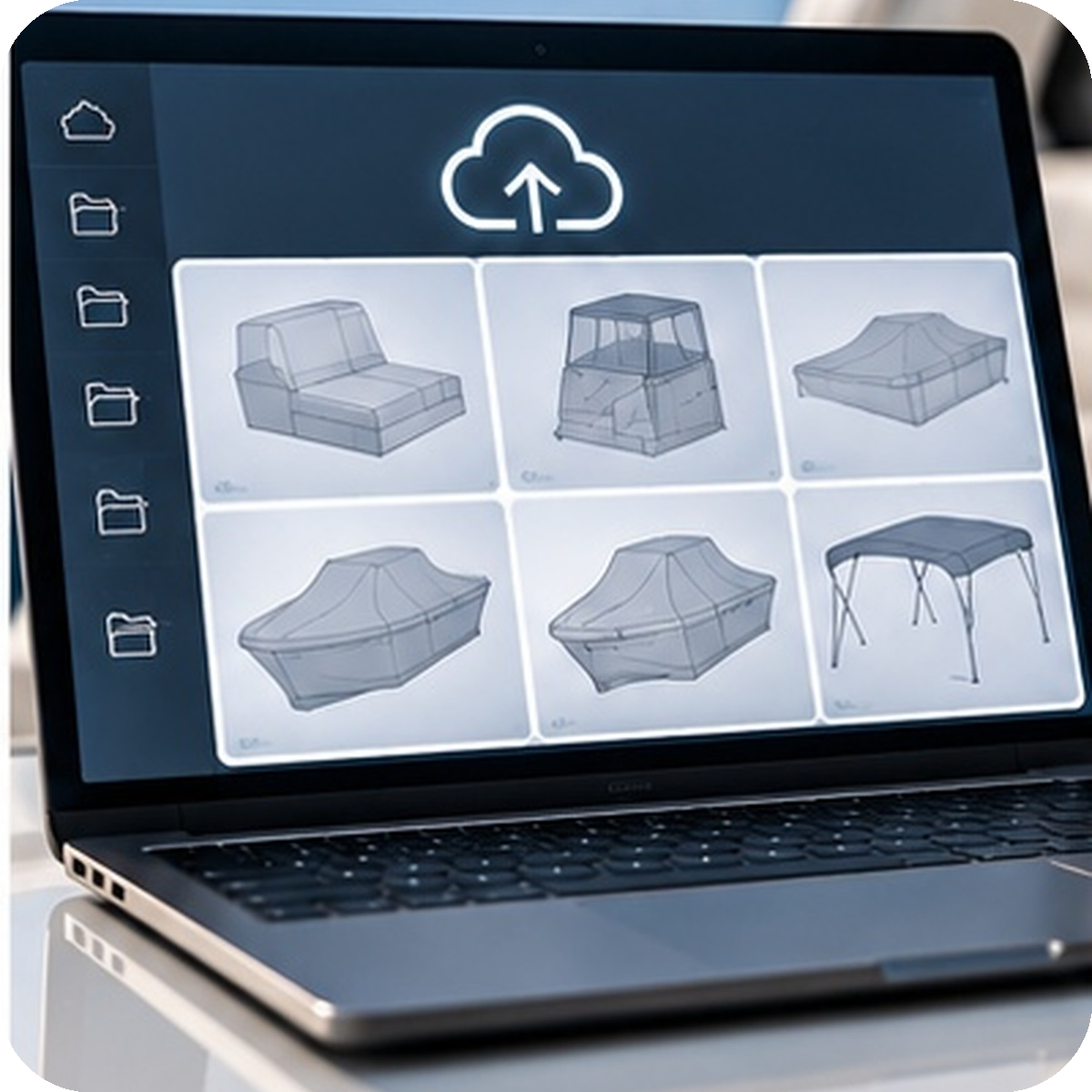
CLOUD-BASED TEMPLATE STORAGE
All digital patterns are securely archived, enabling rapid fabrication of replacement components without the need to remeasure—even if your vessel is abroad or on charter.
-
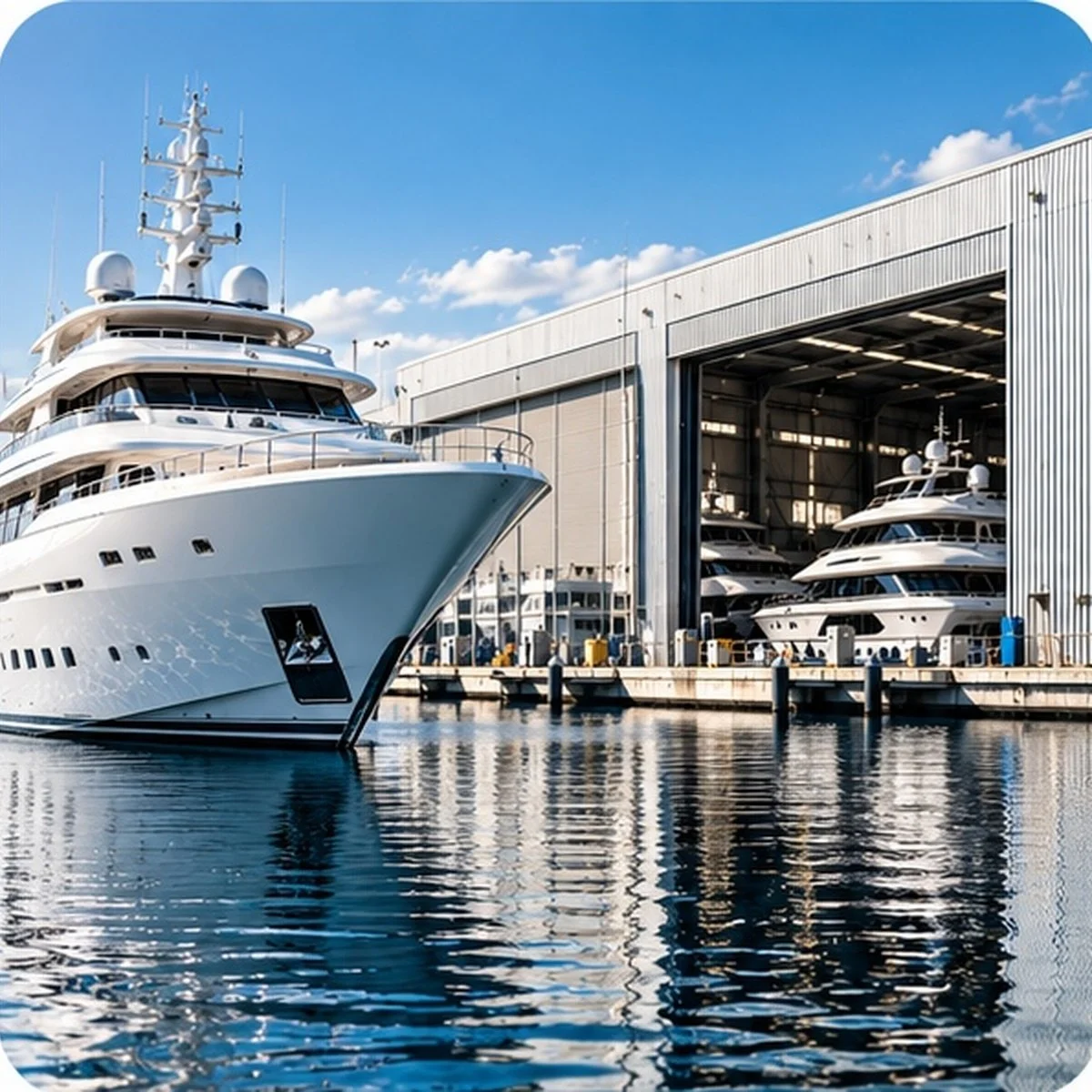
![Large white yacht docked at a marina with other yachts inside a boat storage warehouse, under a partly cloudy sky.]()
TRUSTED AT MAJOR YACHT FACILITIES
Trusted by captains and yacht managers across South Florida, including Rybovich, Lauderdale Marine Center, Derecktor, Pier Sixty-Six, and Bahia Mar, for complex refits and custom canvas and upholstery projects.
-
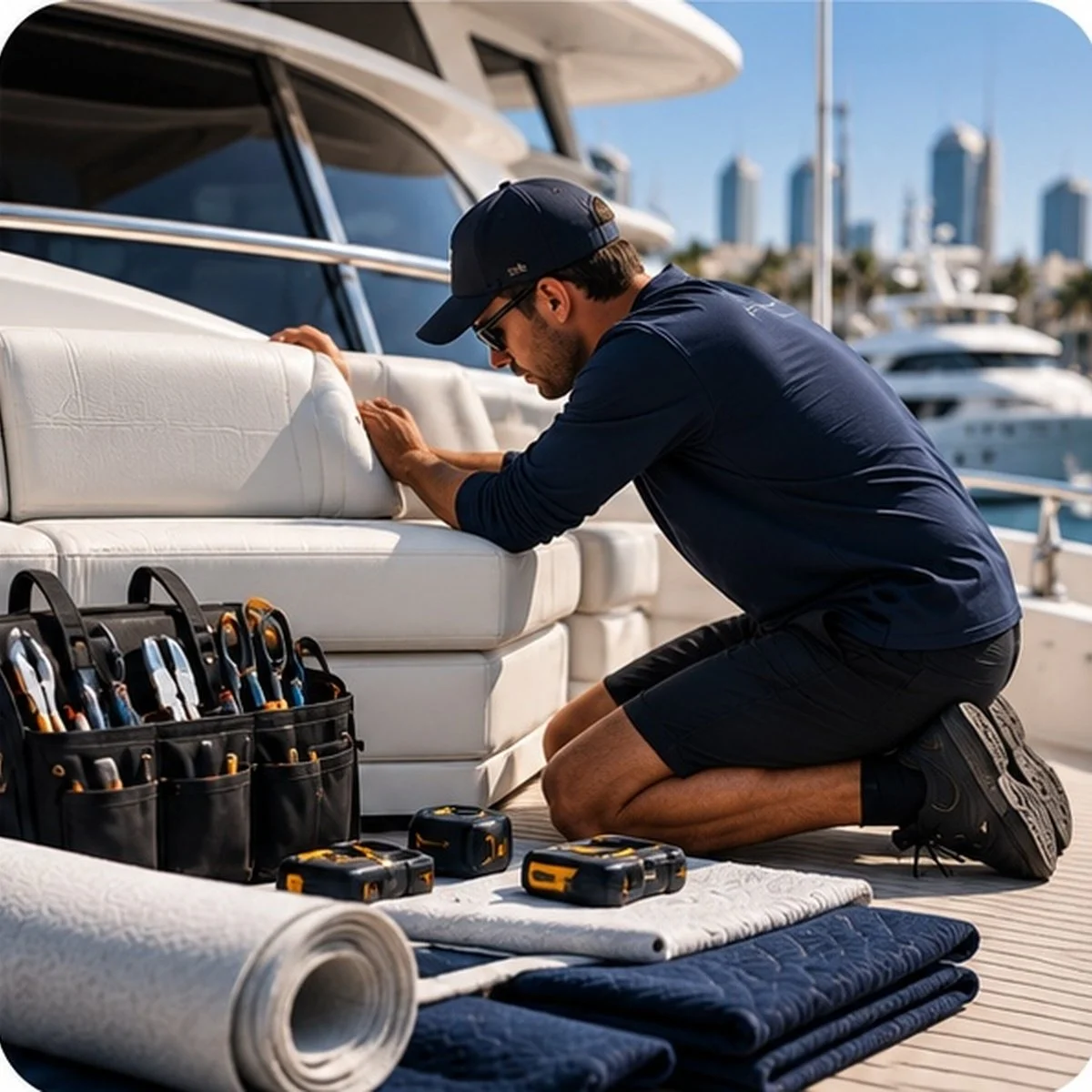
![A man kneeling on a boat floor, working on a white cushioned seat, surrounded by tools and equipment, with yachts and a city skyline in the background.]()
COMPRENHENSIVE POST- INSTALL SUPPORT
Ongoing service for adjustments, repairs, or replacements—ensuring your investment performs season after season, wherever your vessel operates.
-
![PROJECT MANAGEMENT]()
PROJECT MANAGEMENT
From initial planning to final installation, we coordinate schedules, materials, and communication with captains and yacht managers to keep your project on track.

3D PRECISION FOR A PERFECT FIT
PRECISION YOU CAN SEE - BEFORE WE BUILT IT
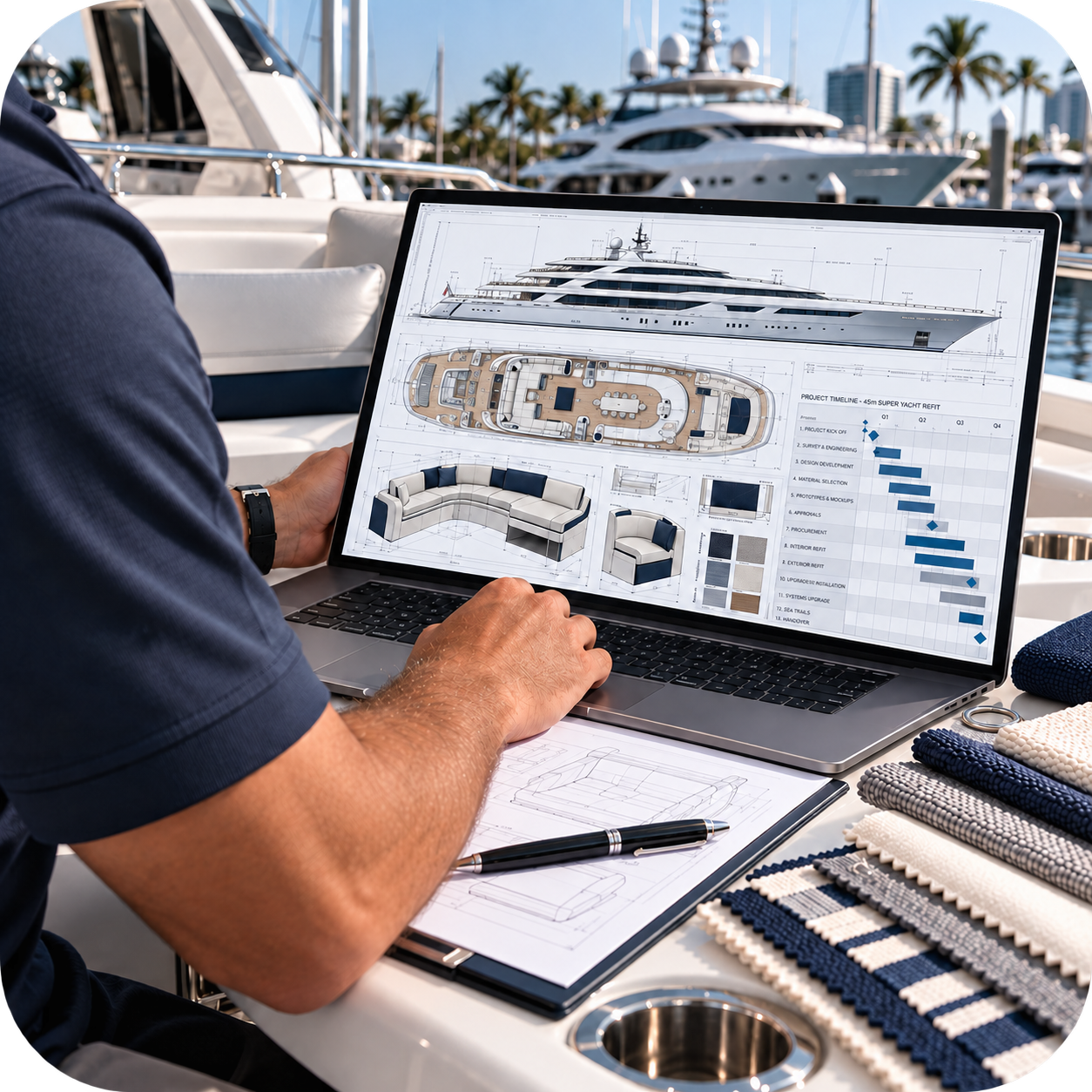
American Marine uses 3D digital patterning and measurement systems to eliminate guesswork and guarantee perfect fit. Our custom yacht upholstery and marine canvas process captures exact vessel geometry, simulates tension loads, and generates precision patterns—resulting in flawless enclosures, covers, and upholstery on the first install.
From start to finish, every project is digitally mapped for precision — no guesswork, no wasted material, just a perfect fit for your custom yacht upholstery - every time.
WHAT THAT THIS MEAN FOR YOU
CONSISTENT, PRECISE FIT : 3D digital patterning ensures your enclosures, covers, and upholstery fit complex vessel geometries with minimal adjustments.
CLOUD-BASED TEMPLATE STORAGE : Templates are securely stored, allowing for fabrication and delivery of replacement components without remeasuring—ideal for owners cruising or chartering globally.
FASTER TOUR-AROUND : Digital workflows enable faster production and installation, minimizing disruption to your vessel’s schedule.
VISUAL APPROVAL BEFORE FABRICATION : Review detailed digital renderings prior to build, ensuring alignment with your requirements and minimizing surprises during installation.
We often hear from captains and owners that our use of digital patterning and 3D visualization is unlike anything they’ve experienced with traditional custom yacht upholstery and canvas shops. It’s a core part of how we deliver precision at scale—whether you’re at a major yard or a private marina.
Whether you’re upgrading an enclosure, redesigning exterior custom yacht upholstery, or completing a full exterior refit, American Marine delivers yard-grade craftsmanship with precision, professionalism, and unmatched attention to detail.
From major yard refits to private marina projects—we bring the same standards to every vessel.
REQUEST A CUSTOM YACHT UPHOLSTERY AND MARINE FABRICATION CONSULTATION
Trusted by Captains, Engineers & Yacht Managers
FREQUENTLY ASKED QUESTIONS
-
There is no single replacement interval for superyacht upholstery because service life depends heavily on location, use, exposure, material selection and maintenance. Exterior cushions and soft furnishings are exposed to intense UV, salt, heat, humidity, sunscreen, food, beverages and repeated cleaning, while interior upholstery normally operates in a much more controlled environment.
The condition of the covering material is only part of the equation. Foam density, drainage, stitching, internal construction, substrate condition and the way cushions are stored or covered all affect long-term performance. Fading, cracking, permanent staining, deteriorated seams, compressed foam, loss of shape, trapped moisture and mildew odor are all signs that a refit should be evaluated.
On a professionally managed yacht, American Marine recommends evaluating the complete cushion or upholstery system rather than replacing material based only on age. A properly planned refit can improve appearance, comfort, drainage, durability and ease of maintenance at the same time.
-
Superyacht cushions are not simply larger versions of standard boat cushions. They often incorporate complex geometry, compound curves, multiple foam densities, drainage considerations, integrated attachment systems and carefully controlled seam lines. On large seating areas, even a small dimensional error can become visually obvious once several cushions are installed side by side.
Different areas of the yacht also require different construction. A foredeck sun pad, aft-deck lounge, beach-club seat, crew mess settee and interior salon cushion may all require different foam characteristics, support levels, materials and moisture-management strategies.
Appearance is also held to a much higher standard. Cushion heights, piping, stitching, seam placement and adjoining panels need to remain consistent across large areas. American Marine can digitally measure complex seating with Proliner technology, develop the geometry in CAD and fabricate the cushions around the actual shape of the vessel rather than relying only on manual patterns.
-
Lower-cost cushions may reduce the initial price by using lower-density foam, simplified internal construction, less suitable exterior materials or less time developing the pattern and fit. Those compromises may not be obvious immediately, but they can show up quickly once the cushions are exposed to real onboard use.
Foam can lose its shape, covers can wrinkle or migrate, water can remain trapped, seams can distort and adjoining cushions can stop aligning properly. On a superyacht, poor fit is particularly noticeable because exterior seating is often a major visual element of the deck.
Replacing or correcting a poorly performing cushion later usually costs more than building it properly the first time, especially when vessel access, shipping and installation are considered. Good cushion construction should balance comfort, drainage, dimensional stability, appearance, serviceability and the specific way the yacht is operated.
-
A repair can be the right choice when the problem is isolated, such as an open seam, a damaged panel, localized wear or a small area of deterioration. If the surrounding upholstery, foam and construction are still in good condition, a professional repair may extend service life without the cost and disruption of a complete replacement.
Replacement becomes more appropriate when the fabric, vinyl, stitching or foam is significantly aged, faded, brittle, compressed or deteriorated. Repeated repairs can eventually become less economical while the overall appearance and comfort continue to decline.
For professionally managed vessels, there is also an aesthetic consideration. A technically successful repair may still be visually unacceptable if the surrounding material has faded or aged enough that the repaired section no longer matches. American Marine evaluates the upholstery, foam, construction and surrounding finish before recommending repair or replacement.
-
Exterior cushions influence much more than seating comfort. They are a major visual element of the yacht's exterior profile and are constantly exposed to UV, salt, moisture, sunscreen, food, beverages and repeated handling by crew.
Correct foam and cushion-core selection helps the cushion recover its shape, provide proper support and manage moisture. Correct textile specification helps control fading, staining and premature deterioration. Precision patterning keeps edges, seams, piping and adjoining cushions aligned.
On large sun pads, lounges and aft-deck seating, small dimensional inaccuracies become very visible. That is why American Marine approaches exterior cushions as complete systems rather than simply foam wrapped in fabric. The goal is to achieve the right combination of comfort, drainage, durability, shape retention and a clean yacht-quality appearance.
-
Common warning signs include fading, cracking, persistent staining, deteriorated stitching, compressed or misshapen foam, trapped moisture, mildew odor, hardening of the covering material or furnishings that no longer match the yacht's current design standard.
Captains and managers should also consider the vessel's operating schedule. A planned yard period, service stop or South Florida visit can be an ideal opportunity to evaluate and digitally measure exterior furnishings even if fabrication and installation will happen later.
With digital measurement and CAD development, the time the yacht must be physically available can often be separated from the time required for design and fabrication. This allows a refit to be planned around charter schedules, cruising itineraries and maintenance windows instead of waiting until the furnishings have deteriorated to the point of failure.
-
AM HydroVent™ is American Marine's exterior cushion approach for applications where drainage, airflow, moisture management and long-term shape retention are especially important. Rather than treating the cushion as only a piece of foam inside a cover, the complete construction is evaluated as a system.
Depending on the application, AM HydroVent™ can combine an appropriate high-performance cushion core, moisture-management and drainage considerations, protective liner construction, venting and an exterior cover engineered for the way the cushion will actually be used aboard the yacht.
The exact construction can vary because a foredeck sun pad, aft-deck settee and high-use charter seating do not necessarily require the same feel, thickness or internal structure. The objective is to reduce retained moisture, improve drying, maintain comfort and preserve the shape and finish expected from premium superyacht exterior seating.
-
There is no single foam or cushion construction that is ideal for every exterior application. The correct solution depends on cushion thickness, desired comfort, exposure, drainage, frequency of use, how the cushion is stored and the visual result required by the yacht.
For exterior seating, moisture management is particularly important. A cushion that feels excellent when new can become a maintenance problem if water is allowed to remain trapped inside the core or liner. At the same time, simply maximizing drainage without considering support and shape retention can produce a cushion that does not meet the comfort or appearance standard expected on a superyacht.
American Marine evaluates the complete application and can specify conventional marine foam, drainage-oriented constructions or the AM HydroVent™ Cushion System where appropriate. The goal is to engineer the cushion around the vessel and its use rather than force every project into one standard specification.
-
Crew quarters are among the most intensely used spaces aboard a superyacht. Crew mess seating, bunks, headboards, wall panels and mattresses may be used every day for long periods, so their requirements are different from those of occasional-use guest accommodations.
Durability, cleanability, support and efficient use of space become especially important. Materials may need to withstand abrasion, frequent cleaning, spills, moisture and continuous contact while remaining comfortable and visually appropriate for the vessel. Foam density and support also matter because crew seating and sleeping surfaces are subjected to repeated daily use.
American Marine fabricates and refits crew mess seating, berth cushions, custom mattresses, headboards, wall panels and other upholstered components with the operating environment in mind. The result should be durable and practical without making the crew areas feel like an afterthought.
-
Crew accommodation is sometimes postponed because it is not guest-facing, yet it is one of the most heavily occupied areas of the yacht. Crew members may sleep, eat, recover between shifts and spend off-duty time in these spaces virtually every day.
Supportive mattresses, comfortable seating and well-maintained soft furnishings contribute to a more functional onboard environment. Durable materials and properly constructed cushions can also reduce the cycle of repeated repairs that occurs when heavily used crew spaces are treated with the same assumptions as lightly used guest areas.
For busy private and charter yachts, a crew-quarters refit is therefore more than a cosmetic upgrade. It can be a practical operational investment in comfort, durability, maintenance efficiency and the spaces used by the people responsible for maintaining the vessel and delivering the guest experience.
-
3D yacht digitizing allows complex shapes, dimensions and attachment points to be captured electronically rather than relying only on hand-measured templates. American Marine uses Proliner digital measuring technology where appropriate to record the actual geometry of the vessel and then develops the project in CAD before fabrication.
The main advantages are accuracy, repeatability and better planning. Large covers, awnings, custom cushions and other fitted components can be developed digitally, allowing geometry, proportions and critical details to be reviewed before expensive materials are cut.
Digitization also creates a valuable long-term reference for the vessel. When the project data and patterns are archived, future replacement or modification may be easier because the original geometry is already available. For yachts that travel extensively, this can reduce the need to return to the same location simply to repeat the measuring process.
-
Traditional hand templating can work well, but complex superyacht geometry can make manual patterning time-consuming and difficult to reproduce exactly. Proliner measurement allows American Marine to capture key points and shapes digitally, while CAD provides a controlled environment for refining the pattern before production.
This workflow is particularly useful on large covers, awnings, curved seating areas and projects where seam placement, symmetry or alignment must be carefully managed. It can also help identify dimensional conflicts before fabrication begins.
Once the geometry is approved, the digital pattern can support precision cutting and repeatable production. The files can then be archived as part of the vessel's project history. If a component is later damaged or lost, the existence of a reliable digital pattern may eliminate much of the remeasurement work normally required.
-
Often, yes - if the component or installation area was previously digitized and the necessary CAD patterns have been archived.
For example, if a cushion is lost underway or a cover is damaged while the yacht is in the Caribbean, Mediterranean or another cruising area, American Marine may be able to manufacture the replacement from the stored digital data without bringing the vessel back to South Florida simply to remeasure it.
The feasibility depends on the component, the quality and completeness of the archived pattern and whether any surrounding conditions have changed since the original project. When the digital information is sufficient, the replacement can be fabricated at our facility and coordinated for shipment or future installation. This is one of the reasons we consider digital pattern archiving an important part of large-yacht project planning.
-
One of the biggest advantages of digital patterning is that it can separate the time required aboard the yacht from the time required for design and fabrication.
American Marine can often board the vessel during a suitable service window, digitally measure the required areas and then continue CAD development and production after the yacht has moved on. This is particularly useful for vessels working around charter commitments, yard periods, seasonal migrations or tight cruising schedules.
For larger projects, reducing unnecessary vessel downtime can be just as valuable as improving fabrication accuracy. The objective is to capture the information we need efficiently, complete as much work as possible off the vessel and coordinate installation around a practical return window rather than requiring the yacht to remain stationary for the entire production process.
-
Custom covers protect furnishings and equipment that are considerably more expensive than the covers themselves. Exterior upholstery, helm equipment, tables, consoles, painted surfaces and other deck components may be exposed continuously to UV, salt, rain, soot, bird debris and airborne contamination.
A properly designed cover reduces this exposure, helps keep surfaces cleaner and can reduce unnecessary cleaning cycles. It can also help extend the usable life of the materials beneath it. But protection is only part of the job. On a superyacht, the cover itself needs to meet the vessel's visual and operational standards.
Good cover design considers fit, tension, water shedding, ventilation, reinforcement, hardware placement, contact with finished surfaces, installation time and storage. American Marine designs covers around both what needs to be protected and how the crew will actually deploy, remove and store them.
-
The process begins aboard the vessel by evaluating the component that needs protection, the surrounding geometry and the way the crew intends to use the cover. We look at attachment locations, access points, water flow, potential rubbing areas, storage requirements and how quickly the cover needs to be installed or removed.
For suitable projects, the area is measured with Proliner digital measuring technology. The geometry is then developed and refined in CAD, including seams, openings, reinforcement zones, attachment points and allowances for the selected material and hardware.
The digital pattern supports precision cutting and controlled fabrication. Once installed aboard, the cover can be checked for fit, tension, drainage and ease of use. The final pattern can also be archived, making future replacement or modification significantly easier than starting again from zero.
-
Yes. American Marine fabricates custom protective covers for superyacht tenders, rescue tenders and chase boats, including console covers, seating covers, equipment covers and larger full-boat protective applications.
Tender covers have their own set of challenges because the boat may be stored on deck, in a tender garage, on a lift, at a dock or exposed during transport and daily operations. The cover may need to work around rails, consoles, lifting points, windshields, hardware and other irregular geometry while remaining practical for crew to handle.
For complex tender shapes, digital measuring and CAD pattern development can improve fit and repeatability. Once the pattern has been developed and archived, it can also simplify future replacement if the cover is damaged or reaches the end of its service life.
-
A custom sun awning can turn an exposed deck into a much more usable guest area by providing shade, reducing direct UV exposure and lowering solar heat on seating and deck surfaces. In South Florida, the Caribbean and other high-sun environments, that can make a significant difference in both guest comfort and the exposure experienced by exterior furnishings.
On a superyacht, however, an awning is more than a piece of fabric stretched between poles. Its geometry, attachment points, pole locations, material selection and tension all affect appearance and performance.
American Marine designs custom sail awnings and shade systems around the yacht's actual deck layout and intended operation. Digital measurement and CAD development can be used to control geometry, symmetry and fit, while the fabrication and hardware are planned around how the system will be deployed, tensioned, removed and stored by the crew.
-
Yes. An existing awning does not have to be duplicated if the current system has problems. Crew may be dealing with poor tension, inadequate shade coverage, water collection, awkward pole locations, difficult deployment, excessive movement or a system that is cumbersome to store.
American Marine can evaluate how the existing awning performs and redesign the geometry, attachment method, pole arrangement or material specification where appropriate. Digital measurement and CAD development allow the replacement to be developed around the vessel itself rather than simply tracing and reproducing an existing problem.
This can be particularly valuable during a refit, when the owner or crew wants to improve usability or appearance rather than simply replace worn fabric. The objective is to create a shade system that looks appropriate for the yacht and works better for the people who have to use it.
-
There is no single cleaning method that is correct for every yacht upholstery material. Marine vinyl, solution-dyed acrylic, coated textiles, synthetic leather and specialty interior fabrics can all have different care requirements, so the manufacturer's instructions for the specific material should be followed whenever possible.
Crew should generally avoid assuming that a stronger cleaner will produce a better result. Harsh solvents, abrasive products and aggressive scrubbing can damage surface coatings, remove protective finishes or permanently alter the appearance of certain materials.
Routine removal of salt and contamination, prompt attention to spills, complete drying and proper use of protective covers can all improve service life. If the material is unknown, it is better to identify it before using strong chemicals. American Marine can also help evaluate whether a problem is primarily contamination, material deterioration or an indication that the upholstery is approaching the end of its service life.
-
Yes. Frequent aggressive cleaning can shorten the life of some yacht upholstery materials even when the surface initially appears cleaner. Strong chemicals, repeated scrubbing and unsuitable solvents can damage coatings, alter sheen, weaken protective finishes or accelerate surface deterioration.
This is particularly relevant on busy charter yachts, where exterior seating may be cleaned very frequently. The goal should be effective routine maintenance using the least aggressive method that is appropriate for the specific material.
Protective covers also play an important role because reducing exposure to soot, salt, UV and environmental contamination can reduce how often deep cleaning is required. When upholstery begins to need increasingly aggressive cleaning to remain presentable, it may also be a sign that the material itself has aged and should be evaluated for repair or replacement.
-
The key is to separate the steps that require physical access to the yacht from the steps that can be completed after the vessel has moved on.
American Marine can coordinate onboard evaluation and digital measurement during a South Florida stop, shipyard period or other suitable service window. Once the required areas have been captured, CAD development, material preparation and much of the fabrication can continue at our facility while the yacht returns to its charter, cruising or maintenance schedule.
Installation can then be coordinated around an agreed return window. For large projects, this approach can reduce unnecessary downtime and make the refit easier to integrate with other trades. Early planning is especially important when specialty materials, large quantities, custom hardware or multiple areas of the vessel are involved.
-
Yes. Superyacht upholstery and canvas projects often involve several parties, and successful execution depends on clear coordination between them.
American Marine works with captains, chief stews, yacht managers, owners' representatives, designers, shipyards, contractors and other trades as required by the project. We can coordinate onboard meetings, measurements, material selection, digital review, fabrication, installation and follow-up while keeping the relevant decision-makers informed.
For larger refits, this coordination is especially important because upholstery, covers, awnings and soft furnishings may need to be completed around painting, carpentry, mechanical work, yard access and vessel scheduling. Our goal is to make our scope easy to manage within the broader refit rather than becoming another source of delays or uncertainty.
-
Yes. American Marine works with superyachts throughout South Florida's major yachting centers, including Palm Beach, West Palm Beach, Riviera Beach, Fort Lauderdale, Boca Raton, Miami and surrounding areas.
Our team works aboard vessels at shipyards, refit facilities, marinas, yacht clubs and private docks throughout Palm Beach, Broward and Miami-Dade. We are accustomed to coordinating access and installation around the schedules and operating requirements of professionally managed yachts.
For substantial upholstery, cushion, cover, awning or refit projects, our service area is not limited to South Florida. When the scope justifies it, American Marine can travel to the vessel for digital measuring, project coordination and installation. Our Proliner and CAD workflow makes remote projects more practical because the yacht can be measured on location while much of the design and fabrication is completed at our South Florida facility.
For yachts that have already been digitally patterned, archived CAD files may also allow certain replacement components to be reproduced later without repeating the entire onboard measurement process.
Exceptional yachts demand exceptional craftsmanship. American Marine brings together precision, refined materials, and decades of marine expertise to create custom marine canvas and upholstery that feels entirely at home aboard the world’s finest vessels.