
Durable Yacht Covers for Motor Yachts and Superyachts: Materials, Fit, and Long-Term Protection
Why Asset Protection Begins with a Durable Yacht Cover
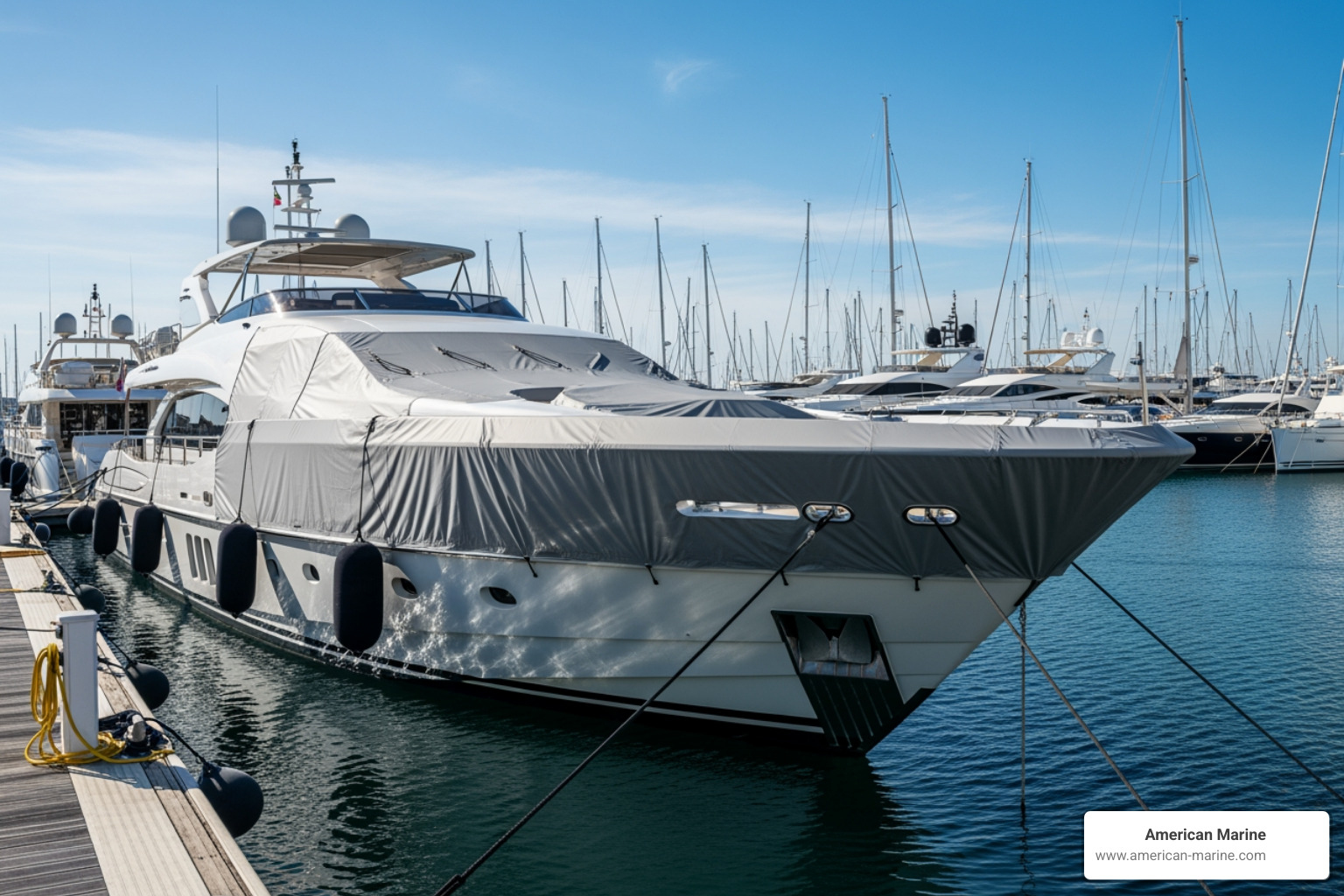
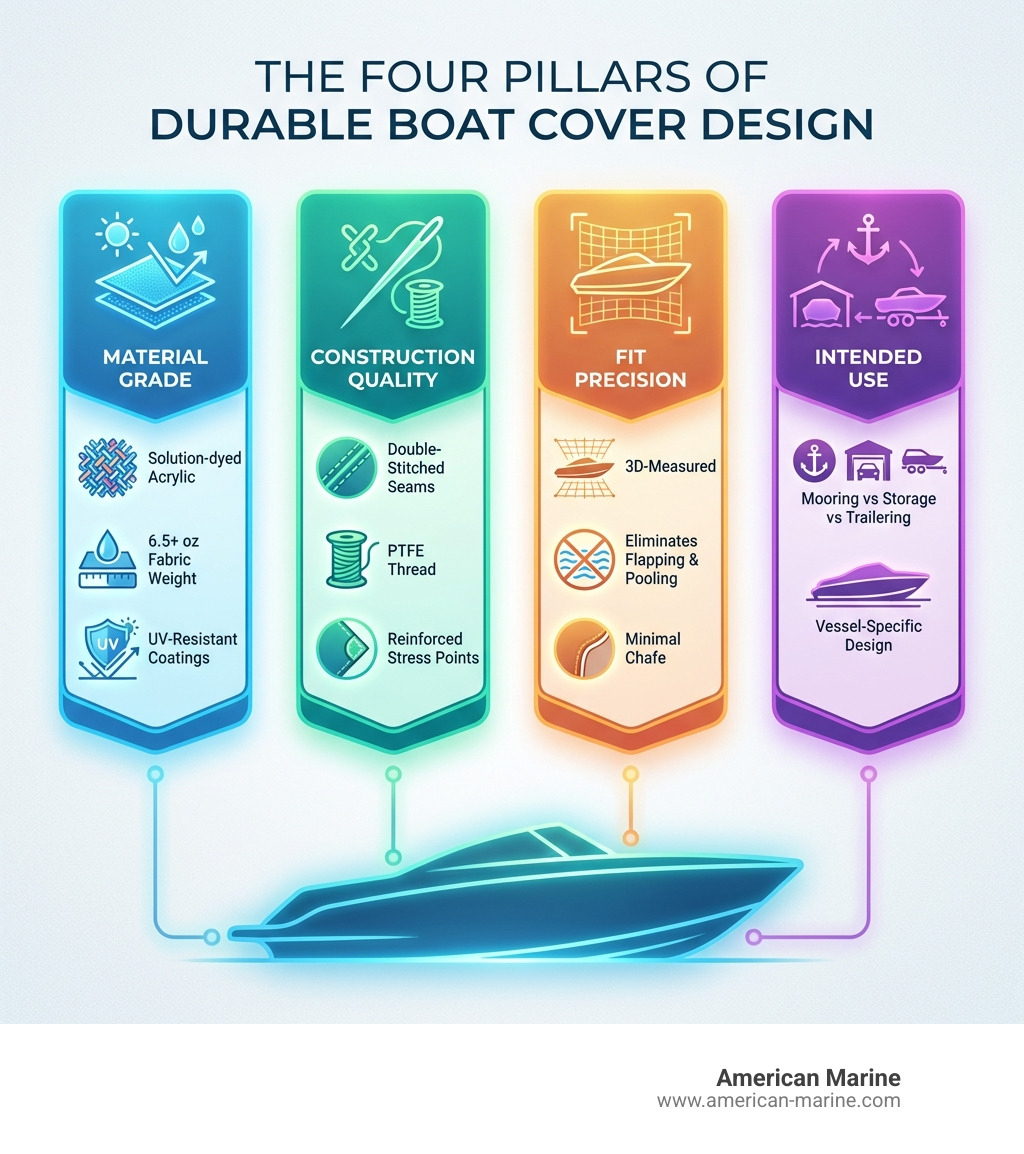
Durable yacht covers are essential for protecting large motor yachts and superyachts from UV degradation, moisture intrusion, and environmental damage during dockside periods. Here's what the professional specification involves:
Key Factors in a Durable Yacht Cover:
- Marine-Grade Fabric — Solution-dyed acrylic or coated polyester (6.5+ oz) with documented UV and mildew resistance ratings
- Construction Quality — Double-stitched seams, PTFE thread, reinforced wear points, and integrated ventilation
- Precision Fit — 3D digitally patterned to eliminate wind flap, water pooling, and stress points on large vessel geometry
- Application Match — Design matched to mooring, dockside storage, or yard storage requirements
- Expected Service Life — Correctly specified covers protect vessels for 5–10 years with consistent maintenance
Every day a vessel sits dockside in South Florida, it faces temperature swings, UV exposure, salt air, and moisture — forces that degrade gelcoat, fade brightwork, and corrode electronics. A properly engineered cover is a precision barrier that prevents these failure modes while preserving the vessel's condition and resale position. Off-the-shelf solutions rarely account for complex deck geometry, equipment interference, or the wind loads experienced by vessels over 40 feet. For builders, captains, and refit managers, understanding what separates a durable cover from a disposable one is as important as understanding the vessel itself.
I'm Jeremy Bottau, owner of American Marine, where we combine 3D digital patterning with CNC fabrication to engineer custom canvas solutions for superyachts and large vessels throughout South Florida. Over years of working with yacht builders and professional crews, I've seen how correct cover specification extends vessel life and reduces long-term maintenance costs — and how poorly designed covers create more problems than they solve.
The Role of a Durable Yacht Cover in Asset Preservation
Investing in a correctly specified, professionally fabricated durable yacht cover is a fundamental aspect of asset protection for any motor yacht or superyacht. The benefits extend beyond keeping the vessel clean — they directly affect structural integrity, operational readiness, and long-term value.
South Florida's marine environment consistently reinforces that proper covering is essential. The UV radiation here accelerates gelcoat degradation, producing chalking and fading that requires costly remediation. A correctly specified cover acts as a sacrificial barrier, absorbing UV load and protecting the underlying finishes. Brightwork — varnished wood, polished metal — is shielded from sustained exposure, preventing the cracking, discoloration, and refinishing cycles that add up quickly on large vessels.
Beyond UV, moisture intrusion is a constant threat. From daily dew to South Florida's torrential summer downpours, water finds its way into every gap — fostering mildew in upholstery and carpeting, corroding sensitive electronics and wiring. A correctly designed cover sheds water effectively, keeping the interior dry and eliminating these risks. A durable yacht cover also deters pests and limits unauthorized access — birds, insects, and small animals cause significant damage to wiring, fabrics, and stored equipment. These protective functions directly contribute to maintaining the vessel's aesthetic and functional condition, which are critical for preserving resale value. For further context on how precision canvas contributes to vessel preservation, see our article More Than a Cover: The Role of Custom Canvas in Yacht Preservation.
Why Generic Covers Fail on Large Vessels
For vessels of significant size and complexity, off-the-shelf covers are inherently inadequate. These generic solutions are not engineered for the challenges presented by large motor yachts and superyachts.
Large vessels in exposed South Florida marinas experience substantial wind load. Generic covers, loosely fitted, billow and flap continuously. This movement creates stress on fabric and stitching, producing tearing and abrasion at chafe points — where the cover rubs against hardware, railings, or deck equipment. The result is rapid deterioration and compromised protection, often within a single season.
The complex geometry of modern yachts — antennas, radar arches, flybridge structures, and custom equipment — is simply not accommodated by universal cover patterns. These elements become interference points, preventing correct seating, creating gaps for water and debris, and causing localized stress that compromises the cover's structural integrity. Poor fit also produces water pooling — any sag in the cover collects rainwater, creating heavy pockets that stretch the fabric, weaken seams, and eventually produce leaks or structural failure of the cover itself. For large vessels, anything less than a custom-engineered solution is a false economy.
Marine-Grade Materials and Construction Standards
The foundation of a correctly specified durable yacht cover is its material and fabrication quality. Compromising on either produces premature failure and potential damage to the vessel it was meant to protect.
Selecting the Right Marine Fabric by Application
Two primary materials define the professional specification for durable yacht covers in South Florida's marine environment:
Solution-dyed acrylic is the professional standard for sun-exposed applications. Color is embedded in the fiber before weaving — not applied to the surface — delivering UV resistance and colorfastness that holds through multiple South Florida seasons without retreatment. Breathability is a critical advantage: acrylic fabrics allow moisture vapor to escape from beneath the cover, preventing the mildew and condensation buildup that occurs under non-breathable alternatives. For vessels stored dockside through South Florida's humid season, breathability is not optional — it's a structural requirement for the interior surfaces the cover is protecting. High-quality solution-dyed acrylic retains structural integrity for up to 10 years with consistent maintenance.
Coated polyester offers a robust combination of strength, waterproofing, and abrasion resistance. Polyester fabrics are inherently strong. Acrylic, urethane, or vinyl coatings improve water repellency and UV performance. We typically specify fabrics in the 6.5 to 9.25 ounce per square yard range for their ruggedness and longevity in South Florida's conditions. Where absolute waterproofing is the primary requirement — full vessel covers for storm season preparation, covers on vessels stored without access for extended periods — coated polyester is the correct specification. Ventilation must be integrated into any cover using fully waterproof coated fabric to prevent condensation buildup beneath the cover. Both solution-dyed acrylic and high-quality coated polyester significantly outperform commodity alternatives — nylon, cotton-poly blends — which lack the UV resistance and structural durability required for serious vessel protection.
Construction Standards That Determine Service Life
Material specification is necessary but not sufficient — construction quality determines whether a correctly specified material performs at its rated service life or fails prematurely at seams, attachment points, and wear zones.
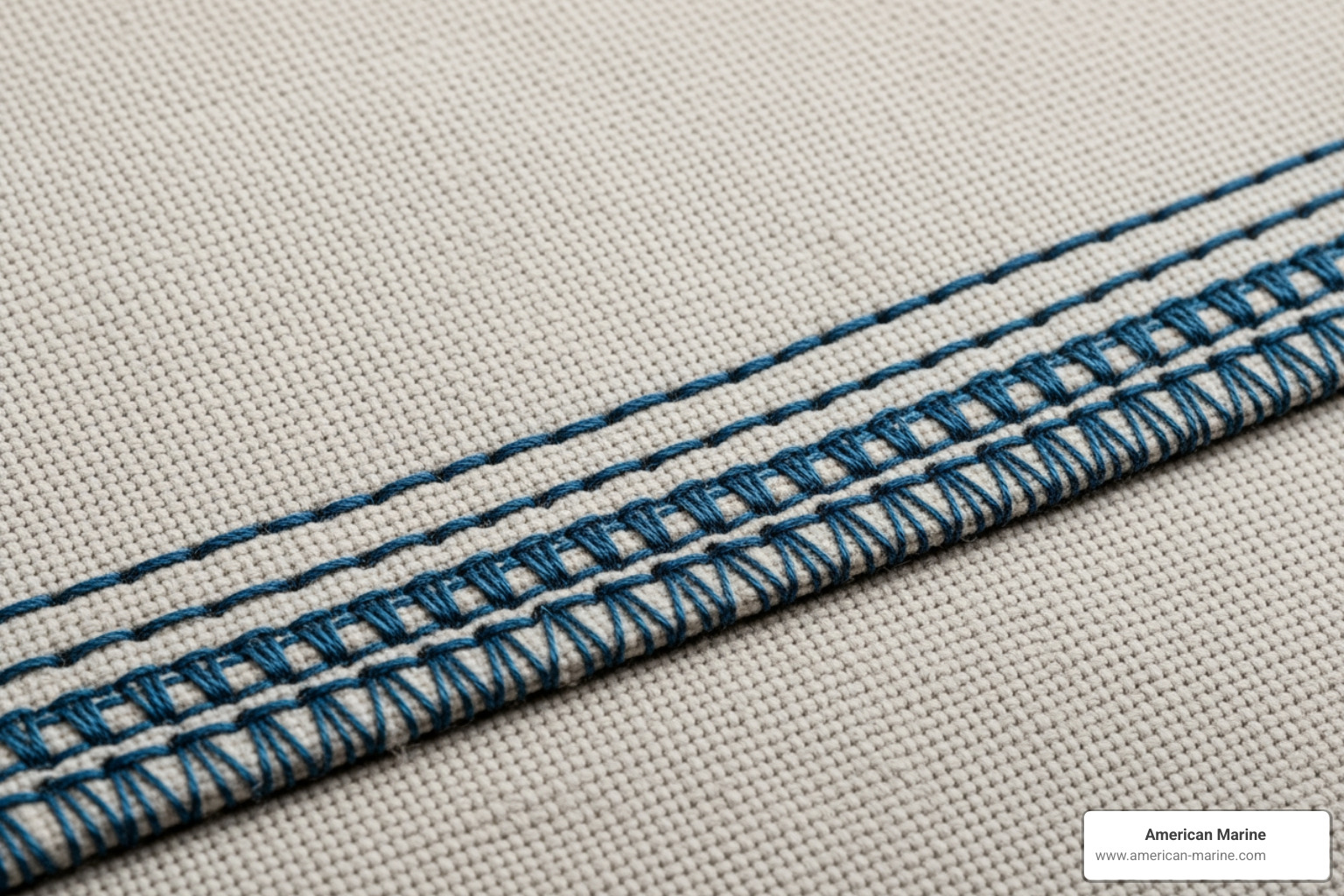
Double-stitched seams are the baseline construction standard for any professional marine cover. Two rows of stitching reinforce the seam and prevent unraveling under the sustained stress of wind load and tension. PTFE thread (Gore Tenara) is the correct thread specification — impervious to UV degradation, mold, mildew, and harsh chemicals. Standard polyester thread breaks down under South Florida's sustained UV exposure well before the fabric reaches end of life, producing seam failure on an otherwise intact cover.
Reinforced wear points are non-negotiable on large vessel covers. These are the areas where the cover contacts the vessel's hardware — windshields, cleats, antenna bases, rail stanchions. Extra layers of fabric or specialized padding at these stress points prevent the premature abrasion and tearing that generic covers experience within their first season.
The attachment system determines how securely the cover stays in place under wind load. Securely stitched webbing loops distribute tension more evenly and are significantly more robust than simple grommets that pull out under stress. Rope draw cords are the correct specification for securing the cover perimeter — elastic cords degrade rapidly under UV exposure and lose their tension within a season.
A vented design balances water resistance with the breathability required to prevent condensation buildup beneath the cover. A waterproof cover without ventilation creates a humid microclimate that accelerates mildew growth on interior surfaces and corrosion of electronics — defeating the primary purpose of the cover. Our commitment to these construction standards is part of our Premium Custom Marine Canvas Engineering process.
The Impact of Fit on Cover Durability and Performance
Fit is the single most consequential variable in a yacht cover's durability and protective performance. A correctly specified material in a poorly fitting cover fails prematurely from wind flap, water pooling, and seam stress. A correctly fitted cover in a correctly specified material delivers its full rated service life.
Custom-Fit vs. Off-the-Shelf for Large Vessel Applications
For motor yachts and superyachts, the distinction between cover categories is critical:
Universal covers are designed to fit a wide range of vessels within a general size bracket. They result in excessive flapping, poor water shedding, and numerous chafe points. For large vessels, these are unsuitable regardless of their material specification.
Semi-custom covers offer improved fit over universal options, designed for specific hull styles or vessel types. They can be adequate for smaller, less complex vessels. For large motor yachts and superyachts with complex deck layouts and custom equipment, semi-custom patterns still require fit compromises that produce the same failure modes at a slower rate.
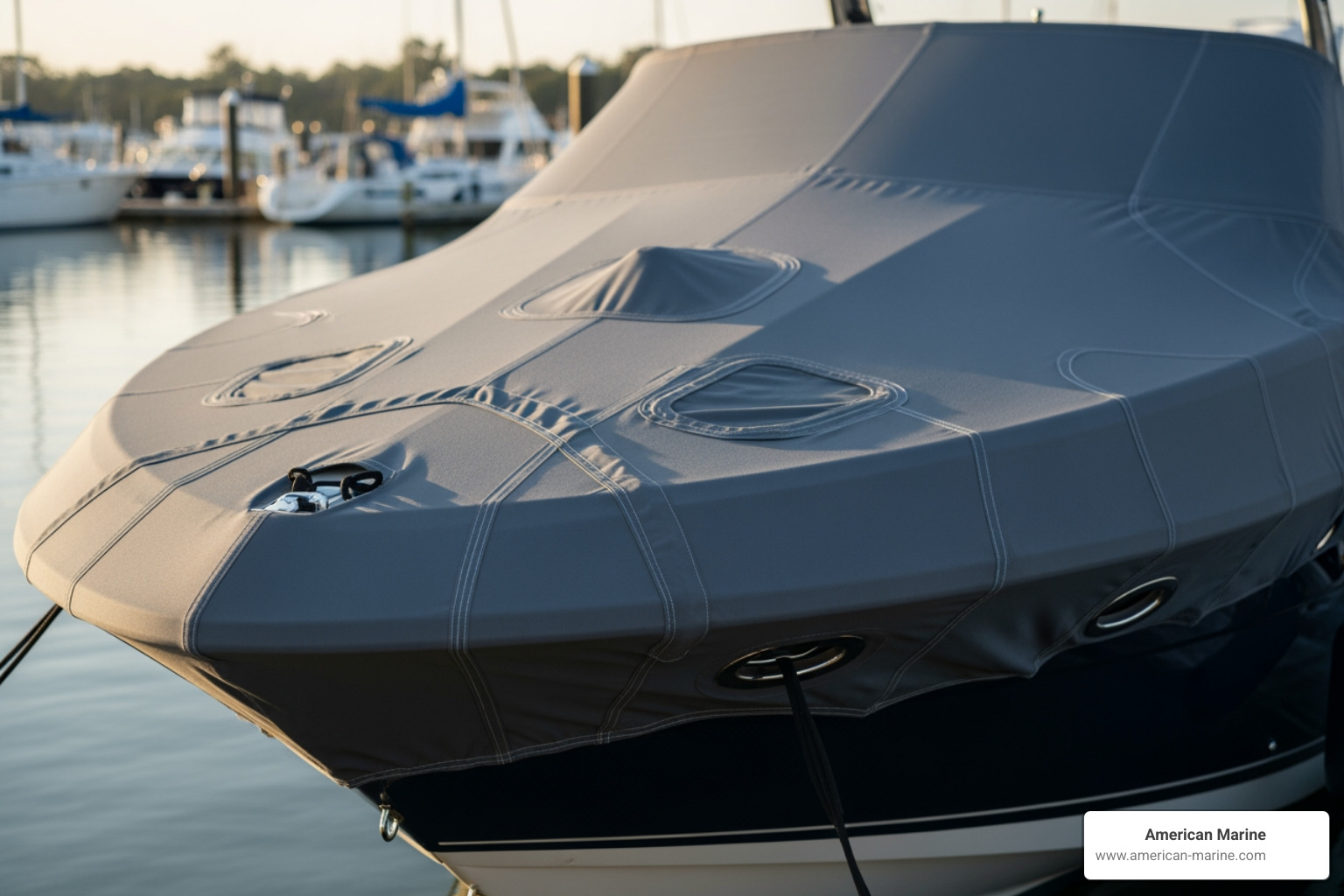
Custom-fit yacht covers are engineered specifically for the individual vessel — accounting for every curve, hardware item, and deck equipment configuration. At American Marine, we use 3D digital measurement technology to capture the exact dimensions and contours of each vessel. This data drives CNC fabrication that cuts each panel with precision that manual methods cannot replicate. The result eliminates excess material that flaps in wind, minimizes seam stress, and ensures water sheds without pooling. For further context on the economics of correct fit versus generic alternatives, see our article The Hidden Costs of Generic Covers: Why Custom-Fit Saves Money Long-Term.
Matching Cover Design to Application
The intended use of a durable yacht cover directly determines the correct design, material, and feature specification.
Mooring covers are designed for vessels kept in the water at a dock or on a lift. Their primary function is protection against UV, rain, bird droppings, and debris while allowing airflow. They require excellent water repellency, UV resistance, and often incorporate support poles or bow structures to create a peaked profile that prevents water pooling. Fit must be snug enough to resist wind load while remaining manageable for crew to install and remove.
Yard and storage covers are specified for vessels out of the water during extended lay-up periods. While UV protection remains important, breathability is the priority — preventing mildew during long-term storage when the vessel is closed up without regular ventilation. These covers typically provide more comprehensive coverage, often including hull side protection.
For specific vessel configurations, design adapts further. Motor yachts with complex flybridge structures may require sectional covers that allow crew to protect specific zones — cockpit, helm, flybridge — independently. Superyachts with unusual superstructure configurations require bespoke solutions that cannot be approximated from any standard pattern. Sectional cover systems are particularly practical on large vessels, allowing manageable handling of individual cover sections rather than a single unwieldy full-vessel piece.
Maintenance, Longevity, and Long-Term Value
The investment in a correctly specified durable yacht cover is a strategic decision that directly affects the vessel's lifecycle cost. South Florida's climate — intense UV, high humidity, and frequent storms — places extreme demands on marine canvas. Maintenance consistency is the primary variable that determines where in the 5–10 year service life range a cover system lands.
Care and Maintenance Protocol
Even the most precisely fabricated cover requires consistent maintenance to reach its maximum service life. The correct maintenance protocol:
Routine cleaning is the highest-leverage maintenance action. Wash covers with mild soap or detergent and rinse thoroughly with fresh water. Harsh chemicals, concentrated bleach, and abrasive brushes damage fabric coatings and degrade stitching. Never machine wash or tumble dry marine canvas — this damages the fabric structure and protective coatings. After cleaning, allow the cover to dry completely before folding or storing — mildew development in stored damp canvas requires remediation that exceeds the cost of prevention.
Water repellency maintenance: Over time, the water-repellent treatment on solution-dyed acrylic and coated polyester diminishes. Products like 303 Fabric Guard or Aqua-Tite restore this barrier when applied every few years — a low-cost maintenance action that meaningfully extends service life.
Regular inspection: Check for minor tears, loose stitching, and chafe points — particularly around hardware contact areas — on a consistent schedule. Addressing these early prevents progression to panel-level failure that requires more extensive repair or replacement.
Storage discipline: When the cover is removed and stored, ensure it is completely dry before folding. Store in a breathable bag in a cool, dry location away from direct sunlight. When installed on the vessel, a cover support system that maintains a peaked profile prevents water pooling and debris accumulation.
The Economics of Correct Specification
The economics of a correctly specified durable yacht cover are straightforward when evaluated over a realistic service horizon. A correctly specified and fabricated cover for a large vessel delivers 5–10 years of reliable protection, with some premium specifications carrying warranties of 7–10 years. The alternative — repeated replacement of lower-grade covers that fail within one or two seasons — eliminates any apparent initial cost advantage within the first replacement cycle.
More significantly, the cost of vessel damage from inadequate protection far exceeds the cost of correct specification from the outset. Faded gelcoat requires expensive compounding, waxing, and sometimes repainting. Water intrusion produces costly repairs to electronics, upholstery, and wood. Pest damage can create structural and wiring problems that require extensive remediation. On a large motor yacht or superyacht, these repair costs can run into tens of thousands of dollars — far beyond the investment in a correctly specified cover system. For further analysis of this cost dynamic, see our article The Hidden Costs of Generic Covers: Why Custom-Fit Saves Money Long-Term.
Frequently Asked Questions for Captains and Vessel Managers
What is the most durable material for a yacht cover in South Florida's UV environment?
For South Florida's sustained UV intensity, solution-dyed acrylic is the most durable material for sun-exposed yacht cover applications. The fiber is dyed before weaving — producing UV resistance and colorfastness that holds through multiple seasons without retreatment. The breathability of solution-dyed acrylic is equally important in South Florida's humidity: it allows moisture vapor to escape from beneath the cover, preventing condensation and mildew on the interior surfaces the cover is meant to protect. These properties contribute to a service life of up to 10 years with consistent maintenance — making it the correct specification for any large vessel cover where longevity and interior protection are the primary requirements.
How does 3D digital patterning improve cover durability?
3D digital patterning improves durability by eliminating the root causes of premature cover failure. Wind flap — the primary cause of early wear — is eliminated when the cover has no excess material to catch the wind. Water pooling is prevented when every panel is profiled to shed water without sag points. Seam stress is minimized when tension distributes evenly across a correctly fitted cover rather than concentrating at misaligned points. Chafe is reduced when the cover is designed to accommodate all deck hardware and equipment without contact. Each of these failure modes shortens cover service life significantly when present in a generic cover — and each is eliminated in a 3D digitally patterned custom cover.
How long should a correctly specified yacht cover last?
A correctly specified and fabricated durable yacht cover in premium marine-grade materials should deliver 5–10 years of service life. The key variables that determine where in this range a cover lands:
- Material specification: Solution-dyed acrylic consistently delivers the upper end of this range. Premium coated polyester performs similarly. Commodity alternatives fail significantly earlier.
- UV exposure intensity: South Florida's UV