How Custom Vessel Covers Are Specified and Fabricated for Motor Yachts in South Florida
Why Custom Vessel Covers Matter on Motor Yachts and Superyachts
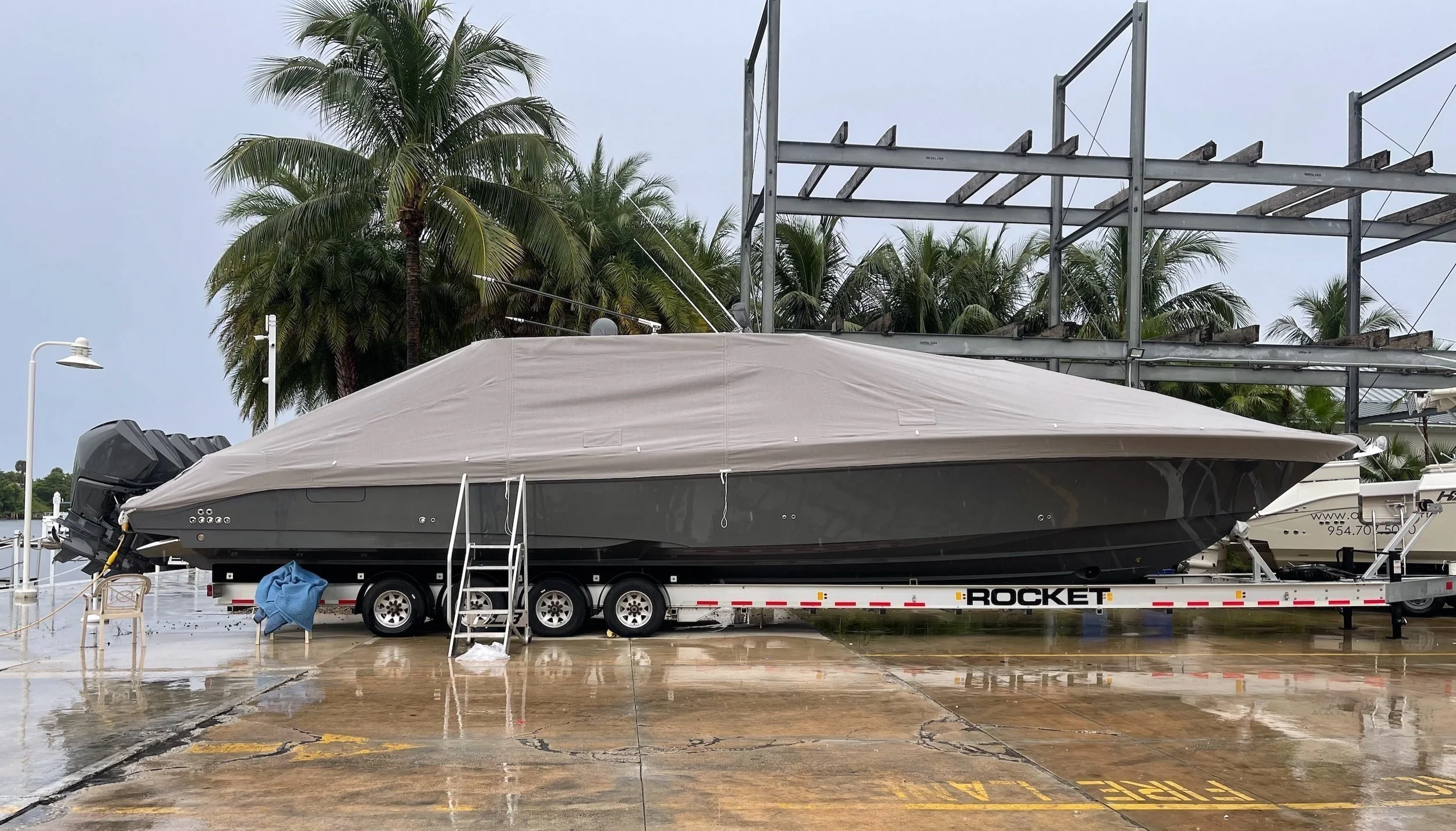
A correctly specified vessel cover on a motor yacht or superyacht in South Florida is an asset protection decision — not a commodity purchase. South Florida's UV intensity, salt air, and tropical storm season create conditions that degrade unprotected surfaces rapidly. Gelcoat fades. Electronics corrode. Upholstery deteriorates. A precision-fabricated cover built to the vessel's exact geometry is the difference between a vessel that holds its condition through an extended dockside period and one that requires costly remediation at the start of the next season.
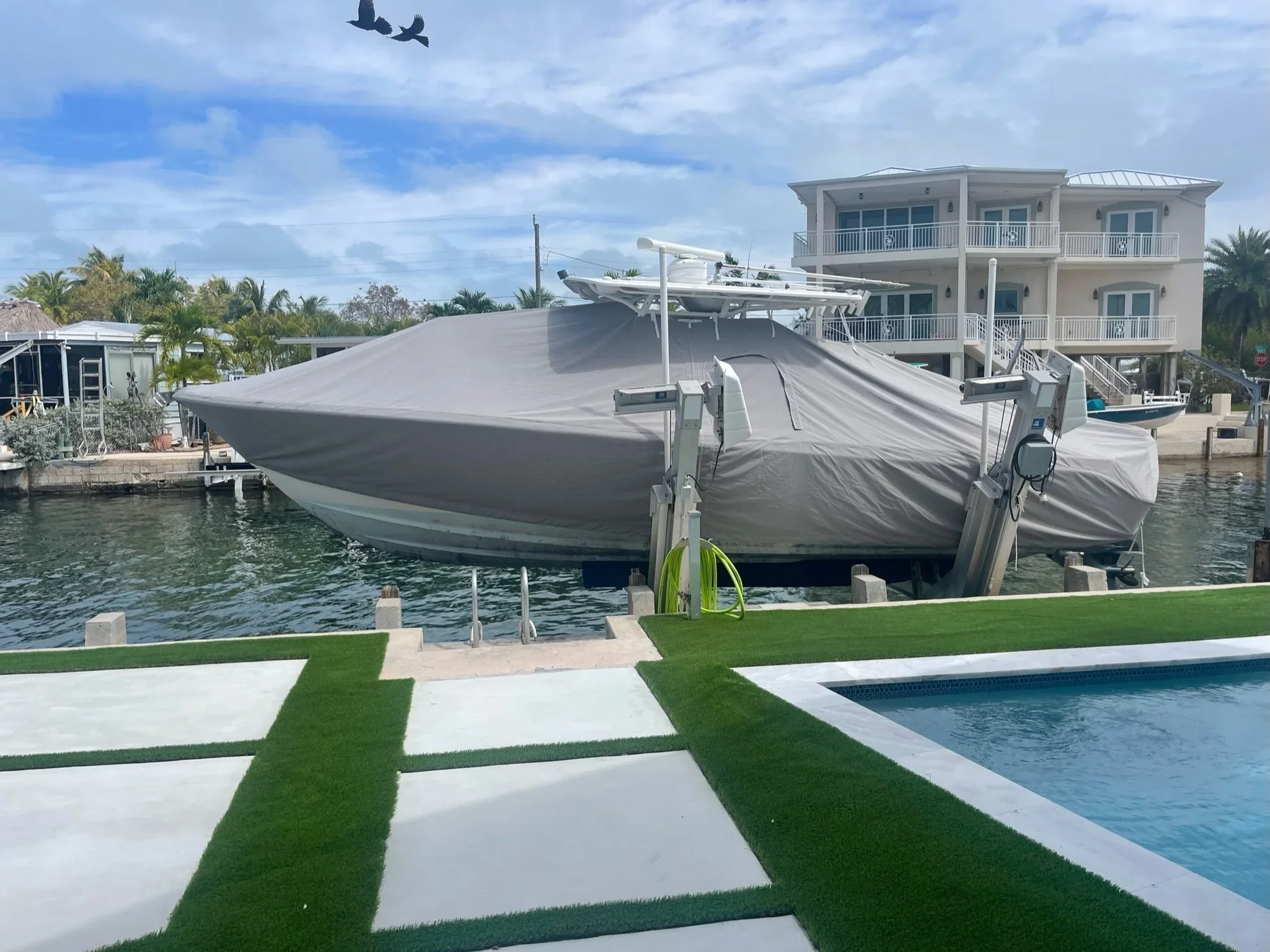
Generic and semi-custom covers cannot perform at this level on large vessels. The complex deck hardware, custom superstructures, and equipment configurations of motor yachts 40ft and above create fit requirements that standard patterns cannot accommodate. Gaps allow water ingress. Excess material flaps in wind and generates chafe points. Pooling from poor water shedding stresses seams and produces localized leaks. On a vessel of significant value, these are not minor inconveniences — they are accelerated depreciation.
I'm Jeremy Bottau, owner of American Marine. We fabricate custom vessel covers for motor yachts and superyachts throughout South Florida using 3D digital patterning and professional-grade materials. In this guide I'll cover how vessel covers are correctly specified, what the fabrication process involves, and how to maintain a cover system for maximum service life in South Florida's conditions.
The Case for Custom Fit on Large Vessels
Protection in South Florida's Marine Environment
South Florida's combination of UV intensity, salt air, humidity, and summer storm season is among the most demanding operating environments for any vessel cover system. UV degradation is the primary failure mechanism — it fades gelcoat, breaks down upholstery vinyl, and causes electronics to deteriorate faster than in any other North American coastal market. A correctly specified cover absorbs this UV load, protecting the surfaces beneath it. Moisture intrusion during South Florida's tropical rain season produces mildew in upholstery, corrosion in electronics, and rot in wooden accents — all of which are preventable with a correctly designed cover that sheds water without pooling. For context on how custom canvas contributes to vessel preservation, see our article More Than a Cover: The Role of Custom Canvas in Yacht Preservation.
Asset Value and Resale Position
A motor yacht or superyacht maintained under a correctly specified cover system consistently presents better at survey and sale than one that has been inadequately protected. Gelcoat condition, upholstery integrity, and electronics function are all directly affected by cover quality. For captains and vessel managers responsible for maintaining a vessel's condition and value, the cover system is a fundamental part of the maintenance program — not a discretionary accessory. For context on the cost economics of correct specification vs. generic alternatives, see our article The Hidden Costs of Generic Covers: Why Custom-Fit Saves Money Long-Term.
Why Generic Covers Fail on Large Vessels
The failure modes of generic vessel covers on large vessels are consistent and predictable. Wind flap from excess material generates sustained mechanical stress on seams and attachment points — producing failures within a single South Florida storm season. Water pooling from inadequate profiling creates load concentrations that stretch the fabric and breach seams. Chafe against deck hardware — antennas, radar arches, winches, cleats — produces localized wear that accelerates into tearing. These are not edge cases — they are the expected outcome when a cover designed for a generic vessel profile is applied to a vessel with specific deck equipment and superstructure configurations.
How Custom Vessel Covers Are Specified
Step 1: Application and Use Assessment
Correct cover specification begins with understanding how and where the vessel will be covered. The primary use cases for large vessel covers:
- Mooring covers: Vessels kept in the water at a dock or on a lift. Primary requirements are UV resistance, water shedding, and breathability to prevent condensation beneath the cover during South Florida's humid season.
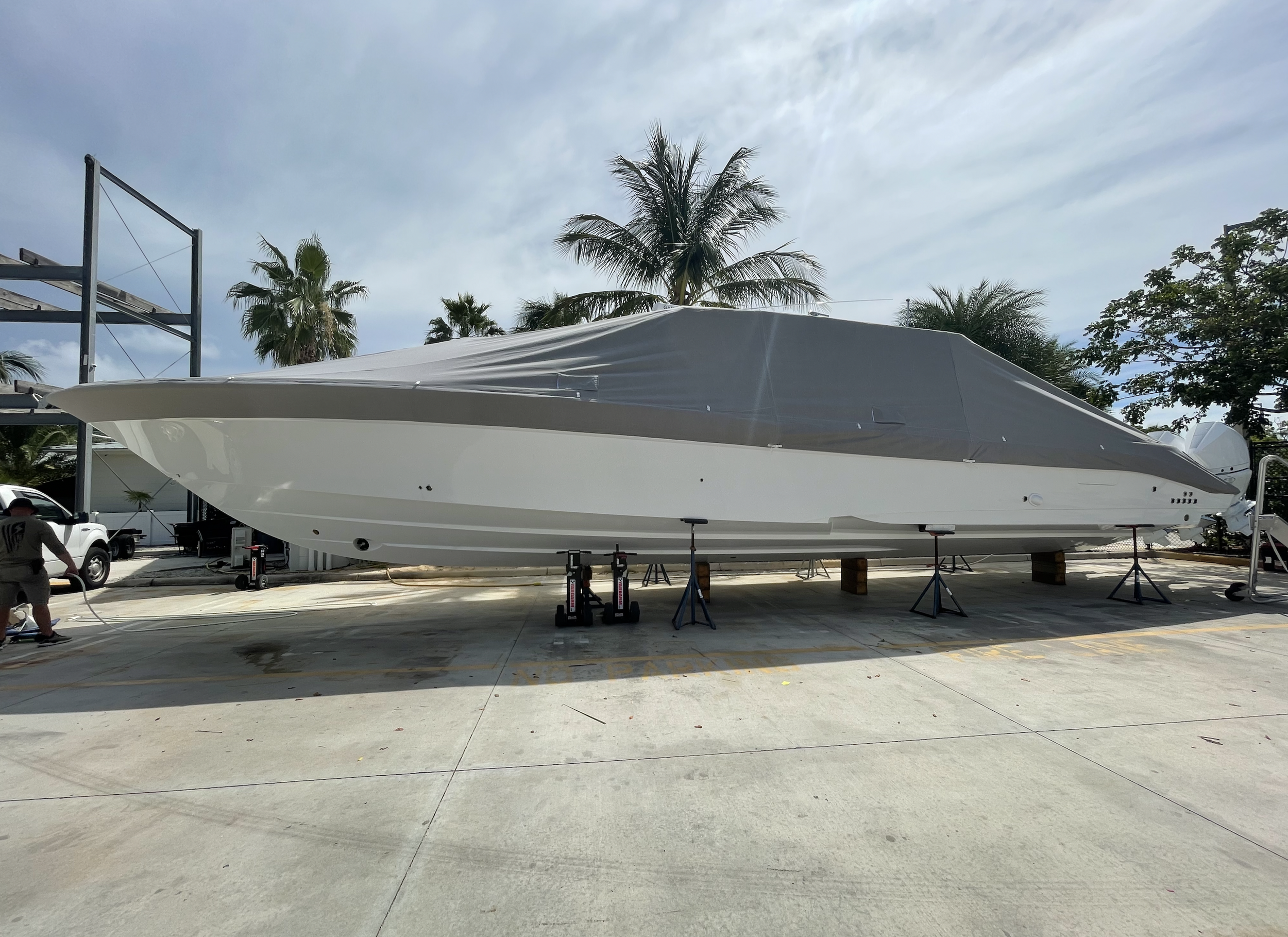
- Yard and storage covers: Vessels out of the water during extended lay-up or refit. Breathability is the priority — preventing mildew during long-term storage when the vessel is closed without regular ventilation.
- Hurricane preparation covers: Full vessel covers for storm season lay-up. Complete waterproofing and structural integrity through sustained wind and rain load are the primary requirements.
- Sectional covers: Targeted coverage of specific zones — cockpit, flybridge, helm — rather than the full vessel. Practical on large vessels where crew can manage sectional covers more effectively than a single full-vessel piece.
Step 2: Material Specification
Material specification is where most cover projects succeed or fail. The correct material for each application zone is determined by the zone's primary exposure conditions and performance requirements.
| Material | UV Resistance | Waterproofing | Breathability | Best Application |
|---|---|---|---|---|
| Solution-dyed acrylic (Sunbrella) | Excellent | Water resistant | Excellent | Mooring covers, sun-exposed applications |
| Vinyl-coated polyester (Stamoid) | Good | Fully waterproof | None | Full vessel covers, storm preparation |
| Coated polyester | Good | Good | Moderate | High-abrasion applications, yard storage |
For a detailed comparison of the primary material options, see our guide to Marine Canvas Materials for Yachts. For a direct comparison of the two most common professional specifications, see our article Sunbrella vs Stamoid: Which Marine Fabric Reigns Supreme for Superyacht Covers?
Step 3: 3D Digital Patterning
Accurate measurement is the foundation of a custom cover that fits correctly from the first installation. On motor yachts and superyachts, we use 3D digital patterning to capture the vessel's exact geometry — including complex curves, stanchion positions, hardware attachment points, antenna bases, and radar arch configurations that manual measurement cannot consistently replicate. Digital templates are used to drive CNC precision cutting — eliminating the fit errors that manual cutting produces on complex vessel geometry. Templates are archived in cloud storage, enabling identical replacement covers to be fabricated from any location without remeasuring the vessel.
Step 4: Design Features for Large Vessel Applications
Cover design for motor yachts and superyachts involves considerations that don't apply to smaller vessels:
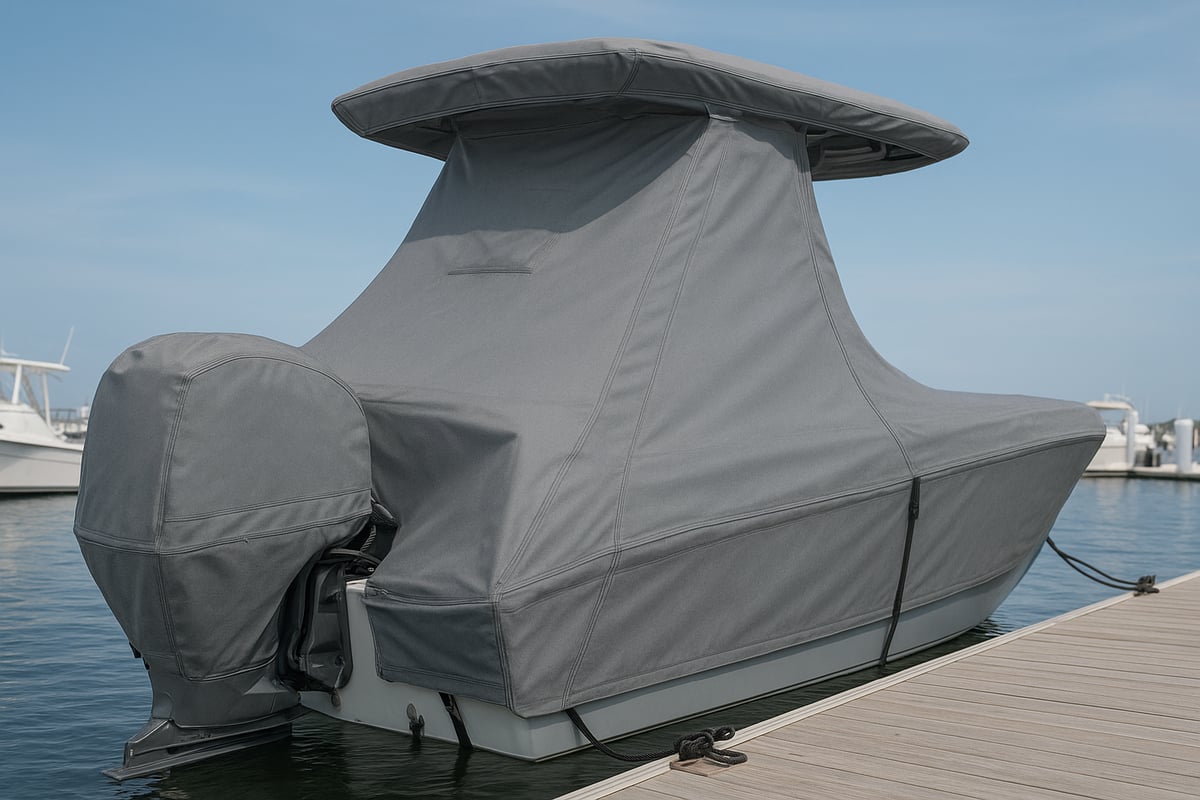
- Support structure: Large covers require internal support systems — poles, frames, or integrated supports — to maintain a peaked profile that prevents water pooling across wide deck areas.
- Ventilation: Covers on vessels with significant enclosed volume beneath require integrated ventilation to prevent the humid microclimate that produces mildew on interior surfaces. This is particularly critical for fully waterproof materials like Stamoid that have zero breathability.
- Attachment systems: Heavy-duty webbing loops and marine-grade rope draw cords distribute tension evenly across the cover's perimeter — preventing the point-load failures that elastic cords and grommets produce under South Florida wind conditions.
- Reinforced wear points: Every location where the cover contacts deck hardware — cleats, stanchion bases, antenna mounts — requires additional fabric reinforcement or protective padding to prevent the chafe and abrasion that produce premature failure.
- Sectional design: On vessels above 60ft, full-vessel covers in a single piece become impractical for crew to handle. Sectional designs — cockpit, flybridge, forward deck — allow manageable installation and removal by normal crew complement.
Step 5: Construction Standards
Construction quality determines whether a correctly specified material performs at its rated service life or fails prematurely at seams, attachment points, and wear zones.
- PTFE thread (GORE TENARA): Impervious to UV degradation, saltwater, and chemical cleaners — ensures seams outlast the fabric itself. Standard polyester thread degrades under South Florida's sustained UV exposure well before the fabric reaches end of life.
- Double-stitched seams: Two rows of stitching reinforce the seam and prevent unraveling under sustained wind load and tension cycles.
- Marine-grade hardware: All fasteners, snaps, and attachment hardware specified in 316 stainless steel or marine-grade polymer — salt crystallization seizes non-marine hardware and produces corrosion staining on the cover and deck.
The Professional Fabrication Process
On-Vessel Consultation and Assessment
The process begins with an on-vessel assessment at your slip or yard — not a showroom consultation. We review the vessel's specific protection requirements, assess existing cover condition if applicable, and document the hardware and superstructure conditions relevant to each cover zone. This assessment drives the material specification and design decisions — it is not a sales visit.
Digital Patterning and CAD Design
3D digital measurement of the vessel produces templates that capture exact geometry across all surfaces. These templates are imported into CAD software where the cover design is developed — profiling for water shedding, positioning of ventilation, placement of attachment points, and reinforcement of wear zones. Digital renderings allow captains and vessel managers to review design decisions before fabrication begins — confirming that the cover will function as intended before any material is cut.
Precision Fabrication
Digital patterns drive CNC cutting equipment — each panel is cut with precision that manual cutting cannot replicate. Panels are assembled by experienced marine canvas fabricators, with seams double-stitched in PTFE thread and all hardware specified in marine-grade materials throughout. Quality checks at multiple fabrication stages ensure every component meets specification before leaving the facility.
Dockside Installation and Verification
Installation is performed at your vessel — at your slip, marina, or yard. Each section is fitted on-site with final adjustments made to ensure fit, water shedding, ventilation function, and attachment security meet design intent. Digital templates are archived in cloud storage, enabling identical replacement covers to be fabricated without remeasuring the vessel — an operational advantage for vessels that require replacement components during an active season or from a remote location.
Maintenance and Service Life
Correctly specified and professionally fabricated vessel covers deliver 7–15 years of service life in South Florida conditions — depending on material specification and maintenance consistency.
Routine Cleaning Protocol
- Rinse regularly with fresh water to remove salt accumulation before it crystallizes and abrades the fabric surface
- Use mild soap and a soft brush for deeper cleaning — avoid harsh detergents, concentrated bleach, and pressure washers that damage fabric coatings
- Allow the cover to dry completely before folding or storing — mildew develops rapidly in stored damp canvas
- Reapply water-repellent treatment periodically — restores water shedding performance as the fabric ages
For detailed canvas care guidance, see our article Canvas Care Tips Every Yacht Owner Should Know.
Inspection and Early Repair
Regular inspection of seams, attachment points, and wear zones at hardware contact areas — on a monthly cadence for vessels in active South Florida use — identifies minor issues before they progress to panel-level failure. Minor seam repairs, chafe reinforcement, and hardware replacement addressed early prevent the progression to full cover replacement. When widespread UV degradation, fabric stiffening, or extensive seam failure are present, replacement is the correct decision — continued repair investment on end-of-life material produces diminishing returns.
Storage Protocol
When the cover is removed and stored, ensure it is completely dry before folding. Store in a breathable bag in a cool, dry location away from direct sunlight. When installed on the vessel, the cover's support structure should maintain a peaked profile — preventing water pooling and debris accumulation during extended dockside periods.
American Marine fabricates custom vessel covers for motor yachts and superyachts across Fort Lauderdale, West Palm Beach, and Miami. If you're planning a cover project for a vessel 40ft or above, schedule a dockside assessment and we'll evaluate your vessel's specific requirements and recommend the correct specification for each application zone.