Yacht Flooring for Motor Yachts and Superyachts: Materials, Installation, and Maintenance
Flooring specification on a motor yacht or superyacht is a technical decision that affects vessel performance, maintenance burden, and long-term value. The wrong material for an application zone fails prematurely under South Florida's UV intensity and saltwater exposure. The right specification — matched to the specific area, usage pattern, and operational requirements of the vessel — delivers reliable performance for 10 to 20 years with consistent maintenance. This guide covers the primary flooring options for large vessels, selection criteria by application zone, installation considerations, and a maintenance framework for South Florida conditions.
Yacht Flooring Trends for 2025
The professional yacht flooring market continues to evolve with improvements in material science, sustainability credentials, and fabrication technology. Understanding current developments helps captains and vessel managers make informed specification decisions.
Sustainable and Eco-Friendly Materials
Sustainability is an increasingly relevant specification criterion in yacht flooring. Recycled teak, responsibly sourced bamboo, and cork are gaining traction alongside low-VOC adhesives and finishes. FSC and GreenGuard certifications provide a documented basis for evaluating environmental credentials alongside performance metrics. For an overview of marine-grade flooring options available for South Florida vessels, visit our Marine Carpet and Flooring page.
High-Performance Synthetics
High-performance synthetics — woven vinyl, EVA foam, PVC planks — continue to expand their share of the professional yacht flooring market. These materials deliver stain resistance, slip resistance, and UV stability that make them practical specifications for both interior salons and exterior decks on motor yachts and superyachts. Reduced maintenance requirements compared to natural teak are a meaningful operational advantage on large vessels where crew time is a managed resource.
Customization on Large Vessels
Custom patterns, vessel logos, and color-matched flooring are standard requests on motor yachts and superyachts where the interior reflects the vessel's identity. Digital printing technology enables bespoke designs — including 3D effects and branded motifs — that coordinate with the overall interior design scheme. On superyachts, flooring is specified as part of a broader interior design system rather than as a standalone selection.
Smart System Integration
Embedded LED systems, moisture sensors, and climate-integrated flooring options are entering the superyacht market. These features connect with onboard monitoring and climate control systems, providing operational data and supporting proactive maintenance. As smart vessel systems become more prevalent, flooring that integrates with these systems will be an increasingly common specification at the superyacht level.
Minimalist and Seamless Design
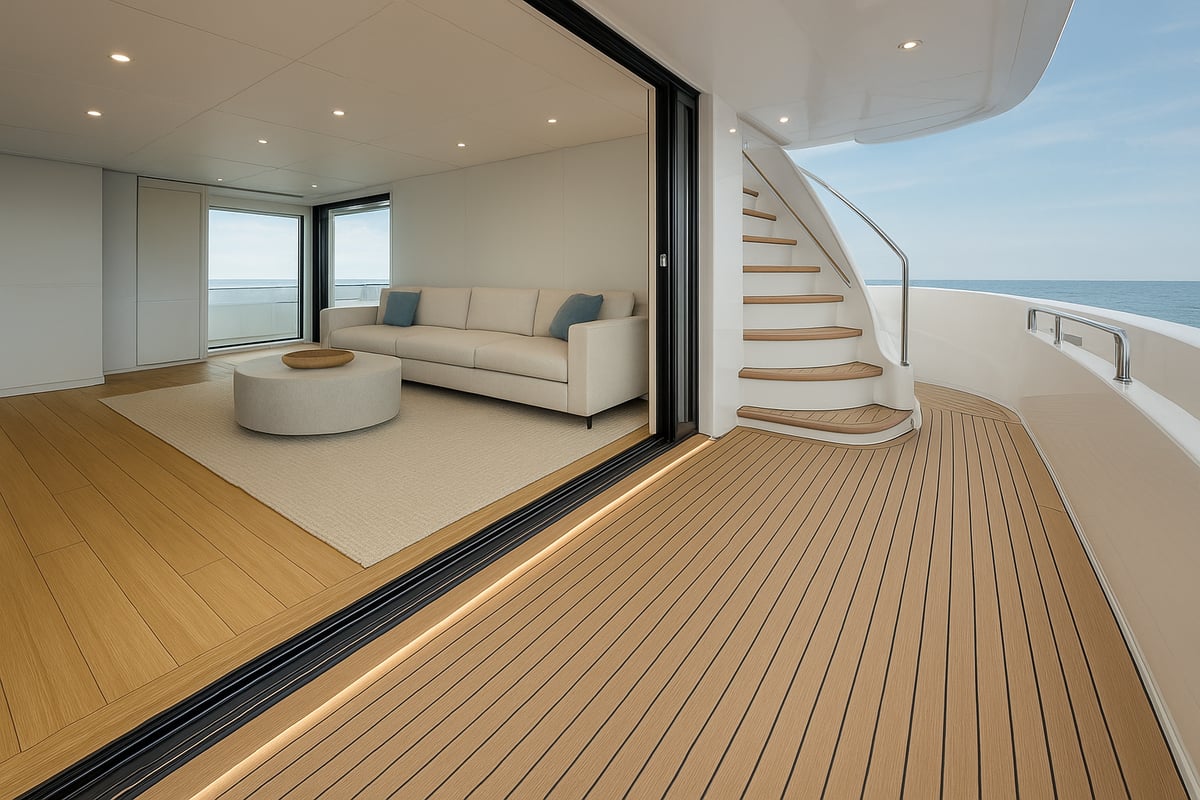
Wide planks, seamless transitions between interior and exterior zones, and neutral color palettes that read cleanly under South Florida's light conditions remain the dominant aesthetic direction in professional yacht flooring specification. Matte finishes and natural wood grains that age gracefully with minimal visible wear are preferred over high-gloss surfaces that show scratching and require more intensive maintenance.
Hybrid Flooring Systems
Hybrid solutions — teak overlays on composite bases being the most common — deliver the traditional aesthetic of natural teak with reduced weight, lower maintenance, and improved structural performance. These systems are increasingly specified on vessels where fuel efficiency and weight distribution are design constraints, and where the visual outcome of natural teak is required without the maintenance commitment.
Key Considerations When Specifying Yacht Flooring
Flooring specification for a motor yacht or superyacht requires evaluating each application zone against a consistent set of performance criteria. Decisions made based on appearance alone without accounting for durability, weight, and maintenance requirements produce premature failure and additional cost.
Durability and Service Life
Flooring on a motor yacht or superyacht must withstand sustained UV exposure, saltwater contact, and high foot traffic — often simultaneously. Service life by material in South Florida conditions:
| Material | Expected Service Life |
|---|---|
| Natural Teak | 20+ years with consistent maintenance |
| Synthetic Teak | 10–15 years |
| Woven Vinyl | 5–10 years |
| EVA Foam | 5–8 years |
Material selection should account for the full service life cycle — not just the initial cost. A correctly specified natural teak installation on an exterior deck delivers lower total cost over 20 years than three replacement cycles of a lower-cost synthetic.
Safety and Non-Slip Performance
Non-slip surface performance is a non-negotiable specification for any exterior deck area, boarding platform, or wet zone on a vessel in active use. Textured finishes, specialized surface coatings, and inherently non-slip materials like EVA foam are the correct specifications for these zones. Interior areas where crew and guests spend extended time benefit from EVA foam's cushioning properties — reducing fatigue on long passages and providing a safer surface in sea conditions.
Weight and Vessel Performance
Flooring weight directly affects fuel efficiency and vessel handling — a meaningful consideration on large motor yachts where flooring covers significant surface area across multiple decks. Lightweight synthetics and modular systems reduce overall vessel weight compared to natural teak, with a measurable impact on operational costs over a full season. On superyachts, flooring weight is typically specified in coordination with the naval architect as part of the overall weight budget.
Maintenance Requirements by Application Zone
Maintenance commitment varies significantly by material — and by where on the vessel the material is installed. Natural teak requires regular cleaning and periodic sealing. Woven vinyl and synthetic teak are lower maintenance — suitable for vessels where crew maintenance time is a managed constraint. A realistic assessment of available maintenance resources should be part of every flooring specification decision.
Aesthetic Coordination with Interior Design
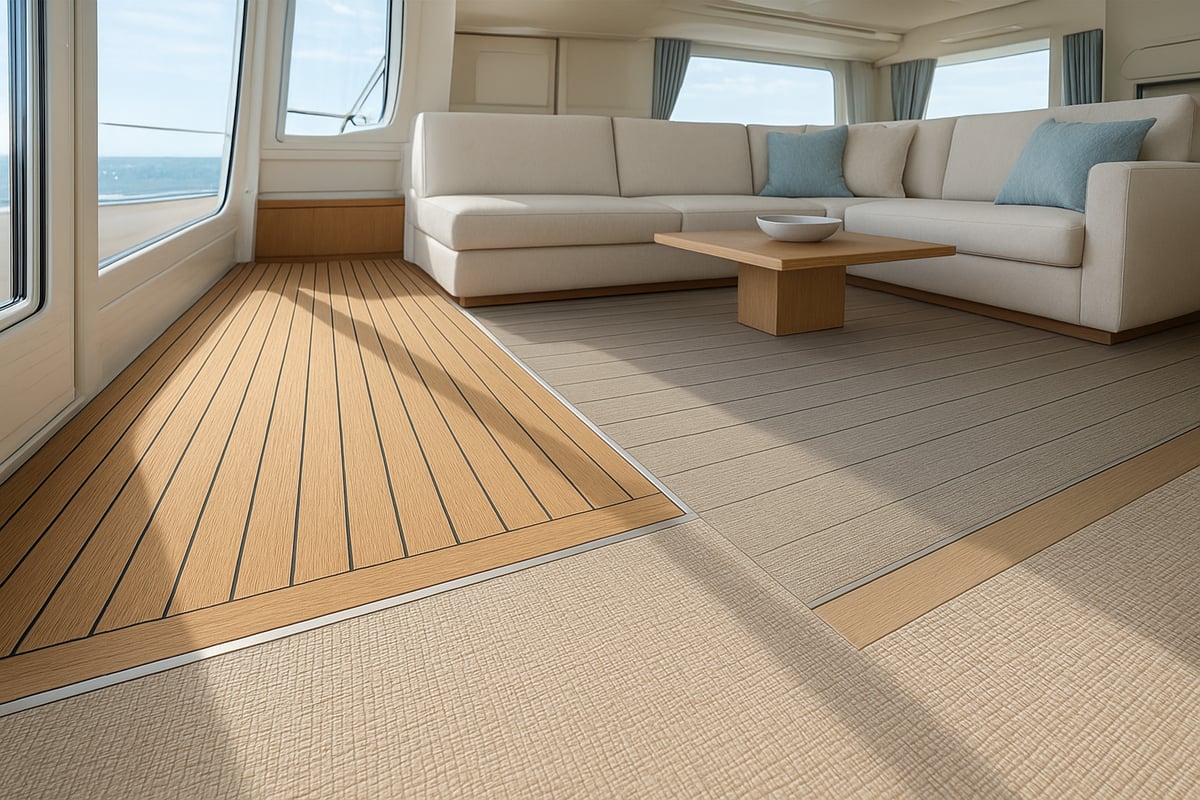
On motor yachts and superyachts, flooring is part of a broader interior design system. The specification needs to coordinate with joinery, upholstery, window treatments, and hardware finishes. Custom flooring options — matched to cabinetry, color-coordinated with upholstery, or incorporating vessel branding elements — are standard on vessels where the interior represents a significant design investment. Involving the flooring fabricator early in the refit planning process prevents costly specification changes mid-project.
Environmental Credentials
FSC-certified teak, recycled content synthetics, and low-VOC adhesive systems are increasingly specified on vessels where environmental credentials are a priority for the owner. These specifications are available at professional quality levels — environmental commitment does not require compromising on performance or appearance.
Total Lifecycle Cost
- Natural teak: Highest upfront cost, longest service life — lowest total cost over 20 years on exterior decks
- Synthetic teak: Moderate cost, good durability — correct specification for many interior and exterior applications
- Woven vinyl and EVA foam: Lower upfront cost, shorter service life — appropriate for application zones where replacement is planned
For context on how flooring specification connects to broader vessel value, see our article Why Yacht Builders and Designers Partner with American Marine.
Selecting and Installing Yacht Flooring: The Professional Process
A professional flooring installation on a motor yacht or superyacht follows a structured process that eliminates the guesswork that produces misaligned planks, adhesive failure, and premature wear.
Step 1: Application Zone Assessment
Begin by evaluating how each area of the vessel is used. High-traffic zones — salons, companionways, exterior decks — require durable flooring that withstands constant foot traffic and mechanical wear. Cabins and lounge areas allow for higher-comfort specifications where aesthetics and tactile quality are priorities. Exterior decks and swim platforms require weatherproof materials with proven UV and saltwater resistance. Wet zones require non-slip surfaces with drainage-compatible installation systems.
Step 2: Material Research and Specification
Primary material options for motor yachts and superyachts:
- Natural teak: Classic appearance, 20+ year service life with maintenance — correct for exterior decks where longevity justifies the upfront investment
- Synthetic teak: Similar aesthetics at reduced weight and cost — appropriate for applications where the teak appearance is required without the maintenance commitment
- Woven vinyl: Stain resistant, easy to clean, UV stable — correct for salons and interior areas with high traffic
- EVA foam: Superior cushioning, non-slip — correct for swim platforms, boarding areas, and exterior zones where crew and guest comfort and safety are priorities
- Cork: Sustainable, naturally antimicrobial — appropriate for enclosed interior spaces where sustainability credentials and acoustic performance are valued
Step 3: Professional Consultation and Measurement
Professional measurement and consultation is the correct next step once materials are shortlisted. A marine flooring specialist assesses the vessel's specific geometry, identifies subfloor conditions that need remediation before installation, and provides recommendations tailored to the vessel's layout and operational requirements. 3D digital measurement captures exact geometry across hatches, curved surfaces, and hardware penetrations — eliminating the fit errors that manual measurement produces on complex vessel geometries. For professional consultation on yacht flooring for your vessel, contact American Marine to schedule a vessel assessment.
Step 4: Budget Planning and Sample Review
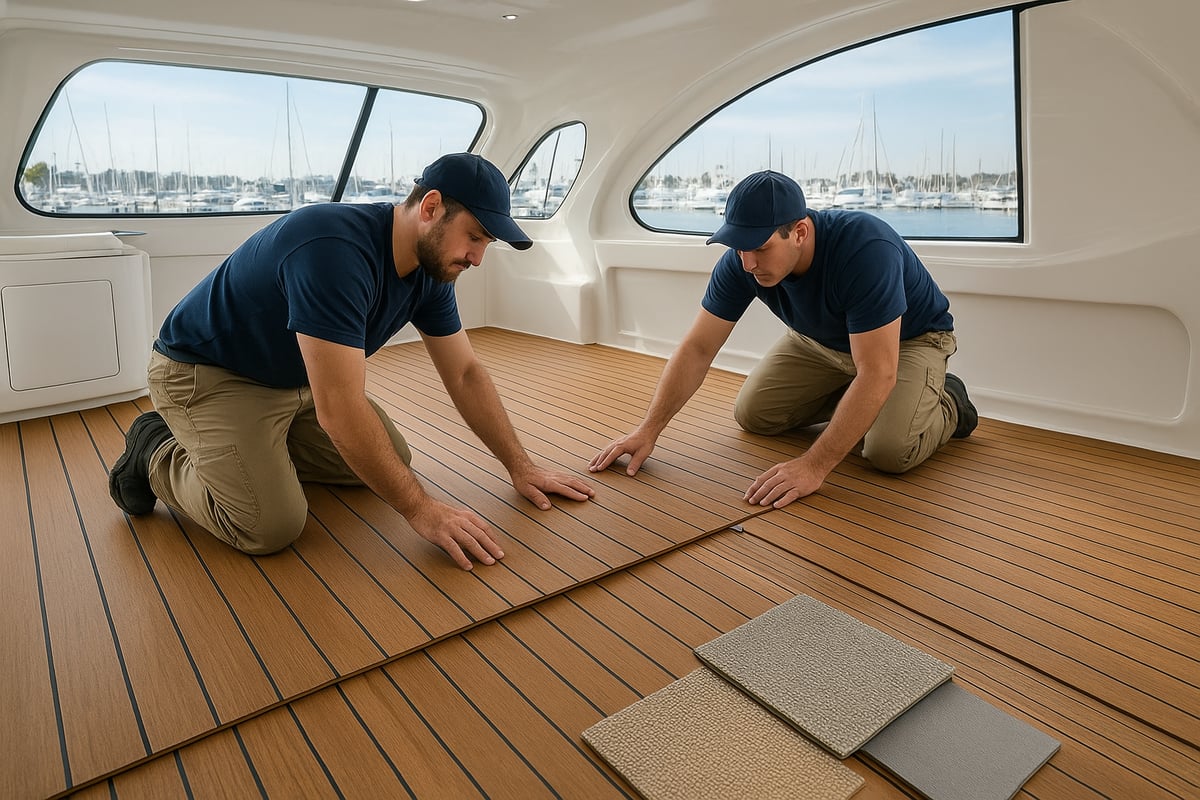
Once the professional assessment is complete, finalize the budget accounting for materials, installation labor, and subfloor preparation. Request physical samples for evaluation in onboard conditions — UV exposure, moisture contact, and foot traffic testing provide more useful data than indoor showroom evaluation. Sample review before committing to a specification prevents costly post-installation regrets.
Step 5: Professional Installation
Professional installation by certified marine flooring specialists is the correct approach for any vessel where the quality of the finished result matters. Installation typically requires one to three days per area depending on surface complexity and material. Professional installation protects the product warranty and ensures the subfloor preparation, adhesive specification, and sealing are executed correctly for South Florida's moisture and UV conditions.
Step 6: Post-Installation Inspection
A thorough post-installation inspection verifies seamless joints, secure adhesion, and consistent finish quality across all installed surfaces. Issues identified and corrected immediately after installation are significantly less costly to address than defects discovered after the vessel has returned to service. A successful inspection provides confidence that the installation will perform at specification for its intended service life.
Maintenance for Yacht Flooring in South Florida
South Florida's saltwater environment and UV intensity accelerate degradation of any flooring material that isn't actively maintained. A consistent maintenance protocol is the primary determinant of whether a flooring system performs at its rated service life.
Routine Cleaning Protocol
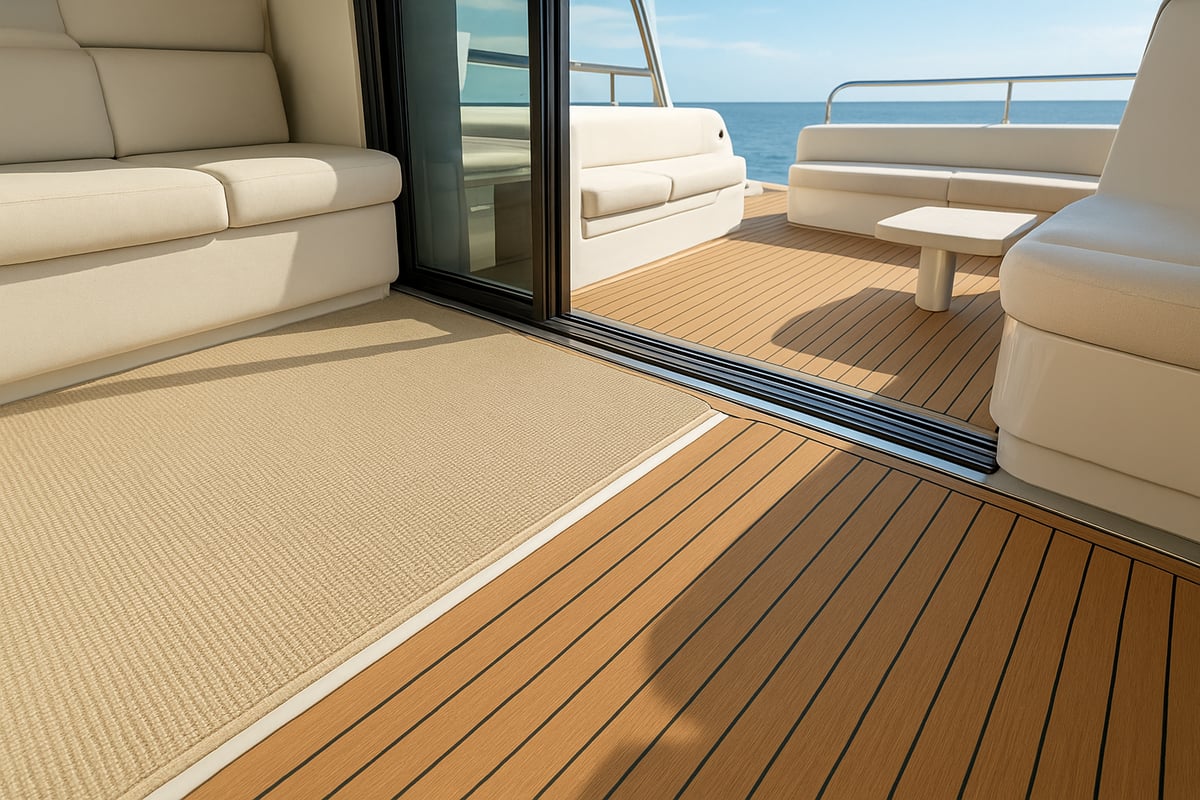
Material-appropriate cleaning products are essential — pH-neutral soaps for natural teak, gentle detergents for synthetics, and specialized routines for EVA foam. A consistent schedule — daily sweeping to remove grit and salt crystal accumulation, weekly washing to prevent salt buildup, and seasonal deep cleaning — is the correct maintenance framework for vessels in continuous South Florida use. Soft brushes and microfiber mops prevent surface scratching. Thorough rinsing after each wash removes salt residue that accelerates surface degradation if left in place.
UV and Moisture Protection
UV protectants and sealers appropriate to the flooring material should be applied on a schedule consistent with the manufacturer's specification. This is particularly critical for natural teak, where UV degradation without regular sealing accelerates surface graying and structural breakdown. Waterproof mats at entryways and prompt drying of wet areas reduce moisture ingress risk. Regular inspection of seams and joints identifies water intrusion before it reaches the subfloor and causes structural damage.
Stain and Damage Response
Immediate blotting of liquid spills prevents penetration into surface texture. Manufacturer-recommended cleaning products are the correct specification for stain treatment — improvised cleaning solutions frequently damage protective coatings. Light surface scratches can often be addressed with gentle buffing. Deep gouges and tears should be assessed for patch repair or section replacement — deferred repairs allow moisture ingress that extends damage to adjacent areas.
Seasonal and Long-Term Maintenance
At the beginning and end of each season, conduct a comprehensive inspection: adhesive integrity, sealer condition, signs of wear, discoloration, or moisture damage. Address identified issues before storage — deferred maintenance compounds over the lay-up period and produces more significant problems at the start of the following season. A documented maintenance log supports warranty claims and provides useful data for planning future refits.
Professional Maintenance Services
Annual or biannual professional inspections — deep cleaning, adhesive assessment, sealer reapplication, and expert evaluation of wear patterns — extend flooring service life meaningfully beyond what routine crew maintenance alone delivers. Professional assessment also identifies specification issues early, allowing planned remediation before they develop into structural problems.
Off-Season Storage
Proper ventilation during lay-up periods prevents moisture buildup that causes mold and material warping. Protective runners in high-traffic areas prevent dust and scuff accumulation. Elevating cushions and removable mats to allow airflow underneath protects both the flooring and the underlays from trapped moisture during extended storage periods.
Common Yacht Flooring Specification and Installation Errors
Inadequate Subfloor Preparation
Subfloor preparation is the foundation of a flooring installation that performs at specification. Skipping moisture testing, failing to address uneven surfaces, or omitting vapor barriers produces bubbling, warping, and adhesive failure — often within the first season. Moisture barriers and leveling compounds are not optional steps — they are the prerequisite for any flooring installation in South Florida's high-humidity marine environment. Product warranties are voided by improper subfloor preparation.
Material Misspecification by Application Zone
Specifying teak for a high-moisture interior zone, or carpet for a swim platform, produces material failure regardless of installation quality. Each application zone on a motor yacht or superyacht has specific performance requirements — UV resistance for sun-exposed areas, non-slip performance for wet decks, mold resistance for enclosed spaces. Matching material to application is the foundation of a correct specification. For current industry context on material performance standards, the Marine Interiors Industry Trends 2025–2029 provides useful reference data.
DIY Installation on Complex Vessel Geometry
DIY flooring installation on motor yachts and superyachts produces misaligned planks, insufficient adhesive coverage, and inadequate sealing — particularly in the curved surfaces, hatch surrounds, and hardware penetrations that define large vessel geometry. These errors compromise both appearance and safety, and typically require professional correction within two years. Professional installation by certified marine flooring specialists is the correct approach for any vessel where the quality and longevity of the finished result matter.
Ignoring Manufacturer Specifications
Installation temperature and humidity ranges, recommended adhesive systems, cleaning product specifications, and maintenance schedules are not suggestions — they are the conditions under which the product warranty applies. Deviating from manufacturer specifications voids warranty coverage and accelerates material degradation. Following these specifications consistently is the lowest-cost approach to maximizing flooring service life.
Underestimating Ongoing Maintenance Requirements
Every flooring material requires active maintenance to perform at its rated service life. Natural teak requires regular oiling and inspection. Synthetics benefit from routine UV protection and consistent cleaning. Establishing a realistic maintenance schedule based on the material specification — and ensuring crew are trained to execute it correctly — prevents the premature wear that results from maintenance neglect.
Failing to Plan for Future Refits
Modular and upgradable flooring systems — click-lock planks, interchangeable section systems — provide flexibility for future refits without full replacement. On superyachts where the vessel's use evolves over time, flooring systems that can be updated or modified without structural work deliver long-term value. Design flexibility and compatibility with emerging smart vessel technologies are worth considering at the specification stage rather than as afterthoughts during a future refit.
American Marine specifies and installs yacht flooring for motor yachts and superyachts across Fort Lauderdale, West Palm Beach, and Miami. If you're planning a flooring replacement or refit on a vessel 40ft or above, schedule a dockside assessment and we'll evaluate your vessel's specific zones and recommend the correct specification for each area.