Marine Canvas Materials for Yachts: Sunbrella, Stamoid, and Polyester Compared
In South Florida's marine environment, fabric selection for a motor yacht or superyacht is a technical decision with real consequences. UV intensity, salt air, ambient humidity, and sudden tropical storms don't forgive second-rate materials — and on a vessel of significant value, a cover or enclosure that fails mid-season is never acceptable. This guide compares the primary marine canvas materials used in professional fabrication — solution-dyed acrylic, coated polyester, vinyl-coated polyester, and treated cotton duck — with a focus on performance in South Florida conditions and how each material maps to specific applications on vessels 40ft and above.
What is Marine Canvas Material? Defining the Standard
Choosing the right marine canvas material is a decision that shapes the protection, condition, and long-term value of any vessel. Understanding what separates professional-grade fabrics from commodity options is essential for captains and vessel managers seeking reliable performance season after season.
The Evolution from Natural to Synthetic Marine Fabrics
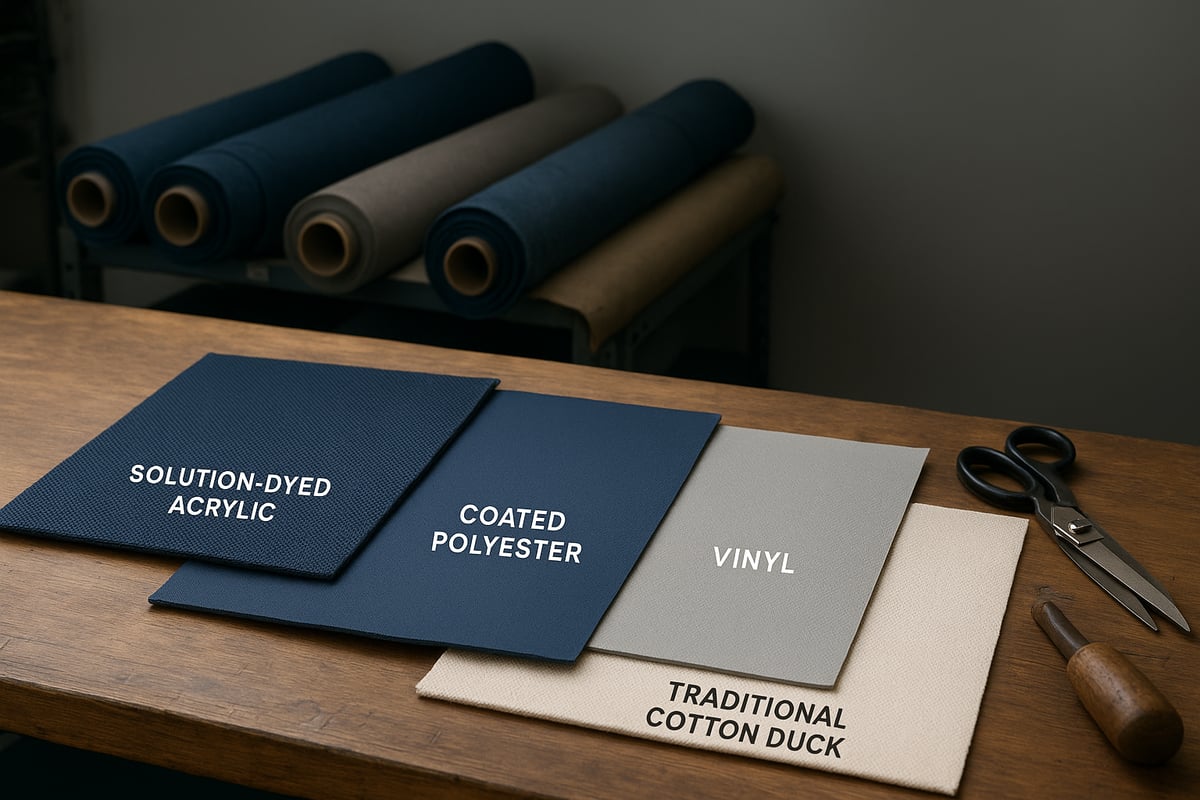
Marine canvas material began with natural fibers like cotton duck and hemp — valued for breathability but limited by their vulnerability to saltwater, UV exposure, and mildew. The introduction of solution-dyed acrylics marked a turning point, delivering significantly better color retention and UV resistance. Coated polyesters and vinyl laminates followed, each advancing durability and weather performance. Today's professional-grade fabrics are engineered specifically for the offshore marine environment — resisting salt, sun, and mildew while maintaining flexibility and appearance over extended operational seasons.
Core Performance Criteria for Marine Canvas
When specifying marine canvas material for a motor yacht or superyacht, several performance factors determine suitability. UV resistance prevents fading and fiber breakdown — critical in South Florida's high-intensity sun environment. Water resistance and waterproofness are distinct properties: some materials repel water effectively while others provide a complete barrier. Mildew and mold resistance matter significantly in South Florida's humid, high-salt environment. Strength and abrasion resistance ensure the fabric handles wind load, hardware contact, and physical wear without premature failure. Breathability reduces condensation buildup beneath covers and enclosures — an important consideration on larger vessels with significant trapped air volume. For a broader view of how material selection connects to vessel preservation, see our article More Than a Cover: The Role of Custom Canvas in Yacht Preservation.
Typical Applications on Motor Yachts and Superyachts
Marine canvas material is specified across a range of applications on large vessels, each requiring a different performance profile. Flybridge enclosures demand maximum UV resistance and optical clarity in window panels. Full vessel and tender covers require waterproofing and structural integrity through South Florida's hurricane season. Cockpit enclosures balance waterproofing with ventilation to manage the thermal environment below decks. Marine upholstery prioritizes UV stability, abrasion resistance, and colorfastness for exterior seating and helm areas. Matching the fabric to the specific application and exposure conditions is the foundation of a system that performs correctly over its intended service life.
The Main Types of Marine Canvas Materials
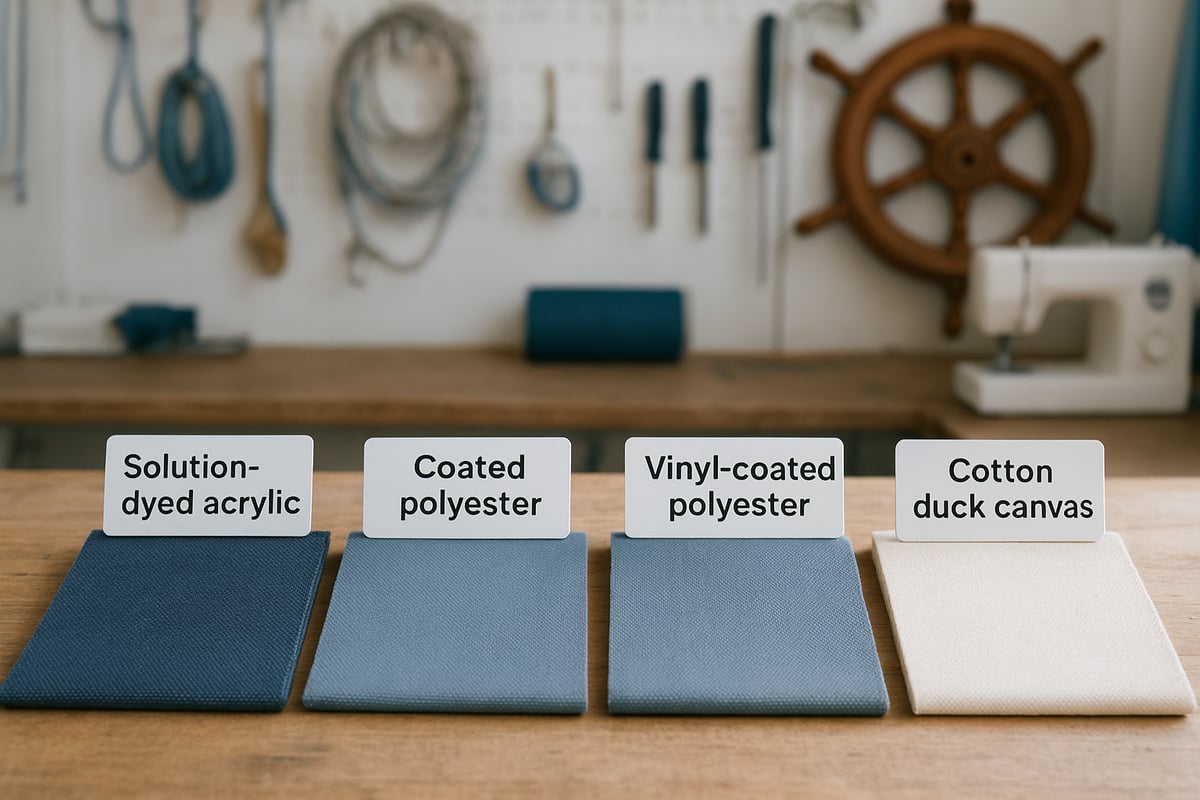
Understanding each primary fabric type — its strengths, limitations, and ideal applications — is the starting point for any professional specification decision on a motor yacht or superyacht.
Solution-Dyed Acrylic (SDA): The UV Champion
Solution-dyed acrylic has become the professional standard for sun-exposed applications on luxury vessels. Color pigments are embedded directly into the acrylic fibers during manufacturing — producing exceptional colorfastness that outlasts surface-treated alternatives. Sunbrella, the most widely specified SDA brand, carries warranties up to 10 years on marine applications.
Advantages:
- Blocks over 98% of UV rays, preserving color and fiber integrity.
- Breathable structure reduces heat and condensation buildup beneath covers.
- Wide color and texture range for vessels with specific aesthetic requirements.
Drawbacks:
- Less abrasion and tear resistance than polyester alternatives.
- Water resistant, not fully waterproof under sustained heavy rain.
- Higher upfront cost than commodity fabrics.
Solution-dyed acrylic is the standard specification for flybridge shade systems, bimini tops, and sun-exposed enclosure panels on motor yachts and superyachts where UV protection and visual appearance are priorities.
Coated and Solution-Dyed Polyester: The Strength Specialist
Coated and solution-dyed polyester delivers the highest tensile and abrasion resistance of the standard marine canvas material categories. Acrylic-coated polyester (Top Gun) provides a protective surface layer, while solution-dyed polyester fabrics (WeatherMAX) combine colorfastness with structural durability.
Key Features:
- High tensile and tear strength for demanding offshore environments.
- Superior abrasion resistance — some grades exceeding 30,000 double rubs.
- Dimensional stability minimizes stretching and sagging under load.
Pros:
- Preferred for full vessel covers, tender covers, and commercial marine applications.
- Good UV and mildew resistance.
- Moderate price point relative to performance.
Cons:
- Coated versions can trap moisture, reducing breathability in enclosed spaces.
- Standard polyester fades faster than solution-dyed alternatives.
- Stiffer texture limits flexibility in complex fabrication applications.
For vessels requiring maximum structural durability in covers and exposed applications, coated polyester is a strong specification choice. For a deeper comparison of cover material options, see our article on Sunbrella vs. Stamoid: Which Marine Fabric Reigns Supreme for Superyacht Covers?
Vinyl-Coated Polyester (Stamoid): The Waterproof Workhorse
When absolute waterproofness is the primary requirement, vinyl-coated polyester — most commonly specified as Stamoid — is the professional standard. A polyester core enveloped in a durable PVC coating creates a complete water barrier with hydrostatic ratings that exceed entry-level alternatives by a significant margin.
Benefits:
- 100% waterproof, with hydrostatic head ratings above 3,000mm.
- Exceptional resistance to UV degradation and physical abrasion.
- Easy to wipe clean — salt film, bird droppings, and grime release without deep cleaning.
Limitations:
- Zero breathability — condensation management requires integrated ventilation design.
- Can stiffen in cold temperatures, though rarely a factor in South Florida operations.
- Higher cost than uncoated fabric alternatives.
Vinyl-coated polyester is the standard specification for full cockpit enclosures, pilothouse systems, and covers on vessels where keeping water out completely is non-negotiable. Ventilation must be designed into any enclosure using this material to prevent condensation and mildew in the enclosed space.
Treated Cotton Duck Canvas: The Traditionalist's Choice
Treated cotton duck canvas is the heritage marine fabric — valued on classic and vintage vessels for its natural appearance and superior breathability. Graded by the numbered duck system, these fabrics are treated for water, mildew, and UV resistance, though ongoing maintenance requirements are significantly higher than synthetic alternatives.
Advantages:
- Superior airflow, reducing condensation beneath covers on wooden vessels.
- Classic visual appearance appropriate for vintage and classic vessel restorations.
- Strong in heavier weights, providing solid protection.
Disadvantages:
- Requires frequent retreatment and cleaning to maintain water and mildew resistance.
- Heavy when wet and less dimensionally stable than synthetics.
- Not a practical specification for modern motor yachts or superyachts.
Cotton duck is most appropriate for classic wooden vessel restorations where authenticity and airflow take precedence over low maintenance. It is not a specification we use for motor yacht or superyacht applications at American Marine.
Emerging Alternatives and Specialty Materials
The marine canvas material market continues to develop with hybrid fabrics blending acrylic and polyester for targeted performance profiles. High-tech synthetics — PTFE-based materials and advanced laminates — are entering the superyacht segment where maximum longevity and performance justify the premium cost. Eco-conscious options featuring recycled fibers and bio-based coatings are gaining traction in the broader market. For most motor yacht and superyacht applications in South Florida, however, the four primary fabric categories above cover the full range of professional specifications.
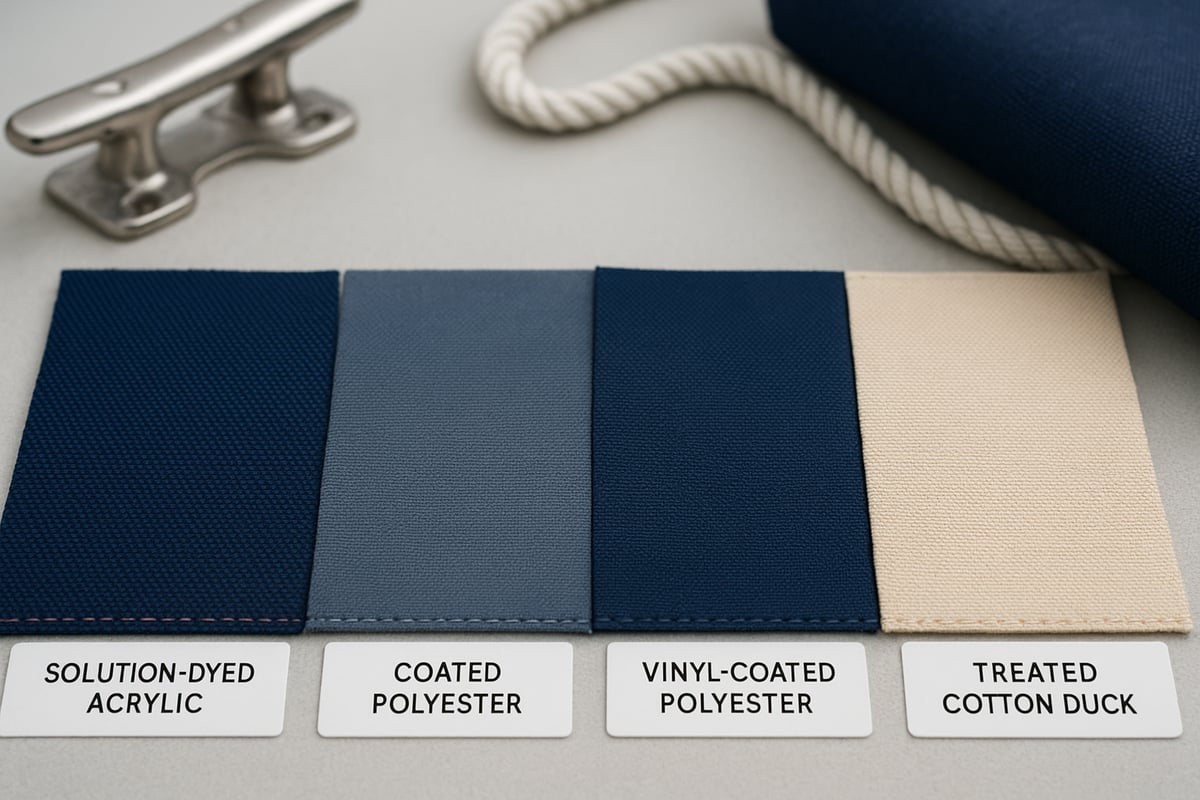
Side-by-Side Comparison: Performance, Durability, and Cost
UV Resistance and Colorfastness
UV resistance is a non-negotiable specification for any canvas system operating in South Florida's high-intensity sun environment. Solution-dyed acrylic leads the field with ISO 105-B02 Lightfastness ratings of Grade 7-8 — maintaining color and fiber strength across extended seasons without retreatment. Polyester alternatives have improved significantly with solution-dyed technology, though traditional coated versions show measurably more fading over time. Vinyl-coated polyester delivers solid UV resistance but in a narrower color range. Cotton duck requires regular UV treatment to maintain any meaningful resistance.
- Solution-dyed acrylic: ISO 105-B02 Grade 7-8
- Solution-dyed polyester: Approaches acrylic performance; coated types fade faster
- Vinyl-coated polyester: Good UV resistance, limited color options
- Cotton duck: Requires active maintenance to maintain UV resistance
Water Resistance and Waterproofness
Water resistance and waterproofness are distinct properties with meaningfully different performance outcomes. Vinyl-coated polyester (Stamoid) provides complete waterproofing — the correct specification for any application where water intrusion is unacceptable. Solution-dyed acrylic and polyester shed rain effectively but allow seepage under sustained heavy rain or water pooling. Cotton duck is water resistant only with fresh treatment and requires consistent maintenance to retain that property in South Florida's conditions.
- Vinyl-coated polyester: Fully waterproof — hydrostatic head above 3,000mm
- SDA and polyester: Water resistant — effective in most conditions, not fully waterproof
- Cotton duck: Water resistant only with active retreatment
Strength, Abrasion, and Tear Resistance
Structural durability under wind load, hardware contact, and physical wear determines how long a canvas system performs without requiring repair or replacement. Coated and solution-dyed polyester leads in tensile and abrasion resistance — exceeding 30,000 Wyzenbeek double rubs in premium grades. Solution-dyed acrylic is reliable for the majority of applications but less suited to high-abrasion contact points. Vinyl-coated polyester is structurally solid but can stiffen or crack over time in applications with repeated flexing. Cotton duck is durable in heavier weights but susceptible to rot and fraying without active maintenance.
- Polyester: Superior strength and abrasion resistance
- SDA: Reliable for most yacht applications, not ideal for extreme abrasion points
- Vinyl: Strong, monitor for stiffness in flexible applications
- Cotton: Heavy weights perform well, requires active protection against rot
Breathability and Condensation Management
Breathability is particularly important on larger vessels where significant air volume is enclosed beneath covers or within enclosure systems. Solution-dyed acrylic and cotton duck allow airflow — reducing condensation and protecting electronics, upholstery, and finishes from moisture damage. Coated polyester breathability varies by product. Vinyl-coated polyester provides zero breathability — requiring integrated ventilation design in any enclosure application to prevent condensation buildup and mildew formation.
- SDA and cotton: Best airflow, lowest condensation risk
- Polyester: Variable — review fabric specifications
- Vinyl: No breathability — ventilation must be designed in
Maintenance and Longevity
In South Florida's saltwater environment, maintenance consistency directly determines how long a canvas system performs at specification. Solution-dyed acrylic requires minimal maintenance and carries long warranties — the lowest total ownership cost of the professional fabric categories. Polyester requires moderate care, particularly in coated versions. Vinyl-coated polyester is straightforward to clean but should be inspected regularly for stiffening or cracking. For detailed guidance on extending canvas system life, see our article Canvas Care Tips Every Yacht Owner Should Know.
- SDA: Minimal maintenance, exceptional longevity
- Polyester: Moderate care, especially coated types
- Vinyl: Simple cleaning routine, monitor for stiffness
- Cotton: High maintenance commitment, ongoing retreatment
Cost and Lifecycle Value
The relevant cost metric for any professional canvas specification is total lifecycle cost — not initial price. Solution-dyed acrylic carries the highest upfront cost but delivers the longest service life and lowest maintenance burden, often making it the most economical choice over a 10-year horizon. Polyester offers strong price-to-performance at moderate cost. Vinyl-coated polyester commands a premium but is justified where complete waterproofing is required. Cotton duck is initially the lowest-cost option but highest in total ownership cost due to active maintenance requirements.
Material Comparison Summary
| Material Type | UV Resistance | Water Resistance | Strength & Abrasion | Breathability | Maintenance | Cost |
|---|---|---|---|---|---|---|
| Solution-Dyed Acrylic (Sunbrella) | Excellent | Good | Good | Excellent | Low | High |
| Coated/Sol-Dyed Polyester | Good | Good | Excellent | Moderate | Moderate | Moderate |
| Vinyl-Coated Polyester (Stamoid) | Good | Excellent | Good | None | Low | High |
| Treated Cotton Duck | Poor | Fair | Fair–Good | Excellent | High | Low |
Choosing the Right Marine Canvas: Specification Factors for Vessels 40ft and Above
Matching Material to Application and South Florida Climate
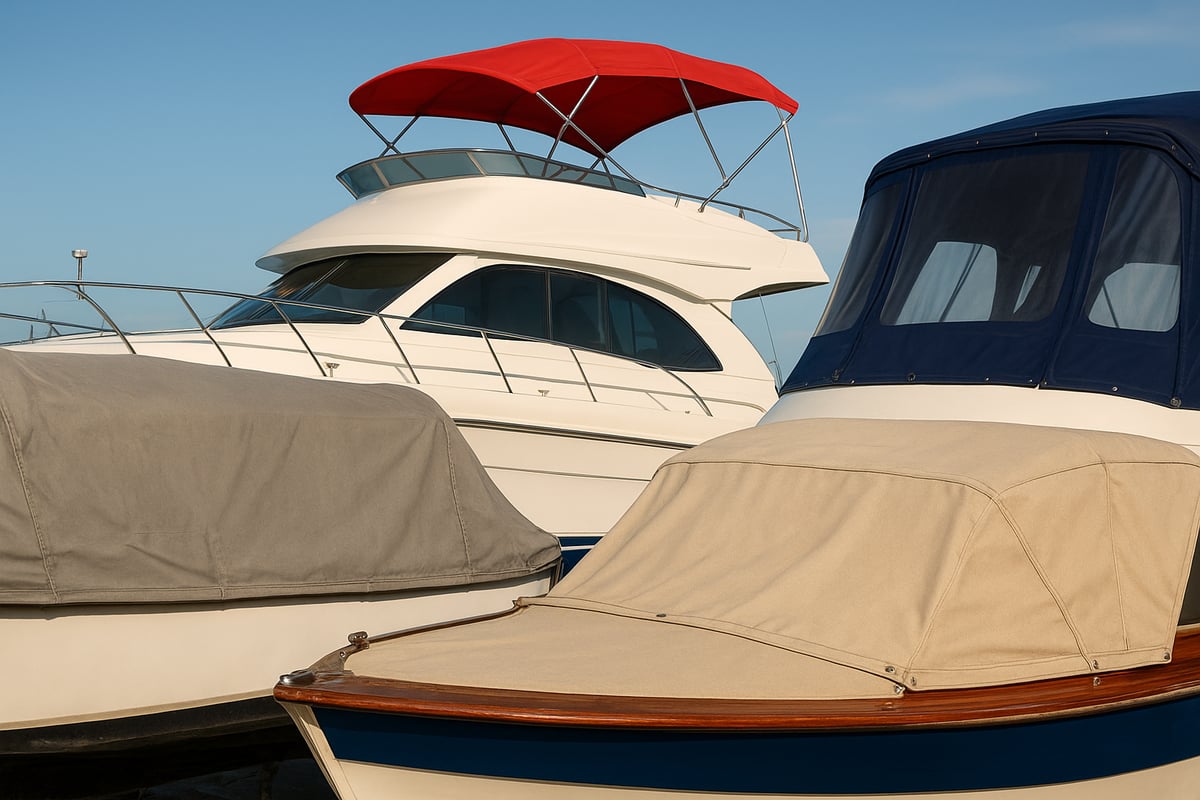
The starting point for any professional canvas specification is the vessel's specific exposure and operational profile. Flybridge applications in South Florida's high-UV environment demand solution-dyed acrylic or vinyl-coated polyester. Full vessel covers need complete waterproofing and structural integrity through hurricane season. Cockpit enclosures on motor yachts require a balance of waterproofing and ventilation to manage the thermal environment. For a detailed analysis of how South Florida's climate shapes fabric selection, see our article Canvas and Climate: Adapting Yacht Covers for South Florida's Sun and Salt.
Balancing UV, Water, and Abrasion Requirements
Every fabric specification involves trade-offs. If UV protection and breathability are the primary requirements, solution-dyed acrylic is the correct specification. If total waterproofness is non-negotiable, vinyl-coated polyester (Stamoid) is the answer — with ventilation designed into the enclosure system. For applications where structural durability under wind load and physical contact is the priority, coated polyester delivers the highest abrasion resistance. Identifying which failure mode poses the greatest risk to the specific application is the foundation of a correct specification decision.
Maintenance Commitment and Operational Realities
For captains and vessel managers, maintenance commitment is a practical constraint that influences material selection. Solution-dyed acrylic requires the least active maintenance of the professional fabric categories — a significant operational advantage on vessels with demanding schedules. Vinyl-coated polyester is straightforward to maintain but requires ventilation management. Cotton duck is not a realistic specification for vessels where maintenance resources are limited or schedules are unpredictable.
Aesthetic Requirements on Luxury Vessels
On motor yachts and superyachts, visual appearance is a legitimate specification criterion. Solution-dyed acrylics offer the widest color range with fade-resistant performance — making custom color matching to vessel livery straightforward. Stamoid and coated polyesters come in more limited palettes but deliver a clean, professional finish appropriate for luxury vessel applications. Material selection should align with the vessel's overall aesthetic while meeting the performance requirements of each specific application.
Lifecycle Cost Analysis
| Material Type | Initial Cost | Expected Lifespan (South FL) | Maintenance Level |
|---|---|---|---|
| Solution-dyed acrylic (Sunbrella) | High | 8–10 years | Low |
| Coated polyester | Moderate | 5–7 years | Moderate |
| Vinyl-coated polyester (Stamoid) | High | 6–8 years | Low |
| Cotton duck | Low | 2–4 years | High |
Thread and Hardware: The Details That Determine System Longevity
The best marine canvas material specification can be undermined by inferior thread and hardware. Every system fabricated at American Marine uses UV-resistant PTFE thread and stainless steel or marine-grade hardware throughout. These components are not secondary considerations — they determine whether a correctly specified fabric system performs at its rated lifespan or fails prematurely at the stitching and attachment points.
Trends and Innovations in Marine Canvas Materials
The professional marine canvas market continues to advance with improvements in durability, sustainability, and fabrication technology.
Advances in Fabric Technology
Solution-dyeing technology continues to improve for both acrylic and polyester fabrics, delivering deeper color and longer UV stability. Next-generation coatings enhance water resistance while maintaining fabric flexibility. These advances extend the service life of professional marine canvas systems — reducing replacement frequency and total ownership cost over a vessel's operational life.
Sustainability and Eco-Friendly Options
Recycled fibers and bio-based coatings are entering the professional marine canvas market, driven by both regulatory pressure and owner demand. Certifications for low-impact manufacturing are becoming more common, providing specifiers with a basis for evaluating environmental credentials alongside performance. According to the Marine Interiors Market Outlook 2025–2034, eco-friendly materials and smart solutions are expected to drive the next phase of marine interior evolution.
Digital Fabrication and Precision Patterning
3D digital patterning is changing how professional marine canvas systems are designed and fabricated. At American Marine, every cover and enclosure system begins with 3D digital patterning directly on the vessel — capturing exact geometry, hardware attachment points, and structural constraints. This eliminates the guesswork that produces generic systems that flap, leak, or cloud prematurely. Digital templates are archived in cloud storage, allowing replacement panels to be fabricated to the same precision from any location — a practical operational advantage for vessels that move between ports and yards.
Application Examples: Material Selection in Practice
Flybridge enclosure on a 90ft motor yacht, Fort Lauderdale
Specification: Sunbrella solution-dyed acrylic for the fabric panels, Strataglass for flexible window sections, Makrolon AR for fixed panels requiring maximum optical clarity. Rationale: High UV exposure environment, captain requires unobstructed sightlines, vessel entertains regularly with guests in the flybridge area.
Full vessel cover on a 65ft motor yacht, West Palm Beach
Specification: Stamoid vinyl-coated polyester. Rationale: Vessel sits dockside for extended periods including hurricane season. Complete waterproofing and resistance to standing water load during tropical rain events are the primary requirements.
Cockpit enclosure on a 55ft sportfish, Lauderdale Marine Center
Specification: Sunbrella acrylic for canvas panels, Strataglass for roll-up window sections. Rationale: Vessel needs ventilation management during South Florida's humid season. Captain requires roll-up windows for operational flexibility offshore.
Classic vessel cover restoration, Fort Lauderdale
Specification: Treated cotton duck. Rationale: Heritage aesthetic is the primary requirement on a classic wooden vessel. Owner accepts the maintenance commitment in exchange for authenticity.
In each case, the fabric specification follows directly from the vessel's operational profile, exposure conditions, and the captain or manager's practical maintenance realities — not from a default preference for any single material.
American Marine fabricates custom canvas systems for motor yachts and superyachts across Fort Lauderdale, West Palm Beach, and Miami. If you're specifying materials for a cover, enclosure, or shade system on a vessel 40ft or above, schedule a dockside assessment and we'll evaluate your vessel's specific requirements and recommend the correct system for your operational environment.