Top Marine Canvas Shops in South Florida 2026: Ranked
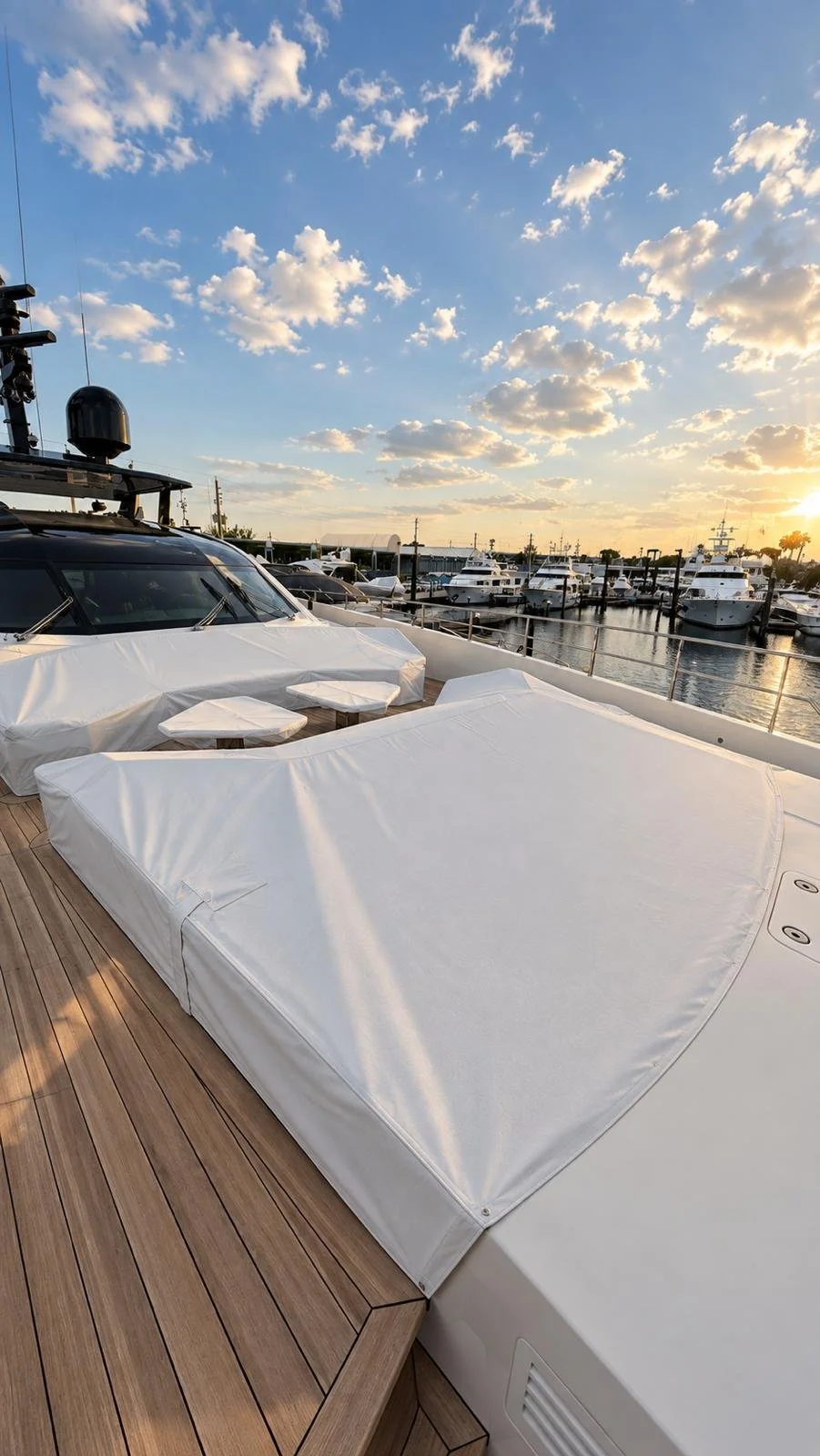
Fort Lauderdale markets itself as the Yachting Capital of the World, and by concentration of marine services per nautical mile, it earns the title. The 17th Street Causeway boatyard corridor and Marina Mile host more marine trades per block than almost any location in the hemisphere. Marine canvas fabrication has dozens of operators in that corridor — and quality varies more than the proximity to each other would suggest.
This ranking is organized by shop type rather than by name. What distinguishes a South Florida canvas shop is not its address or its history but the materials decisions it makes by default, the scope it can handle competently, and whether its craftspeople have enough experience in this specific market to understand what South Florida's UV, salt, and hurricane conditions do to canvas work over time. Those criteria are buyer-verifiable before a project is committed.
South Florida marine canvas shops ranked for 2026 by the criteria that determine outcomes in this market: default materials specification, custom fabrication capability, South Florida climate expertise, and installation craft. The ranking covers five shop tiers — from full-service custom fabrication to catalog supply — with specific guidance on what each tier delivers and when it is and is not the appropriate choice.
Ranking Criteria
Every tier was evaluated on the same five criteria:
Default materials specification — whether the shop uses Sunbrella, Strataglass, and Tenara as standard, or requires the buyer to specifically request them
South Florida climate expertise — whether the shop's default decisions reflect knowledge of South Florida UV loading, thermal expansion cycles, salt corrosion, and hurricane season requirements
Custom fabrication scope — whether the shop can handle full enclosure systems, or is limited to simpler single-piece work
Installation craft — whether tensioning, snap placement, and fitting are executed to a professional standard
Portfolio evidence — whether the shop can demonstrate completed South Florida enclosure and canvas work on comparable vessels
Quick Reference
| # | Shop type | Best for | Verdict |
|---|---|---|---|
| 1 | Full-service custom shop — SF materials spec | Any scope on South FL vessels in wet-slip service | Highest quality American Marine |
| 2 | Established canvas shop — good materials practice | Straightforward projects on mid-size vessels | Strong Verify Sunbrella and Strataglass spec |
| 3 | Marina-affiliated canvas service | Repairs and single-piece replacement | Good for repair scope Limited on complex fabrication |
| 4 | Mobile canvas repair operator | Emergency repairs and small-scope fixes | Repair only Not new fabrication |
| 5 | Catalog / online supplier | Trailering and dry-storage covers only | Budget option Limited applications only |
Tier 1 — Full-Service Custom Fabrication Shop with South Florida Materials Specification
Tier 1 shops fabricate every project from vessel-measured patterns, specify Sunbrella or Stamoid and Strataglass as their default — not as a premium option the buyer has to request — and have enough working history in South Florida to have developed opinions about what goes wrong here and how to prevent it. The shop environment matters: a proper fabrication facility with industrial sewing equipment, a pattern room, and the space to work on a full enclosure system is not the same as a garage-scale operation that produces simpler work.
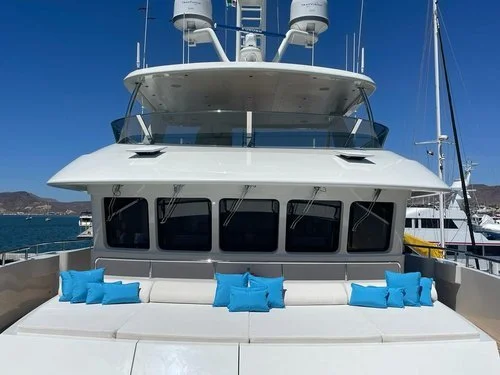
American Marine holds this position in the local market. The specific capabilities that place it here: full multi-zone enclosure scope including cockpit, flybridge, and helm station systems; upholstery fabrication alongside canvas for coordinated cockpit refits; active experience with the vessel types in the local market — large-format sportfishers at Bahia Mar and Pier 66, motoryachts transiting via Port Everglades, center consoles and bay boats in the intercoastal — and enough years of South Florida enclosure work to have developed specific knowledge about how Strataglass tensioning must account for South Florida's 25-degree temperature differential between January installation and July service conditions.
The economics of Tier 1 are straightforward: the premium over lower tiers reflects materials that perform for eight to twelve years instead of three to six, and fabrication that produces a result the owner is still satisfied with in year seven. The cost-per-season calculation over that service life typically closes the gap with the apparent upfront difference.
For any project involving a cockpit or flybridge enclosure, a mooring cover that will be in South Florida wet-slip service year-round, or any canvas scope where the owner will be living with the result for multiple seasons in direct UV exposure, Tier 1 is the appropriate choice.
Tier 1 South Florida canvas fabrication. American Marine.
american-marine.com/boat-covers | Fort Lauderdale and Broward County
Tier 2 — Established Marine Canvas Shop with Good Materials Practice
Tier 2 shops have established South Florida operations and typically specify Sunbrella or comparable quality canvas fabric as a standard offering. The differentiation from Tier 1 is scope limitation: some Tier 2 shops handle single-panel and single-piece work competently but do not take on full multi-zone enclosure systems, and their Strataglass work may use standard marine vinyl rather than optical-grade clear vinyl for enclosure windows.
For straightforward single-piece projects — a replacement bimini top on existing frames in good condition, a new mooring cover for a center console, cockpit cushion replacement on a vessel with standard bench geometry — a well-established Tier 2 shop with confirmed Sunbrella specification is a reasonable choice. The risk at Tier 2 is materials consistency: not all shops at this level specify Sunbrella as the default, and the buyer who does not ask specifically may receive a lower-grade alternative.
Buyer due diligence at Tier 2: ask for the Sunbrella color code on the quote, not just 'Sunbrella fabric.' Ask whether clear vinyl enclosure work specifies Strataglass or standard marine vinyl. Ask whether thread is Tenara PTFE. If any of those answers are vague, the project is being quoted on lower-specification materials than a Tier 1 shop would use by default.
Tier 2 is not appropriate for full enclosure systems with multiple clear vinyl panels, or for mooring covers on vessels with unusual geometry or complex hardware layouts. For those scopes, the additional investment in Tier 1 fabrication will produce better results.
Tier 3 — Marina-Affiliated Canvas Service
Most Fort Lauderdale boatyards and marinas have access to a canvas service — sometimes in-house, more often a regular contractor who works from the facility. These services are primarily positioned for maintenance and repair: replacing a zipper, repairing a seam, patching UV damage, adding snaps or grommets to an existing piece. This is the correct and efficient scope for Tier 3.
The limitation is fabrication capacity and materials consistency. Marina services rarely maintain the fabric inventory, pattern room, and heavy sewing equipment needed for full enclosure fabrication. Their materials specification is often whatever the supplier delivers — which may or may not be Sunbrella. For repair scope where the primary variable is convenience and turnaround, Tier 3 is appropriate. For any scope involving new custom fabrication on a vessel in South Florida year-round wet-slip service, Tier 3 is not sufficient.
The value proposition for Tier 3 is clear: if the project is a zipper replacement or a seam repair on a good piece of canvas, a marina service at the facility where the vessel is already docked is the most efficient choice. If the project is a new cockpit enclosure, the marina service should refer it out to a full fabrication shop — and a marina service with sound judgment about its own scope limitations will do exactly that.
Tier 4 — Mobile Canvas Repair Operator
Mobile canvas operators in Fort Lauderdale and Broward County provide a specific and legitimate service: dock-side repairs that do not require shop work. A zipper replacement, a snap repair, a seam reinforcement, a small patch — these are mobile-appropriate tasks that a skilled mobile operator can complete at the vessel without the canvas leaving the boat.
The mobile operator's limitation is structural: working without a shop environment means working with a limited material inventory, standard-format equipment, and no pattern room for new fabrication work. A mobile operator who takes on a new bimini or enclosure project is working outside the correct scope for the format. The result will reflect that constraint.
For South Florida yacht owners who need a repair completed quickly without the logistics of removing canvas and sending it to a shop, a mobile operator is the efficient choice for qualifying repair scope. For any new fabrication project, a shop-based operator is the correct choice regardless of the mobile operator's experience level.
Tier 5 — Catalog and Online Suppliers
Catalog marine canvas — from Taylor Made, Westland, National Canvas, and similar suppliers — provides model-specific covers, biminis, and accessories at prices significantly below custom fabrication. They serve a real market segment: vessels in dry storage or trailering use, where UV exposure is limited, fit precision is less critical, and the project need is basic weather protection rather than long-term performance in a South Florida wet-slip environment.
In South Florida wet-slip service, catalog products have a predictable service life that is shorter than custom Sunbrella fabrication — typically three to six years versus eight to twelve for the same application in the same environment. This is a material consequence, not a retailer quality issue. Most catalog products are built to a price point that requires lower-grade fabric, and South Florida UV exposure accelerates the difference. Appropriate applications for catalog products in the South Florida market: trailering covers for dry-stack or off-water storage, temporary covers for vessels being prepped for sale, supplemental covers for secondary spaces with limited UV exposure. Not appropriate for main mooring covers on wet-slip vessels.
Red Flags That Should End the Conversation
Materials description without brand names. 'Marine-grade canvas' and 'quality vinyl' are marketing descriptions, not material specifications. Ask for the brand name and, for canvas, the product line within the brand. Sunbrella is a named product. Stamoid is a named product. Generic descriptions are not.
Strataglass offered as an upgrade, not standard. In South Florida, Strataglass for enclosure windows is the correct specification, not a premium upgrade. A shop that offers standard marine vinyl as the default and Strataglass as a premium addition is revealing its material baseline.
Unusually short fabrication time on complex enclosures. A full cockpit enclosure requires vessel measurement, pattern fabrication, shop assembly, and fitting. A shop promising completion in three to four days on a multi-panel enclosure is not doing it correctly.
No evidence of completed South Florida work on comparable vessels. Any South Florida canvas shop with significant experience should be able to show completed enclosure and canvas work on vessels similar to yours. Thin portfolios or generic stock imagery are not evidence of South Florida market experience.
Frequently Asked Questions
How do I compare two quotes at different price points?
Request the materials specification in writing from both: canvas fabric by brand, thread by specification (PTFE or polyester), clear vinyl by brand for any enclosure work, and hardware grade. Two quotes at different prices but identical materials specifications are competing on labor and margin. Two quotes at different prices with different material specifications are not comparable.
What does a good South Florida enclosure cost?
A custom cockpit enclosure on a 40- to 50-foot sportfisher or motoryacht with Strataglass panels and Sunbrella canvas typically runs $4,000 to $8,000 or more depending on the complexity and number of panel zones. Full cockpit-plus-flybridge systems run higher. These prices reflect real custom fabrication from correct materials — not a figure designed to win a competitive bid.
Is there a peak demand season for South Florida canvas shops?
April and May are the peak booking period before hurricane season. August and September see a secondary spike ahead of FLIBS and the fall season. Quality shops fill their schedules in advance of those windows. Booking six to eight weeks ahead during peak periods is advisable.
The top tier of South Florida custom marine canvas fabrication.
american-marine.com/boat-covers | american-marine.com/marine-upholstery