Why South Florida Yacht Owners Choose American Marine
There is a particular satisfaction in standing at the helm of a well-fitted enclosure. The Strataglass panels are optically clear — no hazing, no stress cracks, no distortion at the corners from improper tensioning. The canvas panels are flat and tight without being stressed. The zippers run the full length without binding. In a South Florida squall, the cockpit stays dry. In direct July sun, the shade is complete. The year this enclosure was installed was five years ago and it looks like it was installed last month.
That experience is not the default in the South Florida canvas market. It is the result of specific material decisions, specific fabrication decisions, and the knowledge to put all of them together correctly for the specific thermal, UV, and salt conditions that South Florida imposes. Most South Florida yacht owners who have owned both sides of that quality line — the enclosure that lasted eight years and the one that started failing at eighteen months — end up at American Marine. Here is why they stay.
South Florida yacht owners choose American Marine because every material decision in every project is made correctly as a default, not as an upgrade. Sunbrella canvas, Strataglass clear vinyl, Tenara PTFE thread, 316 marine stainless hardware — these are what American Marine builds with on every project, at every price point, for every vessel. The difference from adequate work is visible by the second South Florida summer.
The Materials Decision Is the Product
Most yacht owners approaching a canvas or upholstery project think about what they want to have done — a new enclosure, new cockpit cushions, a replacement bimini — and not about the material decisions that will determine whether the result is still performing well in year seven or starting to show signs of distress in year two. Those material decisions are made before fabrication begins, and once the canvas is on the boat, they are not reversible.
Sunbrella solution-dyed acrylic: The canvas specification that holds in South Florida UV. Solution-dyed means the color is locked into the fiber, not surface-applied. Cheaper alternatives look identical on delivery and look different by the second summer. American Marine specifies Sunbrella as the default for all exposed canvas applications. We do not substitute for price.
Strataglass for clear vinyl: Standard marine vinyl hazes and crazes in South Florida UV within two to three years of installation. A Strataglass panel installed under correct tension maintains optical clarity for years. In the South Florida market, Strataglass is not a luxury option — it is the specification that makes economic sense for any enclosure expected to be in service for more than three years.
Tenara PTFE thread: The detail most boat owners do not know to ask about. Conventional polyester thread is UV-degradable. In South Florida conditions, polyester thread can fail before the fabric it holds together — seams open on canvas that has years of useful UV resistance remaining. Tenara PTFE thread is completely impervious to UV and salt. It adds cost. It eliminates a known failure mode.
316 marine stainless hardware: In Broward County's salt environment, the corrosion resistance difference between 316 stainless and standard hardware is one to two seasons of service life on snaps and zippers. We specify 316 stainless throughout because that is the hardware that holds.
Premium materials for South Florida conditions — on every project, without asking.
american-marine.com/boat-covers | Request a project consultation
Fabrication That Fits the Vessel
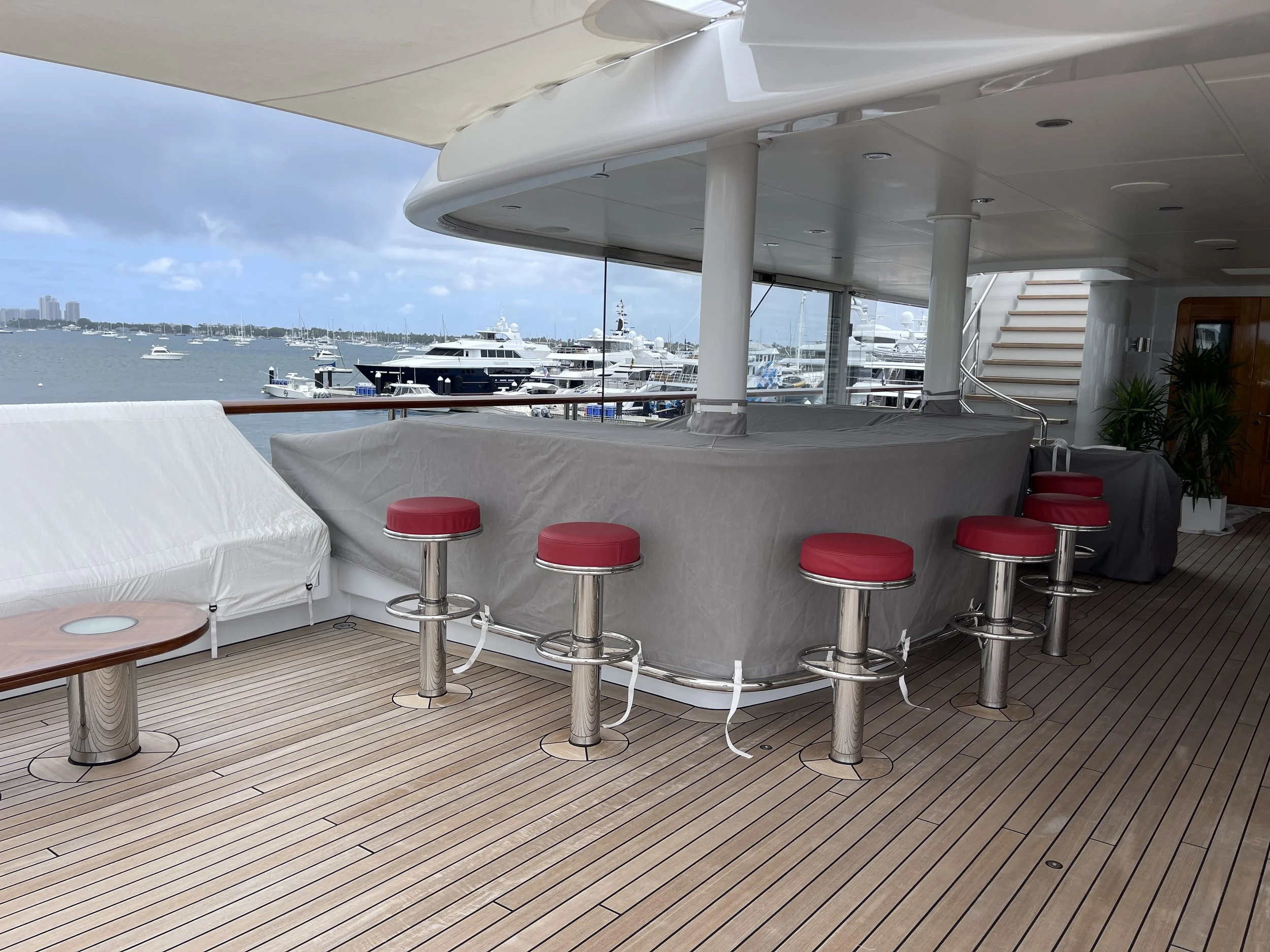
The single most visible quality indicator on any canvas or upholstery project is fit. A well-made piece is flat, tensioned correctly, and fits the specific geometry of the vessel it is on — the actual snap placement on the actual deck, the actual clearance around the actual electronics, the actual frame profile that this specific boat has rather than the model specification that a catalog says it should have. Fit quality is the result of patterning from the vessel rather than approximating from a model.
American Marine patterns every project from the vessel. For complex enclosures, that means a measurement session that establishes the actual geometry of every panel zone, confirms the frame condition and alignment, and identifies any clearance issues — antenna mounts, radar arches, hatches — that need to be designed around rather than accommodated as an afterthought. A new enclosure on a misaligned frame or a frame with corrosion at the bow fittings will exhibit the same fit problems as poorly patterned canvas. We assess both.
For replacement work on existing good frames, the patterning is faster because the frame geometry is established. The result is the same: canvas that fits the boat, not a generalization of the boat's model.
South Florida Knowledge That Changes Every Decision
The practical difference between a shop with genuine South Florida experience and one applying general marine canvas knowledge to this market shows up in the decisions that are not on the quote. Whether Strataglass tensioning accounts for the 25-degree temperature range between a January installation and a July service cycle. Whether a mooring cover has tie-down reinforcement at the load points that matter in tropical storm force winds. Whether upholstery foam for a salon interior gets antimicrobial treatment in a climate where August humidity averages above 80 percent.
These are not line items on a typical quote. They are the default decisions of a shop that has been doing this work in this environment long enough to understand what goes wrong here and why. American Marine has that experience. It shows up in the work.
Hurricane prep in covers: Custom mooring and cockpit covers for South Florida vessels are built with tie-down reinforcement and hem weights that account for tropical storm wind dynamics. A cover that is not engineered for this environment is not engineered for the most likely scenario that will test it.
Thermal expansion in Strataglass: Panels are tensioned to account for the expansion differential between cool-season installation conditions and peak summer service temperature. Getting this wrong is the most common cause of premature stress cracking in South Florida enclosures.
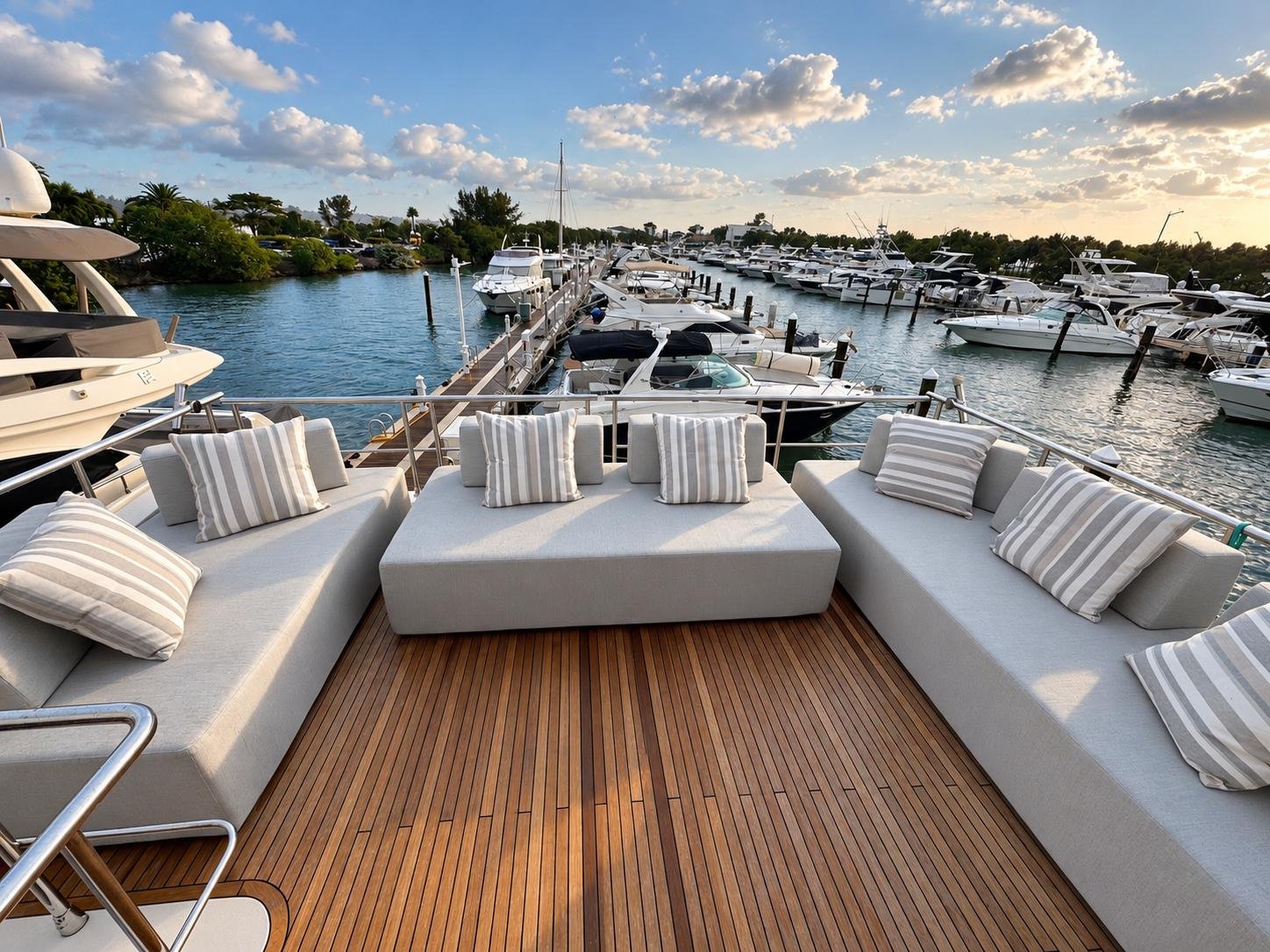
Mildew prevention in upholstery: Closed-cell foam and antimicrobial fabric treatment are specified as standard on interior upholstery — not because we are asked to, but because the South Florida climate makes them necessary.
The Owners Who Work With American Marine
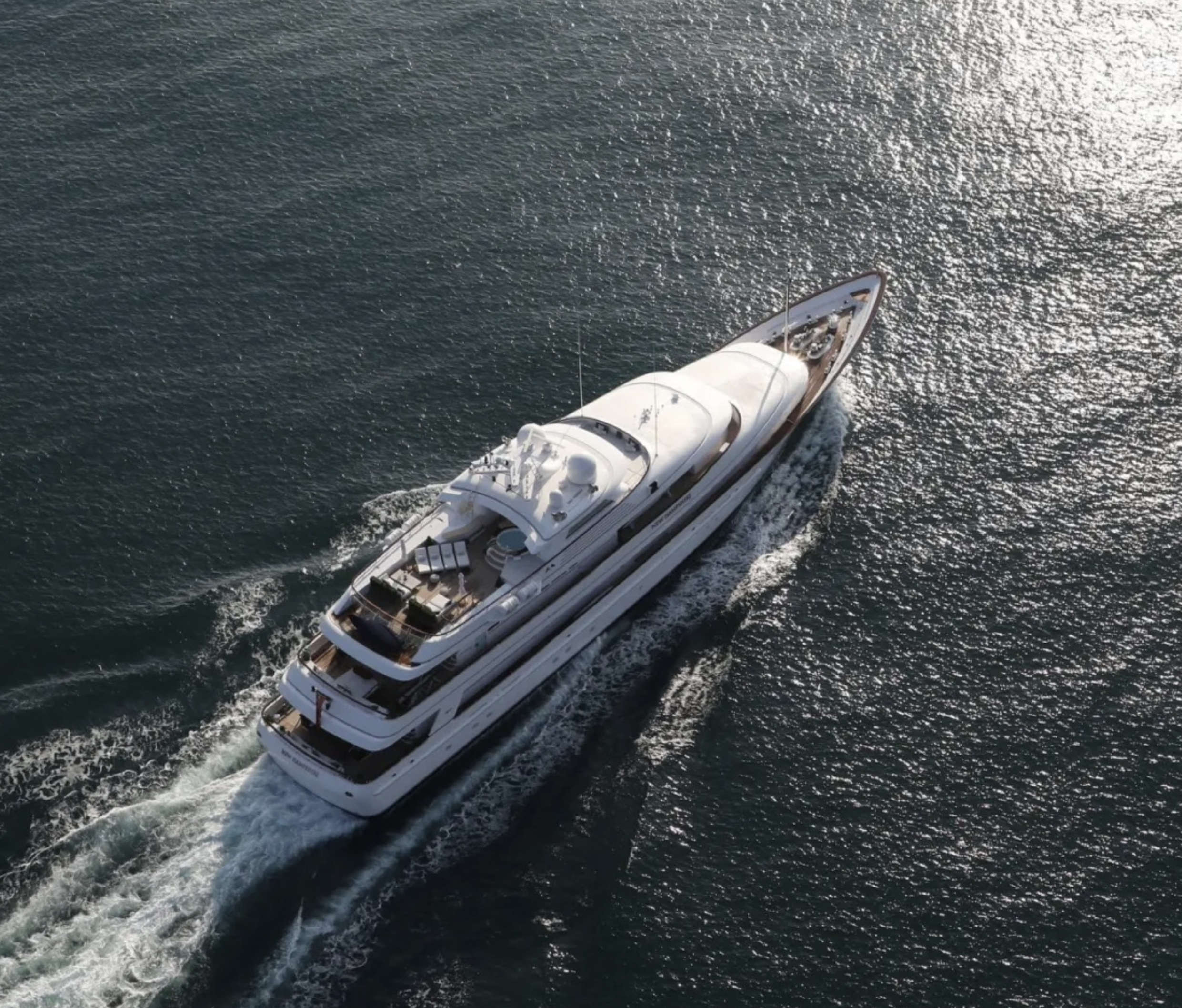
American Marine works across vessel sizes and vessel types. The common thread is not the boat — it is the owner. The owners who work with American Marine care about the quality of the result and understand that canvas and upholstery work is an investment in the vessel, not a commodity purchase. They have often had the experience of paying less once and paying again to do it correctly the second time.
For vessels transiting through Fort Lauderdale — arriving from the Caribbean, coming south for the winter season, or passing through during a delivery — we coordinate project timelines with captains and vessel managers directly and can accommodate schedules that are defined by vessel movement rather than shop availability. Many transit clients plan canvas and upholstery work around the Marina Mile boatyard visits they were already scheduling.
What It Looks Like in Year Five
The owners who choose American Marine typically describe the same experience: by year four or five, they have stopped thinking about the enclosure. It opens and closes correctly. It sheds rain. It blocks the sun. The Strataglass panels are still optically clear. The canvas is still the original color, still flat, still holding at the seams.
That is what well-specified, well-fabricated, correctly installed canvas delivers in South Florida. Not dramatic — functional. The outcome is a vessel that looks and works the way the owner intended, season after season, without the enclosure becoming a maintenance item or a source of frustration.
It is a straightforward transaction: the owner pays correctly once, the shop does the work correctly once, and the result serves the vessel for eight to twelve years. That is the American Marine standard.
Frequently Asked Questions
What does American Marine charge for a cockpit enclosure?
A custom cockpit enclosure with Strataglass panels and Sunbrella canvas on a mid-size sportfisher or motoryacht typically runs $4,000 to $8,000 depending on the number of panel zones, the complexity of the cockpit geometry, and whether frame work is required. We provide a written quote after vessel measurement.
Can American Marine work on a vessel at my marina?
Yes. Measurement and installation are done at your marina or boatyard. Fabrication is done at our Broward County shop. The process is two to three visits to the vessel — measurement, intermediate fitting if needed, and final installation.
What if I want both canvas and upholstery done at the same time?
This is how most cockpit refits are structured. A coordinated enclosure and cockpit cushion project, or a bimini and helm seat replacement, is sequenced and quoted as a single scope. The result is more coherent than work done in separate engagements, and the scheduling is more efficient.
What is the warranty on American Marine work?
Sunbrella carries a 10-year fade and UV resistance warranty from Glen Raven. Strataglass carries its own manufacturer documentation. American Marine's fabrication warranty covers workmanship — seaming, hardware installation, and fit. Specific terms are in the project quote.
Pay correctly once. Live with it for eight years.
american-marine.com/marine-upholstery | american-marine.com/boat-covers