
Front and Back How to Choose the Best Bimini Top Extension for Your Boat
Why Every Luxury Yacht Owner Needs Improved Shade Coverage
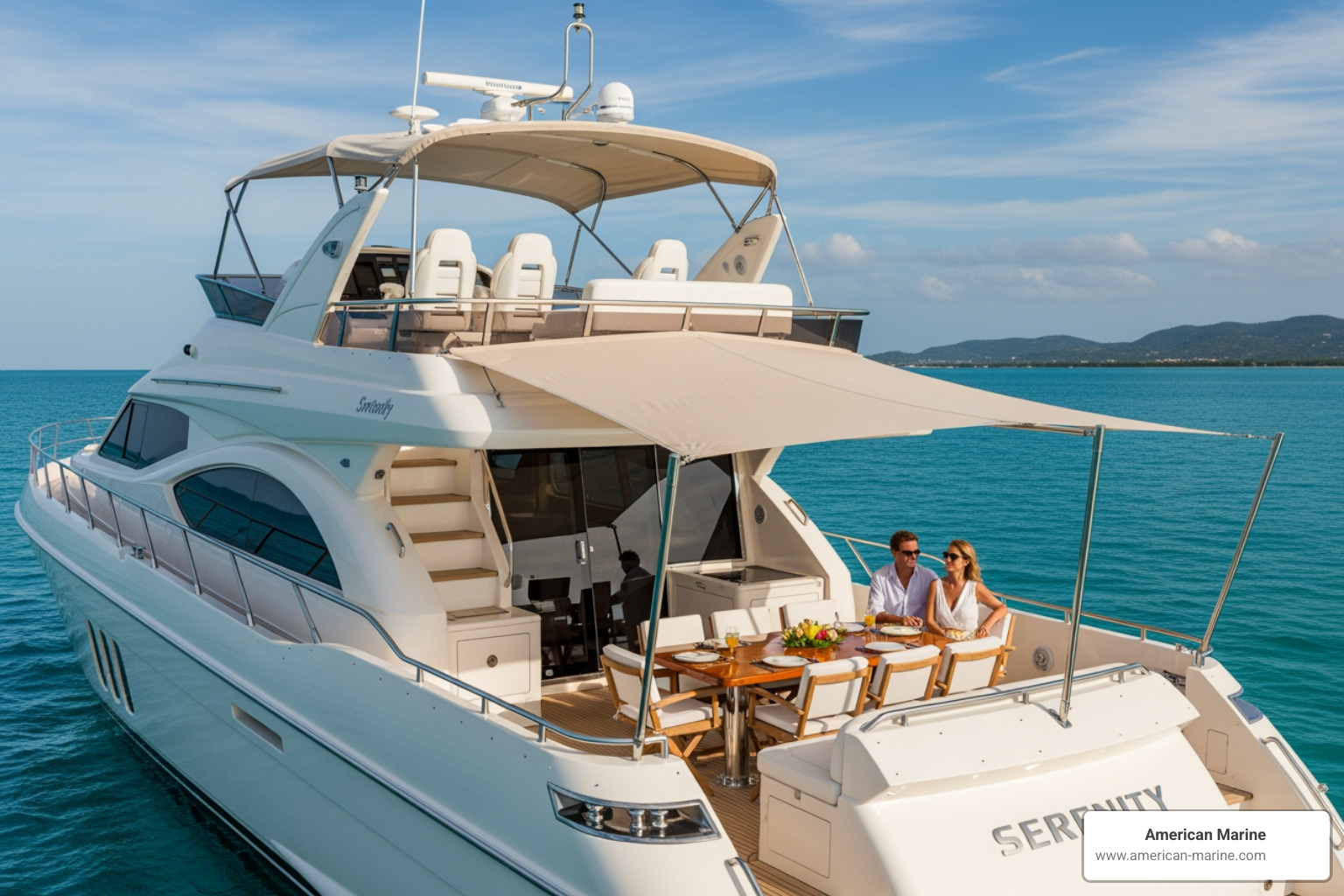
A boat bimini extension is an additional shade structure that attaches to your existing bimini top or T-top to expand your protected area. Here's what you need to know:
Key Benefits:
- Expands shade coverage by 5-8 feet beyond your existing bimini
- Protects passengers from harmful UV radiation (UPF 50+ protection)
- Increases comfort on deck during extended time on the water
- Preserves yacht aesthetics with custom-fitted designs
Common Types:
- Pole-mounted kits (telescopic aluminum or stainless steel)
- Zipper-attached extensions for seamless integration
- Wake tower-mounted shades for sport boats
- Custom-fabricated solutions for luxury vessels
When you're spending a great day on your pontoon boat or luxury yacht, you want protection from the elements. The global boat bimini market reflects this demand—valued at $1.1 billion in 2022 and projected to reach $1.8 billion by 2030. UV radiation causes significant damage to skin, and prolonged exposure leads to sunburn, premature aging, and an increased risk of skin cancer.
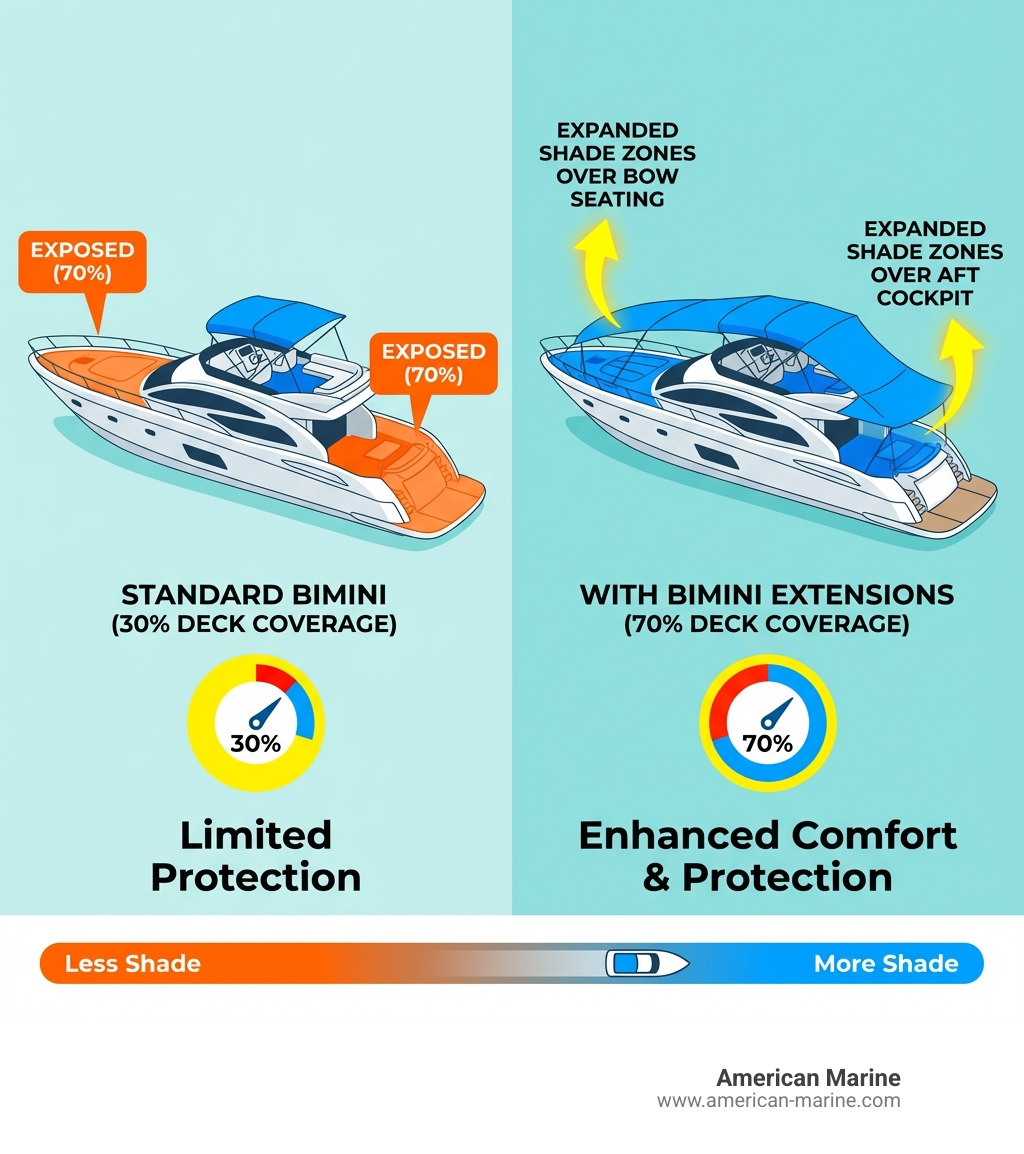
A standard bimini top typically covers only the helm and seating area. An extension pushes that coverage forward toward the bow or backward over the cockpit and swim platform, creating a seamless canopy of shade. For vessels 40 feet and larger, where entertaining and extended cruising are paramount, this expanded coverage transforms how you use your yacht.
The difference between a standard bimini and one with extensions is substantial. You're not just adding a few square feet of shade—you're creating usable outdoor living space that remains comfortable throughout the day.
Choosing the Perfect Boat Bimini Extension: Types and Materials
The quest for improved comfort and protection on the water often leads us to consider a boat bimini extension. This section will explore the different styles of extensions and the materials that define their quality and durability, helping you make an informed choice.
Types of Bimini Extensions on the Market
Just as every boat is unique, so too are the various types of bimini extensions designed to complement them. From sleek center consoles cruising the waters of Fort Lauderdale to spacious pontoons navigating the Intracoastal Waterway, there’s an extension style to fit almost any need.
Here are the primary types you'll encounter:
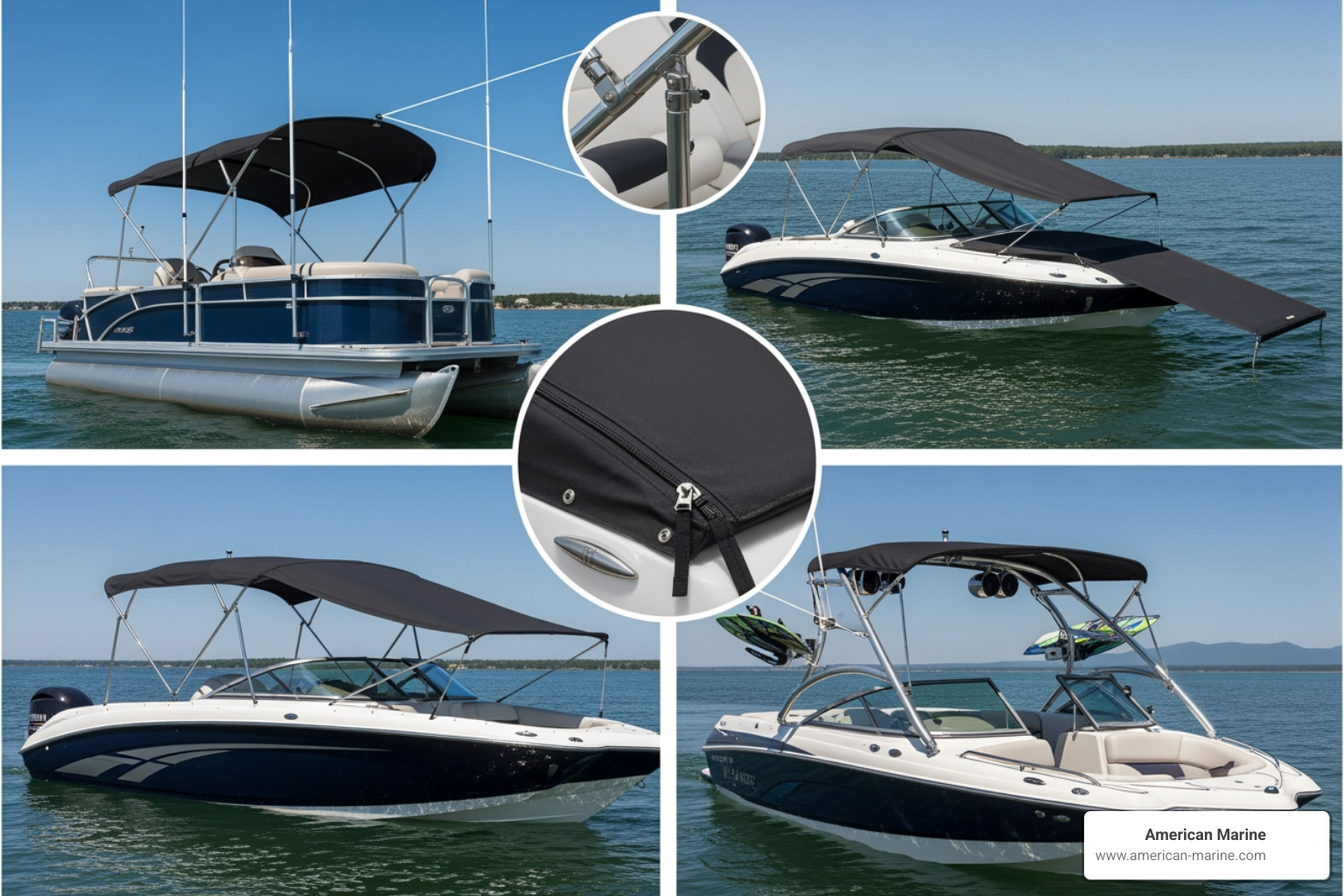
Pole-Mounted Kits: These are perhaps the most common and versatile. They typically consist of a canvas canopy supported by telescopic aluminum or stainless steel poles. The poles often fit into existing rod holders on your boat's stern or bow, securing the extension in place. Some designs feature adjustable height poles, ranging from approximately 3.75 feet to 7 feet, allowing for both sitting and standing clearance. Installation often involves adjustable tie-down straps, making them relatively easy to set up without specialized tools or drilling. This type is great for quickly adding shade over a fishing cockpit or swim platform.
Wake Tower-Mounted Shades: For those enjoying watersports on wake boats, extensions designed to attach directly to the wake tower are a popular choice. These systems often feature mounting brackets that remain on the tower, with the shade and poles collapsing for storage when not in use. They are specifically engineered to provide shade for passengers engaging in activities like wakesurfing, often allowing the tow rope to pass underneath.
Zipper-Attached Extensions: These offer a more integrated and seamless look. Instead of relying on separate poles and straps, these extensions connect directly to your existing bimini top via a heavy-duty marine zipper. This can provide a very clean aesthetic and superior stability. For optimal integration, you might choose to have a new bimini top cloth fabricated with the zipper already sewn in, or a marine canvas specialist can add a zipper counterpart to your current bimini. These are often suitable for both 3-bow and 4-bow bimini tops and can be mounted at either the front or rear.
Pontoon-Specific Designs: While many universal kits can work on pontoons, some extensions are specifically designed with the unique structure and usage of pontoon boats in mind. These might offer broader coverage or integrate with power bimini systems, often with features for easy storage in a zippered boot when not in use.
Universal Kits: Many manufacturers offer "near-universal" kits with various mounting options and adjustable features to fit a wide range of boats. These are often a good starting point if you're looking for an off-the-shelf solution.
For those who demand the absolute best for their luxury vessels in South Florida, an American Marine custom solution is unparalleled. We specialize in designing and fabricating bimini extensions that integrate flawlessly with your yacht's specific dimensions and aesthetic, whether it's a sleek extension for your T-Top or an expansive custom canopy for your aft deck.
Frames and Canopies: A Guide to Marine-Grade Materials
The durability and performance of your boat bimini extension largely depend on the quality of its materials. When investing in a shade solution, especially in the intense South Florida sun, marine-grade components are non-negotiable.
Frame Materials: The framework of your bimini extension provides its structural integrity.
- Aluminum Poles: Lightweight and corrosion-resistant, aluminum is a popular choice for telescopic poles. Diameters typically range from 1 1/8 inches to 1 1/4 inches. They offer a good balance of strength and portability, making them easy to deploy and store.
- Stainless Steel Poles: For superior strength and a more polished look, stainless steel (often SS316 marine-grade) is an excellent option, particularly for larger extensions or those on luxury yachts where aesthetics are paramount. While heavier than aluminum, stainless steel offers exceptional corrosion resistance and durability, standing up to the harsh marine environment.
Canopy Fabrics: The canvas material is your primary shield against the sun. We always recommend marine-grade fabrics for their specialized properties.
- Polyester: Many extensions use heavy-duty polyester, often with a denier rating of 600. This material is typically coated for water resistance and UV protection. Some advanced polyesters, like the ATLAS Marine Grade Fabric, boast impressive specifications such as 9.14oz/yd² weight, UPF 50+ (measured > UPF 80) UV protection, excellent tear and abrasion resistance, and resilience against mold and mildew. Some newer polyesters even offer elasticity, allowing for a tighter, more custom-like fit.
- Acrylic: Solution-dyed acrylic fabrics are renowned for their colorfastness, breathability, and superior UV resistance. Brands like Sunbrella are industry standards, offering exceptional longevity and aesthetic appeal. While often a premium option, the investment pays off in extended lifespan and vibrant color retention.
When selecting a fabric, always look for:
- UV Protection: A UPF (Ultraviolet Protection Factor) rating of 50+ is ideal, blocking over 98% of harmful UV rays. This is crucial for protecting you and your guests from the intense sun.
- Water Repellency: A good marine fabric should repel water, keeping you dry during unexpected showers. Some fabrics are also treated with durable water repellent (DWR) finishes.
- Mold and Mildew Resistance: The humid climate of South Florida makes this a vital feature to prevent unsightly growth and prolong the life of your canvas.
For a deeper dive into what makes marine fabrics truly exceptional, explore our guide on Marine Canvas Material.
Here’s a quick comparison of common marine canvas materials:
| Feature | Solution-Dyed Acrylic (e.g., Sunbrella) | Coated Polyester (e.g., 600D, ATLAS) |
|---|---|---|
| UV Resistance | Excellent (inherent colorfastness) | Very Good (depends on coating) |
| Water Repellency | Good (breathable, treated) | Excellent (often coated) |
| Durability | Excellent (long-lasting) | Good to Very Good (can vary) |
| Breathability | High | Moderate to Low |
| Cost | Higher | Moderate |
Sizing, Selection, and Customization
Getting the right fit and features is crucial for both functionality and aesthetics. This section guides you through measuring, selecting, and considering custom options for your boat bimini extension.
How to Measure Your Boat for a Perfect Fit
Accurate measurements are the foundation of a successful bimini extension installation. A poorly sized extension won't provide adequate shade, may look out of place, or could even be unsafe.
Here’s how to approach it:
Determine Desired Shade Coverage Length: Stand on your boat and visualize how much additional shade you need. Do you want to cover the entire aft cockpit, or just the swim platform? This will give you the length of the extension you need, typically ranging from 5.5 to 6 feet for most off-the-shelf options, but custom solutions can be much larger.
Measure Width: If your extension will be pole-mounted into rod holders, measure the distance between the two rod holders where the poles will be inserted. This measurement will determine the required width of your extension. If it's a zipper-attached extension, you'll need the width of your existing bimini frame at the point of attachment.
Determine Height: This is crucial for comfortable head clearance. Measure from the rod holder (or attachment point) to your desired canopy level. Telescopic poles often offer adjustable heights, from 50 inches up to 92 inches, allowing you to fine-tune the clearance. Remember to account for the height of your existing bimini top if the extension will be positioned to avoid overlap.
Identify Mounting Points: Confirm you have suitable rod holders or clear areas on your boat's rails or transom for installing attachment hardware. Some extensions require permanently affixed locking plates, while others simply strap down to cleats or transom eyes. For custom solutions, our team at American Marine will perform precise 3D measurements to ensure every mounting point is perfectly integrated with your yacht's structure.
Taking these measurements carefully will ensure that your boat bimini extension provides the maximum benefit without hindering movement or visibility on deck.
How to Select the Right Boat Bimini Extension
Once you have your measurements, it’s time to consider the features that will make your boat bimini extension truly improve your time on the water.
Here are the key features to look for:
- Adjustability: Can the poles be adjusted for height? This is important for accommodating both seated and standing passengers, and for managing sun angles throughout the day.
- Durability: As discussed, marine-grade materials for both the frame (aluminum or stainless steel) and canvas (UV-resistant polyester or acrylic) are essential for longevity in the South Florida environment. Look for strong stitching and corrosion-resistant hardware.
- Ease of Storage: When not in use, how easily does the extension collapse or fold? Many systems feature telescopic poles that reduce to about 36 inches and shades that fold neatly into a storage bag or a zippered compartment on your existing bimini.
- Speed Rating: This is a critical safety consideration. Some extensions are designed for use only when docked or anchored, while others can be used while underway. We see products rated for speeds ranging from 15 mph (approximately 13 knots) up to 30 knots (55 km/h) or even 75 km/h (40 knots). Always check the manufacturer's specifications and err on the side of caution, especially in windy conditions.
- Boat Compatibility: Ensure the extension is suitable for your specific boat type. While many are "near-universal," some are optimized for center consoles, pontoons, or wake boats.
- Average Cost Range: Off-the-shelf boat bimini extensions can range widely, from around $85 for basic kits to over $300 for more robust or specialized systems. Custom solutions, of course, will reflect the premium materials, precision craftsmanship, and custom fit they offer.
Here is a list of key features to look for:
- UPF 50+ UV Protection
- High-Speed Rating (knots or km/h, if applicable)
- Telescopic Poles
- Corrosion-Resistant Hardware (stainless steel preferred)
- Storage Bag Included (for convenience)
Off-the-Shelf vs. Custom Solutions
When it comes to acquiring a boat bimini extension, you generally have two paths: purchasing an off-the-shelf kit or opting for a custom-fabricated solution. Each has its merits, but for the discerning yacht owner in South Florida, the choice often leans towards bespoke craftsmanship.
Off-the-Shelf Kits: These are widely available from various marine accessory suppliers. They offer convenience, a lower initial cost, and quick availability. Many come with universal mounting hardware and adjustable poles, making them adaptable to a range of boats. Some boaters even try DIY solutions, using poles into rod holders and strapping down a site shade, or even a patio umbrella for basic, temporary shade. While these can be functional, they often result in a "hodgepodge" setup that may lack the seamless integration and durability of purpose-built marine products.
Benefits of Professional Measurement and Customization: For a truly integrated and flawless fit, especially on luxury yachts, a Custom Boat Bimini Top is the superior choice. This is where American Marine truly shines. We don't just sell bimini extensions; we design and fabricate them to perfectly match your yacht's lines, existing structures, and your specific needs. Our process involves precise 3D measurements, ensuring every curve and dimension is accounted for. This level of detail results in:
- Perfect Fit: No gaps, no awkward angles, just a seamless extension of your vessel's shade.
- Superior Aesthetics: A custom extension improves your yacht's appearance, rather than detracting from it.
- Optimized Functionality: Custom to your usage patterns, whether it's for entertaining, fishing, or simply relaxing.
- Elite Materials: We use only the highest-grade marine canvas and hardware, ensuring longevity and performance in the demanding South Florida climate.
While off-the-shelf options might seem appealing for their initial price point, we often find that The Hidden Costs of Generic Covers can add up over time due to ill-fit, premature wear, and the need for frequent replacement. For luxury yachts in Fort Lauderdale, West Palm Beach, and Miami, investing in a custom solution is an investment in lasting quality and unparalleled comfort.
Installation, Usage, and Care
Once you've chosen your boat bimini extension, proper installation, use, and maintenance will ensure it lasts for years to come and provides maximum enjoyment on the water.
Installation and Safe Use of Your Boat Bimini Extension
Installing a boat bimini extension can vary from a tool-free process to one requiring a few basic items.
Typical Installation Process:
- Identify Mounting Points: Most pole-mounted kits use existing rod holders. If your boat lacks these, some kits include a nylon pole holder that can be screwed into a flat surface (requiring a drill and screws). Zipper-attached extensions require a corresponding zipper to be sewn onto your existing bimini.
- Attach Extension Poles: Insert the telescopic poles into the rod holders or mounting bases. Adjust their height to achieve desired head clearance and tension on the canvas. Some poles feature quick-connect locking pins for easy setup.
- Secure the Canvas: Attach the canvas to the tops of the poles. Many canvases have multiple tie-down points—main loops at each corner and additional loops along the sides. Use adjustable tie-down straps to secure the canvas to cleats, stern rails, or existing bimini frames. For zipper extensions, simply zip it into place.
- Tensioning: Ensure the canvas is taut to prevent flapping in the wind, but not overly stretched, which could damage the fabric or stitching.
Required Tools (Generally): For most off-the-shelf kits, you might need a tape measure, a pencil for marking, and potentially a drill and screwdriver if installing new mounting bases. However, many pole-mounted systems pride themselves on being "no tools or drilling required" for deployment. For custom solutions, our expert team handles all installation, ensuring precision and structural integrity.
Usage While Underway: This is a crucial safety consideration.
- Speed Limitations: Many boat bimini extensions are designed with speed limits in mind. Some are rated for use up to 15 mph, others up to 30 knots (around 34 mph), and some specialized ones even up to 75 km/h (about 40 knots). However, extensions like those integrated with a SureShade Power Bimini are often designed for use only when docked or anchored. Always check the manufacturer's specifications.
- Wind and Water Conditions: Regardless of the stated speed rating, always use good judgment. If winds pick up or water conditions become choppy, it's wise to reduce speed or even take the extension down. High winds can put immense stress on the frame and mounting points, potentially causing damage or becoming a hazard.
- Wakesurfing Compatibility: Some wake tower-mounted extensions are specifically designed to be used while wakesurfing, allowing the tow rope to pass underneath. However, it's generally recommended to take down any shade system during higher-impact activities like wakeboarding or waterskiing to prevent damage and ensure safety.
An Example of a Bimini Extension Kit from American Marine would be a custom-designed solution that perfectly integrates with your yacht's existing framework, ensuring both aesthetic appeal and robust functionality, whether at anchor or cruising the South Florida coast.
Long-Term Care and Maintenance
Proper care will significantly extend the lifespan of your boat bimini extension, ensuring it remains a valuable asset for years of enjoyment.
- Cleaning Canvas: Regularly clean the canvas fabric to prevent the buildup of salt, dirt, and mildew, which thrive in our South Florida climate. Use mild soap (like dish soap) and lukewarm water with a soft brush. Rinse thoroughly and allow it to air dry completely before storing. Avoid harsh chemicals or bleach, as these can damage the fabric's UV coatings and color.
- Rinsing Hardware: After each outing, especially in saltwater, rinse all metal hardware (poles, fittings, zippers) with fresh water. This helps prevent corrosion and keeps mechanisms operating smoothly.
- Proper Storage: When not in use, collapse the poles and fold the canvas neatly. Store them in a dedicated storage bag in a dry, well-ventilated area. Many systems are designed for compact storage, with poles collapsing to about 36 inches. If your extension integrates with your existing bimini, ensure it's stored correctly within its zippered boot.
- Checking for Wear and Tear: Periodically inspect the canvas for rips, tears, or fraying. Check all stitching, zippers, straps, and hardware for signs of wear, damage, or corrosion. Addressing small issues promptly can prevent them from becoming larger, more costly repairs.
- Zipper Care: If your extension uses zippers, keep them clean and lubricated with a marine-grade zipper lubricant to ensure smooth operation and prevent corrosion.
- Protecting Against Sun Damage: Even with UV-resistant fabrics, prolonged, intense sun exposure can degrade materials over time. When your boat is docked for extended periods, consider using a full boat cover or a dedicated cover for the bimini extension itself to maximize its lifespan.
A boat bimini extension is an investment in your comfort and protection. Just like any other part of your luxury yacht, it benefits from diligent care. For insights into preserving all your marine canvas, read our article: More Than a Cover: The Role of Custom Canvas in Yacht Preservation.
Frequently Asked Questions about Boat Bimini Extensions
Can a bimini extension be used while the boat is moving?
Yes, many kits are rated for use at specific speeds, typically between 15-30 knots. Always check the manufacturer's specifications and use caution in windy conditions. For instance, some specific products are approved for speeds up to 75 km/h (about 40 knots), while others are limited to 15 mph (about 13 knots). However, it is not recommended for high-speed activities like wakeboarding or waterskiing, as the forces exerted by wind and water can damage the extension or create a safety hazard. Some extensions are even explicitly designed for use only when your boat is docked or anchored.
How does a bimini extension compare to a full boat cover?
A boat bimini extension provides shade while the boat is in use, enhancing comfort on the water for you and your guests. It’s designed to be deployed when you’re cruising, fishing, or relaxing. A full boat cover, on the other hand, is designed to protect the entire boat from the elements (sun, rain, dirt, debris) while it is docked or stored, not while underway or occupied. Think of the extension as an active comfort accessory and the full cover as a passive protection system.
What are the main drawbacks of a bimini extension?
While incredibly beneficial, boat bimini extensions do have a few potential limitations:
- Speed Restrictions: As mentioned, most extensions have speed limits, and some cannot be used while underway at all. This means you might need to take it down if you plan on traveling at higher speeds.
- Reduced Headroom: Depending on the design and your boat's layout, some extensions might slightly reduce headroom in certain areas, especially for taller individuals.
- Storage: They require proper storage when not in use, which means collapsing poles, folding canvas, and stowing them in a bag or compartment. While many are designed for easy storage, it's an extra step in your boating routine.
- Wind Sensitivity: If not properly secured or if used in high winds beyond its rating, an extension can become a hazard, potentially damaging itself, your boat, or even injuring passengers.
- Installation Complexity: While many are designed for easy setup, some types, especially those requiring new mounting points or zipper integration, might require more effort or professional installation.
Maximize Your Comfort on the Water
A boat bimini extension is a fantastic investment for any boat owner looking to maximize comfort and sun protection. By considering the types, materials, and proper fit for your vessel, you can significantly expand your usable, shaded space. Whether you choose a universal kit or a precision-crafted custom solution, you'll be enhancing every moment spent on the water. For luxury yacht owners in South Florida, a custom-designed and fabricated bimini extension from American Marine offers unparalleled integration, durability, and aesthetic appeal, ensuring your vessel remains a haven of comfort and style. Ready to explore the best shade solutions for your yacht? Explore our custom Bimini Shades.