Custom Bimini Tops & Yacht Enclosures: The South Florida Guide
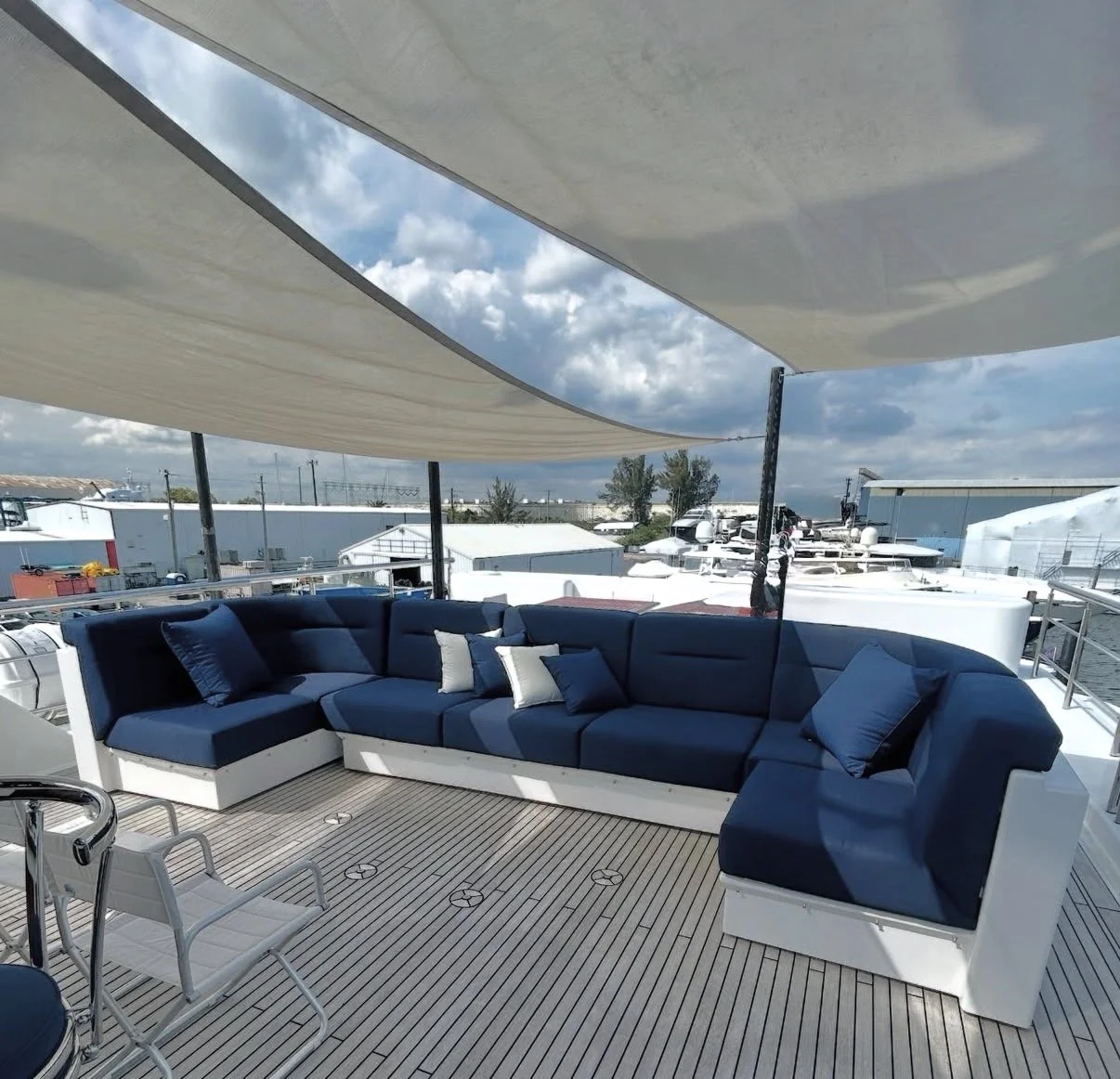
There is a specific moment in the South Florida marine enclosure market where two installations start to look very different from each other. The installation that accounted for South Florida's thermal expansion cycle — panels tensioned for the full range of temperature between a January install and a July service condition — stays flat, clear, and stress-free well into year four. The installation that did not account for it develops stress cracks from the panel frame attachments inward, beginning within the first summer.
Both installations used Strataglass. The material was correct in both cases. The installation craft was not.
Custom bimini tops and yacht enclosures for South Florida vessels require Sunbrella canvas, Strataglass clear vinyl, and Tenara PTFE thread as materials — and correct thermal expansion management during installation as the craft variable that determines whether the enclosure performs correctly for years or develops stress cracks in the first summer.
Bimini Tops: Frame and Canvas as Separate Decisions
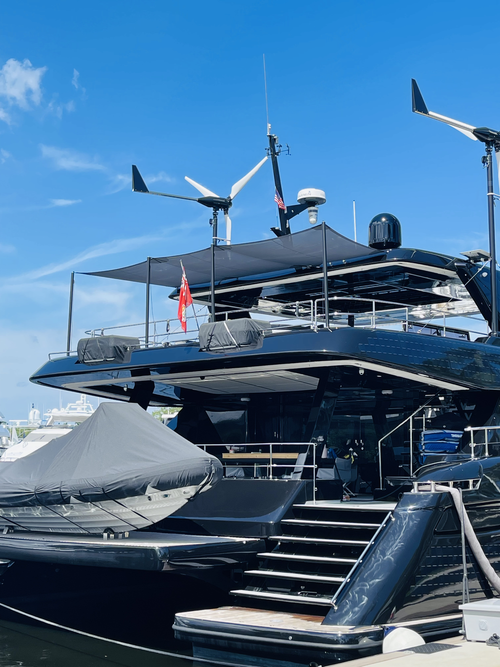
A bimini top has two components — the frame and the canvas — with different service lives and different failure modes in South Florida conditions. Understanding them separately prevents the mistake of replacing only one when both need attention.
The frame: Typically 7/8-inch or 1-inch diameter 316 stainless steel tubing bent to the specific profile of the installation. South Florida frame failure is primarily corrosion at the fitting connections — not the tube itself, but the clamp and socket hardware at the bow pockets and mounting points. A frame with fitting corrosion that has progressed to pitting and scale is a frame that needs replacement, not just new canvas. We assess frame condition at every measurement visit.
The canvas: Sunbrella is the correct South Florida bimini specification. In South Florida continuous UV service, Sunbrella biminis last eight to twelve years. Generic polyester or olefin canvas biminis last three to six years. The service life difference shows up not just as fading but as brittleness — fabric that has lost its UV-stable properties begins to tear at the seam lines and stress points under normal load, not just under hurricane conditions.
The most common bimini project at American Marine is fabric replacement on existing frames — a straightforward project with significant service life improvement when the replacement fabric is Sunbrella. For vessels arriving in South Florida from northern markets with original factory canvas, the South Florida UV clock starts at day one of their first season here.
Enclosures: The South Florida Standard
What an Enclosure System Provides
A well-designed cockpit enclosure transforms the South Florida boating experience. The cockpit stays dry through the afternoon thunderstorms that move through Broward County from June through September. The Strataglass panels provide full visibility for navigation and for the view. The cockpit environment is protected from direct sun and from rain while maintaining ventilation through roll-up panels and zippered sections. The vessel is usable in conditions that an open boat cannot manage comfortably.
An enclosure that does not perform this way — panels that haze within two years, zippers that fail in the first season, canvas that pulls at the snaps because the fit was not patterned from the vessel — provides none of these benefits and produces ongoing frustration instead of an extended season.
Components of a South Florida Enclosure System
Sunbrella canvas panels: The structural frame of the enclosure — typically the solid panels at the aft and sides, the connections to the hardtop or arch, and any non-clear sections. These panels carry the wind and rain load. They should be cut and sewn with seam allowances appropriate to the tension they will experience, and they should be installed flat and correctly tensioned at the snaps or tracks.
Strataglass clear vinyl panels: The enclosure windows. The most technically demanding component of the system because correct installation tension is the critical variable. Strataglass is the correct South Florida specification for optical clarity over the service life of the enclosure. Standard marine vinyl is a compromise for new South Florida enclosure installations on any vessel that will be in service for more than three to four years.
Marine-grade zipper systems: YKK coil zippers on reinforced tape, properly lubricated at installation. Zipper placement determines how the enclosure functions daily — access points, drop-down windows, ventilation sections. Properly placed and installed zippers run the full service life of the canvas. Improperly placed zippers create tension at connection points that eventually splits the canvas at the attachment.
Snaps, tracks, and attachment hardware: 316 marine stainless throughout. The mechanical interface between the canvas system and the vessel structure. Snap track installation requires precise placement — misaligned snaps create angular pull at the fabric attachment point that creates progressive fatigue failure at the snap locations.
Tensioning Strataglass: The Critical Installation Variable
The single most common cause of premature Strataglass failure in South Florida enclosures is mismatched installation tension for the thermal cycle the panel will experience in service.
Strataglass has a working tension range within which it remains flat, optically clear, and stress-free. Install it too loose and it wrinkles in wind and shows folds in direct sun. Install it too tight and stress concentrations at the frame attachment points will produce cracks from the edge inward — first visible as fine lines at the stainless attachment hardware, progressing inward across the panel within one to two South Florida summers.
South Florida's temperature range — from January lows around 60 degrees Fahrenheit to July highs at 90 degrees and above with the additional thermal loading of direct sun on the panel — creates a thermal expansion differential that an installation made in January must account for. A panel at correct tension in 65-degree January conditions is under significantly more tension in July at 90 degrees plus direct solar loading. The installation that does not account for this will show stress cracking in the first summer. The installation that accounts for it correctly will stay clear for years.
We account for it. This is not a universal standard in the South Florida canvas market, and the owners who have had premature Strataglass failure on a previous installation typically understand immediately what happened when it is explained to them.
Strataglass enclosures installed correctly for South Florida's thermal conditions.
american-marine.com/bimini-shades | Request a quote for your bimini or enclosure project
Hurricane Season and Canvas Assessment
South Florida boating is year-round, which means canvas is in service year-round. No off-season means no rest period — frame corrosion, zipper wear, UV degradation, and canvas fatigue accumulate continuously. A South Florida bimini should be assessed every three to four years, not every five to seven. What is mid-life canvas in a northern seasonal market is often approaching end of useful life in South Florida continuous service.
The hurricane season assessment is the most important annual canvas checkpoint. Canvas in marginal condition at the start of June faces six months of potential tropical weather. Hurricane-force winds will find every weak point in a cover, a bimini, or an enclosure — the seam that was borderline, the snap that was loose, the frame fitting that was corroding. Addressing those weak points in April or May rather than after a named storm converts a reactive expense into a planned investment.
Custom mooring covers built for South Florida hurricane prep are engineered differently from standard mooring covers: tie-down reinforcement at key wind-load points, appropriate fabric weight for sustained wind exposure, and fastening configurations that account for wind uplift dynamics rather than just rain protection. A standard catalog cover will not perform the same function in tropical storm conditions, and should not be relied upon to do so.
Bimini and Enclosure Pricing
Replacement bimini top, Sunbrella fabric on existing frames: $600–$1,500
New bimini, full frame and Sunbrella canvas build: $1,200–$3,500
Cockpit enclosure, canvas and Strataglass windows: $3,500–$8,000+
Full enclosure system, cockpit and flybridge: $6,000–$15,000+ depending on configuration
All projects are quoted after vessel measurement. Contact us to schedule a measurement consultation at your marina.
Frequently Asked Questions
How often should a South Florida bimini be replaced?
Assess every three to four years. A Sunbrella bimini in South Florida continuous service should last eight to twelve years with care. Canvas showing brittleness, fading beyond 50 percent of original color, or seam separation has reached end of useful life regardless of calendar age.
Should I replace my enclosure if I already have stress cracks?
Assess the extent before deciding. Minor stress cracks at one panel that are isolated to an installation issue can sometimes be addressed with panel replacement rather than full system replacement. Widespread stress cracking across multiple panels typically indicates systemic installation tension problems and warrants full re-fabrication. We assess and advise at measurement.
Do enclosures create heat buildup in South Florida?
A closed enclosure in July direct sun will retain heat relative to an open cockpit. Well-designed South Florida enclosures include roll-up panels, zippered ventilation sections, or designed aft openings that allow airflow while maintaining rain protection. We design ventilation into every enclosure system — not as an optional feature.
What is the lead time for a cockpit enclosure project?
Three to four weeks from measurement to installed enclosure for a standard cockpit system on a mid-size vessel. Larger systems or vessels requiring significant frame work run longer. We provide a specific timeline estimate with the written quote.
South Florida bimini and enclosure fabrication — correct materials, correct installation, correct for this climate.