Marine Upholstery for Luxury Yachts: The Complete South Florida Guide
The call comes at the end of the season in late October or early November. The owner has not been on the boat since early September, when hurricane season was in full swing and they were managing other priorities. They open the hatch, step below, and smell it immediately — the specific damp, sour smell of mildew that has been growing in the berth cushions or the salon settee through a South Florida summer. The salon cushions look fine from the surface. Lifting one, the mildew is visible at the hull contact edge where the foam has been absorbing condensation from the hull. The repair estimate is the same cost as replacement. Replacement is the right call.
This scenario plays out on South Florida vessels every fall, and it is entirely preventable. The difference between upholstery that holds through a South Florida summer and upholstery that develops mildew in it is closed-cell foam — a specification decision that costs marginally more than open-cell foam and eliminates the failure mode entirely. This guide exists so that South Florida yacht owners make that decision before the project rather than after the season.
Marine upholstery for South Florida yachts is a different specification challenge than upholstery in most other markets. South Florida's summer humidity above 80 percent, year-round UV on exterior seating, and the potential for water intrusion in covered vessels all require specific materials decisions — closed-cell foam, UV-stable marine vinyl, Tenara thread on exterior applications, and antimicrobial treatment as standard — that are not universal in the general marine upholstery market.
Why South Florida Upholstery Is Different
The South Florida upholstery failure modes are specific to this environment. Understanding them is the foundation of every material decision that follows.
UV on exterior upholstery: Helm seats, cockpit cushions, flybridge seating, and settee cushions on open decks are exposed to a UV index that regularly reaches 11 from April through October. Marine vinyl that is not formulated for sustained high-UV exposure begins to crack and lose surface texture within two to three years on a South Florida vessel in direct sun. Exterior upholstery on a boat that lives in a Broward County wet slip needs UV-stable marine vinyl as the baseline — not standard automotive or commercial vinyl, which will degrade significantly faster in this environment.
Mildew in interior upholstery: South Florida's average relative humidity in summer exceeds 80 percent. Covered vessels with limited ventilation — hatches closed, salon air-conditioning off during the owner's absence — create conditions where open-cell foam absorbs moisture from the hull and the air and retains it. The mildew grows at the interface between the foam core and the vinyl surface, at the seam lines, and along hull-contact edges. Surface mildew can sometimes be cleaned; mildew that has penetrated the foam cannot. Closed-cell foam does not absorb moisture and eliminates this failure mode.
Accelerated UV on exterior vinyl from wet-dry cycling: South Florida's combination of daily spray, afternoon rain, and intense sun creates a wet-dry cycling pattern that accelerates vinyl degradation faster than either wet or dry conditions alone. The expansion and contraction of the vinyl surface under alternating wet and dry conditions, combined with UV exposure, shortens the service life of exterior marine vinyl more quickly than most northern-market service life estimates would suggest.
Upholstery specified for South Florida conditions — from helm seats to full salon refits.
american-marine.com/marine-upholstery | Request a consultation
The Full Scope of Yacht Upholstery Work
Marine upholstery covers more of a large vessel than most owners realize until they approach a project. Understanding the full scope helps in budgeting accurately and in coordinating work efficiently across the vessel.
Exterior Upholstery — Cockpit, Deck, and Bridge
Exterior upholstery is the highest-demand environment on the vessel and requires the most durable material specification. Direct UV, rain, salt spray, and wet-dry cycling are daily conditions on any open South Florida vessel.
Helm seats and bolsters: The highest-use upholstered item on most powerboats. The base cushion absorbs the full weight and vibration of the operator through hours of running; the bolsters take lateral loading in offshore conditions. Helm seats that have cracked from UV or developed foam compression from moisture should be replaced rather than repaired — a correctly rebuilt helm seat with new closed-cell foam and UV-stable marine vinyl will outlast a patched original by years.
Cockpit cushions: Custom cockpit cushions are patterned from the specific cockpit bench geometry — no two cockpits are identical. Foam density selection matters: too soft and the cushion loses profile within a season; too firm and it becomes uncomfortable on long passages. We specify closed-cell marine foam at density appropriate to the application and usage frequency.
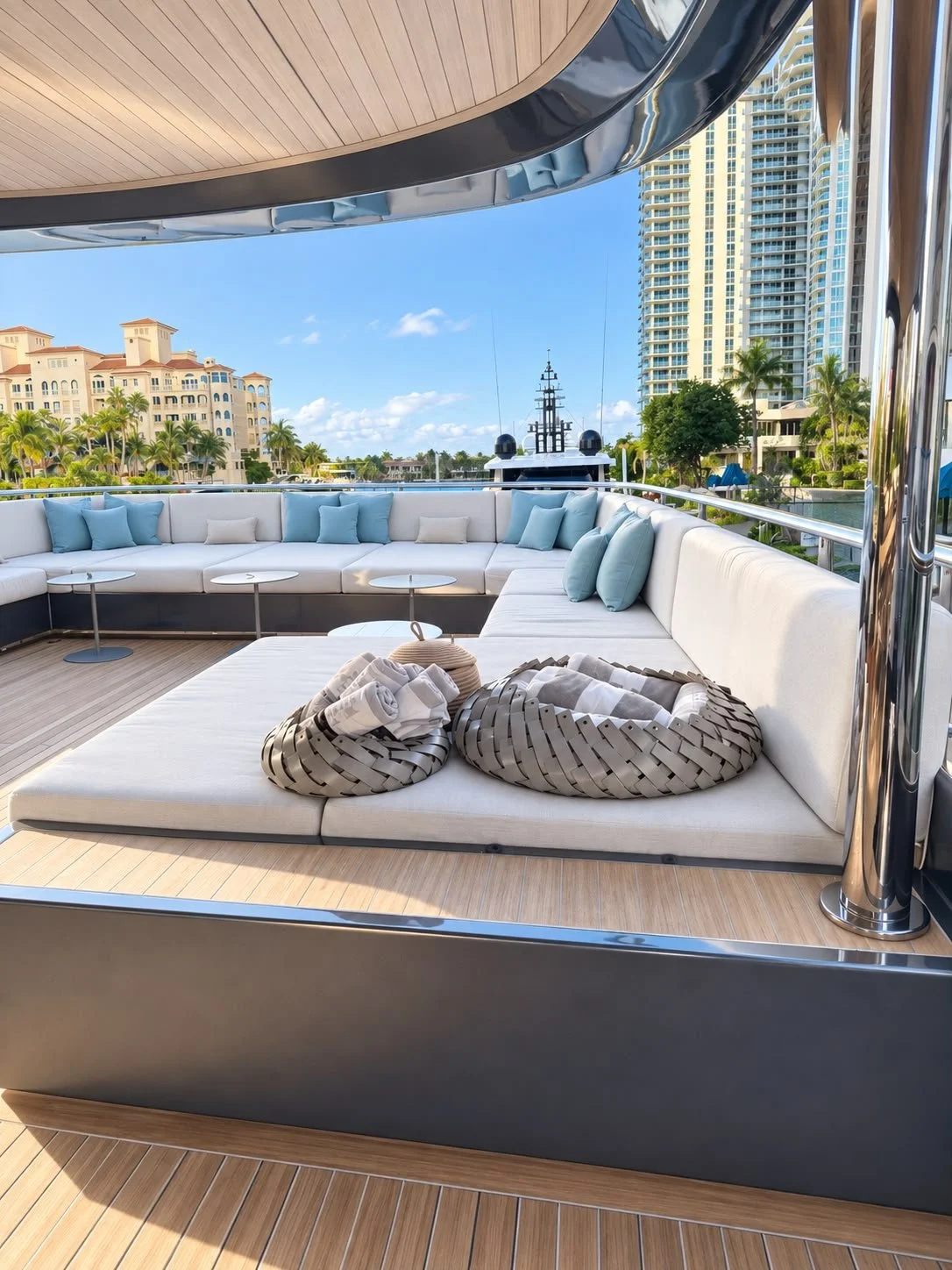
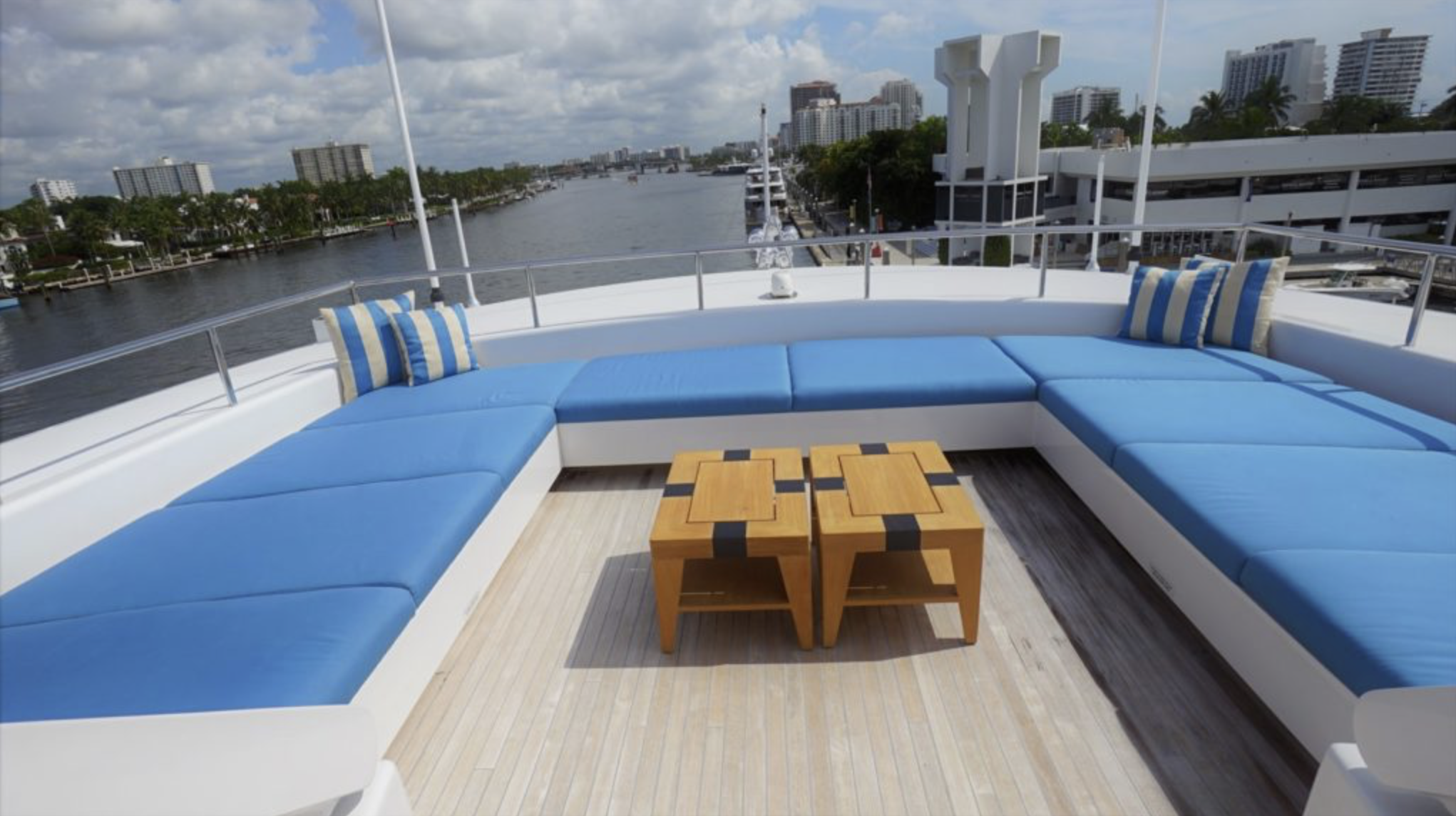
Flybridge and bridge seating: The flybridge receives maximum UV exposure on most vessels — more direct sun hours per day than any other upholstered area. Material specification here is non-negotiable in South Florida. UV-stable marine vinyl on closed-cell foam is required; anything less will show degradation within two years of installation at this UV loading level.
Interior Upholstery — Salon and Cabin
Interior upholstery is protected from direct UV but exposed to the humidity and water intrusion risks that are most acute in the South Florida wet season.
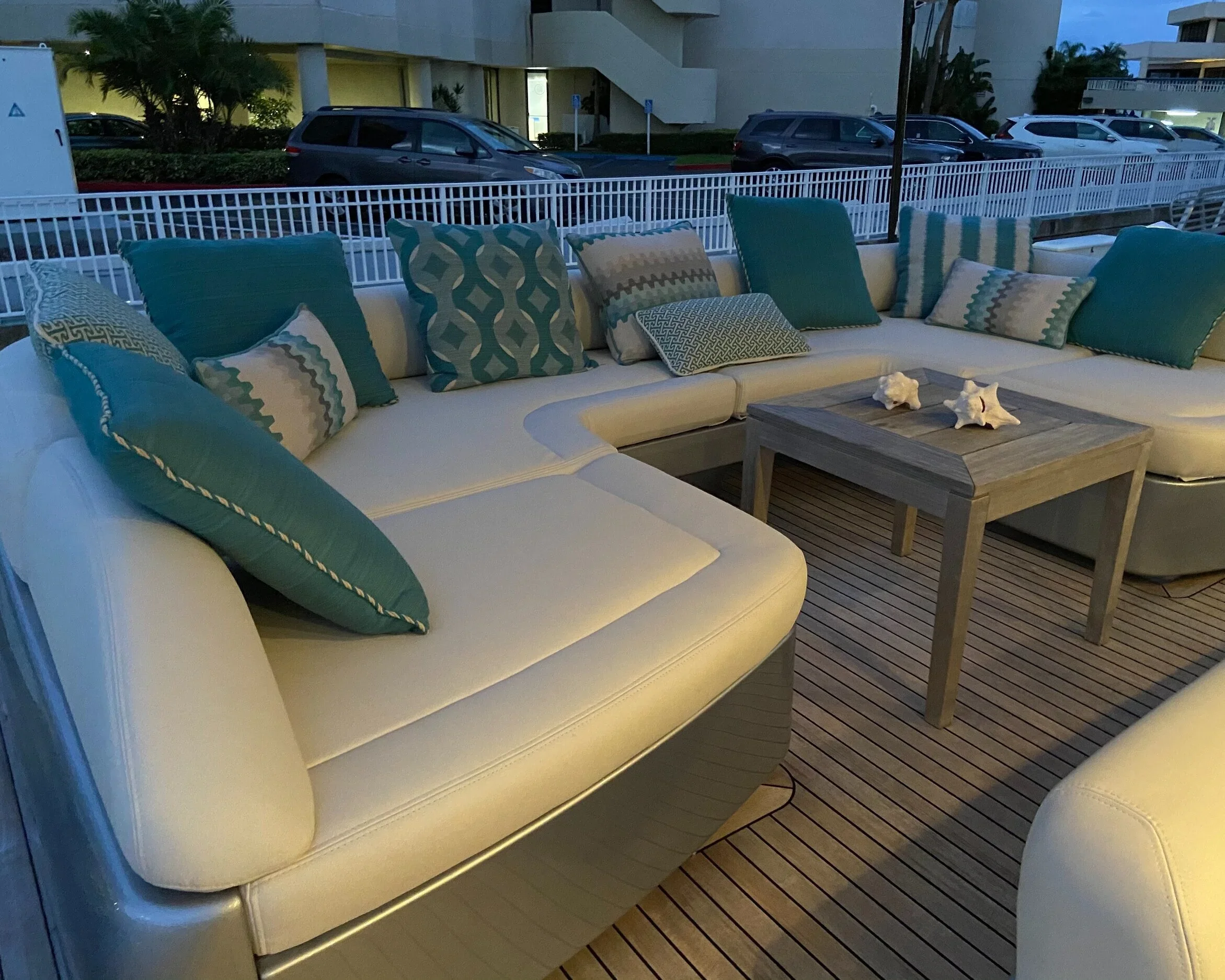
Salon settees and lounges: The primary salon seating is both a comfort surface and a significant presentation item. Material options range from standard marine vinyl to Ultraleather and Durasoft premium marine fabrics that provide a leather appearance with marine-appropriate durability. Color and pattern selection should account for South Florida's high ambient light — dark fabrics in spaces with large ports absorb heat that affects comfort significantly.
Berth cushions: The item most affected by South Florida's humidity and ventilation conditions. Closed-cell foam in berth cushions is the specification that eliminates the mildew failure mode. Additionally, adequate ventilation in the berth space — not just in the cabin overall — is part of the long-term mildew prevention equation.
Headliners: Vinyl-covered foam panel systems that form the overhead surface of cabin and salon spaces. South Florida vessels with headliner staining from age or water intrusion, delaminating foam behind the vinyl surface, or water marks from previous deck-hardware leaks are candidates for headliner replacement. This is typically a full-cabin project and is most efficiently done in combination with other interior work.
Specialty Applications
Specialty upholstery on South Florida vessels includes fighting chair refurbishing on tournament-class sportfishers (a specific high-use, high-impact application with distinct foam and cover requirements), sun pad replacement on swim platforms and open powerboat decks, custom nav station upholstery on sailing yachts, and T-top and hardtop upholstery on center consoles and walkarounds.
Materials Guide: What to Specify in South Florida
Exterior Marine Vinyl — What Performs
TopGun (Gunn Industries): Commercial-grade marine vinyl with high abrasion resistance and documented UV stability. Used on high-wear exterior applications — helm seats and bolsters on working vessels, cockpit seating on sportfishers with high usage frequency. The step up from standard marine vinyl in durability and UV performance.
SeaMark and Nautolex: Purpose-designed marine vinyl — UV-rated, mold-resistant, and salt-appropriate. Baseline exterior specification for South Florida cockpit cushions and deck seating. Better than automotive or commercial vinyl by a significant margin in marine exterior applications.
Ultraleather and Durasoft: Premium marine interior fabrics providing leather appearance and feel with marine durability. Appropriate for salon and cabin interior upholstery where aesthetics matter alongside functionality. Not appropriate for exterior applications with direct UV exposure.
Standard automotive or commercial vinyl: Not appropriate for any South Florida exterior marine application. Will crack and delaminate within two to three years in direct sun at the UV exposure levels common in Broward County. Some shops use it. Request the specific product and check its UV rating before accepting any exterior upholstery quote.
Marine Foam Specification
Closed-cell foam: Does not absorb water. If a closed-cell cushion gets wet in a squall, the surface sheds water and the foam interior remains dry. This is the correct specification for all South Florida marine upholstery — exterior and interior — where any possibility of moisture exposure exists.
High-density closed-cell foam: Specified for helm seats and heavily-used cockpit seating where compression recovery is a service-life determinant. Foam that loses its profile from compression — without moisture damage — is typically underspecified in density for the application.
Antimicrobial treatment: Applied to fabric before installation on all interior upholstery at American Marine as standard. Extends the time before mildew conditions develop in South Florida's summer humidity. Does not substitute for closed-cell foam — it complements it.
Thread and Hardware
Tenara PTFE thread is specified for all exterior upholstery — helm seats, cockpit cushions, flybridge seating — at American Marine. For interior upholstery with lower UV exposure, high-quality polyester thread is adequate. Marine-grade zippers and velcro are specified throughout. Zipper placement on exterior cushions should allow drainage — closed zippers that trap water promote the moisture conditions that degrade foam and fabric.
The Mold and Mildew Problem — Cause, Prevention, and Response
Mildew is the most common and most avoidable upholstery problem on South Florida vessels. Understanding the mechanics of the failure makes the prevention obvious.
The conditions that produce mildew in marine upholstery: summer humidity above 80 percent (South Florida averages above this through August and September), closed hatches and reduced ventilation during owner absence, and foam that retains moisture from any source — rain intrusion through a gap in the canvas, condensation from the hull, or spray that gets under a cover. The mildew develops at the interface between retained moisture in the foam and the warm, dark covered environment. Open-cell foam retains moisture. Closed-cell foam does not.
Prevention: Closed-cell foam eliminates the moisture retention failure mode. Antimicrobial fabric treatment on interior applications extends the resistance window. Adequate ventilation when the vessel is not in use addresses the environmental condition. Addressing canvas and enclosure gaps that allow rain intrusion removes the primary moisture source.
When prevention has not been applied: Surface mildew on vinyl fabric can often be cleaned with marine mildew cleaner if caught early. Mildew at seam lines or visible between the vinyl and foam means the foam core is compromised. At that stage, cleaning is a temporary measure; replacement is the correct solution. Open-cell foam that has been saturated and dried repeatedly has a substantially shortened remaining service life regardless of mildew treatment.
When to Replace vs. Repair: The Practical Assessment
Vinyl that is cracking, peeling, or delaminating from the foam is at end-of-life UV failure. Not reversible by cleaning or treatment.
Mildew at seam lines that does not respond to cleaner indicates foam penetration. Replacement is the economically correct path.
Foam that does not recover its full profile after removing body weight has exhausted its structural life. Usually accompanied by compression at seam lines.
Color fading inconsistent between panels — one panel noticeably lighter than adjacent panels — indicates advanced UV degradation of the vinyl surface.
Hardware corrosion visible through the fabric surface, or zipper failure that allows water intrusion, warrants replacement of the piece rather than repair of the hardware.
Project Pricing in South Florida
Helm seat, cushion and bolsters: $400–$1,200 per seat
Full cockpit cushion set (6–8 cushions): $1,500–$4,000
Flybridge seating: $2,000–$5,000+
Salon settee (per settee): $1,500–$4,000
Full cabin berth cushions: $800–$2,500 per cabin
Headliner replacement (full cabin): $2,500–$6,000+
Project quotes are provided from vessel measurement. The ranges above are reference points for budgeting. Actual cost depends on vessel configuration, fabric selection, and scope.
Frequently Asked Questions
How long does quality marine upholstery last in South Florida?
Exterior upholstery in TopGun or SeaMark on closed-cell foam, properly maintained, typically lasts eight to twelve years. Interior upholstery from premium materials in a well-maintained cabin can last fifteen or more. Substandard vinyl on the exterior of a South Florida vessel will show visible degradation in three to five years.
Can I match replacement pieces to my existing upholstery?
Exact color matching on older upholstery is difficult because vinyl colors and textures change over product generations. We source the closest current match and present samples for approval. If the aesthetic matters, replacing all visible upholstery in a single coordinated project is more reliable than mixing generations.
When should I schedule upholstery work?
Any time of year — upholstery work is not as seasonally concentrated as canvas work. For the most efficient scheduling, coordinate interior upholstery with planned periods of non-use, and coordinate exterior upholstery with canvas work if both are in scope. A combined cockpit refit — new enclosure and new cockpit cushions — is more efficiently scheduled as a single scope.
Is it worth reupholstering versus buying new boat cushions?
For custom vessel geometry, reupholstering is typically the right call — factory replacement cushions for older vessels may not be available, and aftermarket catalog cushions will have the same fit limitations as catalog canvas. For vessels with standardized cushion shapes, the comparison is between custom fabrication cost and catalog cost versus service life in South Florida conditions.
Marine upholstery built for South Florida's humidity, UV, and the reality of what a wet season does to open-cell foam.
american-marine.com/marine-upholstery | Broward County and Fort Lauderdale