
Cover Your Controls: Essential Yacht Helm Cover Options
Why Protection Matters for Your Yacht's Command Center

Yacht helm covers are protective barriers designed to shield your vessel's steering wheel, navigation electronics, and control panels from UV radiation, saltwater spray, rain, and physical damage. They range from universal wheel covers to full custom-fit console enclosures, typically made from marine-grade fabrics like Sunbrella or coated polyester.
Quick Guide to Helm Cover Options:
- Full Console Covers - Enclose entire helm station including electronics and seating
- Instrument Panel Covers - Protect specific gauge clusters and displays
- Steering Wheel Covers - Shield the wheel from sun damage and weathering
- Custom-Fit Solutions - Precisely custom to your exact helm configuration
- Universal Covers - Adjustable options for standard console sizes
Your yacht's helm is the nerve center of your vessel. It houses thousands of dollars in navigation equipment, chartplotters, radar displays, and precision instrumentation. Yet this critical area faces constant assault from UV radiation, corrosive saltwater, humidity, and physical debris.
The numbers tell the story: over 70% of boat owners consider helm protection a priority for maintaining their vessel's value and functionality. UV radiation alone can degrade unprotected materials by up to 50% over five years. Custom-fit helm covers can extend the life of your boat's helm and electronics by up to 30% simply by creating a barrier against the elements.
For luxury yacht owners, helm protection isn't just about function—it's about preserving the aesthetic excellence and resale value of a significant investment. A faded, cracked dashboard or salt-damaged electronics can cost tens of thousands to replace or restore.
I'm Jeremy Bottau, owner of American Marine in South Florida, where I've spent years designing and fabricating precision yacht helm covers for vessels ranging from 40-foot sportfishers to superyachts. Through advanced 3D patterning and elite marine-grade materials, I've seen how the right helm cover protects both the performance and beauty of a yacht's command center.
Why Your Yacht's Helm Needs a Cover
Imagine your yacht's helm, gleaming and ready for adventure. Now picture it after months of relentless South Florida sun, salty air, and unexpected squalls. Without proper protection, that pristine command center quickly deteriorates. This is where high-quality yacht helm covers become indispensable.
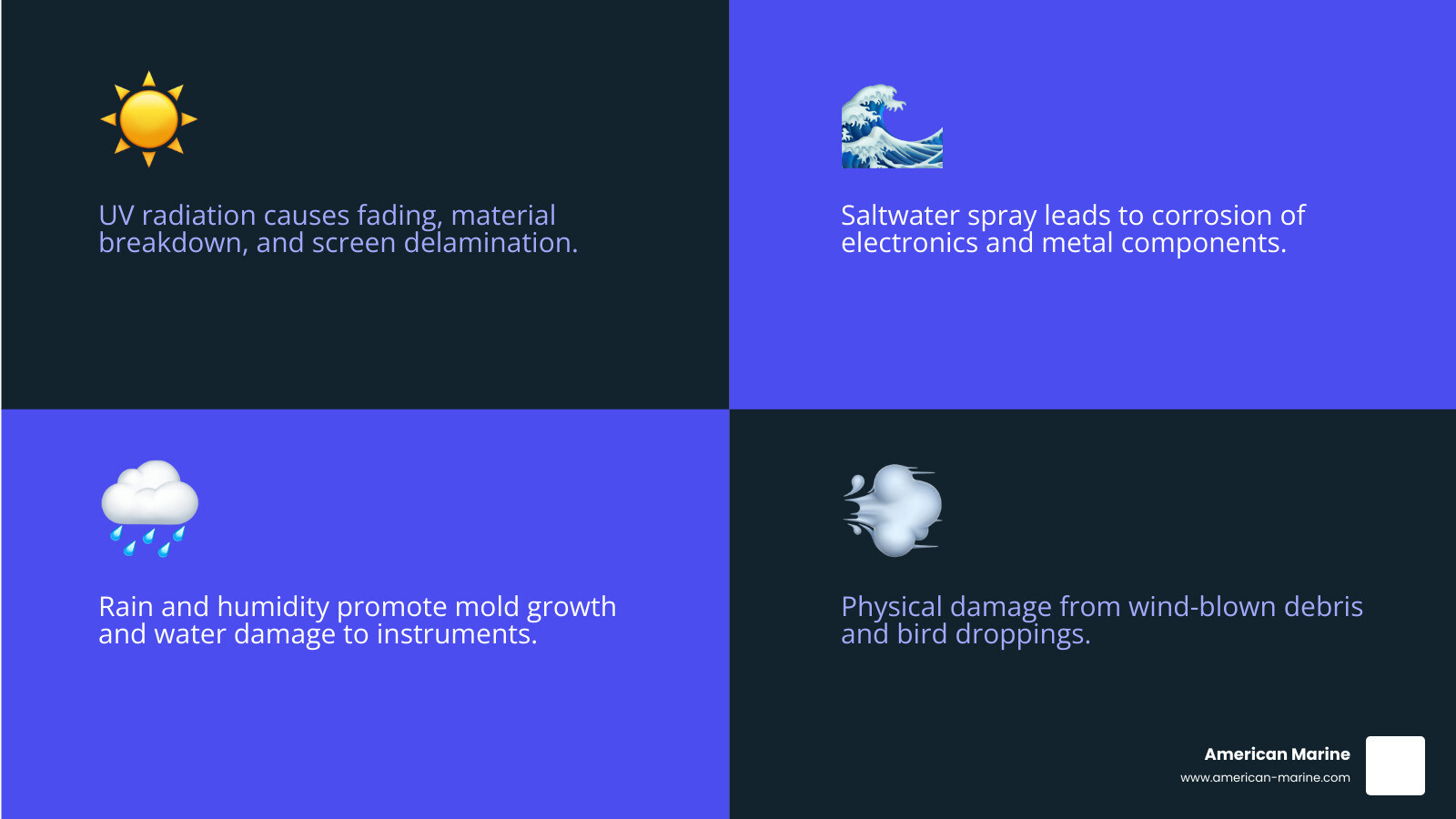
The primary function of a yacht helm cover is to act as a robust shield against the relentless elements. Here in South Florida, we know the sun doesn't play nice. Constant UV radiation is a notorious culprit, causing plastics to become brittle, colors to fade, and sensitive electronic screens to delaminate. Our research indicates that UV radiation can degrade helm cover materials by up to 50% over a five-year period, underscoring the need for durable, UV-resistant fabrics, and even more so, the electronics underneath them.
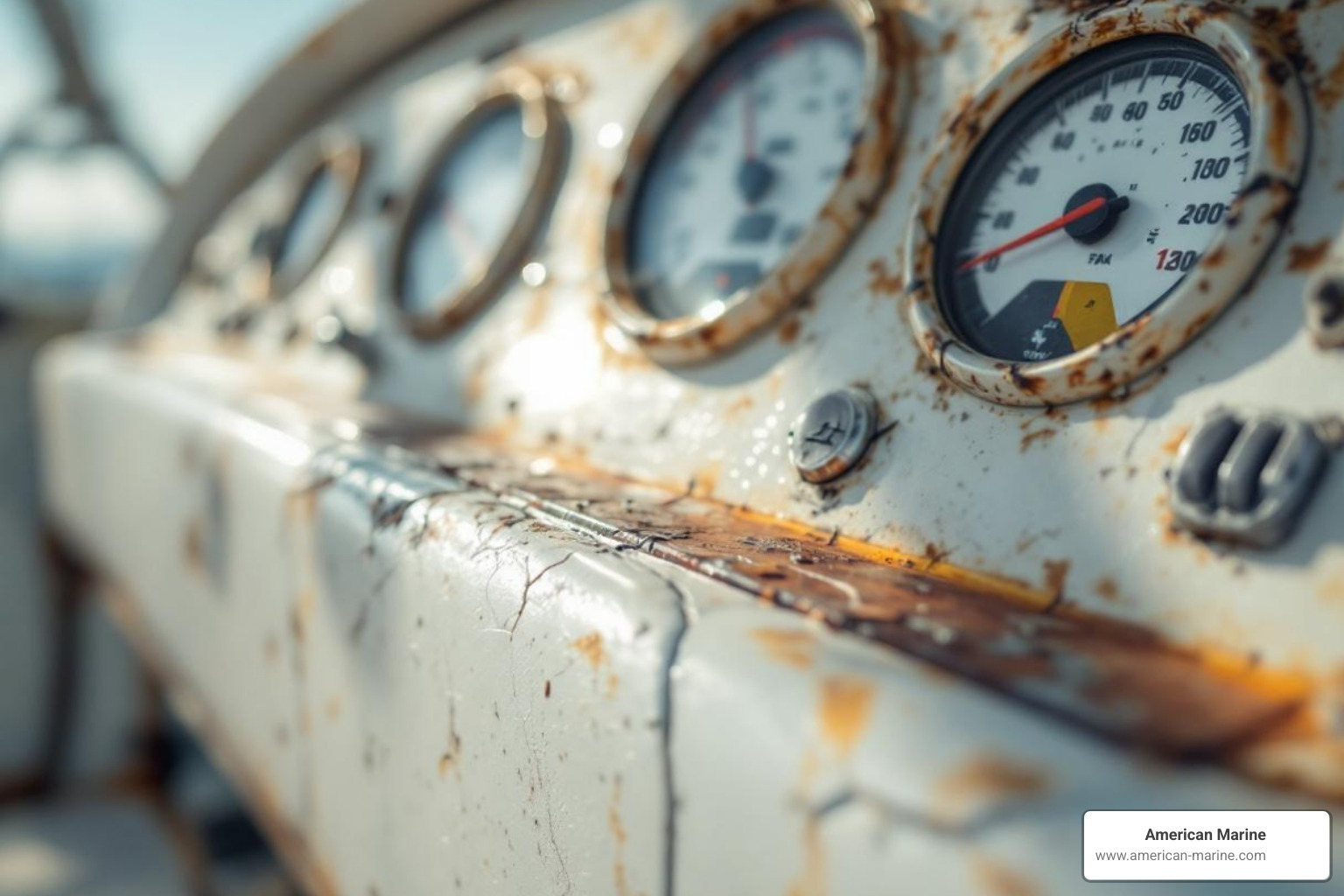
Beyond the sun, saltwater spray is a corrosive force, silently eating away at metal components, connections, and even the internal workings of your electronics. Rain and humidity promote mildew growth, stain surfaces, and can lead to costly water damage if allowed to seep into delicate instruments. And let's not forget the occasional bird dropping or wind-blown debris that can leave unsightly marks or scratches.
The benefits of using a yacht helm cover are tangible and significant:
- Preserving Expensive Electronics: Your GPS, chartplotter, radar, and other gauges represent a substantial investment. A quality cover shields them from direct sun, moisture, and dust, preventing premature wear and tear. In fact, custom-fit helm covers can extend the life of a boat's helm and electronics by up to 30% by protecting them from the elements. This means fewer costly repairs and replacements down the line.
- Maintaining Steering Components: The steering wheel, throttle controls, and other mechanical parts are also vulnerable. Covers keep them clean, dry, and protected from environmental degradation, ensuring smooth operation and a longer lifespan.
- Enhancing Resale Value: A well-maintained helm area speaks volumes about a yacht's overall care. A crisp, undamaged console and functional electronics contribute significantly to your vessel's aesthetic appeal and command a higher price when it's time to sell. As we often say, it's about more than just a cover; it's about yacht preservation. You can learn more about how custom canvas plays a crucial role in protecting your investment in our article, More Than a Cover: The Role of Custom Canvas in Yacht Preservation.
A yacht helm cover is not just an accessory; it's an essential investment that safeguards your vessel's functionality, aesthetics, and long-term value, especially in demanding climates like South Florida.
Choosing the Right Material for Your Helm Cover
When it comes to selecting a yacht helm cover, the material is paramount. Here in South Florida, where the sun beats down relentlessly and the air is thick with salt, the fabric choice determines how effectively your cover will protect your helm and how long it will last. We only work with elite marine-grade materials designed to withstand these harsh conditions.
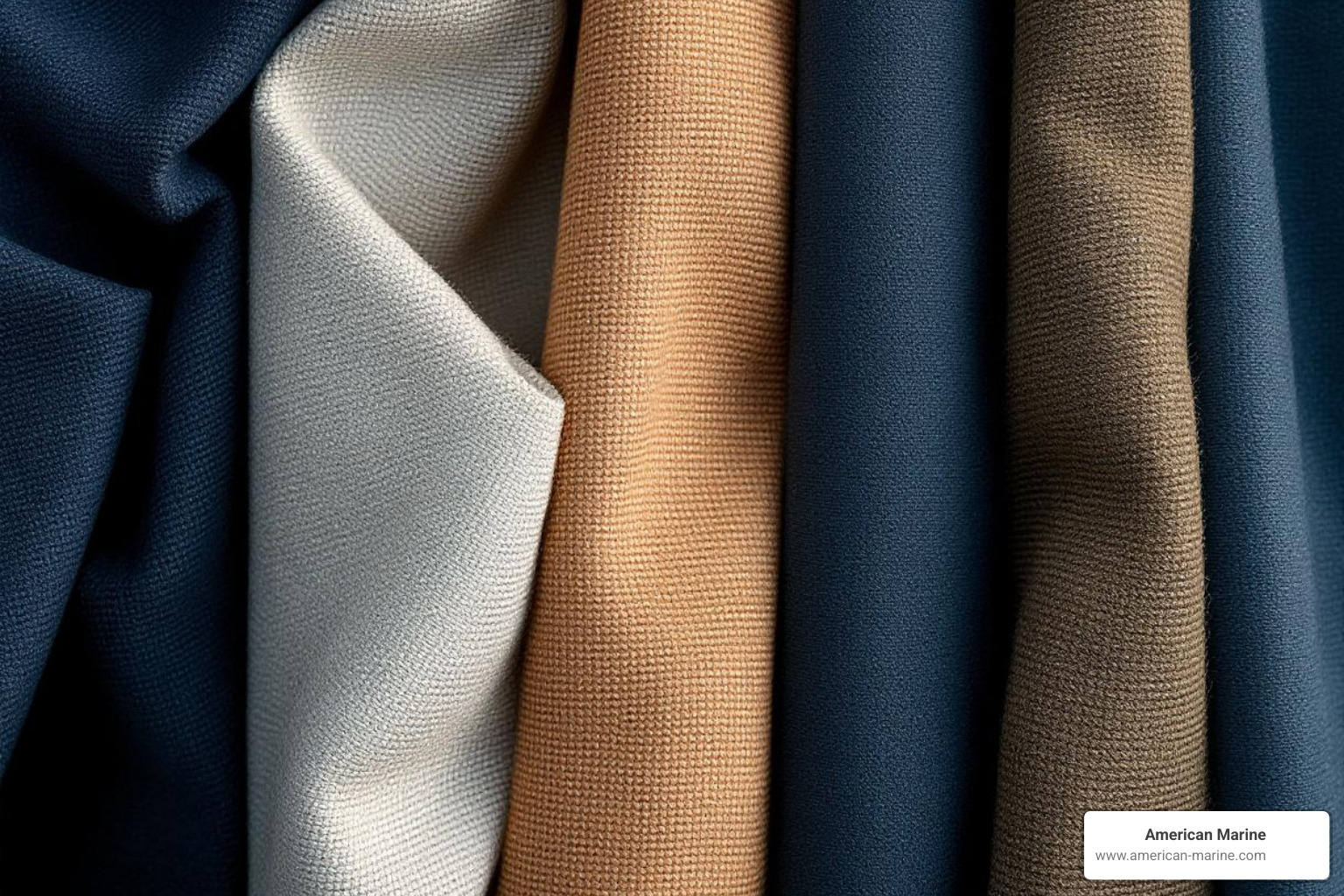
Here are the most commonly used materials for yacht helm covers, along with their pros and cons:
- Solution-Dyed Acrylics (e.g., Sunbrella): These are often considered the gold standard for marine canvas, and for good reason.
- Pros: Exceptional UV resistance (the color is saturated to the core of the fibers, making it highly fade-resistant), excellent breathability (reduces heat build-up and mildew), good water repellency, and a luxurious feel. Sunbrella fabrics are also recommended by The Skin Cancer Foundation for shading products.
- Cons: Generally more expensive than other options. While highly water-repellent, they are not 100% waterproof without additional coatings, which can affect breathability.
- Coated Polyesters (e.g., Top Gun, Sun-Dura): These fabrics offer a balance of performance and affordability.
- Pros: Good water resistance (often waterproof due to coatings), decent UV resistance, strong and tear-resistant. Top Gun is a recognized canvas fabric for marine applications.
- Cons: Can be less breathable than acrylics, potentially leading to condensation or mildew if not properly ventilated. UV resistance, while good, may not match the longevity of solution-dyed acrylics in extreme conditions.
- Vinyl-Coated Fabrics (e.g., Stamoid, SeaMark): These are heavy-duty options, often used for more extreme weather protection.
- Pros: Excellent waterproofing, very durable, easy to clean.
- Cons: Can be less breathable, heavier, and less pliable than other materials. Might not be ideal for covers that need frequent removal and storage.
Here's a quick comparison table to help you visualize the differences:
| Material Type | UV Resistance | Water Repellency | Breathability | Durability |
|---|---|---|---|---|
| Solution-Dyed Acrylic | Excellent | Good | Excellent | Excellent |
| Coated Polyester | Good | Very Good | Good | Very Good |
| Vinyl-Coated Fabric | Very Good | Excellent | Fair | Excellent |
For high-end yachts, especially here in the intense South Florida environment, we almost exclusively recommend solution-dyed acrylics like Sunbrella. Their superior UV resistance and breathability are best, offering the best long-term protection for your investment. You can explore more about high-performance marine fabrics and their properties on the Sunbrella Marine Fabrics page. Choosing the right fabric is a critical step, as we detail in Canvas Matters: Why High-End Yachts Deserve Custom-Fit Marine Covers.
Types of Yacht Helm Covers and Their Applications
Just as yachts come in countless shapes and sizes, so do their helm areas. Consequently, there's no one-size-fits-all solution for yacht helm covers. Understanding the different types and their specific applications is key to selecting the perfect protection for your vessel. At American Marine, we craft a wide array of custom covers to suit every need. You can see some of our general offerings on our Covers page.
Here are the primary types of yacht helm covers and how they differ:
- Full Console Covers: These are comprehensive covers designed to envelop the entire helm station. This includes the steering console, navigation electronics, gauges, throttles, and often the helm seating.
- Purpose & Design: Full console covers offer maximum protection from all angles, shielding sensitive equipment from UV, rain, salt spray, and even curious hands or accidental bumps. They typically feature secure fastening systems, such as heavy-duty marine-grade zippers, adjustable straps, or snaps, ensuring a snug fit. Many are designed to accommodate T-tops or hardtops, enclosing the entire structure underneath. These are particularly popular for center console boats and flybridge helms in South Florida, where complete coverage during mooring or storage is crucial.
- Instrument Panel Covers: For those who only need to protect the immediate dashboard area, instrument panel covers are a more compact solution.
- Purpose & Design: These covers focus specifically on the electronic displays and gauges, leaving the steering wheel and throttles exposed. They are often less bulky and easier to install and remove than full console covers. While they offer good protection for the most sensitive and expensive components, they don't safeguard the entire helm area.
- Steering Wheel Covers: The simplest form of helm protection, these covers are designed solely for the steering wheel.
- Purpose & Design: Their main goal is to protect the wheel material (leather, stainless steel, wood) from UV degradation, fading, and cracking. They also keep the wheel cooler to the touch in hot climates like ours. They are typically secured with elastic, drawstrings, or Velcro. While essential for wheel longevity, they offer no protection for electronics or controls.
- Powerboat Considerations: On powerboats, especially open center console or express cruiser designs, the helm is frequently exposed. Full console covers are incredibly popular, often extending to cover helm seats and sometimes even integrating with T-top structures. For flybridge helms, a dedicated cover that can withstand higher winds and sun exposure is critical.
- Sailboat Pedestal Covers: Sailboats often have a distinct helm setup, typically a steering pedestal with a large wheel, engine controls, and sometimes a small chartplotter or instrument display.
- Purpose & Design: Pedestal covers are custom to fit this specific configuration, protecting the wheel, compass, and any mounted instruments from UV and weather. They often have cutouts or flexible sections to accommodate lines or other deck hardware. Given the nuanced designs of sailboat cockpits, custom solutions are almost always preferred for the best fit and protection.
The choice among these types depends heavily on your boat's design, your typical usage, and the level of protection you desire.
Selecting the Best Yacht Helm Covers for Your Vessel
Choosing the right yacht helm cover is a decision that blends practicality with the specific demands of your vessel and our unique South Florida environment. It’s not just about picking a color; it’s about understanding your boat and its needs.
Here are the key factors we consider when helping boat owners select the best yacht helm covers:
- Assessing Your Boat Type:
- Center Console Boats: These boats are often fully exposed to the elements, making full console covers a highly recommended choice. These covers can protect the entire console, including integrated helm seats and even T-top structures. The goal is to encapsulate the whole command center when not in use.
- Flybridge Yachts: Flybridge helms are constantly bombarded by sun and wind. Custom-fit full console covers are essential here, often designed to be easily removable for frequent use but robust enough for serious weather.
- Sailboat Cockpits: Sailboat helms typically feature a pedestal. A custom pedestal cover is crucial to protect the steering wheel, compass, and any mounted instruments. For sailboats, we also consider how the cover integrates with other cockpit canvas, like dodgers or biminis.
- Matching Cover to Use Case:
- Mooring Protection: If your yacht spends most of its time docked or on a mooring, a robust, weather-resistant full console cover is paramount. It needs to withstand daily sun, rain, and salt exposure, preventing mildew and UV damage.
- Off-Season Storage: For longer periods of inactivity, a heavy-duty, breathable cover is critical. This protects against prolonged exposure to humidity and prevents dust and debris from accumulating. Even in South Florida, some yachts may be stored for hurricane season, requiring maximum protection.
- Short-Term Protection: If you just need a quick cover for an overnight stay or while grabbing lunch, an easily deployable, lighter-weight cover might be suitable.
The best yacht helm cover is one that fits perfectly, is made from the appropriate marine-grade material for our climate, and directly addresses your specific protection needs.
Custom-Fit vs. Universal: A Critical Decision for Protection
When it comes to yacht helm covers, one of the most critical decisions you'll face is whether to opt for a universal or a custom-fit solution. While both aim to protect, their effectiveness and aesthetic impact differ dramatically, especially for luxury yachts in South Florida.
Let's break down the pros and cons:
- Universal Covers Pros and Cons:
- Pros: Generally lower cost, readily available off the shelf, and might offer a quick, temporary solution. They are designed to fit a range of console sizes with adjustable straps or elastic hems.
- Cons: The "universal" fit often means a baggy, ill-fitting cover that flaps in the wind, collects water, and provides inconsistent protection. They rarely cover all contours of your unique helm, leaving gaps where UV rays, moisture, or dust can sneak in. Aesthetically, they can detract from the sleek lines of a luxury yacht. They may also use less durable materials, leading to a shorter lifespan in harsh environments.
- Custom-Fit Covers Pros and Cons:
- Pros: Precision fit means complete coverage of every curve and component of your helm. This ensures maximum protection against all elements, no flapping in the wind, and no water pooling. The custom design improves the yacht's aesthetics, appearing as an extension of the vessel rather than an afterthought. Custom covers are typically made from superior marine-grade materials, offering unparalleled durability and longevity. They preserve the value of your yacht's electronics and steering components far more effectively.
- Cons: Higher initial investment and a longer lead time for manufacturing. However, as the saying goes, "you get what you pay for," and the long-term savings from protected electronics and preserved aesthetics far outweigh the upfront cost.
At American Marine, our expertise lies in creating precision-fit custom solutions. We use advanced 3D digital measuring techniques to ensure every cover we fabricate is a perfect match for your yacht's unique helm. This precision fit isn't just about looking good; it's about providing an impenetrable barrier against the relentless South Florida sun and sea. This approach is what makes our custom-fit boat covers truly superior. You can read more about our process and the benefits in our article, Custom Fit Boat Covers.
Key Features of High-Quality Yacht Helm Covers
Beyond the choice of material and fit, several key features distinguish a truly high-quality yacht helm cover that will stand the test of time, especially in a challenging marine environment like South Florida. When we design and fabricate covers, these are the details that ensure superior performance and longevity:
- UV-Resistant Thread: Even the strongest fabric can fail if the stitching degrades. High-quality covers use UV-resistant thread, typically made from materials like PTFE (Teflon) or bonded polyester, which won't rot, fray, or break down under constant sun exposure.
- PTFE Stitching: For the ultimate in durability and resistance to UV, chemicals, and mildew, PTFE (polytetrafluoroethylene) thread is a top choice. It's incredibly strong and virtually impervious to environmental degradation, ensuring your seams hold up as long as your fabric.
- Reinforced Stress Points: Areas around corners, snaps, zippers, and tie-downs experience the most stress. High-quality covers feature reinforced stitching, extra layers of fabric, or webbing at these points to prevent tearing and extend the cover's life.
- Non-Corrosive Fasteners: All snaps, buckles, and zippers should be made from marine-grade stainless steel, brass, or durable plastics. This prevents rust stains on your yacht and ensures the fasteners remain functional in a saltwater environment.
- Soft Liner for Screens: For covers that directly contact sensitive electronic screens, a soft, non-abrasive liner on the interior can prevent scratching and damage to delicate surfaces.
- Proper Ventilation: While protecting from rain, a good cover also needs to breathe. Strategically placed vents prevent heat and moisture buildup underneath, which can lead to mildew growth and condensation on electronics. This is particularly important in South Florida's humid climate.
These features, often overlooked, are crucial for a cover that not only protects your helm but also endures. They are the hallmarks of precision canvas, which we explain further in From Sun Damage to Storms: Why Precision Canvas is Your Yacht's Best Defense.
Frequently Asked Questions about Helm Protection
We often get asked various questions about yacht helm covers, from their upkeep to their cost. Here are some of the most common inquiries we address for our clients in South Florida.
How do I clean and maintain my helm cover?
Proper maintenance is key to extending the lifespan of your yacht helm cover. Think of it as a small investment in time that pays off big in protection and longevity.
- Regular Rinsing: After each trip, especially in saltwater, give your cover a good rinse with fresh water to remove salt residue, dust, and bird droppings. This prevents buildup and prolongs the fabric's life.
- Mild Soap and Water: For deeper cleaning, use a mild soap (like dish soap or a specialized marine fabric cleaner) mixed with lukewarm water. Apply with a soft brush or sponge, gently scrubbing away grime. Avoid harsh detergents or abrasive cleaners, as these can damage the fabric's water-repellent coating and UV protection.
- Air Drying: Always allow your cover to air dry completely before folding and storing it. Lay it flat or hang it in a shaded area. Storing a damp cover is an open invitation for mildew and mold, a common issue in our humid South Florida climate.
- Fabric-Specific Protectants: Depending on your cover's material, consider applying a fabric protectant periodically. For solution-dyed acrylics like Sunbrella, there are specific products designed to restore water repellency and improve UV protection. Always follow the manufacturer's recommendations.
- Proper Storage: When not in use for extended periods, store your clean, dry cover in a breathable bag in a cool, dry place. Avoid folding it tightly for long durations to prevent creasing.
By following these simple steps, you can significantly extend the life of your yacht helm cover, ensuring it continues to protect your valuable helm components for years to come.
What factors should I consider for my climate?
The climate in which your yacht operates is a paramount factor when choosing and maintaining your yacht helm cover. Here in South Florida, we face unique challenges that demand specific considerations.
- High-UV Climates (like South Florida!): Our intense sun is the primary adversary.
- Prioritizing UV-Resistant Fabric: In high-UV environments, selecting a cover made from a solution-dyed acrylic like Sunbrella is non-negotiable. These fabrics offer superior fade resistance and structural integrity under prolonged sun exposure. UV radiation can degrade helm cover materials by up to 50% over a 5-year period, making this a critical choice.
- Color Choice: Lighter colors tend to absorb less heat, which can help keep the helm area cooler underneath the cover, reducing stress on electronics.
- Rainy Climates (especially our summer rainy season): Frequent downpours and high humidity are also a factor.
- Water Repellency and Ventilation: While UV protection is key, excellent water repellency is also crucial. Coated polyesters can offer superior waterproofing, but it's essential that the cover also provides adequate ventilation. Without proper airflow, trapped moisture can lead to mildew and condensation on electronics, even if the cover itself is waterproof. Strategic vents are a must.
Adapting your yacht helm cover to our specific canvas and climate conditions in South Florida is vital for optimal protection and longevity. Our article, Canvas and Climate: Adapting Yacht Covers for South Florida's Sun and Salt, digs deeper into these considerations.
How much does a custom helm cover cost?
This is a question we hear frequently, and it's an important one. The average cost of a high-quality, custom-fit helm cover ranges from $200 to $500+, depending on materials, complexity, and size. However, it's crucial to view this not as an expense, but as an investment.
Consider the value of what you're protecting: your yacht's helm contains thousands, if not tens of thousands, of dollars in sophisticated electronics, navigation systems, and steering components. A small crack in a chartplotter screen from UV exposure, or corrosion in an electrical connection due to saltwater intrusion, can easily cost hundreds or thousands to repair or replace.
By investing in a custom-fit yacht helm cover, you are:
- Protecting Thousands in Electronics: Extending the life of your expensive equipment by up to 30%, as statistics show.
- Preserving Your Yacht's Value: Maintaining the pristine condition of your helm contributes to a higher resale value.
- Avoiding Costly Repairs: Preventing damage before it occurs saves you money and hassle in the long run.
While a universal cover might seem cheaper upfront, its inadequate protection often leads to premature wear and tear, ultimately costing you more in repairs and replacements down the road. A custom-fit cover is a custom solution that provides peace of mind and tangible long-term savings.
Conclusion: The Ultimate Protection for Your Yacht's Command Center
Your yacht's helm is more than just a place to steer; it's the heart of your vessel, a sophisticated command center teeming with vital electronics and controls. Protecting this crucial area is not merely an option, but a necessity for any discerning yacht owner, especially those navigating the demanding waters and sun of South Florida.
Throughout this guide, we've explored the myriad benefits of yacht helm covers, from shielding against the relentless assault of UV radiation and saltwater to preserving the integrity of expensive navigation equipment and maintaining your yacht's aesthetic and resale value. We've digd into the superior performance of marine-grade materials like solution-dyed acrylics, highlighted the critical differences between universal and custom-fit solutions, and detailed the key features that define a truly high-quality cover.
The message is clear: a well-chosen, precision-fit yacht helm cover is an essential investment. It's a proactive step that extends the life of your electronics by up to 30%, prevents costly repairs, and ensures your command center remains as pristine and functional as the day it was installed.
At American Marine, we pride ourselves on delivering bespoke canvas solutions for luxury yachts and superyachts across Miami, Fort Lauderdale, West Palm Beach, and throughout Broward County. Our 3D-measured, precision-cut solutions using elite marine-grade materials ensure top-tier craftsmanship and timely delivery, providing the ultimate protection for your yacht's helm. Don't compromise on the care of your vessel's most important area.
For custom solutions that blend seamlessly with your yacht's design while offering unparalleled protection, we invite you to Explore our custom marine shade solutions and find the American Marine difference.