
In Depth Guide to Marine Grade Materials
Why Material Selection is Critical at Sea

Marine grade materials are specialized products engineered to withstand the relentless assault of saltwater, UV radiation, humidity, and temperature extremes that define the marine environment. Unlike standard materials, which corrode rapidly and fail prematurely when exposed to these harsh conditions, marine grade materials are specifically formulated or alloyed to resist degradation, maintain structural integrity, and provide long-term reliability on the water.
Quick Answer: What Makes a Material "Marine Grade"?
- Saltwater Resistance: Contains specific alloys or treatments to prevent corrosion from chlorides
- UV Stability: Resists degradation from intense sun exposure
- Biofouling Protection: Prevents organism growth that can damage components
- Proven Performance: Meets industry standards like ASTM, ABS, or USCG regulations
- Common Examples: 316 stainless steel, 5xxx/6xxx aluminum, marine-grade HDPE, UV-resistant canvas
The difference between standard and marine grade isn't just about longevity—it's about safety, performance, and protecting your investment. Water is relentless. It wears down metal through pressure, corrosion, and bacteria growth. Standard steel corrodes quickly in saltwater, leading to structural weaknesses and reduced lifespan. Marine grade materials solve this through specialized alloying elements: chromium creates protective films, molybdenum improves pitting resistance, and zinc provides sacrificial protection.
For luxury yacht owners and builders, the stakes are even higher. A failed fastener or corroded railing isn't just an inconvenience—it's a potential safety hazard and a compromise to the vessel's aesthetic excellence. That's why every component, from structural metals to canvas and upholstery materials, must be purpose-built for the marine environment.
I'm Jeremy Bottau, owner of American Marine, where we've built our reputation on sourcing and working exclusively with elite marine grade materials for custom canvas and upholstery solutions on luxury yachts throughout South Florida. Our expertise in material selection ensures that every project—from protective covers to bespoke upholstery—delivers both exceptional durability and flawless aesthetics in demanding saltwater conditions.
A Closer Look at Marine Grade Metals
When we talk about marine grade materials, metals often come to mind first. But what truly defines a metal as "marine grade"? It's not just about dipping it in saltwater and hoping for the best! A metal achieves marine grade status when its composition and properties are specifically engineered to endure the brutal conditions of the marine environment. This means resisting the primary threats of saltwater corrosion, galvanic corrosion (when dissimilar metals react), and the physical stresses of constant motion and impact.
The magic often lies in the alloying elements. These are the secret ingredients that transform ordinary metals into sea-hardened champions. For instance, chromium is crucial for creating a passive, protective film that prevents oxidation. Molybdenum significantly boosts resistance to pitting, especially in chloride-rich environments like the ocean. Nickel improves corrosion resistance and ductility, while zinc is often used as a sacrificial coating in galvanization to protect underlying steel. These elements work together to give marine grade metals superior corrosion resistance, better pitting resistance, and an optimal strength-to-weight ratio, all vital for applications in South Florida's demanding coastal waters.
The advantages of using marine grade metals over standard metals are clear: vastly improved longevity, reduced maintenance, and improved safety. Standard metals simply can't stand up to the corrosive power of saltwater and humidity, leading to rapid degradation and costly, frequent repairs. However, it's also important to acknowledge that even marine grade metals have limitations. No material is completely impervious to the marine environment forever, and choosing the right marine grade metal for a specific application is key.
Marine Grade Stainless Steel: The Versatile Standard
Stainless steel is perhaps the most recognized marine grade material, and for good reason. Its properties make it incredibly valuable for a wide range of marine applications. We appreciate stainless steel for its impressive strength, durability, and heat resistance, but most importantly, its exceptional corrosion resistance.
The key to stainless steel's marine-grade status is its chromium content. In grades like 304 and 316, about 18% of chromium is added, which generates a protective film on the metal's surface. This film acts as a barrier, preventing further oxidation and corrosion.
- Grade 304 Stainless Steel: This is the most versatile and widely used type of stainless steel. It minimizes carbide precipitation and can withstand scorching temperatures. While excellent for many applications, it's generally considered suitable for freshwater or less aggressive marine environments.
- Grade 316 Stainless Steel: This is probably the most common marine grade stainless steel, and for excellent reasons. Grade 316 contains notable contents of molybdenum and nickel, which give it superior overall corrosion resistance compared to 304. The molybdenum is particularly effective at enhancing pitting resistance, making it the preferred choice for saltwater exposure and high-chloride areas.
Typical applications for marine grade stainless steel on yachts and boats in South Florida include railings, fasteners, various hardware for Marine Upholstery, and deck fittings. While 304 is often acceptable for above-deck, low-exposure areas, we always recommend 316 for components frequently exposed to saltwater or below the waterline, ensuring maximum durability and peace of mind.
Marine Grade Aluminum: Lightweight Strength
For vessels where weight is a critical factor, marine grade aluminum steps up as an outstanding marine grade material. Aluminum offers a fantastic combination of properties: it's incredibly lightweight, boasts a high strength-to-weight ratio, and is surprisingly formable, allowing for complex designs.
However, not all aluminum is created equal for marine use. For the most part, marine grade aluminum is limited to the 5XXX and 6XXX grades. These alloys incorporate elements like magnesium and silicon, which significantly boost their corrosion resistance in harsh marine conditions.
- Grade 5052: This is an excellent marine grade aluminum when formability is required. It balances good strength with superb workability, making it ideal for bending and shaping into various components.
- Grade 5083: Known for its exceptional strength and corrosion resistance in marine environments, 5083 is often chosen for more structural applications where high durability is paramount.
- 6XXX Series Alloys: These alloys, such as 6061-T6, are also widely used and offer a good all-around balance of strength, weldability, and corrosion resistance.
Marine grade aluminum is ideal for building sea vessels and offshore structures, as well as the machinery and components used within them. You'll find it extensively used in boat hulls, masts, superstructures, and offshore platforms. Its lighter weight compared to steel can lead to better fuel efficiency and improved performance, which is a major plus for any vessel cruising the waters of Fort Lauderdale or Miami.
Copper, Bronze, and Brass: Classic Maritime Choices
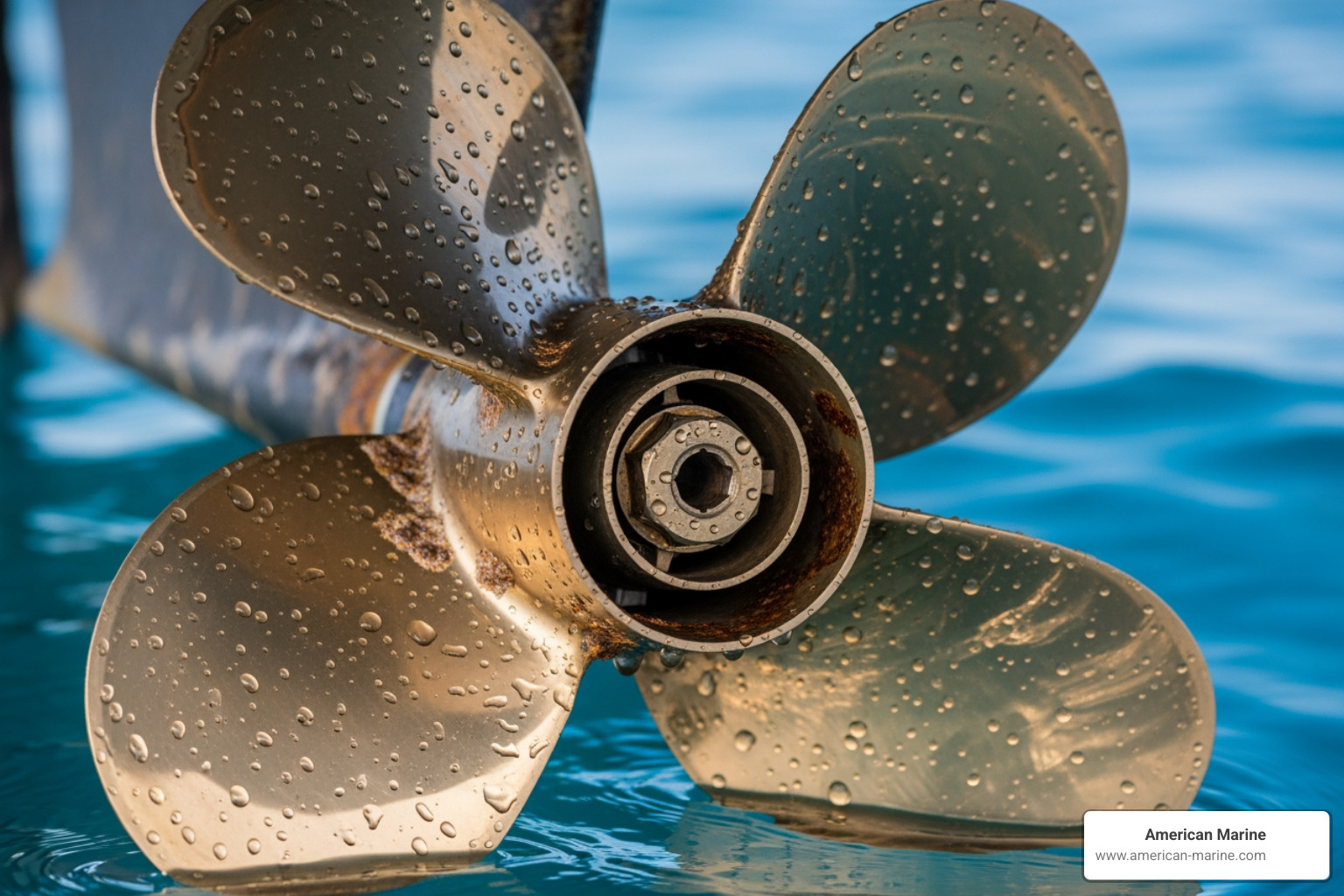
These copper-based alloys have a rich history in marine applications, proving their worth over centuries. They are excellent marine grade materials for specific functions, each bringing unique benefits to the table.
- Copper: Pure copper offers good corrosion resistance and excellent ductility, making it easy to form. It's commonly used for underwater tubing and piping. While not the strongest metal on its own, it forms the base for incredibly resilient alloys. A unique advantage of copper alloys is their high resistance to biofouling, meaning damage to piping caused by organisms such as barnacles and algae. This can save significant headaches and maintenance costs.
- Bronze: This alloy of copper, typically with tin, is renowned for its durability and corrosion resistance. Among bronze alloys, those alloyed with silicon are particularly able to resist the corrosive effects of marine environments.
- Silicon Bronze (C65500): Silicon adds strength and contributes to corrosion resistance. It's often chosen for fasteners, pipes, and is popular for propellers and propeller shafts due to its low friction against other metals, reducing wear and tear.
- Aluminum Bronze (C95400): Created specifically for marine use, aluminum bronze is tarnish-resistant, benefits from low oxidation rates at high temperatures, and offers excellent resistance to corrosion and biofouling.
- Brass: An alloy of copper and zinc, brass is also a valuable marine grade material. Naval brass, often blended with tin, zinc, or lead, is specifically improved for sea qualities. Tin and zinc boost corrosion resistance, while lead can improve its workability. Brass can withstand extreme heat, making it useful in piping, condensers, and for various marine fittings, fasteners, valves, and pumps.
These classic choices continue to be indispensable in modern yachting, from the intricate workings of a vessel's engine room to the critical components of its propulsion system, such as propellers and shafts. Even for components like Boat Motor Covers, the underlying piping and connections often rely on these robust alloys.
Beyond Metal: Essential Non-Metallic Marine Materials
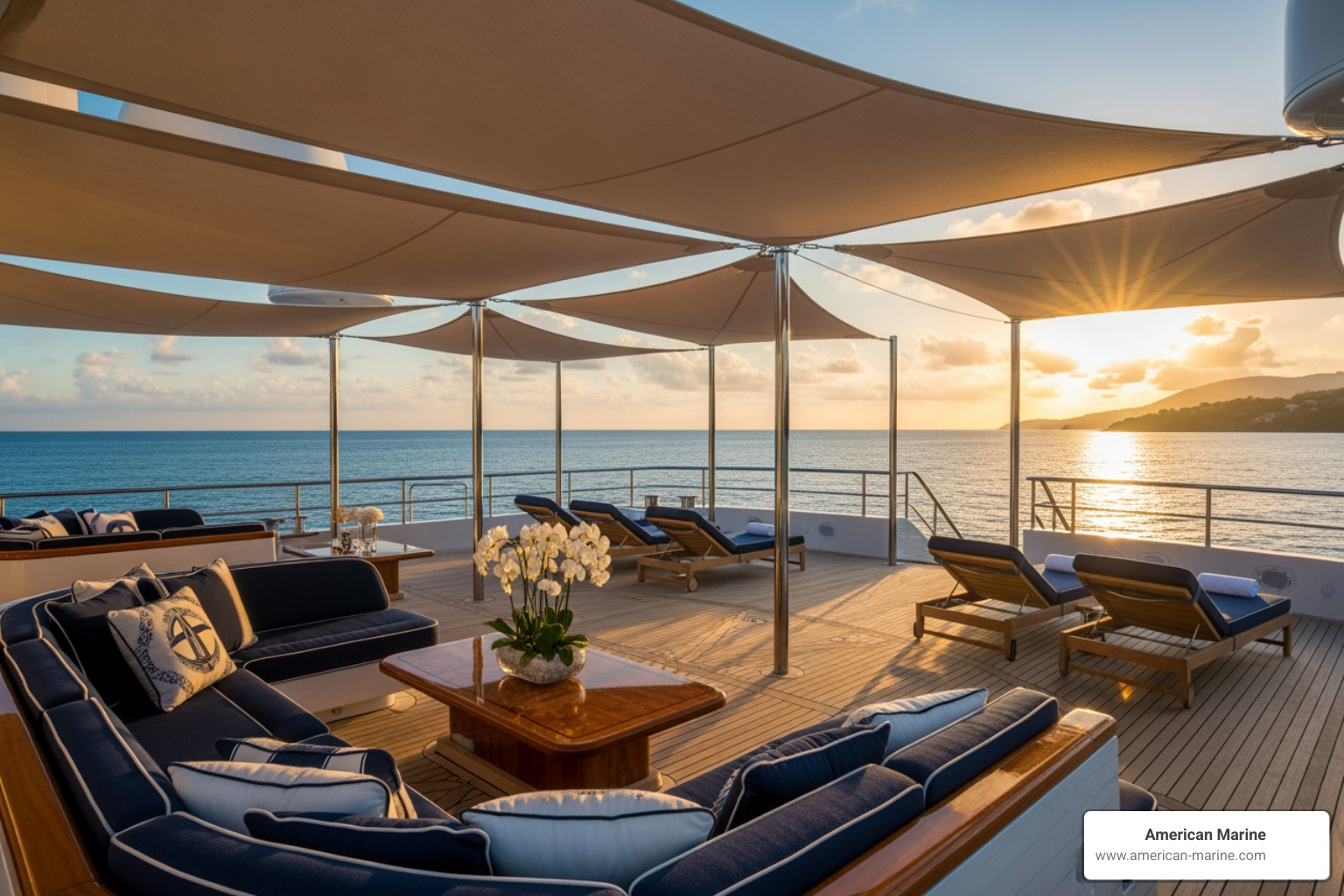
While metals form the backbone of many marine structures, marine grade materials extends far beyond. Non-metallic materials play an equally crucial role, offering unique properties that metals simply can't match. From the luxurious decking of a superyacht to the intricate upholstery inside, these materials contribute significantly to a vessel's durability, aesthetics, and overall functionality in the demanding marine environment. We know this at American Marine, where we see how these materials seamlessly integrate to create comfortable, protected, and beautiful marine spaces.
High-Performance Marine Plastics
The evolution of plastics has brought forth a new generation of marine grade materials that are changing boat building and marine infrastructure. These high-performance plastics are specifically engineered to resist the unique challenges of the sea, often outperforming traditional materials like wood and even some metals in certain applications.
Key benefits of marine-grade plastics include:
- Moisture and Water Resistance: They won't absorb water, swell, rot, or delaminate.
- Durability and Impact Resistance: Many are incredibly tough and can withstand significant impact.
- Lightweight: This contributes to better fuel efficiency, improved handling, and increased speed.
- UV Resistance: Formulated to resist degradation from intense sun exposure.
- Chemical Resistance: Impervious to many oils, fuels, and cleaning agents.
- Ease of Maintenance: They don't require painting or staining and are easy to clean.
Some of the most common and effective marine-grade plastics we encounter include:
- HDPE (High-Density Polyethylene): Marine-grade HDPE, often known as HDPE marine board (like SIMONA’s BOATBOARD®), is a mainstay. It's used in decking, storage bins, instrument panels, and seating components. Its high strength, durability, and comparative light weight make it ideal. BOATBOARD Lightweight, for example, is 20% lighter than standard BOATBOARD, offering further weight savings without sacrificing strength.
- Polycarbonate: Marine grade polycarbonate is specifically designed for use in marine environments. It offers impressive impact strength and clarity, making it perfect for windows, windshields, and other transparent applications where resistance to scratching and cracking is crucial.
- PVC (Polyvinyl Chloride): For structures like docks, PVC offers a long-lasting and sustainable alternative to wood.
- UHMW-PE (Ultra-High Molecular Weight Polyethylene): This material is soft and durable yet very impact resistant, making it the perfect low friction shield to prevent damaged docks or breached ship hulls. It's excellent for dock bumpers and fenders, absorbing kinetic energy from collisions.
- Acrylic (e.g., ASTARIGLAS® NAUTICAL): This cross-linked, cell cast marine-grade acrylic is used for boat glasswork and interior components, offering clarity and impact resistance.
- Foam Core Materials: Products like Divinycell are used for hull coring components to reduce weight without sacrificing strength, revolutionizing boat construction.
These materials are indispensable for a variety of marine applications, providing robust, low-maintenance solutions that stand the test of time in South Florida's climate. Learn more about the versatility of Plastic Materials for Boating & Marine Grade Materials.
Advanced Marine Grade Materials: Fabrics and Foams
Beyond rigid plastics, flexible marine grade materials like fabrics and foams are paramount for comfort, protection, and aesthetics on any vessel. For us at American Marine, working with these specialized textiles and cushioning is our bread and butter, especially for luxury yachts in Miami and Fort Lauderdale.
The critical properties for marine fabrics include:
- UV Resistance: Essential for preventing fading and degradation under the intense South Florida sun.
- Water Repellency/Waterproofing: To keep interiors dry and protect underlying structures.
- Mildew Resistance: A must-have in humid marine environments to prevent unsightly and unhealthy growth.
- Durability: To withstand constant exposure to the elements and frequent use.
We carefully select fabrics for everything from Marine Vinyl Fabric Near Me to specialized Marine Canvas Material. These materials are crafted into custom Boat Seat Covers Guide, bimini tops, yacht enclosures, and the sophisticated upholstery that defines a luxury vessel. Our Luxury Yacht Cover: Best Upholstery Guide digs deeper into these choices.
Foam materials are equally important, particularly closed-cell foams, which do not absorb water. These are vital for buoyancy (like processed kapok, which must have a buoyancy of at least 48 pounds per cubic foot in fresh water), and structural insulation. For instance, structural insulation meeting specific specifications can limit the average temperature rise of a steel bulkhead to 139 °C (250 °F) at the end of a 60-minute standard fire test – a critical safety feature. Whether it's for comfortable seating, flotation devices, or insulation, the right marine-grade foam ensures both safety and comfort.
Navigating Regulations and Standards for Marine Grade Materials
Choosing the right marine grade materials isn't just about performance; it's also about compliance. Regulations and standards play a crucial role in ensuring the safety, reliability, and legality of materials used in marine applications, especially for vessels navigating international or even busy domestic waters like those off the coast of South Florida. Adhering to these standards affects everything from vessel safety and insurance requirements to resale value.
Several key regulatory bodies and standards organizations dictate what constitutes an acceptable marine grade material:
- U.S. Coast Guard (USCG): For vessels operating in U.S. waters, the USCG sets stringent standards, particularly for fire safety and structural integrity. Their regulations, such as those found in 46 CFR Part 164 -- Materials, specify testing protocols and approval processes for various materials, including deck coverings, structural insulation, and interior finishes. Materials approved under SOLAS standards can be used on U.S. flag vessels for international or domestic voyages, while those approved to 46 CFR standards are restricted to domestic voyages. The USCG doesn't conduct tests themselves but specifies test methods and relies on Coast Guard Accepted or Recognized Independent Laboratories for testing.
- American Bureau of Shipping (ABS): As a leading classification society, American Bureau of Shipping (ABS) provides technical standards and certification services for marine and offshore assets. Their approvals are critical for structural metals. For example, certain carbon steels like AH36, DH36, and EH36, which are improved with chromium and manganese for higher strength and corrosion resistance, are ABS-approved for marine use.
- ASTM International: This organization develops and publishes voluntary consensus technical standards for a wide range of materials, products, systems, and services. ASTM International standards are frequently referenced by regulatory bodies like the USCG for material testing and performance. For instance, FRP grating listed and labeled as meeting ASTM F3059 by an independent lab acceptable to the USCG may not need separate USCG type approval.
Specific regulations often focus on crucial safety aspects like fire performance. The International Maritime Organization's (IMO) Fire Test Procedures (FTP Code) for SOLAS vessels, for example, dictates stringent requirements for materials regarding flame spread, smoke density, and toxicity. This ensures that in the event of a fire, materials do not contribute excessively to the hazard.
For any project on a yacht or marine structure in South Florida, understanding and complying with these regulations is non-negotiable. It ensures not only the safety of those on board but also the structural integrity and longevity of the vessel itself.
Frequently Asked Questions about Marine Materials
We often get asked about the best choices for various marine applications, especially given the unique challenges of South Florida's climate. Here are some of the most common questions and our expert insights:
What is the best metal for a saltwater environment?
For most structural and hardware applications in a saltwater environment, Grade 316 stainless steel is generally considered the best all-around choice. Its improved molybdenum content provides superior resistance to pitting and crevice corrosion, which are common issues in chloride-rich marine conditions. While no metal is completely immune, 316 offers a robust defense.
However, "best" can depend on the specific application. For components that require exceptional biofouling resistance, such as propellers or underwater fittings, bronze alloys (especially silicon and aluminum bronzes) and copper alloys are often preferred. Copper's natural resistance to marine organisms makes it an excellent choice for piping and heat exchangers. For lightweight structural elements like boat hulls, specific marine-grade aluminum alloys (5XXX and 6XXX series) are often ideal due to their excellent strength-to-weight ratio and custom corrosion resistance.
Can I use standard stainless steel on my boat?
You can, but we strongly advise against it for anything exposed to saltwater or high humidity, especially in a region like South Florida. Standard stainless steel, typically Grade 304, lacks the molybdenum content found in Grade 316. This seemingly small difference has a significant impact. Without molybdenum, 304 stainless steel is highly susceptible to "tea staining" (a surface discoloration that indicates early stages of corrosion) and, more critically, crevice corrosion in saltwater.
While 304 might suffice for purely aesthetic, interior components that see no moisture, for anything on deck, below deck where humidity is high, or certainly below the waterline, it's a recipe for premature failure. The cost savings of using 304 are quickly negated by the expense and hassle of repairs or replacements due to corrosion. For optimal longevity and safety, particularly for fittings, fasteners, and structural elements on your yacht, always opt for Grade 316 stainless steel.
How do I choose the right marine grade materials for my project?
Choosing the right marine grade materials involves a careful analysis of several factors, ensuring optimal performance, durability, and cost-effectiveness for your specific needs. Here's our approach:
Application Analysis:
- Above vs. Below Waterline: Materials below the waterline face harsher, constant immersion and galvanic corrosion risks.
- Structural vs. Aesthetic: Structural components demand high strength and corrosion resistance, while aesthetic elements might prioritize UV stability and appearance.
- Load-Bearing Requirements: How much stress or weight will the material need to handle?
- Movement/Friction: For moving parts like propellers or hinges, low-friction materials are crucial.
Environmental Exposure: Consider the specific conditions: constant saltwater spray, high UV exposure, extreme humidity, freshwater vs. saltwater, and potential exposure to chemicals.
Material Properties: Evaluate based on required properties:
- Corrosion resistance (especially to chlorides)
- UV stability
- Strength (tensile, yield)
- Weight (for performance and fuel efficiency)
- Ductility/Formability
- Biofouling resistance
- Ease of maintenance
Budget Considerations: While marine grade materials often have a higher upfront cost, their extended lifespan and reduced maintenance needs typically offer a better long-term value.
Regulations and Standards: Ensure chosen materials comply with relevant USCG, ABS, or ASTM standards for safety and legality.
For custom canvas and upholstery projects, for instance, we consider not just the fabric's UV and water resistance, but also thread strength, fastener material, and how it will integrate with the yacht's existing structure. Our Expert Guide to Custom Boat Covers offers detailed insights into material selection for protection. Don't hesitate to consult with experts like us; we can help steer these choices for your specific yacht and project in South Florida.
Conclusion: Investing in Durability for the Long Haul
The marine environment is a beautiful but unforgiving place. Choosing the right marine grade materials isn't just a recommendation; it's a fundamental requirement for the safety, performance, and long-term enjoyment of any vessel, especially in the vibrant boating culture of South Florida. From the structural integrity provided by advanced metal alloys to the protective and aesthetic qualities of high-performance plastics, fabrics, and foams, every material plays a vital role.
By understanding what makes a material marine grade, the specific threats it must withstand, and the critical role of regulations, you're not just making a purchase—you're making an investment. An investment in durability means less time spent on repairs, more time enjoying the open water, and a higher resale value for your vessel. It also means greater peace of mind, knowing that your yacht is equipped to handle the relentless challenges of the sea.
At American Marine, our commitment to using elite marine grade materials for custom canvas and upholstery reflects this philosophy. We believe that true luxury lies in both impeccable aesthetics and uncompromising quality that stands the test of time. Protecting your investment, enhancing its beauty, and ensuring its longevity in the demanding South Florida climate is what we do best.
Ready to explore how premium materials can transform your yacht? Find More Than a Cover: The Role of Custom Canvas in Yacht Preservation or learn how we can help Protect your vessel with premium boat covers.