
The Ultimate Guide to Marine Upholstery Repair: Fix It Yourself!
Why Upholstery Integrity Matters for Large Yachts
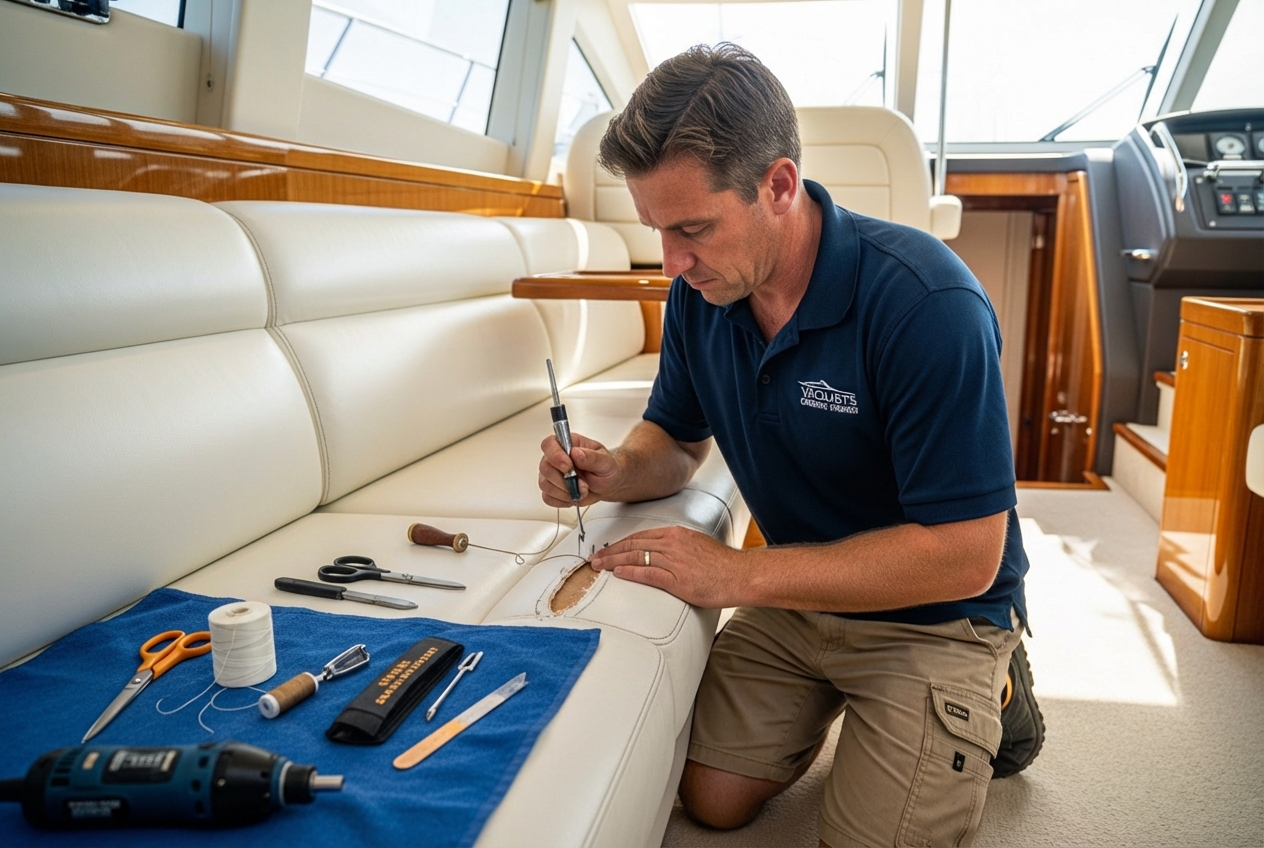
Marine upholstery repair is the process of restoring or replacing damaged interior seating, cushions, and fabric components on vessels to maintain functionality, aesthetics, and value. For yachts 60 feet and above, this work goes beyond simple patching—it requires precision fabrication, marine-grade materials, and an understanding of how saltwater, UV exposure, and constant use affect large-vessel interiors.
Quick Answer: When to Repair vs. Replace Marine Upholstery
| Situation | Action |
|---|---|
| Small tears or surface cracks | Minor repair possible |
| Fading or minor discoloration | Cleaning or restoration |
| Extensive cracking or foam breakdown | Full refabrication required |
| Mold penetration or structural damage | Complete replacement necessary |
| Seam failure across multiple sections | Professional reupholstery recommended |
Damaged upholstery affects more than comfort. It impacts vessel value during resale or charter evaluations. It signals poor maintenance to potential buyers or charter clients. And in some cases—such as mold growth or foam degradation—it can create safety and air quality concerns.
For builders, captains, and refit managers overseeing large yachts, understanding the repair process is essential. Whether you're managing a minor fix or coordinating a full interior refabrication, knowing what's feasible onboard versus what requires professional intervention helps you make informed decisions and avoid costly mistakes.
I'm Jeremy Bottau, owner of American Marine, a marine canvas and upholstery firm based in South Florida specializing in custom solutions for luxury yachts and superyachts. With experience in yacht brokerage and marine services, I've led projects that combine advanced technologies like 3D patterning with elite marine-grade materials to deliver custom upholstery and protective solutions for vessels requiring precision and scale.
Assessing Marine Upholstery: Repair or Full Refabrication?
The decision to repair or fully refabricate marine upholstery on a large yacht is a critical one, impacting both immediate costs and long-term vessel integrity. For builders, captains, and refit managers, accurately assessing the extent and nature of damage is paramount. This is not merely about aesthetics; it concerns the structural longevity of the seating, the health of the interior environment, and the overall value of the vessel.
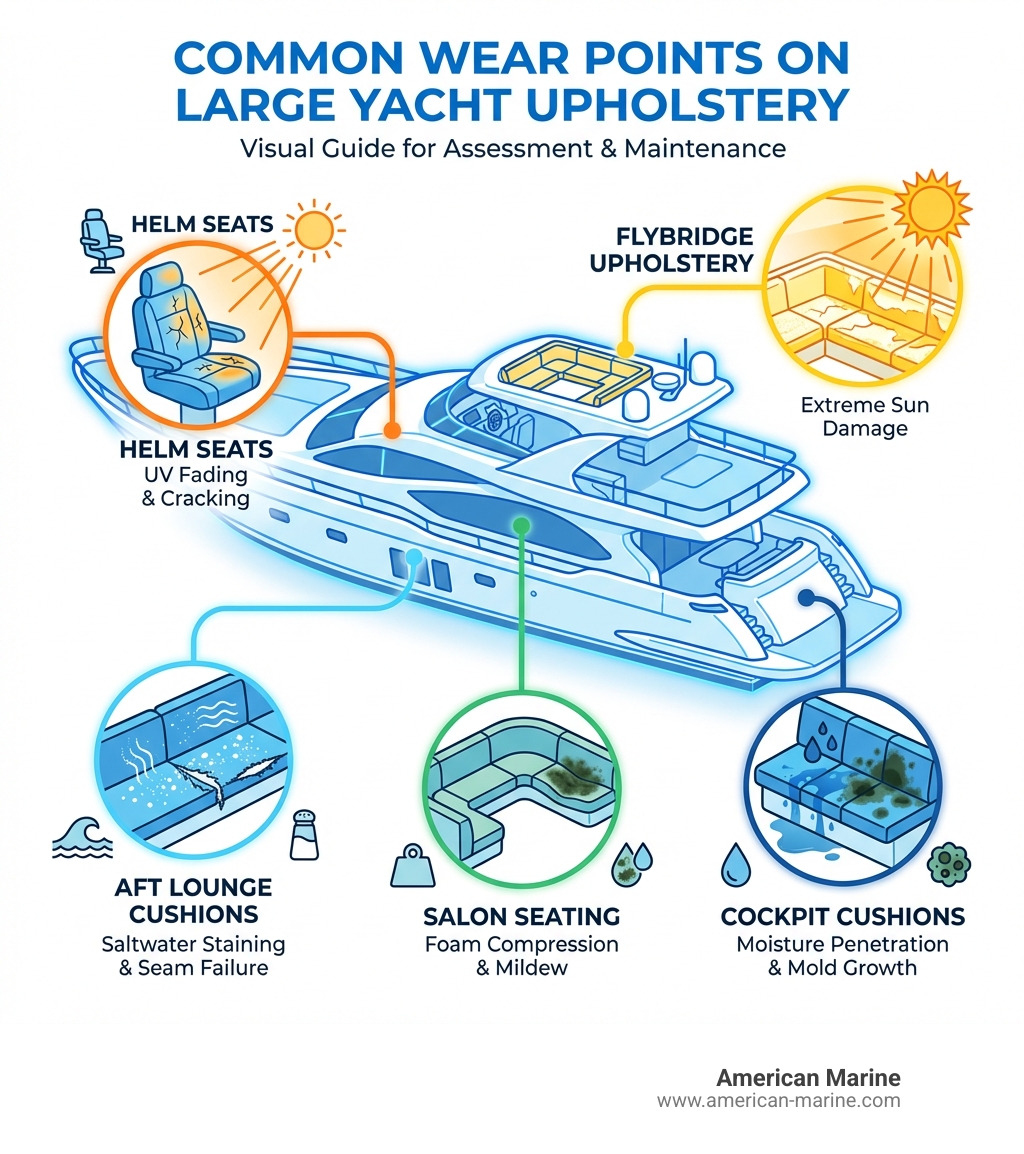
Common damage types we observe on large vessels in the South Florida marine environment include:
- UV Degradation: Prolonged exposure to intense sunlight causes vinyl to stiffen, crack, and fade, while fabrics can become brittle and discolored. This is particularly prevalent on exterior seating, helm seats, and sun lounges.
- Saltwater Exposure: Constant salt spray and moisture can lead to material breakdown, staining, and accelerated corrosion of underlying hardware.
- Seam Failure: High-traffic areas, especially on larger yachts, experience significant stress. Over time, stitching can deteriorate, leading to seams pulling apart, exposing foam, and allowing water ingress.
- Mold and Mildew: The humid climate of South Florida, combined with trapped moisture, creates an ideal breeding ground for mold and mildew. This can permeate upholstery materials and foam, leading to unpleasant odors, discoloration, and potential health concerns.
- Foam Compression and Breakdown: Continuous use causes foam to lose its resilience and density, resulting in uncomfortable, saggy seating that no longer provides adequate support.
When assessing the need for marine upholstery repair, it is important to distinguish between minor cosmetic issues and more significant structural or material failures.
When minor repair is feasible:
- Small Tears or Superficial Cracks: If a tear or crack is isolated, has not penetrated deeply into the material, and the underlying foam remains dry and intact, a professional patch or seam repair may be sufficient. These are typically cosmetic fixes designed to prevent further propagation of damage.
- Minor Discoloration or Fading: If discoloration is confined to the surface or is part of general fading, specialized cleaning and conditioning treatments can often restore the material's appearance.
When full refabrication is required:
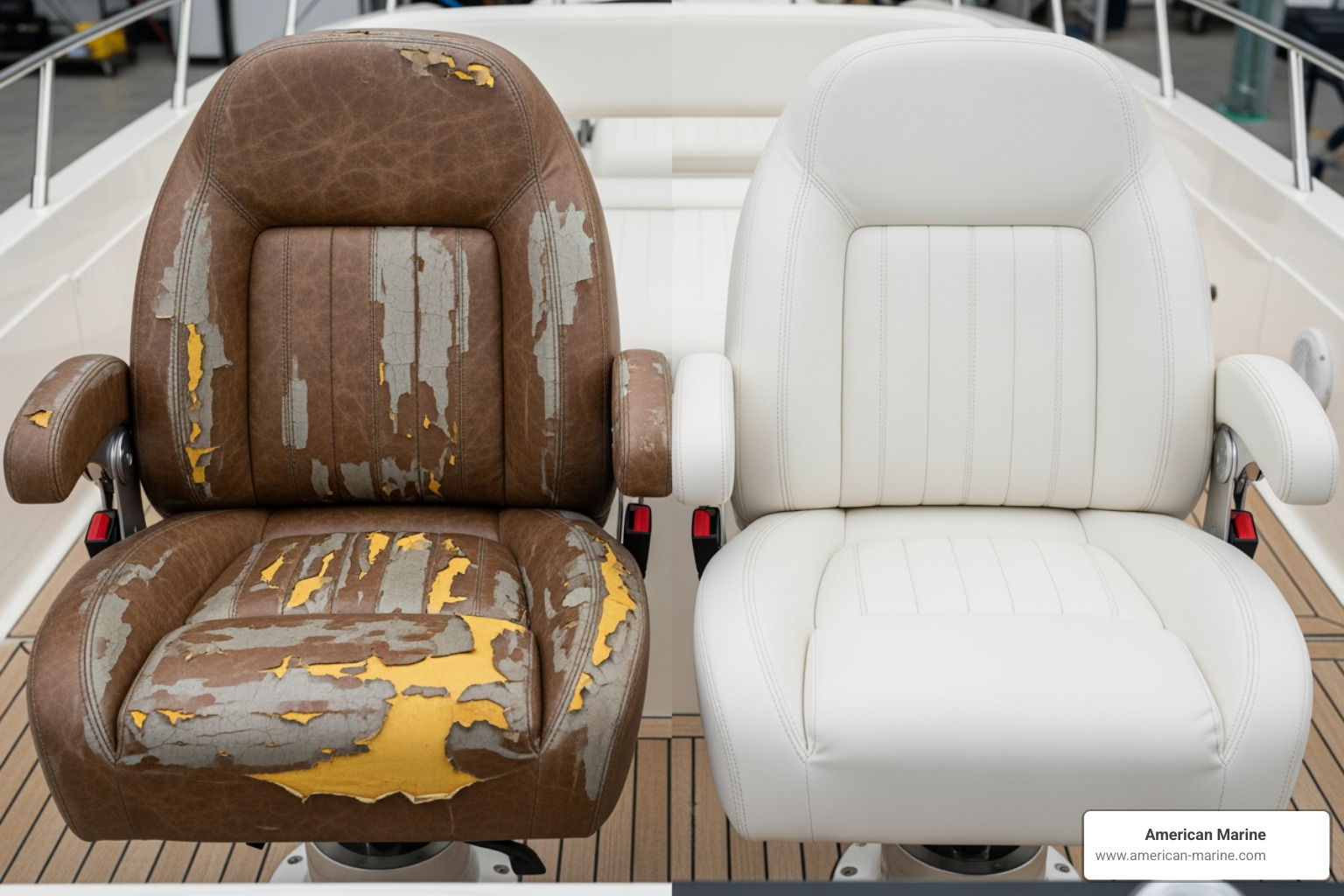
- Extensive Cracking or Material Breakdown: When cracks are widespread, deep, or the material has become brittle and prone to tearing, attempting a repair is often a temporary measure. The integrity of the material is compromised, making a full refabrication the more durable and cost-effective long-term solution.
- Foam Breakdown or Saturation: If the foam has lost its density, become saturated with water, or is infested with mold, it necessitates complete replacement. Repairing only the outer layer while retaining compromised foam is ineffective and can exacerbate issues.
- Widespread Mold or Mildew: When mold has deeply penetrated the upholstery material or foam, surface cleaning is insufficient. The spores can remain, leading to recurrence and persistent odors. Full replacement of the affected components ensures a clean, healthy environment.
- Structural Issues: If the damage extends to the underlying frame or support structures, a comprehensive refabrication allows for inspection and repair of these hidden components, ensuring the safety and longevity of the seating.
For builders and captains, viewing upholstery improvements as an investment rather than an unnecessary expense is a strategic frame of mind. Tackling issues early and maintaining the vessel's interior ensures it consistently looks and feels exceptional. We see this as integral to the overall Boat Interior Renovation strategy for large yachts.
Selecting Materials for Marine-Grade Durability
The demanding environment of South Florida's waters dictates a stringent selection process for materials used in large yacht upholstery. Unlike residential or even automotive applications, marine upholstery requires specialized components that can withstand constant exposure to UV radiation, saltwater, humidity, and heavy use. Our expertise lies in choosing and working with materials engineered for this unique challenge, ensuring both aesthetic appeal and long-term performance.
For optimal marine upholstery repair and refabrication, we prioritize:
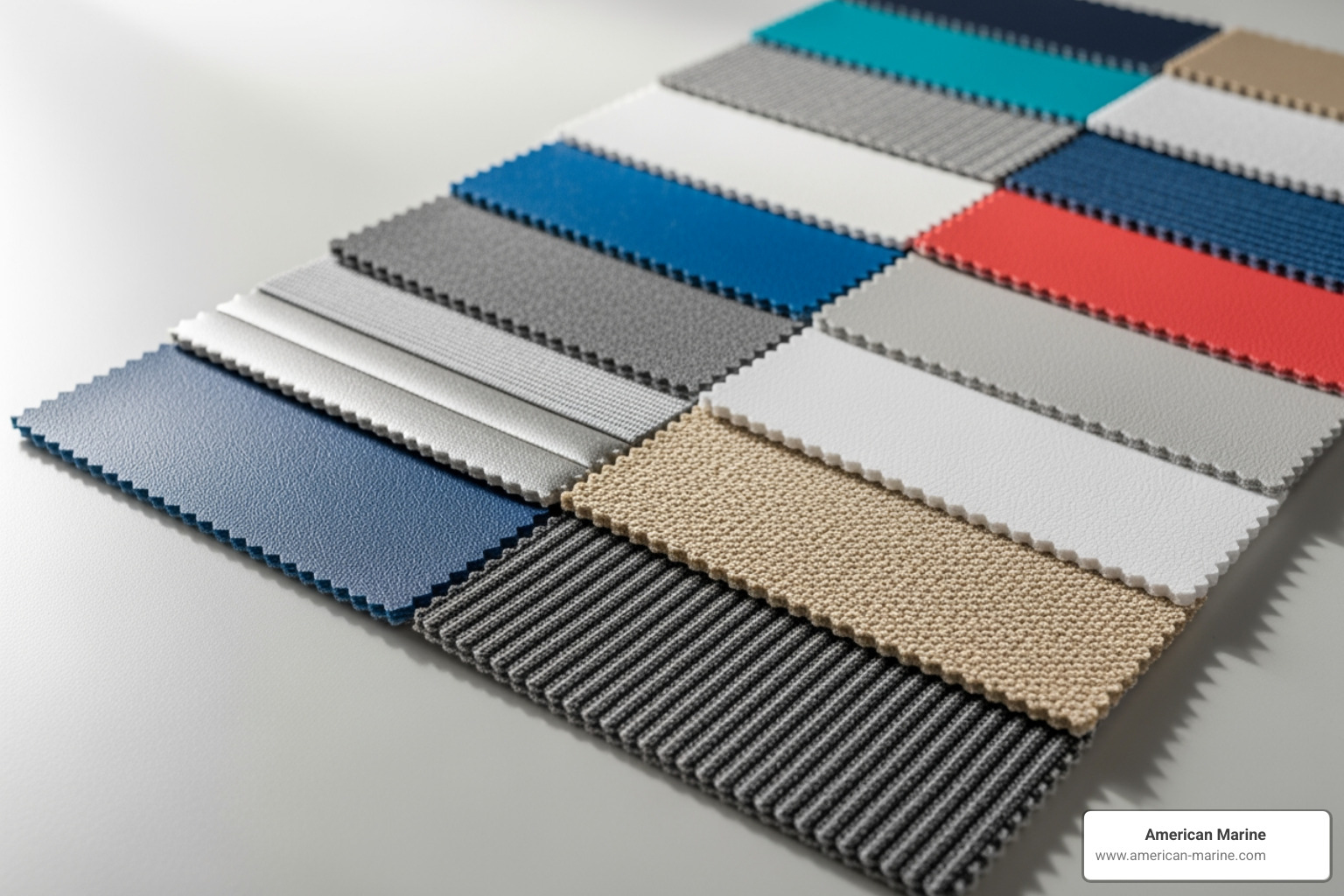
- Marine-Grade Vinyl: This is a cornerstone material for yacht interiors due to its exceptional water resistance and ease of cleaning. However, not all vinyl is created equal. We use marine-grade vinyl specifically formulated with robust UV inhibitors to resist fading and cracking, as well as anti-microbial treatments to prevent mildew growth. Its durability makes it ideal for exterior seating, helm stations, and high-traffic interior areas where spills and moisture are common.
- Performance Fabrics: For areas where a softer touch and improved breathability are desired, such as salon seating or cabin cushions, we select high-performance marine fabrics. These textiles are engineered for colorfastness, resistance to UV degradation, and often incorporate stain-resistant and moisture-wicking properties. They provide a luxurious feel while maintaining the resilience required in a marine setting.
- Foam: The choice of foam is critical for comfort, support, and hygiene. We exclusively use closed-cell foam for exterior applications to prevent water absorption, which eliminates mold growth and extends lifespan. For interior seating, high-density, open-cell foam with anti-microbial treatments is selected to provide superior comfort and retain its shape over years of use, even in compressed areas like dinettes and sleep berths.
- Thread and Hardware: The longevity of any upholstered piece is heavily reliant on the quality of its construction. We employ PTFE (Polytetrafluoroethylene) thread, known for its exceptional resistance to UV rays, saltwater, and chemicals. Unlike traditional polyester threads that can degrade over time, PTFE threads ensure seams remain strong and intact for the life of the upholstery. All fasteners, including staples and screws, are marine-grade stainless steel to prevent rust and staining, which is crucial for maintaining a pristine finish.
As specialists in large-vessel upholstery, we understand that these projects require specialized materials that can withstand the challenges of water, sun, and salt. Our professionals carefully choose marine-grade vinyl, performance fabrics, and other appropriate materials to ensure unparalleled durability. This commitment to material science is fundamental to our approach to Marine Upholstery Fabric selection.
The Professional Marine Upholstery Fabrication Process
For large yachts and superyachts, marine upholstery repair or refabrication is a complex undertaking that demands precision, efficiency, and a deep understanding of marine environments. Our process at American Marine is designed to meet these exacting standards, leveraging advanced technology and skilled craftsmanship to deliver superior results for builders, captains, and refit managers. We do not operate as a small-boat canvas shop; our workflow is optimized for projects requiring precision and scale.
Our professional marine upholstery fabrication process involves several critical steps:
Step 1: Assessment & Digital Templating The process begins with a thorough assessment of the existing upholstery and the vessel's specific requirements. For unparalleled accuracy, particularly on complex curves and large surfaces typical of yachts 60ft+, we employ advanced 3D scanning and ProLiner digital templating. This technology captures precise dimensions, ensuring a perfect, repeatable fit that hand-measuring cannot achieve. This digital blueprint forms the foundation for all subsequent fabrication.
Step 2: Deconstruction & Pattern Digitization Existing upholstery is carefully deconstructed, allowing us to analyze its construction and extract patterns. These patterns, or new ones derived from our digital templates, are then digitized. This step is crucial for maintaining design integrity, especially when replicating intricate details or creating new custom designs that align with the yacht's aesthetic.
Step 3: CNC Material Cutting for Precision and Repeatability Once patterns are digitized, materials are cut using our state-of-the-art CNC (Computer Numerical Control) fabric cutting tables. This technology ensures extreme precision, minimal material waste, and perfect repeatability across multiple pieces, which is essential for uniform seating throughout a large yacht. This capability significantly reduces production time and eliminates human error inherent in manual cutting.
Step 4: Industrial Stitching & Assembly With components precisely cut, our skilled craftsmen proceed to industrial stitching and assembly. We use heavy-duty, marine-grade sewing machines and UV-resistant PTFE thread to create robust, durable seams that withstand the harsh marine environment. Our stitching techniques are designed not only for strength but also for a refined, aesthetically pleasing finish.
Step 5: Foam & Backing Replacement If required, degraded foam and backing materials are replaced with new, marine-grade alternatives. We select foam based on its density, comfort, and resistance to moisture and microbial growth. This ensures the new upholstery provides optimal support and longevity, contributing to the overall comfort and hygiene of the yacht's interior.
Step 6: Precision Installation & Quality Control The final stage involves the meticulous installation of the newly fabricated upholstery onto the vessel. Our team ensures each piece is fitted perfectly, with proper tension and alignment, resulting in a flawless finish. A comprehensive quality control check is performed to verify that all specifications are met and that the craftsmanship adheres to our high standards.
This systematic approach guarantees that every marine upholstery repair or refabrication project we undertake for large yachts is executed with maximum precision, durability, and a superior finish. This process is integral to our work in Inside a Yacht Makeover: Transformations with Custom Canvas & Upholstery.
DIY Repairs: Scope and Limitations for Large Yachts
For builders, captains, and refit managers of large yachts, the concept of "DIY" marine upholstery repair carries significant implications. While minor, temporary fixes can be performed onboard, the inherent limitations of such efforts, particularly on vessels 60ft+, often outweigh the perceived benefits. Our experience shows that for serious marine upholstery work, professional intervention is not just recommended, but essential.
What Can Be Addressed Onboard
In limited scenarios, basic onboard interventions might include:
- Minor Cleaning: Routine cleaning with marine-appropriate products can be performed by the crew. This is a preventative measure, not a repair.
- Temporary Vinyl Patches for Small Tears: For a very small, isolated tear that has not compromised the underlying foam, a temporary patch kit might offer a short-term solution. This is primarily to prevent further damage until a professional repair can be scheduled. It is crucial to understand that these are not permanent fixes and typically do not match the original material or finish.
- Limited Seam Gluing: Very minor, superficial seam separations might be temporarily addressed with specialized marine-grade adhesives. Again, this is a stop-gap measure.
Limitations of DIY Marine Upholstery Repair for Large Yachts
The challenges and risks associated with DIY upholstery work on large vessels are substantial:
- Lack of Access to Marine-Grade Materials: Commercial retail materials often lack the specific UV inhibitors, anti-microbial treatments, and robust construction found in professional marine-grade fabrics, vinyls, and threads. Using inferior materials will result in premature failure and further damage.
- No CNC or Industrial Equipment: Achieving the precision fit and durable construction required for yacht upholstery is impossible without industrial-grade sewing machines, digital templating, and CNC cutting technology. Manual cutting and household sewing machines cannot replicate the strength, consistency, or finish of professional fabrication.
- Risk of Improper Fit or Finish: Without precise measurements and professional fabrication techniques, DIY repairs often result in ill-fitting, wrinkled, or aesthetically inconsistent results. This can significantly detract from the yacht's interior appeal.
- Potential to Reduce Vessel Value: For a luxury yacht, visible, unprofessional repairs can severely diminish the vessel's perceived quality and resale value. The cost savings of a DIY attempt are quickly negated by the devaluation of the asset.
- Compromised Durability: DIY repairs typically lack the longevity of professional work, leading to recurring issues and ultimately higher long-term costs.
When to Engage a Professional Marine Upholstery Fabricator
For large yachts, engaging a professional marine upholstery fabricator is not merely a convenience; it is a necessity for maintaining the vessel's standards and protecting its investment. The benefits are clear:
- Precision Fit via 3D Templating: Our use of 3D scanning and ProLiner technology ensures every upholstered piece fits perfectly, conforming to the yacht's unique contours.
- Material Expertise for Marine Environments: We select and work exclusively with elite marine-grade materials that are proven to withstand the harsh South Florida climate, offering superior UV, moisture, and mildew resistance.
- Industrial-Grade Tools and Repeatable Processes: Our fabrication facility is equipped with CNC cutting tables and industrial sewing machines, ensuring consistent quality, durability, and efficiency across all projects.
- Durability and Warranty: Professional fabrication provides a durable, long-lasting solution, often backed by a workmanship warranty, which is critical for operational vessels.
When selecting a partner for marine upholstery repair or refabrication, consider a company with:
- Experience with Large Vessels: A proven track record of working on yachts 60ft+ indicates an understanding of the scale, complexity, and demands involved.
- Technology-Driven Workflow: Look for firms that leverage advanced digital templating and CNC cutting for superior accuracy and efficiency.
- Portfolio of Similar Projects: Review their past work to ensure their quality and aesthetic align with your yacht's standards.
- Service Area: Ensure they operate within your vessel's location, such as Broward County or Palm Beach County, for seamless project management and logistics.
This approach ensures that your yacht's upholstery is not merely repaired, but expertly refabricated to the highest standards, preserving its beauty and functionality. We invite you to explore our capabilities in Custom Yacht Upholstery.
Preventative Maintenance for Extended Upholstery Life
Protecting the investment in your yacht's interior, particularly its upholstery, is paramount for builders, captains, and refit managers. In the demanding South Florida marine environment, proactive preventative maintenance is not merely recommended; it is essential to significantly extend the lifespan of marine upholstery and delay the need for extensive marine upholstery repair.
Our recommendations for comprehensive preventative maintenance include:
- Routine Cleaning with Marine-Appropriate Products: Regular cleaning is the first line of defense against dirt, salt residue, and environmental contaminants. Use mild soap solutions specifically formulated for marine vinyl or fabrics. Avoid harsh chemicals, abrasive cleaners, or stiff brushes, as these can strip protective coatings, damage material integrity, and lead to premature wear. A soft cloth or sponge is typically sufficient for daily or weekly wipe-downs.
- Avoiding Harsh Chemicals: Industrial cleaners, bleach, or solvent-based products can severely damage marine-grade materials, leading to discoloration, embrittlement, and accelerated degradation. Always test any new cleaning product on an inconspicuous area first.
- UV Protection via Custom Covers and UV-Inhibitor Sprays: The intense South Florida sun is the primary enemy of marine upholstery. When the yacht is not in use, deploy custom-fitted covers over all exposed upholstery. These covers, especially those made from high-quality marine canvas, act as a physical barrier against UV radiation. Additionally, regularly apply UV-inhibitor sprays designed for marine vinyl and fabrics. These products replenish protective layers, helping to prevent fading, cracking, and material breakdown. Our expertise in Luxury Yacht Cover: Best Upholstery Guide highlights the importance of custom protection.
- Moisture Management: Proper Drying and Ventilation: Humidity and moisture are ever-present challenges in South Florida. After rain, washdowns, or heavy dew, ensure all upholstery is thoroughly dried before covering or closing up the vessel. Good ventilation, especially in cabins and enclosed spaces, is crucial to prevent the buildup of moisture that leads to mold and mildew. Consider using dehumidifiers in interior spaces during periods of storage.
- Seasonal Care: Winter Storage Prep, Pre-Season Inspection:
- Before Extended Storage: If the yacht is to be stored for an extended period, particularly over the summer or during hurricane season, perform a deep clean of all upholstery. Ensure every cushion and surface is completely dry before covering and storing to prevent mold and mildew growth.
- Pre-Season Inspection: Prior to the main boating season, conduct a thorough inspection of all upholstery. Look for early signs of wear such as minor cracks, loose stitching, or faint discoloration. Addressing these small issues promptly can prevent them from escalating into more significant and costly marine upholstery repair projects.
By implementing these preventative measures, builders and captains can significantly extend the aesthetic appeal and functional life of their yacht's upholstery, ensuring it remains a testament to the vessel's overall quality and meticulous care.
Frequently Asked Questions: Marine Upholstery for Large Yachts
For builders, captains, and refit managers, understanding the intricacies of professional marine upholstery repair and refabrication is crucial for effective project planning and budget management. Here, we address some of the most common questions we encounter regarding large yacht upholstery projects.
What factors determine the cost of professional marine reupholstery?
The cost of professional marine reupholstery for a large yacht is influenced by several key factors, reflecting the specialized materials, labor, and precision required for vessels of this caliber:
- Vessel Size and Scope: The overall size of the yacht and the extent of the upholstery work (e.g., a single helm seat versus a full salon and cockpit refit) directly impact material and labor requirements.
- Material Selection: The choice of marine-grade vinyl, high-performance fabric, or specialized leather alternatives significantly affects cost. Premium materials with advanced UV, stain, and mildew resistance will naturally be a higher investment but offer superior longevity.
- Project Complexity: Intricate designs, custom patterning, detailed stitching, and challenging access points within the yacht's interior increase labor time and skill requirements.
- Foam Replacement: The need for new foam, particularly high-density, anti-microbial, closed-cell foam for exterior applications, adds to the material cost. The quantity and specific type of foam chosen for optimal comfort and durability also play a role.
- Custom Design Requirements: Any bespoke elements, such as unique embroidery, custom quilting patterns, or specialized cushion shapes, will contribute to the overall cost due to the additional design and fabrication effort.
How long does a professional marine upholstery project take?
The timeline for a professional marine upholstery project on a large yacht is highly variable, depending on the scope and complexity. We emphasize transparent communication regarding project schedules:
- Project Management: This initial phase includes consultation, detailed assessment, digital templating (3D scanning), and material sourcing. For large, custom projects, this can take several days to a few weeks to ensure all specifications are precise.
- Digital Fabrication Timeline: Once materials are secured and digital patterns are finalized, the cutting and stitching process begins in our facility. While smaller projects might be completed within 5-10 business days for the fabrication phase, comprehensive refits of large yachts can span several weeks, depending on the volume of work and material availability. Our CNC cutting capabilities significantly streamline this phase.
- Installation Phase: The final installation on the vessel requires meticulous attention to detail to ensure a perfect fit and finish. This can range from a few hours to several days, depending on the number of pieces and the complexity of the installation.
We work closely with builders, captains, and refit managers to establish realistic timelines, aligning our fabrication schedule with the yacht's broader refit or maintenance calendar.
Can new upholstery match my yacht’s original design?
Yes, achieving a seamless match or a deliberate upgrade that complements your yacht's original design is a core aspect of our service. Our capabilities ensure precision in this regard:
- Digital Patterning: By utilizing advanced 3D scanning and pattern digitization, we can precisely replicate existing upholstery designs, including intricate stitching patterns and contours. This ensures that new pieces integrate flawlessly with the yacht's established aesthetic.
- Color and Material Matching: We maintain an extensive selection of marine-grade vinyls and performance fabrics from leading manufacturers, allowing for close color matching to existing schemes or the selection of new materials that improve the interior's luxury. Our expertise includes advising on materials that not only match aesthetically but also perform optimally in the marine environment.
- Custom Fabrication Capabilities: Beyond replication, we excel in custom fabrication. If the goal is to modernize, upgrade, or entirely reimagine certain areas of the yacht, our design team can develop bespoke solutions that align with the vessel's overall design philosophy, ensuring a cohesive and liftd look.
Our objective is to deliver marine upholstery repair and refabrication that not only restores functionality but also improves the yacht's intrinsic style and value.
Conclusion: Precision Fabrication for Yacht Upholstery Projects
For builders, captains, and refit managers overseeing luxury yachts and superyachts, the integrity of marine upholstery is more than a matter of comfort or appearance; it is a direct reflection of the vessel's maintenance standards and overall value. The decision to undertake marine upholstery repair or full refabrication requires a nuanced understanding of material science, fabrication processes, and the unique challenges posed by the South Florida marine environment.
We have explored why quality fabrication is essential for large yachts, distinguishing between minor repairs and comprehensive refabrication projects. We have highlighted the critical role of specialized marine-grade materials—from UV-resistant vinyls and performance fabrics to anti-microbial foams and PTFE threads—all selected to endure saltwater, sun, and heavy use. Our discussion of the professional fabrication process, emphasizing 3D templating, CNC cutting, and industrial-grade stitching, underscores the precision and durability required for large-scale yacht projects. Furthermore, we outlined the limitations of DIY efforts on such vessels, reinforcing the necessity of engaging experienced professionals. Finally, we provided essential preventative maintenance strategies and answered common questions regarding cost, timelines, and design matching.
The key takeaway is clear: understanding the specialized nature of marine upholstery for large yachts empowers better project management and superior outcomes. For projects requiring precision and scale, compromising on expertise or materials is not an option.
At American Marine, we specialize in delivering unparalleled upholstery solutions for discerning clients in South Florida. Our approach combines state-of-the-art technology with decades of marine industry experience, ensuring that every piece of upholstery we fabricate is 3D-measured, CNC-cut, and professionally installed. We partner with builders and captains across Miami FL, Fort Lauderdale, West Palm Beach, and Broward County, providing custom marine canvas and upholstery that meets the rigorous demands of luxury yachting.
We invite you to discuss how our precision fabrication capabilities can improve your next yacht upholstery project.
Request a Fabrication Consultation for your next yacht upholstery project