
Custom Fit, Lasting Protection: Finding the Most Durable Boat Cover for Your Ride
Why Asset Protection Begins with a Durable Yacht Cover
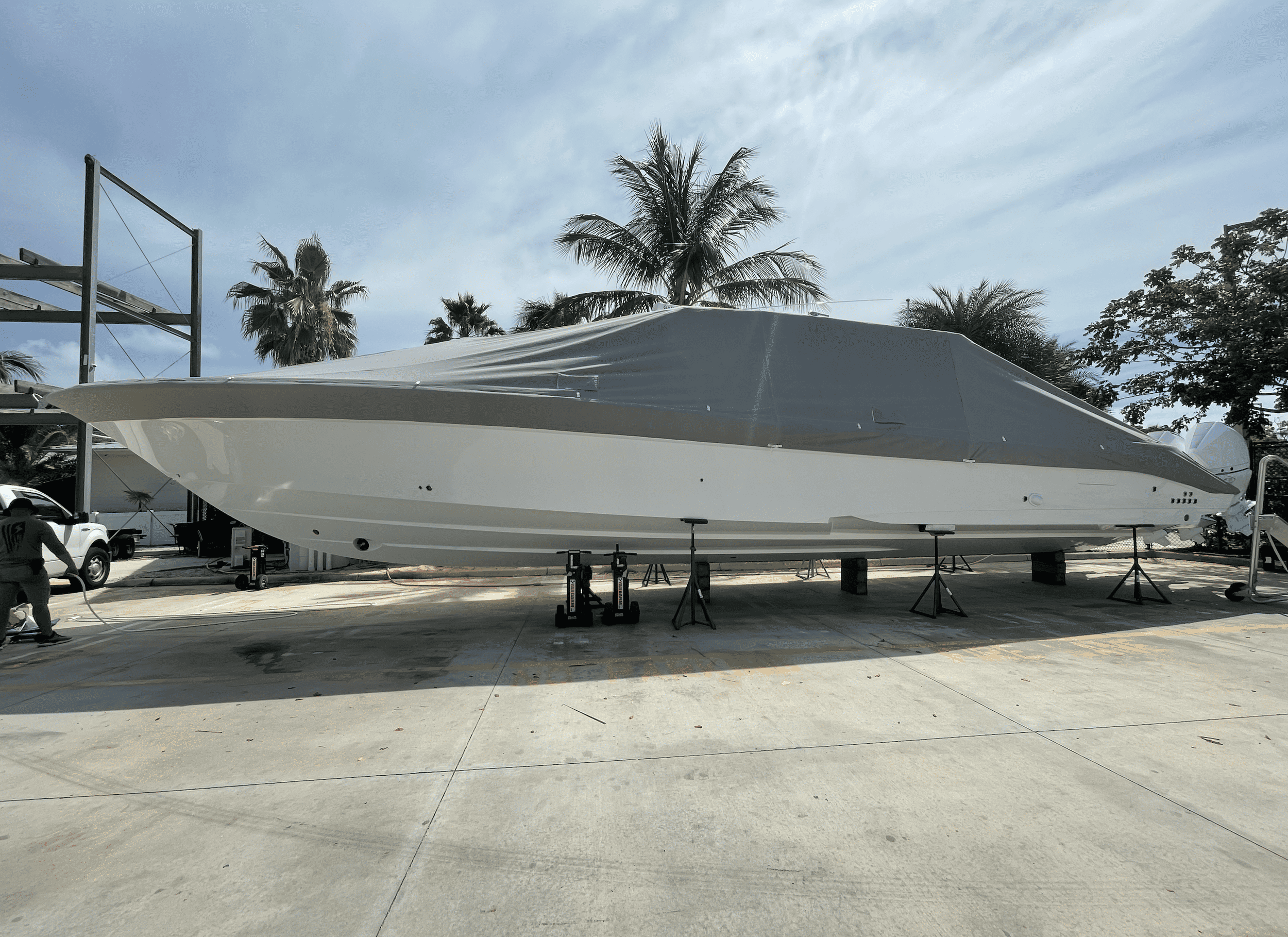
Durable boat covers are essential for protecting large yachts and superyachts from UV degradation, moisture intrusion, and environmental damage. Here's what to look for when choosing a cover built to last:
Key Factors in a Durable Boat Cover:
- Marine-Grade Fabric – Solution-dyed acrylic or coated polyester (6.5+ oz) with UV and mildew resistance
- Construction Quality – Double-stitched seams, PTFE thread, reinforced wear points, and proper ventilation
- Precision Fit – Custom-measured to eliminate wind flap, water pooling, and stress points
- Intended Use – Design matched to mooring, storage, or trailering requirements
- Expected Lifespan – High-quality covers protect vessels for 5-10 years when properly maintained
Every day, your vessel enjoys temperature swings, UV exposure, salt air, and moisture—forces that degrade gelcoat, fade brightwork, and corrode electronics. A properly engineered boat cover isn't just fabric stretched over a hull. It's a precision barrier that prevents oxidation, pest intrusion, and unauthorized access while preserving resale value.
But not all covers are built to the same standard. Off-the-shelf solutions rarely account for complex deck geometry, equipment interference, or the wind loads experienced by vessels over 40 feet. For builders, captains, and refit managers, understanding what separates a durable cover from a disposable one matters as much as the vessel itself.
I'm Jeremy Bottau, owner of American Marine, where we combine 3D digital patterning with CNC fabrication to engineer custom canvas solutions for superyachts and large vessels throughout South Florida. Over years of working with yacht builders and professional crews, I've seen how the right durable boat covers extend vessel life and reduce long-term maintenance costs—and how poorly designed ones create more problems than they solve.
The Critical Role of a Durable Boat Cover in Asset Preservation
Investing in a high-quality, durable boat cover is not merely an accessory purchase; it is a fundamental aspect of asset protection for any luxury yacht or superyacht. The primary benefits extend far beyond keeping the vessel clean, impacting its structural integrity, operational readiness, and long-term value.
Our experience in South Florida's marine environment consistently reinforces that proper covering is essential. The intense UV radiation here accelerates gelcoat degradation, leading to chalking and fading. A robust cover acts as a sacrificial barrier, absorbing the sun's harmful rays and protecting the underlying finishes. Similarly, brightwork, whether varnished wood or polished metal, is shielded from constant exposure, preventing premature cracking, discoloration, and the need for frequent re-finishing.
Beyond UV, moisture intrusion is a constant threat. From daily dew to torrential South Florida downpours, water can find its way into every crevice, fostering mildew growth in upholstery and carpeting, and potentially corroding sensitive electronics and wiring. A well-designed cover sheds water effectively, keeping the interior dry and mitigating these risks.
Moreover, a durable boat cover deters pests and prevents unauthorized access. Birds, insects, and even small rodents can cause significant damage to wiring, fabrics, and stored equipment. A taut, secure cover acts as a physical barrier. While not a security system, it also adds a layer of visual deterrence, keeping valuable equipment out of sight. These protective measures directly contribute to maintaining the yacht's aesthetic appeal and functional condition, which are crucial for preserving its resale value. For a deeper understanding of how precision canvas contributes to yacht preservation, we often refer to our insights on More Than a Cover: The Role of Custom Canvas in Yacht Preservation.
Why Standard Covers Fail on Large Vessels
For vessels of significant size and complexity, standard, off-the-shelf boat covers are inherently inadequate and prone to premature failure. These generic solutions are not designed to withstand the unique challenges presented by large yachts.
Firstly, large vessels, especially those in exposed South Florida marinas, experience substantial wind load. Generic covers, often loosely fitted, billow and flap excessively. This constant movement creates immense stress on the fabric and stitching, leading to tearing and abrasion at chafe points—areas where the cover rubs against hardware, railings, or sharp edges. The result is rapid deterioration and compromised protection.
Secondly, the complex geometry of modern yachts, with their numerous antennas, radars, arches, and custom equipment, is simply not accommodated by universal designs. These elements become points of interference, preventing the cover from sitting properly, creating gaps for water and debris, and leading to localized stress that compromises the cover's integrity.
Furthermore, a poor fit inevitably leads to pooling water. Any sag in the cover will collect rainwater, creating heavy pockets that stretch the fabric, weaken seams, and eventually lead to leaks or outright structural failure of the cover itself. This trapped water can then seep into the boat, negating the cover's purpose. For these reasons, relying on anything less than a custom-engineered solution for a large yacht is a false economy.
Deconstructing Durability: Marine-Grade Materials and Construction
The foundation of a truly durable boat cover lies in its material and how it is constructed. For professional marine operations, compromising on either of these aspects is a direct route to premature replacement and potential damage to the yacht. We prioritize fabric selection and construction quality to ensure exceptional longevity and performance in the demanding South Florida climate.
Selecting the Right Marine Fabric for Your Vessel
When it comes to selecting the right marine fabric for your vessel, two primary materials stand out for their durability and performance: solution-dyed acrylic and coated polyester. Each offers distinct advantages, and our choice depends on the specific demands of the yacht and its usage.
Solution-dyed acrylic is widely regarded as the gold standard for marine canvas. Its fibers are dyed before weaving, meaning the color permeates the entire fiber, not just the surface. This process results in superior UV resistance and colorfastness, making it highly resistant to fading even under the intense South Florida sun. Acrylic covers are also highly breathable, which is crucial for preventing moisture buildup, mildew, and mold underneath the cover. This breathability helps maintain a stable environment for the yacht's interior and electronics. While acrylic fabrics are generally more expensive, their exceptional longevity—retaining strength for up to 10 years—often justifies the initial investment.
Coated polyester is another excellent choice, offering a robust blend of strength, water resistance, and affordability. Polyester fabrics are inherently strong and resistant to abrasion. For improved durability, they are often coated with acrylic, urethane, or vinyl to improve water repellency and UV resistance. The fabric weight, often measured in ounces per square yard or denier (D), is a key indicator of its ruggedness. For instance, 600D refers to 600 denier, a common unit of textile measurement indicating the fiber's thickness, though polyester is more common in high-quality marine covers. We typically recommend fabrics in the range of 6.5 to 9.25 ounces per square yard for their superior ruggedness and longevity. While standard polyester may retain strength for about five years, higher-grade options can last up to eight years. While some polyester fabrics are highly water-resistant, proper ventilation is still critical to balance water protection with breathability, preventing moisture from becoming trapped. For more detailed information on fabric properties, we often consult resources like Boat Cover Materials.
In summary, for the ultimate in UV resistance and breathability, solution-dyed acrylic is often preferred. For applications requiring exceptional strength and water resistance with good UV performance, a high-quality coated polyester is an excellent choice. Both materials far surpass cheaper alternatives like nylon or cotton-poly blends, which lack sufficient UV resistance and durability for long-term marine use.
The Hallmarks of a Truly Durable Boat Cover's Construction
Beyond the raw material, the construction quality of a durable boat cover is paramount. Even the finest fabric will fail prematurely if the cover is poorly assembled. We adhere to rigorous engineering standards to ensure every cover we produce offers maximum protection and longevity.
A critical feature is the use of double-stitched seams. This technique involves sewing two rows of stitching, significantly reinforcing the seam and making it far less likely to solve or tear under stress. Furthermore, the choice of thread is vital. We use PTFE (Polytetrafluoroethylene) thread, such as Gore® Tenara®, which is impervious to UV degradation, mold, mildew, and harsh chemicals. Unlike conventional threads that can break down over time, PTFE thread ensures the seams remain intact for the life of the fabric.
Reinforced wear points are another non-negotiable element. These are areas where the cover is most likely to rub against the yacht's hardware, such as windshields, cleats, or antenna bases. We integrate extra layers of fabric or specialized padding at these stress points to prevent premature abrasion and tearing.
The attachment system also speaks volumes about durability. Instead of simple grommets that can pull out or damage the boat, we incorporate strong, securely stitched webbing loops for tie-downs. These loops distribute tension more evenly and are far more robust. For securing the cover, we recommend rope draw cords over elastic, as elastic cords degrade quickly with UV exposure and lose their tension.
Finally, a vented design is crucial for balancing water resistance with breathability. While a cover must keep rain out, it must also allow trapped moisture and condensation to escape. Without proper ventilation, a waterproof cover can create a humid microclimate underneath, leading to accelerated mildew growth on interior surfaces and potential corrosion of electronics. Strategically placed vents facilitate airflow, preventing this issue while still protecting against external elements. Our commitment to these construction details is part of our Premium Custom Marine Canvas Engineering process.
The Impact of Fit on Durability and Performance
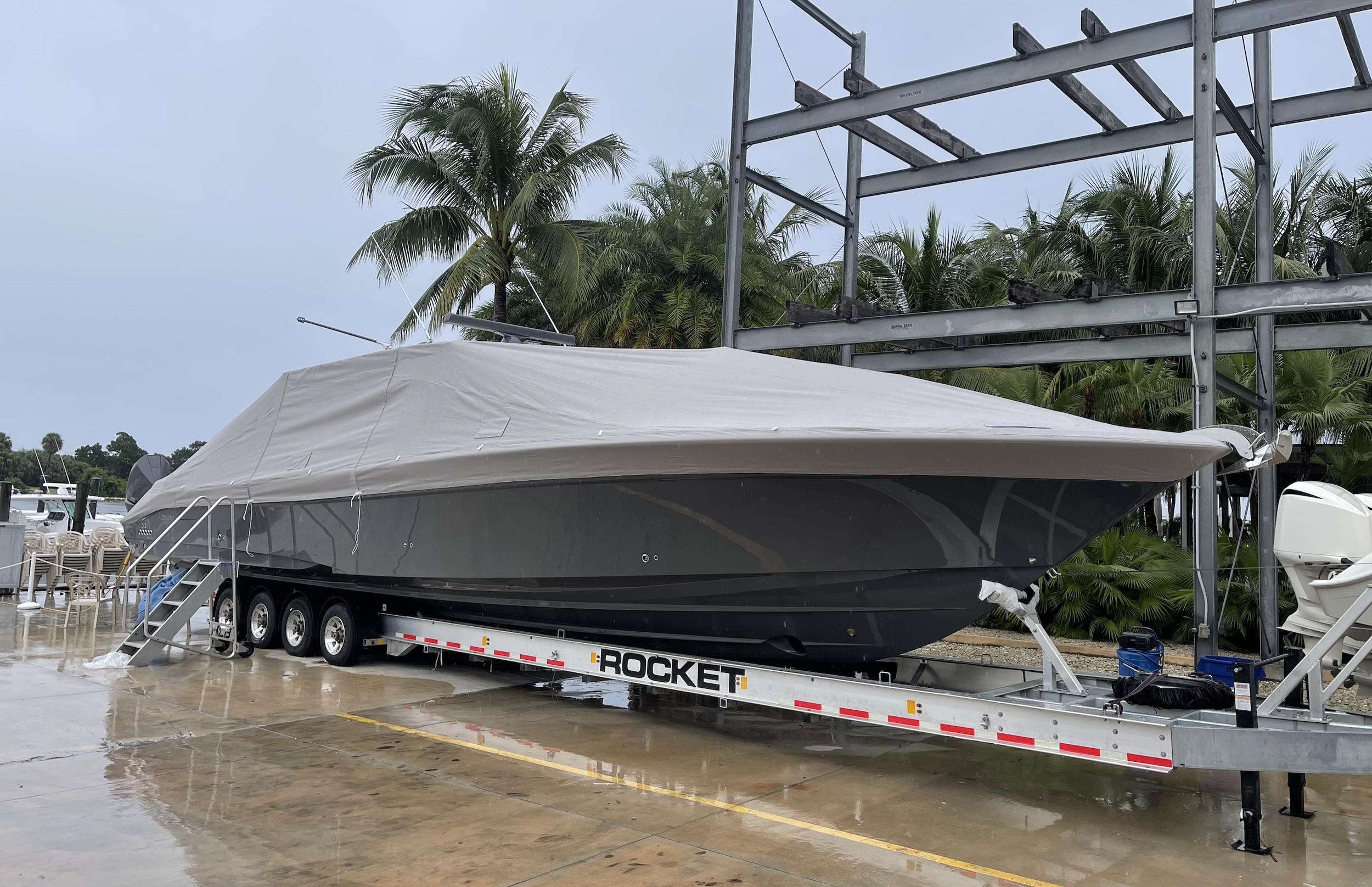
The fit of a boat cover is not merely about aesthetics; it is a direct determinant of its durability and protective performance. A poorly fitting cover, regardless of its material quality, will inevitably lead to problems such as wind buffeting, water pooling, and excessive stress on seams and fabric, all of which dramatically reduce its lifespan. Conversely, a precisely fitted cover minimizes these issues, extending the cover's life and enhancing its protective capabilities.
Custom-Fit vs. Off-the-Shelf: A Comparison for Professional Applications
For large yachts and superyachts, the distinction between cover types is critical. We find that for our discerning clients in South Florida, only a custom-fit solution truly meets the demands of asset protection and longevity.
Universal covers are designed to fit a wide range of boats within a general size bracket. They are typically inexpensive and offer minimal protection, often resulting in excessive flapping, poor water shedding, and numerous chafe points. For luxury vessels, these are simply unsuitable.
Semi-custom covers offer a better fit than universal options, designed for specific hull styles or boat types (e.g., V-hull fishing boats, center console boats). They provide improved protection and can be a decent option for smaller, less complex vessels. However, they still rely on generalized patterns and may not account for unique deck layouts or custom equipment, leading to compromises in fit and durability.
Custom-fit boat covers are engineered specifically for an individual vessel, taking into account every curve, piece of hardware, and accessory. This precision is paramount for durability. At American Marine, we employ advanced 3D digital measurement technology, such as the ProLiner, to capture the exact dimensions and contours of your yacht. This data is then used in CNC fabrication, allowing us to cut fabric with unparalleled accuracy. This process eliminates excess material that can flap in the wind, minimizes stress on seams, and ensures water sheds effectively without pooling. The result is a cover that fits like a second skin, providing superior protection and significantly extending its lifespan. We have extensively documented the benefits of precision in our discussions on Custom-Fit Boat Cover and why Canvas vs. Off-the-Shelf Covers: Why Elite Yachts Choose Custom Solutions. This precision is what allows us to deliver durable boat covers that truly last.
Matching Cover Design to Intended Use
The intended use of a durable boat cover directly influences its optimal design, material choice, and features. A cover for a yacht stored in a climate-controlled shed will have different requirements than one moored outdoors in Fort Lauderdale.
Mooring covers are designed for vessels kept in the water, at a dock, or on a lift. Their primary function is to protect against sun, rain, bird droppings, and debris while allowing for airflow. These covers typically require excellent water repellency, UV resistance, and often incorporate a system of support poles or bows to create a high peak, preventing water from pooling. The fit must be snug enough to prevent billowing in a breeze but allow for easy installation and removal.
Storage covers are for vessels that will be out of the water for extended periods, whether on a trailer or in a dry storage facility. While UV protection remains important, the emphasis can shift slightly towards comprehensive enclosure and breathability to prevent mildew during long-term storage. These covers are often designed for maximum coverage, protecting not just the deck but also the hull sides.
For specific vessel types, the design adapts further. For a motor yacht, this might mean a full cover that encapsulates the entire deck and cabin, or sectional covers that protect specific areas like the cockpit, helm, or flybridge. Sportfish covers often need to accommodate outriggers, tuna towers, and complex fishing setups, requiring precise cutouts and reinforced areas. Sectional covers are particularly useful for large vessels, allowing for partial coverage or easier handling of smaller, more manageable pieces. Understanding the yacht's operational profile and storage conditions is crucial for engineering the most effective and durable boat cover. We detail these custom solutions further in Custom Covers for Boats.
Long-Term Value: Maintenance, Longevity, and Cost
The investment in a durable boat cover for a luxury yacht in South Florida is a strategic decision that impacts the vessel's lifecycle cost. Our regional climate, characterized by intense sun, high humidity, and frequent storms, places extreme demands on marine canvas. Understanding the interplay between maintenance, expected lifespan, and overall cost is essential for yacht captains and managers.
Extending Lifespan: Proper Care and Maintenance Protocols
Even the most robust, custom-fabricated boat cover requires diligent care to achieve its maximum lifespan. Proper maintenance is not just about cleaning; it's a protocol designed to preserve the fabric's integrity and protective properties.
Regular cleaning procedures are paramount. We recommend washing covers with mild soap or detergent and rinsing thoroughly with a garden hose. Harsh chemicals, bleach, or abrasive brushes should be avoided, as they can degrade the fabric's coatings and stitching. For solution-dyed acrylics, cleaning helps prevent the buildup of environmental pollutants that can foster mildew. For coated polyesters, it removes dirt that can abrade the coating. Never put marine canvas in a washing machine or dryer, as this can damage the fabric and its protective properties. After cleaning, always line dry the cover completely before folding and storing.
For water-resistant fabrics, periodic re-treating for repellency is necessary. Over time, the water-repellent coating can diminish. Products like 303® Fabric Guard or Aqua-Tite® can be applied every few years to restore this crucial barrier.
A consistent inspection schedule is also vital. Regularly check for small tears, loose stitching, or signs of chafe, particularly around hardware. Addressing these minor issues promptly can prevent them from escalating into major damage that requires costly repairs or premature replacement.
Finally, proper storage when the cover is not in use is often overlooked. Ensure the cover is completely dry before folding to prevent mildew. Store it in a breathable bag in a cool, dry place, away from direct sunlight and pests. If the cover is installed on the boat, utilizing a boat cover support system can prevent water pooling and debris accumulation, further extending its life. For installation best practices, our guide on Custom Boat Cover Installation provides valuable insights.
The Economics of Durability: A Cost-Benefit Analysis
The initial cost of a durable boat cover can vary significantly. While a budget cover might range from $100 to $1,000, a custom-fit solution for a large yacht can range from $1,000 to $2,000, or substantially more depending on the vessel's size and complexity. However, focusing solely on the upfront investment overlooks the true cost implications and the substantial long-term savings.
A high-quality, custom-fit cover can protect your boat for 5-10 years, and some even come with five, seven, or 10-year warranties. Compare this to cheaper, less durable options that may only last a year or two in the harsh South Florida climate. The replacement frequency for inexpensive covers quickly negates any initial savings.
More importantly, the cost of yacht damage due to inadequate protection far outweighs the investment in a superior cover. Faded gelcoat requires expensive compounding and waxing, sometimes even repainting. Water intrusion leads to costly repairs of electronics, upholstery, and wood. Pests can cause significant structural and wiring damage. These repair costs can easily run into thousands, if not tens of thousands, of dollars.
Consider a practical example: a custom cover for a large yacht ensures a perfect fit, eliminating wind flap that can abrade gelcoat and hardware. It sheds water effectively, preventing pooling that stresses seams and allows leaks. This precision prevents costly cosmetic and structural damage, preserving the yacht's pristine condition and its market value. The durable cover acts as an insurance policy, protecting a far more valuable asset. Our analysis in The Hidden Costs of Generic Covers: Why Custom-Fit Saves Money Long-Term further illustrates this economic advantage.
Frequently Asked Questions for Yacht Captains and Managers
What is the most durable material for a boat cover in a high-UV environment like South Florida?
For the high-UV environment of South Florida, solution-dyed acrylics are widely considered the most durable material for boat covers. Their fibers are dyed before weaving, which means the color is integral to the fabric, offering superior UV resistance and exceptional colorfastness compared to pigment-coated materials. This inherent UV stability prevents premature degradation and fading. Additionally, solution-dyed acrylics are highly breathable, which is crucial in a humid climate like ours. This breathability helps prevent moisture buildup, reducing the risk of mold and mildew on the yacht's surfaces and within its interior, while still offering excellent water repellency. These properties contribute to a significantly longer lifespan and better protection for luxury vessels.
How does a custom 3D-measured fit improve a cover's durability?
A custom, 3D-measured fit dramatically improves a cover's durability by virtually eliminating common stress factors. Firstly, it prevents wind flap, which is a primary cause of premature wear and tear on covers. When a cover fits snugly, there's no excess material to catch the wind, reducing abrasive rubbing against the yacht's surfaces and minimizing stress on seams and stitching. Secondly, precise patterning ensures water sheds effectively, preventing water pooling that can stretch fabric, create heavy loads, and lead to leaks. Thirdly, a custom fit reduces stress on seams and fabric by distributing tension evenly across the entire cover. Finally, it minimizes chafe points, as the cover is designed to accommodate all hardware and accessories without rubbing. By addressing these critical issues, a custom fit significantly extends the fabric's life and the overall durability of the cover.
How long should a high-quality, durable boat cover last?
A high-quality, durable boat cover, particularly one that is custom-fit and made from premium marine-grade materials like solution-dyed acrylic or heavy-duty coated polyester, should typically last between 5 to 10 years. The exact lifespan can vary depending on several factors: the specific material chosen (acrylic often lasts longer than polyester), the frequency and intensity of environmental exposure (South Florida's sun and storms are particularly harsh), and the diligence of maintenance practices. Covers that are regularly cleaned, properly stored, and inspected for minor repairs will naturally achieve the longer end of this spectrum. Some manufacturers, especially for custom-engineered solutions, even offer warranties extending up to 7 or 10 years, reflecting the expected longevity of their products.
Conclusion: Investing in Precision-Engineered Protection
For yacht builders, captains, and refit managers in South Florida, the choice of a durable boat cover is a critical aspect of effective asset management. It is not merely an expense but a strategic investment in the longevity, appearance, and operational integrity of a luxury vessel. Generic, off-the-shelf solutions simply cannot meet the rigorous demands of large yachts or the challenging marine environment of our region.
At American Marine, we understand that true durability stems from a combination of superior marine-grade materials, meticulous construction, and, most importantly, a precision fit. Our commitment to 3D measuring and CNC cutting ensures that every cover we fabricate is an exact fit for your vessel, accommodating every unique feature and eliminating common points of failure. This precision fabrication minimizes wind damage, water pooling, and chafe, significantly extending the life of the cover and, by extension, the yacht it protects.
We apply our expertise to projects across Miami FL, Fort Lauderdale, West Palm Beach, and throughout Broward County, delivering custom marine canvas solutions that reflect the highest standards of engineering and craftsmanship. For yacht builders and captains requiring precision-engineered canvas solutions, we invite you to discuss your project with our fabrication team.