
How Exterior Vessel Window Covers Are Specified and Installed on Motor Yachts in South Florida
Why Exterior Vessel Window Covers Matter on Motor Yachts and Superyachts
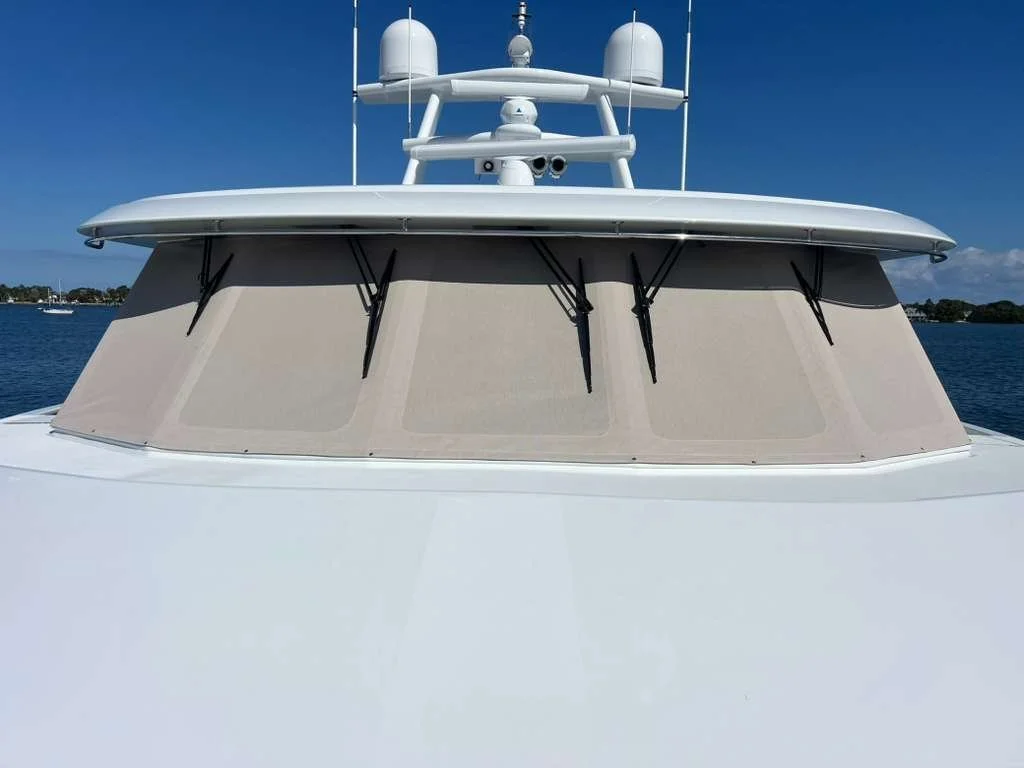
Exterior vessel window covers are precision-engineered protective systems that mount outside marine glazing to block solar heat gain and UV radiation before they penetrate the vessel. On motor yachts and superyachts operating in South Florida, where UV intensity and ambient temperatures are sustained throughout the operating season, these systems are a functional component of vessel protection — not an optional accessory.
Primary Functions:
- Heat Reduction: Block up to 90% of solar heat before it reaches glass, reducing cabin temperatures by 15–20°F — directly reducing HVAC load and runtime
- UV Protection: Shield upholstery, electronics, and interior finishes from the UV degradation that South Florida's sun produces on unprotected surfaces
- Privacy Control: Provide daytime privacy in busy marinas while maintaining outward visibility through optical-grade mesh
- Interior Preservation: Reduce the cumulative UV exposure that fades upholstery, degrades electronics, and accelerates interior refit cycles
Key Material Options:
- Marine-grade mesh fabrics (Phifertex, Soltis) with shade factors from 70% to 92.5%
- 3M VHB adhesive or stainless steel mounting systems — selected based on surface type and load requirements
- CNC-cut, non-fray materials for precision fit on complex window geometries
Installation Methods:
- No-drill adhesive systems for smooth fiberglass and window frame surfaces
- Stainless steel fasteners for textured surfaces and high-stress attachment points
- Professional 3D measurement for complex curved window geometries on large vessel superstructures
The technical case for exterior vs. interior protection is well established — stopping solar energy before it reaches the glazing is measurably more effective than interior-only shading for reducing heat gain. For vessels 60ft and above, this translates directly to preserved interior finishes, reduced HVAC runtime, and lower long-term refit costs.
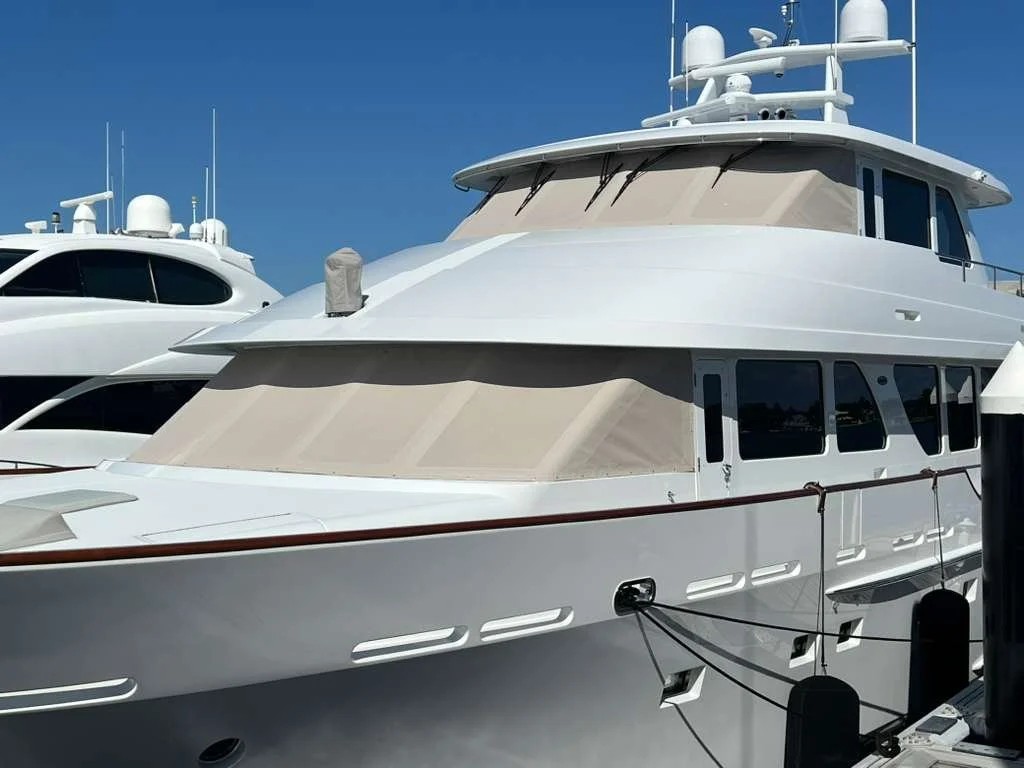
I'm Jeremy Bottau, owner of American Marine. I've spent years working with yacht builders and captains throughout South Florida to specify and fabricate precision exterior window covers for vessels ranging from 60ft sportfishers to 160ft superyachts — measured with 3D scanning tools, CNC-cut for repeatability, and built with marine-grade materials that perform in saltwater environments season after season.
The Technical Advantages of Exterior Window Covers on Large Vessels
In professional marine operations, managing the thermal environment of the cabin is a primary concern for both crew comfort and interior asset preservation. Windows account for up to 48% of heat buildup in a vessel's interior — when solar energy hits marine glass, it creates a greenhouse effect that traps heat and forces HVAC systems to work continuously during South Florida's operating season.
Exterior window covers stop this thermal transfer before it begins. High-performance mesh fabrics with shade factors up to 92.5% produce interior temperature reductions of up to 20°F. For captains managing large-scale vessels, this directly extends the service life of custom upholstery and protects sensitive bridge electronics from the thermal cycling that accelerates component failure. Precision fit is critical — understanding the complexities of overlap, fastener placement, and wind load management on large curved windshields requires 3D scanning to ensure a result that accounts for complex window geometries. For broader context on how precision canvas work integrates with vessel protection, see our article Custom Yacht Canvas: Products, Materials, and the Professional Fabrication Process.
Comparing Marine Mesh Fabrics for Visibility and Privacy
Selecting the correct fabric for exterior vessel window covers involves balancing heat rejection, outward visibility, and daytime privacy. Three industry-standard mesh types cover the range of professional specifications:
- Phifertex Standard: 70% shade factor — the most open weave, preferred by captains who prioritize maximum light and clear horizon visibility. Lowest privacy level of the three options.
- Soltis 86: 86% shade factor — mid-range performer with a flat weave that provides a modern aesthetic. Balanced ratio of visibility to privacy appropriate for most motor yacht applications.
- Phifertex Plus: 92.5% shade factor — the densest specification, delivering the highest UV protection and superior daytime privacy. Correct specification for vessels moored in busy marinas in Fort Lauderdale or West Palm Beach where privacy is a priority.
| Fabric Type | Shade Factor | UV Blocking | Outward Visibility | Privacy Level |
|---|---|---|---|---|
| Phifertex Standard | 70% | High | Excellent | Low |
| Soltis 86 | 86% | Very High | Good | Medium |
| Phifertex Plus | 92.5% | Elite | Fair | High |
An important operational note: privacy in mesh fabrics is dynamic. During daylight hours, the higher light level outside prevents visibility inward while those inside maintain a clear outward view. At night, with cabin lights on, this effect reverses — a consideration relevant to vessels entertaining or anchoring in populated areas.
Design Configurations for Motor Yacht Window Protection
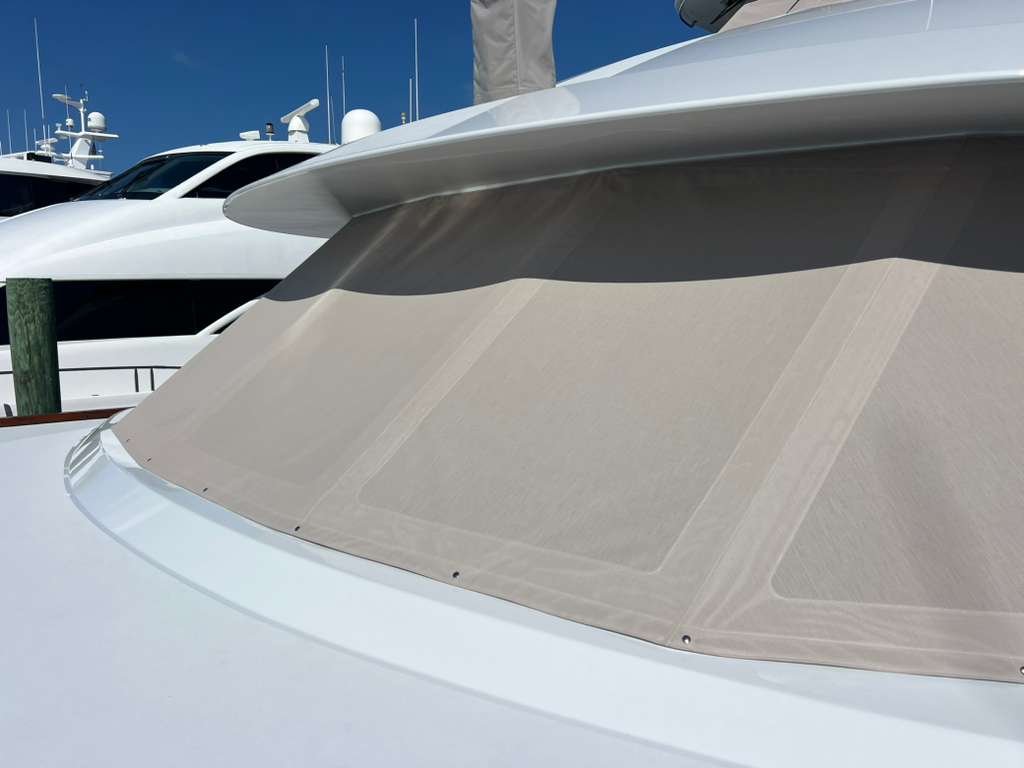
Every large vessel has a unique superstructure profile that requires a specific configuration of window protection. On motor yachts and superyachts, a generic approach produces sagging fabric, wind noise, and fastener failure — the predictable outcomes of applying a standard pattern to complex custom geometry. We categorize exterior window cover solutions into three primary configurations:
- Windshield Covers: Often the largest single canvas piece on the bridge — these must be precisely tensioned to withstand wind loads while at anchor in South Florida's afternoon chop. Fit errors produce flutter that abrades gelcoat and generates noise.
- Side Curtains and Enclosures: Integrated into existing bimini or hardtop structures to create climate-controlled cockpit or flybridge environments. These are specified as part of a complete enclosure system rather than as standalone pieces.
- Hatch and Porthole Covers: Smaller specialized covers for horizontal or angled surfaces that receive the most direct midday sun exposure — particularly relevant for Bomar and Lewmar hatches where interior shades trap heat against acrylic and can cause crazing or cracking over time.
Windshield Cover Specification for Vessels 60ft and Above
The windshield is the highest-priority area for heat management on most motor yacht configurations. Its angle produces intense solar radiation across the majority of the operating day. For vessels 60ft and above, we use 3D scanning to capture the exact curvature of the glass and surrounding frames — this data drives CNC cutting to ensure every fastener aligns precisely with the vessel's structure. Precision fit is essential not just for aesthetics but for safety: loose covers can obscure navigation lights or vibrate against gelcoat, producing abrasions that require cosmetic remediation.
Hatch and Porthole Cover Specification
Exterior hatch covers are fabricated with UV-bonded polyester thread to prevent seam failure under constant direct sun exposure. These covers can be designed with integrated insect screens — allowing airflow while maintaining UV protection and privacy during dockside periods. For vessels focused on interior preservation through extended dockside storage or lay-up, hatch covers are a cost-effective component of a comprehensive interior protection strategy.
Installation Systems for Professional Marine Environments
The attachment method is as consequential as the fabric specification. In professional marine environments, the correct system balances ease of crew operation with the structural integrity required for South Florida's wind and weather conditions.
- No-Drill Fasteners (3M VHB): For vessels where drilling into fiberglass or window frames is not acceptable, 3M VHB (Very High Bond) adhesive stud sets provide a marine-grade solution designed to withstand saltwater, high winds, and South Florida's temperature range without adhesive failure. Correct surface preparation is critical for bond integrity.
- Stainless Steel Studs: For high-load areas or textured surfaces where adhesive systems are not appropriate — the industry standard for durability in demanding attachment zones.
- YKK Marine Zippers: For large-scale enclosures and side curtains, #10 YKK molded tooth zippers with Delrin sliders are specified throughout. Designed specifically for saltwater environments to resist corrosion and salt binding — the most common failure mode in lower-grade zipper specifications.
All installation systems are specified to allow a single crew member to deploy or stow covers in minutes — an operational requirement on active vessels where covers need to be managed efficiently as conditions change.
Frequently Asked Questions
How much heat do exterior vessel window covers block?
When correctly fitted, exterior vessel window covers reduce interior cabin temperatures by 15 to 20°F by blocking up to 90% of solar heat gain before it reaches the glass. This is measurably more effective than interior shading solutions, which allow heat to build up between the shade and the glass. The reduction in heat gain translates directly to lower HVAC runtime — a meaningful operational consideration on vessels where air conditioning runs continuously during South Florida's operating season.
Does outward visibility remain usable through exterior mesh covers?
Yes — optical-grade marine mesh preserves clear outward visibility while reducing glare and solar intensity. The weave is designed to allow safe situational awareness from the cockpit or salon during daylight hours. The visibility level depends on the shade factor specified — Phifertex Standard at 70% provides the clearest outward view, while Phifertex Plus at 92.5% reduces visibility somewhat in exchange for maximum privacy and UV protection.
What separates custom fabrication from generic window cover solutions?
Generic window cover kits lack the precision required for motor yachts and superyachts with complex curved windshields, custom superstructure profiles, and specific hardware configurations. Professional custom fabrication involves 3D measurement and CNC precision cutting — producing a fit that doesn't sag, flutter, or chafe against the vessel's surface. For large vessels where surface damage from a poorly fitted cover can require gelcoat remediation, the cost of correct fabrication is a straightforward value proposition.
Conclusion
Exterior vessel window covers on motor yachts and superyachts in South Florida are an asset protection specification — not a comfort accessory. Correct material selection, precision fit through 3D measurement, and professional installation produce a system that extends the service life of the interior, reduces HVAC load, and provides privacy in South Florida's busy marina environments.
American Marine fabricates exterior vessel window covers for motor yachts and superyachts across Fort Lauderdale, West Palm Beach, and Miami. If you're specifying window protection for a vessel 40ft or above, schedule a dockside assessment and we'll evaluate your vessel's specific window configuration and recommend the correct specification.