
Marine Cushion Replacement for Motor Yachts and Superyachts: When, Why, and How
Identifying the Need for Marine Cushion Replacement
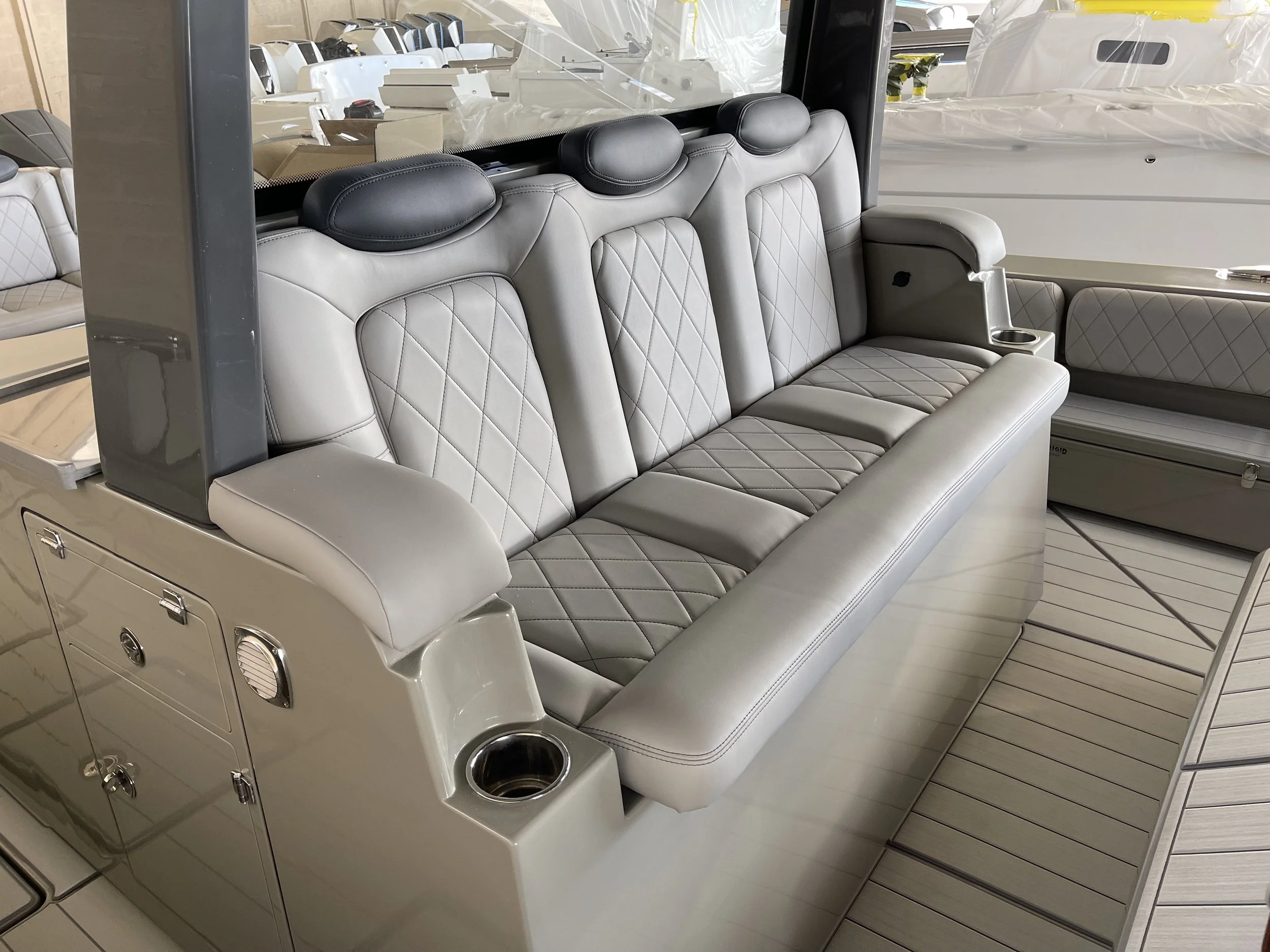
For captains and vessel managers overseeing motor yachts and superyachts in South Florida, marine cushion replacement is a scheduled maintenance decision — not a reactive one. South Florida's UV intensity and humidity accelerate cushion degradation measurably faster than in other markets. Foam loses structural integrity. Vinyl cracks. Fabric fades past acceptable presentation standards. Identifying the correct replacement point and specifying the right materials for the vessel's specific application zones determines how long the next set of cushions performs before the cycle repeats.
When we evaluate a project in Fort Lauderdale or Miami, we look for specific failure points that indicate the internal components have reached the end of their service life. A chalky residue on vinyl or fabric that feels brittle to the touch indicates that plasticizers have leached out due to UV exposure — producing micro-cracks that allow saltwater to penetrate the foam core and begin an internal degradation cycle. For context on identifying upholstery wear and repair needs, see our article Marine Upholstery Repair in South Florida.
Structural Failure Indicators
The most common structural failure is "bottoming out" — the foam loses cell memory and density, producing a pancaking effect where occupants feel the hard substrate beneath the cushion. On large vessels, high-compression foam specifications are used to delay this failure, but even correctly specified foam fatigues over 10–15 years of active use.
Beyond the foam, substrate failures are common in older cushions. Plywood and inferior plastics rot and warp in South Florida's humidity. In correctly specified marine cushions, we use stable HDPE (High-Density Polyethylene) backing plates that are 100% rot-proof and dimensionally stable. If seat shells are bowing or fasteners are pulling out of a soft, deteriorated base, full replacement is the only professional solution. For context on waterproof cushion specification, see our article Waterproof Yacht Cushions for Motor Yachts and Superyachts.
Hygiene and Presentation Indicators
Hygiene is a critical consideration on vessels where guest and charter standards are non-negotiable. Pink mold (Serratia marcescens bacteria) and black mildew colonize the interior of cushions that trap moisture without adequate drainage. Once established within the foam, these organisms produce persistent odors and staining that cannot be addressed from the surface — the foam must be replaced. Salt crystallization inside seams acts as an abrasive, grinding away at thread until the seam fails. A persistent musty odor from cockpit or bridge deck seating is a clear indicator that cushions are retaining moisture rather than shedding it — and that replacement, not cleaning, is the correct response.
Selecting Technical Materials for Marine Environments
Material specification is where most off-the-shelf solutions fail on large vessels. For motor yachts and superyachts, we specify materials based on documented technical performance under the stress conditions of South Florida's marine environment — including 30 oz marine-grade vinyl and performance fabrics at approximately 700 GSM to withstand the friction of heavy use and the chemical stress of sustained saltwater exposure.
Foam Specification for Marine Cushion Replacement
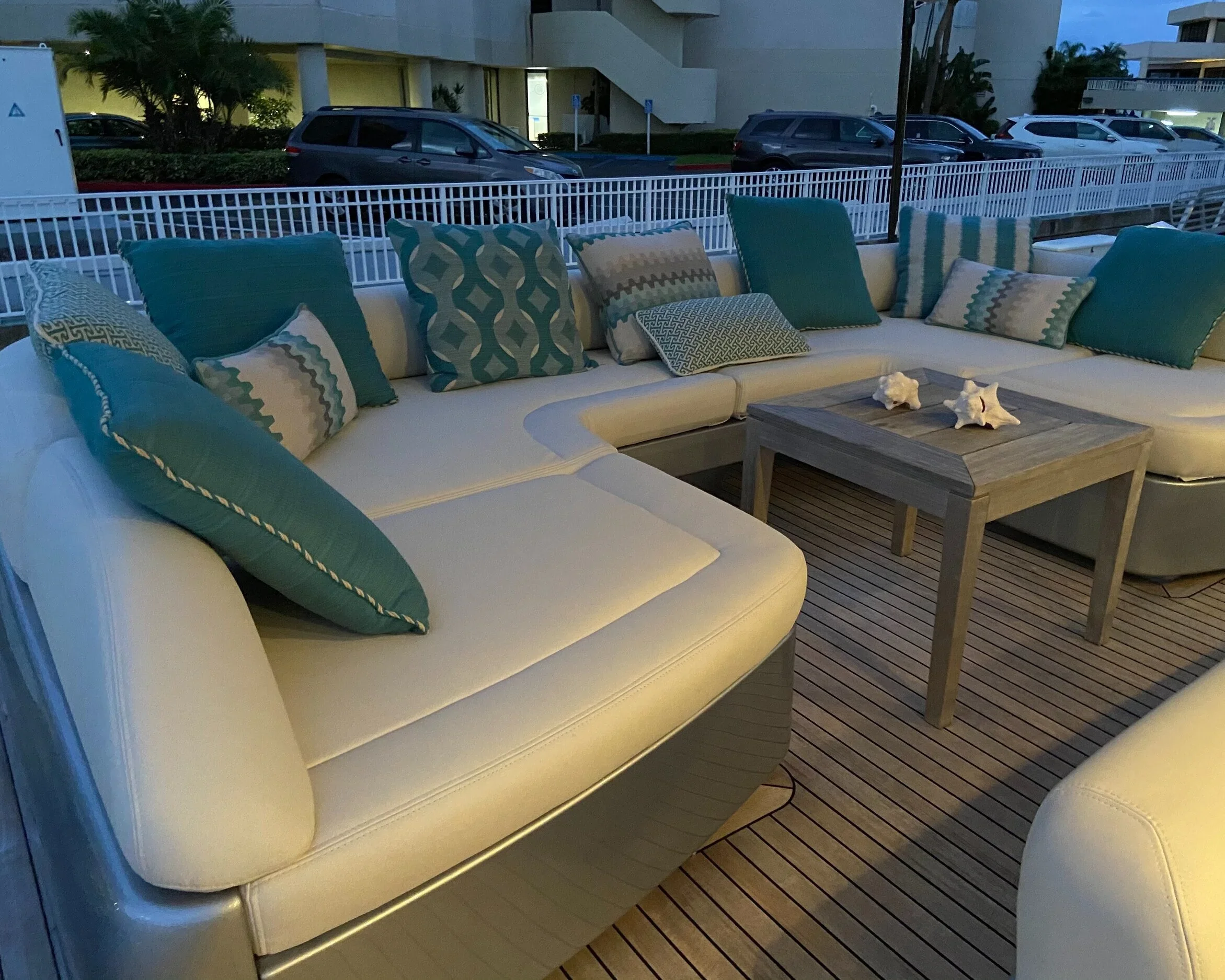
The foam core is the most consequential specification decision in any marine cushion replacement project. For exterior seating — exposed cockpit areas, sun pads, bridge deck seating — we specify Dry-fast reticulated foam. Its open-cell structure allows water to pass through immediately, drying almost instantly and preventing the moisture retention that produces mold and structural degradation. This is the correct exterior specification for any large vessel where cushions face direct rain and spray exposure.
For interior berths and helm seats requiring maximum support, high-density polyurethane or closed-cell Flotex is specified. Flotex does not absorb water and can serve as certified flotation material — a meaningful consideration for cockpit applications. When correctly specified, these foam selections deliver 10–15 year service life under normal motor yacht use patterns.
Fabric and Vinyl Grade Specifications
We specify solution-dyed acrylics — Sunbrella being the industry standard — for their breathability and colorfastness. Unlike printed fabrics, solution-dyed fibers are saturated with pigment through the entire fiber structure, maintaining color integrity through sustained South Florida UV exposure without surface bleaching.
For vinyl applications, we specify 30 oz marine-grade vinyl treated with antimicrobial and UV-stable coatings. To prevent water intrusion at seam points, we employ welded seams and high-tenacity PTFE thread — immune to UV degradation and chemical cleaners — throughout every cushion system we fabricate.
Precision Measurement and Templating for Custom Fits
The difference between an acceptable fit and a shipyard-standard fit is measurement technology. At American Marine, we use digital 3D scanning in place of traditional paper or plastic templates for all marine cushion replacement projects on large vessels.
Using the ProLiner, we capture the exact geometry of the vessel's deck — including subtle hull curvatures and bevel angles that manual measurement consistently misses. This data drives our CNC cutting tables, ensuring every marine cushion replacement fits correctly from the first installation. This precision is essential for custom yacht upholstery projects on motor yachts and superyachts where tolerances are measured in millimeters and fit errors are immediately visible.
Complex Geometries: V-Berths, L-Settees, and Bolsters
Large vessel layouts consistently involve non-standard geometry. V-berths, L-shaped settees, and mezzanine bolsters require complex beveled edges to sit flush against the hull without gaps. For storage areas, we design hinged cushions that allow crew access to lockers without removing the entire seating arrangement — with the hinge geometry and swing radius engineered into the digital template to prevent binding.
Shell Type Identification for Helm and Deck Chairs
When replacing cushions for standard helm or deck chairs, correct shell type identification is critical:
- High-Back Shells: Equal lengths for back and bottom when folded — cushions typically slide on like a pillowcase.
- Low-Back Shells: Backrest approximately 2 inches shorter than the seat bottom — cushions snap directly to the plastic shell.
Misidentification produces sagging and improper fastening — errors that are immediately visible and require refabrication.
Engineering for Durability and Installation
A cushion is only as durable as the system holding it in place. On large vessels operating offshore, loose cushions create safety hazards in rough sea states. We engineer every replacement with integrated drainage and high-strength fastening systems appropriate to the vessel's operational profile.
Fastening Systems for Active Offshore Use
For high-speed vessels and bridge deck seating in active offshore use, we specify track systems — where the cushion beads into a rail — combined with heavy-duty stainless steel snaps. For a cleaner aesthetic on superyachts, blind fasteners or industrial-strength Velcro with non-skid backing secures cushions through sea conditions without visible hardware. These systems keep cushions in position through sustained offshore operation — not just calm water dockside use.
Substrate and Hardware Specification
All custom cushions are built on HDPE substrates — 100% rot-proof and dimensionally stable in South Florida's humidity. We use 316 stainless steel staples and T-nut inserts for pedestal mounting to prevent rust bleeding onto the deck. PVC mesh panels on the underside of every cushion provide drainage and airflow — a standard component of professional marine upholstery fabrication that is frequently omitted in lower-grade replacement work.
Maintenance Protocols for Extended Service Life
To achieve the full 10–15 year projected service life from a correctly specified marine cushion replacement, a consistent maintenance protocol is required. South Florida's salt exposure and UV intensity are unrelenting — proper maintenance is what separates a system that reaches its design life from one that fails prematurely.
| Cleaning Agent | Effect on Vinyl/Fabric | Recommended Use |
|---|---|---|
| pH-Neutral Soap | Safe for all topcoats | Weekly wash-downs |
| Bleach Dilution | Can strip UV inhibitors | Only for extreme mildew — rinse thoroughly |
| Vinegar/Water | Effective for salt removal | Monthly deep clean |
| Harsh Solvents | Causes cracking and yellowing | Never use |
Operational Maintenance Protocols:
- Vertical Storage: When the vessel is not in active use, store cushions vertically to allow any trapped moisture to drain through the mesh bottom.
- Anti-Fungal Treatment: Applying a light anti-fungal powder to the mounting deck prevents mildew colonies from forming beneath cushions during extended dockside periods.
- Seasonal Protection: Use breathable covers during lay-up periods to reduce UV load on exposed cushion surfaces.
Frequently Asked Questions about Marine Cushion Replacement
What does a marine cushion replacement project involve at the professional level?
For a vessel 60ft and above, a marine cushion replacement project involves material costs — premium vinyl, Dry-fast foam, HDPE substrates — combined with labor for digital 3D templating, CNC fabrication, and dockside installation. Project scope and complexity vary significantly by vessel configuration, number of application zones, and hardware integration requirements. American Marine provides detailed assessments after an on-vessel evaluation — ensuring every specification decision is documented before fabrication begins.
How do professional cushions prevent moisture retention?
Three integrated design elements prevent moisture retention in a correctly specified marine cushion replacement:
- Reticulated Foam: Water passes through rather than soaking in — the foam dries almost immediately after rain or spray exposure.
- PVC Mesh Bottoms: Provides a drainage exit path and promotes airflow beneath the cushion to accelerate drying.
- Welded Seams: Minimizes water entry through stitch holes at seam points — the most common moisture intrusion path in lower-grade fabrication.
Can cushions be fabricated for irregular V-berths and compound hull geometries?
Yes — this is the primary advantage of 3D digital scanning over manual measurement. We map the exact tumblehome or flare of a hull and produce beveled foam inserts that fill the space with zero gaps. For V-berths specifically, this eliminates the uncomfortable dead zones near the hull that standard rectangular cushions leave — producing a fit that functions correctly and looks like original equipment.
Conclusion
Marine cushion replacement on a motor yacht or superyacht, when done correctly with precise measurement, correctly specified materials, and professional fabrication, restores both the comfort and the presentation standard of the vessel — and delivers 10–15 years of service life before the replacement cycle repeats. The specification decisions made at the outset determine that outcome more than any other variable.
American Marine handles marine cushion replacement for motor yachts and superyachts across Fort Lauderdale, West Palm Beach, and Miami. We understand the timelines and quality standards required by captains and refit managers in South Florida. Schedule a dockside assessment to discuss your vessel's requirements and plan your next upholstery project with our fabrication team.