
How Weather-Resistant Canvas Is Specified for Motor Yachts and Superyachts in South Florida
Why Weather-Resistant Canvas Is a Critical Specification Decision for Motor Yachts and Superyachts

Weather-resistant canvas is a coated or treated fabric engineered to repel water, resist UV degradation, and hold up under sustained environmental stress — making it the foundation of every cover, enclosure, and shade structure on a working vessel. Selecting the correct specification for each application zone on a motor yacht or superyacht in South Florida is a technical decision with direct consequences for how long the system performs and what it costs to maintain.
What separates high-performance marine canvas from standard options:
| Feature | Entry-Level Canvas | Marine-Grade Weather-Resistant Canvas |
|---|---|---|
| Water resistance | Surface treatment only | PVC or PU backing — hydrostatic ratings up to 5,300 mmH₂O |
| UV resistance | Minimal or unrated | 500+ hours tested — solution-dyed options for lasting color |
| Abrasion resistance | Low | 50,000+ double rubs (ASTM D4966) |
| Weight | 200–220 GSM | 260–390 GSM |
| Typical lifespan in South Florida sun/salt | 1–3 seasons | 5–10+ years with consistent maintenance |
| Correct applications | Light use, non-marine | Marine enclosures, vessel covers, shade systems, superyacht applications |
South Florida is one of the harshest environments a fabric can face. Intense UV, high humidity, salt air, and sudden tropical storms eliminate materials not specifically engineered for these conditions within a single season. A cover that performs in other markets may fail within months dockside in Fort Lauderdale. The wrong canvas doesn't just look bad — it fails structurally. Seams split. Coatings delaminate. Colors oxidize to a chalky grey. On a vessel of significant value, that kind of failure is unacceptable.
I'm Jeremy Bottau, owner of American Marine. I've spent years specifying and fabricating weather-resistant canvas for luxury yachts and superyachts throughout South Florida — work that demands materials capable of performing in real conditions, not just in laboratory testing. In the sections below, I'll walk through exactly what makes a marine canvas perform at the professional level and how to evaluate specification options for each application zone.
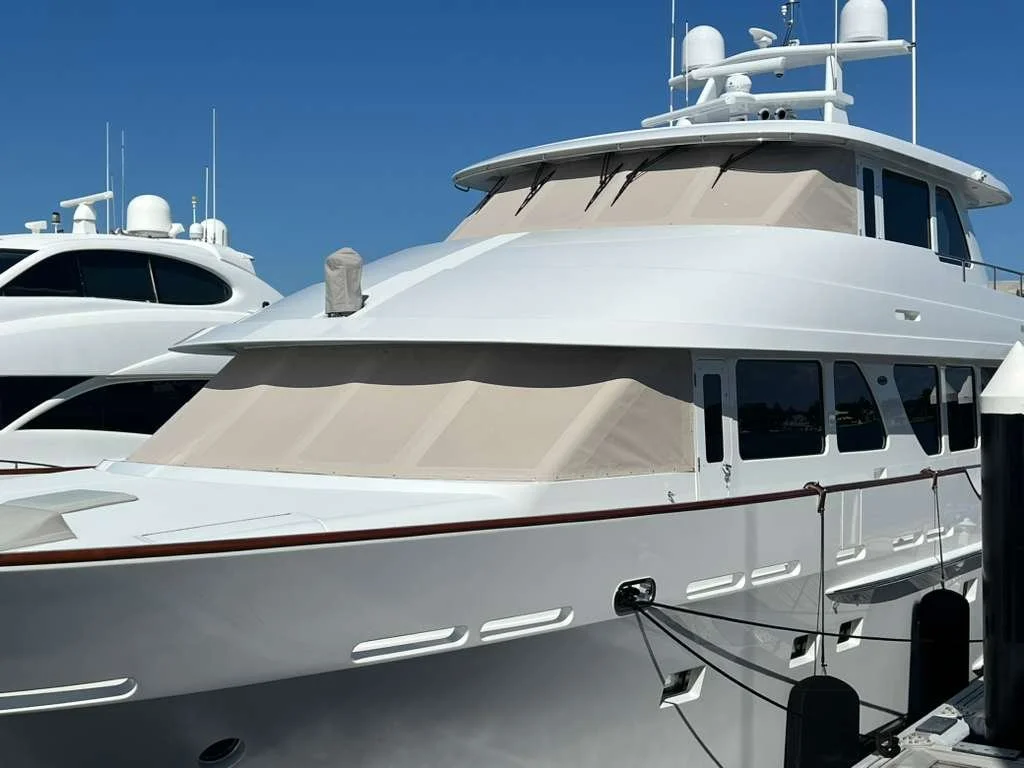
Technical Specifications of High-Performance Weather-Resistant Canvas
When evaluating weather-resistant canvas for a 100ft vessel in Fort Lauderdale or a superyacht in West Palm Beach, material performance data determines specification — not aesthetics. For professional marine applications, the engineering behind a fabric is the primary selection criterion.
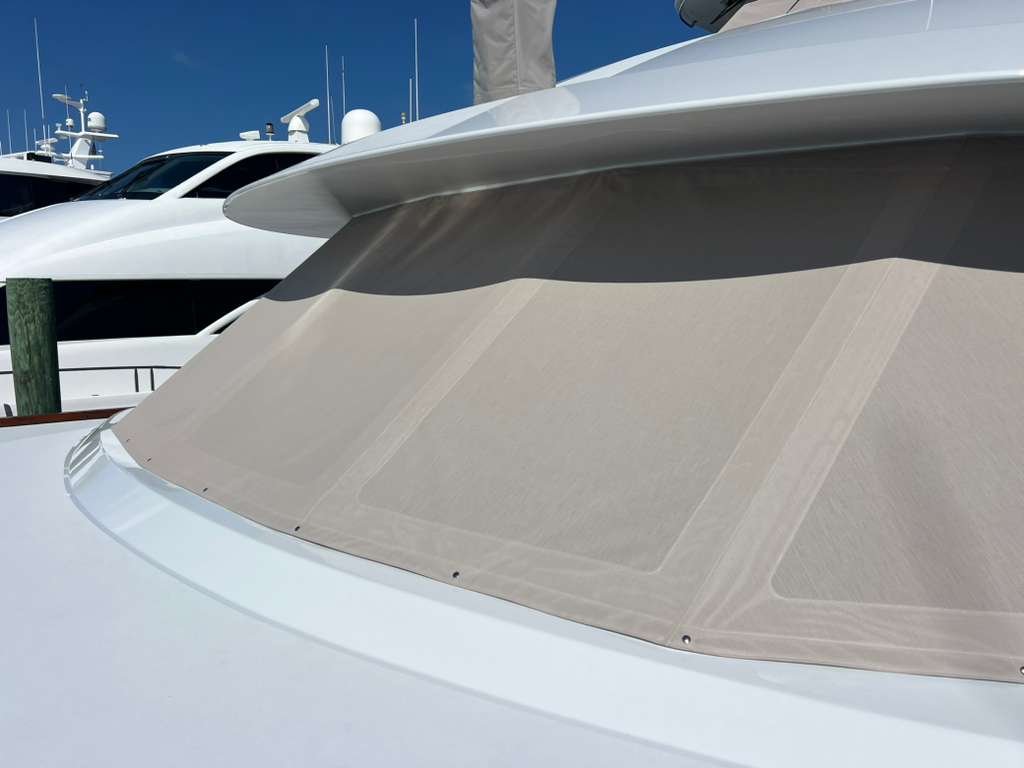
Understanding Weight and Density
In the marine industry, fabric weight is measured in GSM (grams per square meter) or ounces per square yard. Standard retail "waterproof" canvas typically sits around 220 GSM (6.5 oz) — comparable to a 600D thread weave, suitable for general light-use applications but lacking the tensile strength required for high-speed transit or sustained wind loads on large vessels. For serious vessel protection, we prioritize fabrics in the 390 GSM range with corresponding thickness specifications. This density provides the structural integrity required to prevent pooling and seam stress during South Florida's tropical downpour events — which produce sustained rain loads that lighter fabrics cannot manage without deformation.
The Hydrostatic Head Rating
Hydrostatic head rating is the primary performance metric for water resistance in marine canvas — it measures how much water pressure a fabric can withstand before it starts to leak.
- Standard canvas: Often unrated or fails at low pressure
- Elite marine canvas: Ratings reaching 5,300 mmH₂O
At the upper end of this range, the fabric is functionally waterproof — not just water-shedding. This distinction is critical when specifying between materials for mooring covers, where prolonged rain contact is the operating condition, and enclosure panels, where structural integrity under wind and water load determines system performance.
Material Composition and Coating Technologies
The core of professional-grade weather-resistant marine canvas used in South Florida is either polyester or acrylic. The performance differentiation lies in the backing and coatings.
Backings and Coating Technologies
Modern marine fabrics use a multi-layer approach — a polyester face provides the initial barrier, while a Polyvinyl Chloride (PVC) or Polyurethane (PU) backing provides the actual waterproof seal.
- PVC Backing: Extremely durable, provides a complete water block. Correct specification for heavy-duty applications — full vessel covers, cockpit enclosures requiring absolute waterproofing.
- PU Backing: Softer hand while maintaining high water resistance. Correct for applications where the fabric must drape or fold easily — custom enclosure panels, areas requiring flexibility in the fabric assembly.
For a detailed comparison of the primary material options and their correct applications, see our guide to Marine Canvas Materials for Yachts.
Solution-Dyed Acrylic vs. Vinyl-Coated Polyester
For most large vessel applications, the specification choice comes down to these two primary fabric categories — each with distinct performance profiles and correct applications:
- Solution-Dyed Acrylic (Sunbrella): Fibers are dyed before weaving — color penetrates the full fiber structure rather than being surface-applied. This produces exceptional UV resistance with 10-year manufacturer warranties against fading, and breathability that prevents condensation buildup beneath covers and within enclosures. The correct specification for most sun-exposed applications on motor yachts and superyachts.
- Vinyl-Coated Polyester (Stamoid): High structural strength and absolute waterproofing — the correct specification for full vessel covers, cockpit enclosures, and applications where complete water exclusion is the primary requirement. Requires integrated ventilation design in any enclosed application.
For a direct comparison of these two primary specifications for superyacht applications, see our article Sunbrella vs Stamoid: Which Marine Fabric Reigns Supreme for Superyacht Covers.
Durability Metrics and Performance Ratings
When a vessel is docked in Fort Lauderdale or West Palm Beach, canvas is under sustained environmental stress. Durability is measured through standardized testing that simulates years of wear under controlled conditions.
Abrasion and Strength Ratings
- Double Rub Count (ASTM D4966): High-end weather-resistant marine canvas rates at 50,000+ double rubs — the fabric can withstand significant friction from covers rubbing against railings or hardware in wind conditions without surface failure.
- Tensile Strength: Measures the force required to pull the fabric apart. Top-tier polyester canvas exceeds 1,400 N in the warp (lengthwise) direction — ensuring structural integrity under sustained wind load on large vessel applications.
- Tear Strength: Measures how easily a small nick or cut progresses to catastrophic failure. Professional-grade canvas tests around 74 N — a small snag from hardware contact does not compromise the cover's structural integrity.
Environmental Performance and Modern Coatings
The Cold Crack rating — typically -10°F (-23°C) for professional-grade marine canvas — indicates coating quality and resistance to thermal cycling, which is relevant in South Florida's air-conditioned vessel environments where fabrics move between exterior heat and interior cold. The industry is moving toward PFAS-free coating technologies that provide equivalent water-shedding performance without the persistent chemical concerns of legacy DWR treatments — an increasingly common specification requirement on vessels where environmental credentials are a priority for the owner.
Maintenance and Care for Professional Marine Fabrics
Even correctly specified weather-resistant canvas fails prematurely without consistent maintenance. In South Florida's saltwater environment, salt accumulation is the primary silent failure mechanism — salt crystals act as abrasives against fiber surfaces and intensify UV load through a magnification effect.
Canvas Maintenance Protocol for South Florida Conditions
- Rinse frequently with fresh water: A freshwater rinse after every use removes salt before it crystallizes. This single maintenance action has the highest leverage on canvas service life of anything a captain or crew can do consistently.
- Mild detergents only: Harsh chemicals, bleach, and pressure washers damage fabric coatings and degrade seam stitching. A soft brush and mild liquid soap are the correct cleaning tools.
- Air dry only: Heat from dryers delaminate PVC and PU backings — canvas must be air-dried before storage or folding.
- Store completely dry: Storing damp canvas is the direct cause of mildew growth — even mildew-resistant fabrics develop mold when organic debris or salt is trapped in a damp fold during storage.
For a comprehensive maintenance checklist, see our article Canvas Care Tips Every Yacht Owner Should Know.
Frequently Asked Questions
What is the difference between waterproof and water-resistant canvas?
Water-resistant canvas is typically a woven fabric with a DWR (Durable Water Repellent) coating applied to the surface — it sheds light rain but allows moisture to seep through under pressure or standing water. Waterproof canvas features a solid backing (PVC or PU) that creates a physical barrier — water cannot pass through the material itself regardless of pressure, until the fabric's hydrostatic limit is reached. For vessel covers in South Florida's rainy season, waterproof specification is the correct choice for any application where sustained rain contact is the operating condition.
How long does weather-resistant canvas last in South Florida?
In South Florida's UV environment, standard retail-grade canvas typically lasts 12 to 24 months before visible degradation. A correctly specified custom-fabricated cover using 500-hour UV-rated material, solution-dyed fibers, and PTFE thread can reliably deliver 5 to 10 years of service life. The primary variables are material specification, salt exposure management through consistent fresh water rinsing, and how often the vessel is properly cleaned and maintained. For a detailed guide on cover specification and durability, see our article Durable Yacht Covers for Motor Yachts and Superyachts.
Conclusion
Selecting the correct weather-resistant canvas specification for a motor yacht or superyacht in South Florida is a technical decision — not an aesthetic one. Hydrostatic ratings, UV resistance specifications, material composition, and coating technology all determine how long a cover or enclosure system performs in South Florida's sustained UV and saltwater environment. Correct specification by application zone — matched to each zone's specific exposure and performance requirements — is what produces results that perform at their rated service life rather than failing prematurely.
American Marine fabricates weather-resistant canvas systems for motor yachts and superyachts across Fort Lauderdale, West Palm Beach, and Miami. If you're planning a cover or enclosure project on a vessel 40ft or above, schedule a dockside assessment and we'll evaluate your vessel's specific requirements and recommend the correct material specification for each application zone.