
Targeted Comfort for Every Boat Area
Why a Boat Sun Shade for Bow Areas Demands Precision — Not Just Coverage
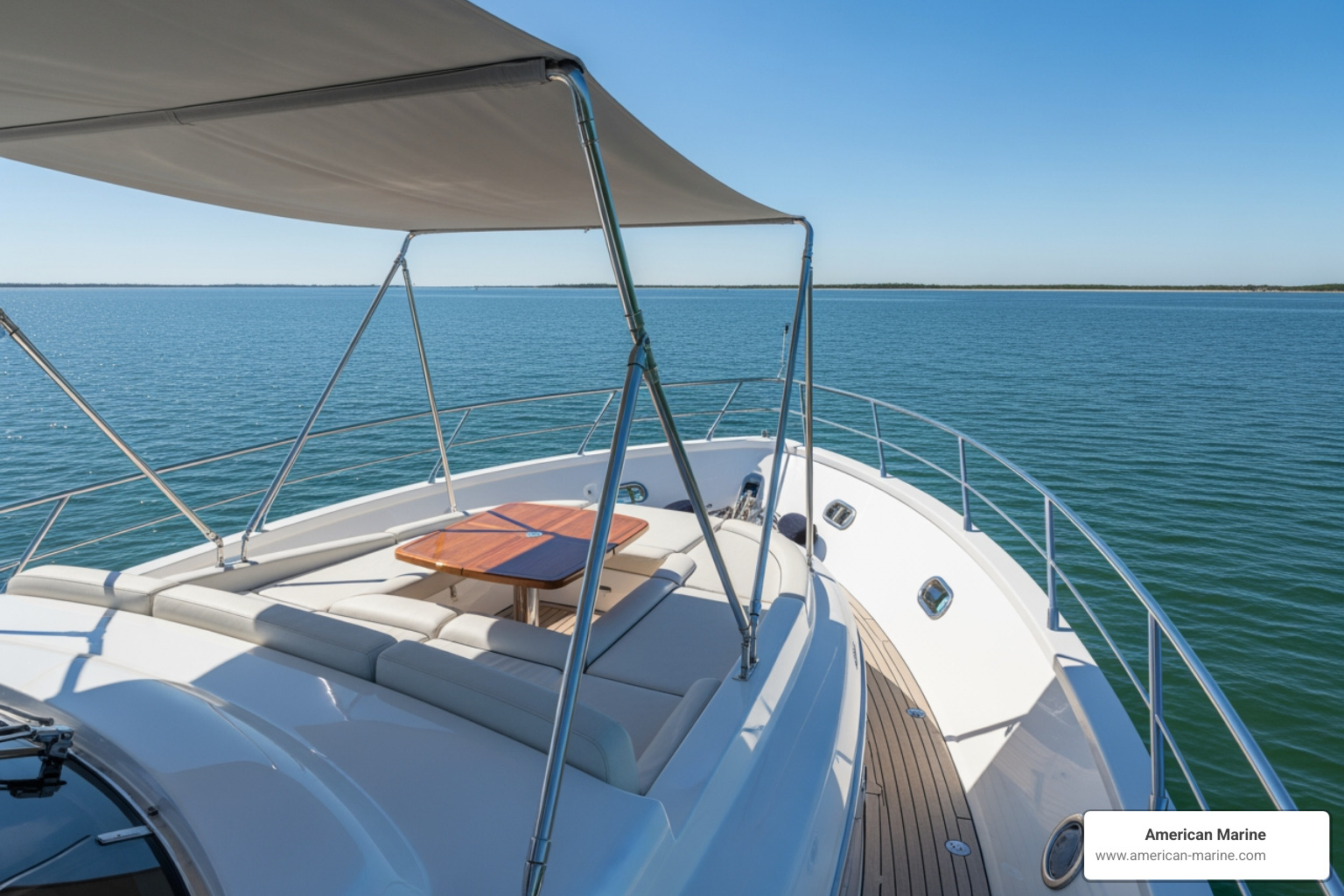
A boat sun shade for bow is one of the most requested upgrades among yacht owners who spend extended time at anchor, on sandbars, or cruising at low speeds in high-sun environments. The bow is typically the most exposed area on any vessel — and on larger yachts, inadequate shading means direct UV exposure, elevated deck temperatures, and accelerated wear on surfaces and upholstery.
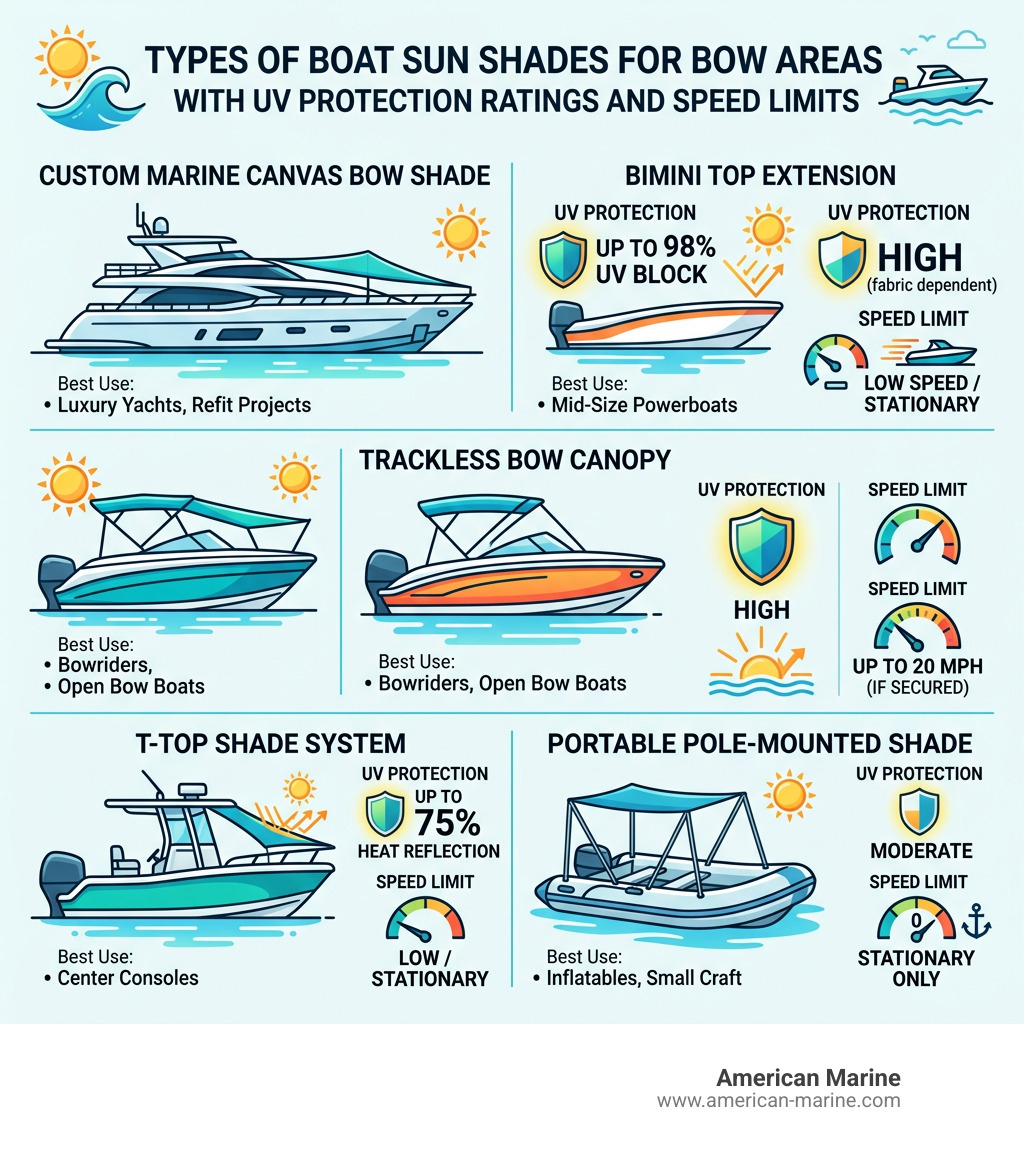
Here is a quick reference for anyone evaluating bow shade options:
| Shade Type | Best Use Case | UV Protection | Speed Limit |
|---|---|---|---|
| Custom marine canvas bow shade | Luxury yachts, refit projects | Up to 98% UV block | Varies by design |
| Bimini top extension | Mid-size powerboats | High (fabric dependent) | Low speed / stationary |
| Trackless bow canopy | Bowriders, open bow boats | High | Up to 20 mph if secured |
| T-Top shade system | Center consoles | Up to 75% heat reflection | Low / stationary |
| Portable pole-mounted shade | Inflatables, small craft | Moderate | Stationary only |
The right solution depends on your vessel's size, structure, and how you use it. For large yachts and superyachts, a generic off-the-shelf product rarely delivers the fit, durability, or aesthetic standard the vessel demands. Precision fabrication — not approximation — is what separates a functional shade from a truly integrated one.
I'm Jeremy Bottau, owner of American Marine, and my team has spent years engineering and installing custom bow shade solutions for luxury yachts and superyachts across South Florida — where UV intensity and heat load make a properly spec'd boat sun shade for bow not a luxury, but a necessity. The sections below break down everything from materials and mounting systems to what separates a bespoke solution from a catalog product.
Engineering the Ideal Boat Sun Shade for Bow Areas
Designing a boat sun shade for bow requires an understanding of both geometry and environmental stress. Unlike a cockpit bimini, which often benefits from the structure of a radar arch or T-top, a bow shade must span an open, often tapered area while remaining stable against coastal winds.
For vessels 60ft and larger, the engineering focus shifts from simple portability to structural integration. We utilize 3D-measurement technology to ensure the canvas follows the specific lines of the deck, preventing the "parachuting" effect common in poorly fitted shades. A high-performance bow shade should achieve two primary technical benchmarks:
- UV Blocking: High-density marine fabrics can provide an effective block of up to 98%.
- Heat Reflection: Specialized coatings can reflect up to 75% of UV heat, significantly lowering the temperature of the gelcoat or teak beneath it.
Stationary vs. Underway Considerations for a Boat Sun Shade for Bow
One of the most frequent questions we receive is whether a boat sun shade for bow can remain deployed while the vessel is moving. The answer depends entirely on the mounting system and the wind load.
Most temporary or "kit" shade systems are strictly designed for stationary use or low speeds (typically under 5 mph). At higher speeds, the upward pressure on the canvas can strain mounting points or cause support poles to fail. However, certain engineered systems, such as trackless bow dodgers or custom-tensioned sails, are rated to withstand winds up to 20 mph.
For captains, visibility is the primary safety concern. Any shade deployed on the bow must not obstruct the line of sight from the helm. This often necessitates a design that sits higher or features clear vinyl sections to maintain a safe operational window.
Structural Integrity and Wind Loading
Wind resistance is the defining factor in the longevity of a bow shade. In South Florida, where sudden afternoon squalls are common, a shade must be able to handle gusts without structural deformation.
- Anodized Aluminum: Lightweight and corrosion-resistant, often used for telescopic poles in temporary setups.
- Stainless Steel: The industry standard for permanent frameworks on luxury vessels, offering high tensile strength.
- Carbon Fiber: Increasingly popular for removable "sail" style shades due to its incredible stiffness-to-weight ratio.
A professional installation utilizes tensioning systems—often integrated into the fabric itself—to ensure the canvas remains taut. This reduces vibration and "whipping," which are the leading causes of fabric fatigue and hardware failure.
Material Specifications and Protective Features
The choice of fabric for a boat sun shade for bow determines not just the aesthetic, but the maintenance cycle of the vessel. We prioritize materials that offer a balance of breathability and resistance to UV radiation.
- Marine-Grade Acrylic: Known for its colorfastness and UV resistance. It is naturally mildew-repellent and breathable, which prevents heat from becoming trapped under the canopy.
- 600D Polyester: Often used in mid-tier applications, this fabric provides excellent water resistance (often rated up to 1000 mm) but may lack the long-term UV stability of acrylics in tropical environments.
- Breathable Canvas: Essential for enclosures to prevent "sweating" and pilling on the interior surfaces.
For more information on selecting the right fabric for your specific environment, refer to our guide on Marine Shade Solutions.
Advanced Fabric Technology for High-Exposure Environments
In recent years, "resilience" materials have changed how we approach bow shading. These fabrics offer a Spandex-like stretch (up to 20% extra stretch) while maintaining a high-density weave. This allows for a sleeker, more aerodynamic fit that can be tensioned over irregular shapes.
Furthermore, moisture-wicking properties and outer UV coatings are critical. A shade that holds water will eventually sag and strain its mounting hardware. High-end fabrics are engineered to shed water instantly while resisting pilling and abrasion from saltwater exposure. If your existing shade is showing signs of wear, understanding the repair process is vital; see our insights on Bimini Canvas Repair.
Installation Methods for Professional Marine Operations
The method used to secure a boat sun shade for bow should reflect the vessel’s operational requirements. For refit managers and builders, the goal is to provide shade without compromising the deck's aesthetics or structural integrity.
Precision Mounting and Hardware Selection
| Mounting Method | Pros | Cons |
|---|---|---|
| Permanent Deck Mounts | Highest stability; rated for higher wind speeds. | Requires drilling; permanent hardware on deck. |
| Removable Rod-Holder Poles | No permanent deck hardware; easy to stow. | Limited to 15 or 30-degree angles; lower wind rating. |
| Rail-Mounted Clamps | Versatile placement; no drilling required. | Can mar stainless rails if not properly padded. |
| Trackless / Pad-Eye | Clean aesthetic; quick deployment. | Requires precision tensioning for stability. |
When installing hardware on a yacht's bow, drilling is a high-anxiety task for many owners. Professional installers mitigate risk by:
- Taping the Fiberglass: Prevents chipping of the gelcoat during the initial pilot hole.
- Sealing the Core: Any hole drilled into a cored deck must be over-drilled, filled with epoxy, and re-drilled to ensure no moisture ever reaches the core material.
- Using 316 Stainless Steel: To prevent "bleeding" or rust streaks on the white fiberglass. This marine-grade alloy is essential for long-term corrosion resistance in saltwater environments.
For a deeper dive into hardware and frame selection, consult the Custom Boat Bimini Ultimate Guide.
Specialized Solutions for Diverse Vessel Profiles
Every vessel presents a unique set of challenges. A center console requires a different approach than a 100ft superyacht.
Custom Integration of a Boat Sun Shade for Bow on Large Vessels
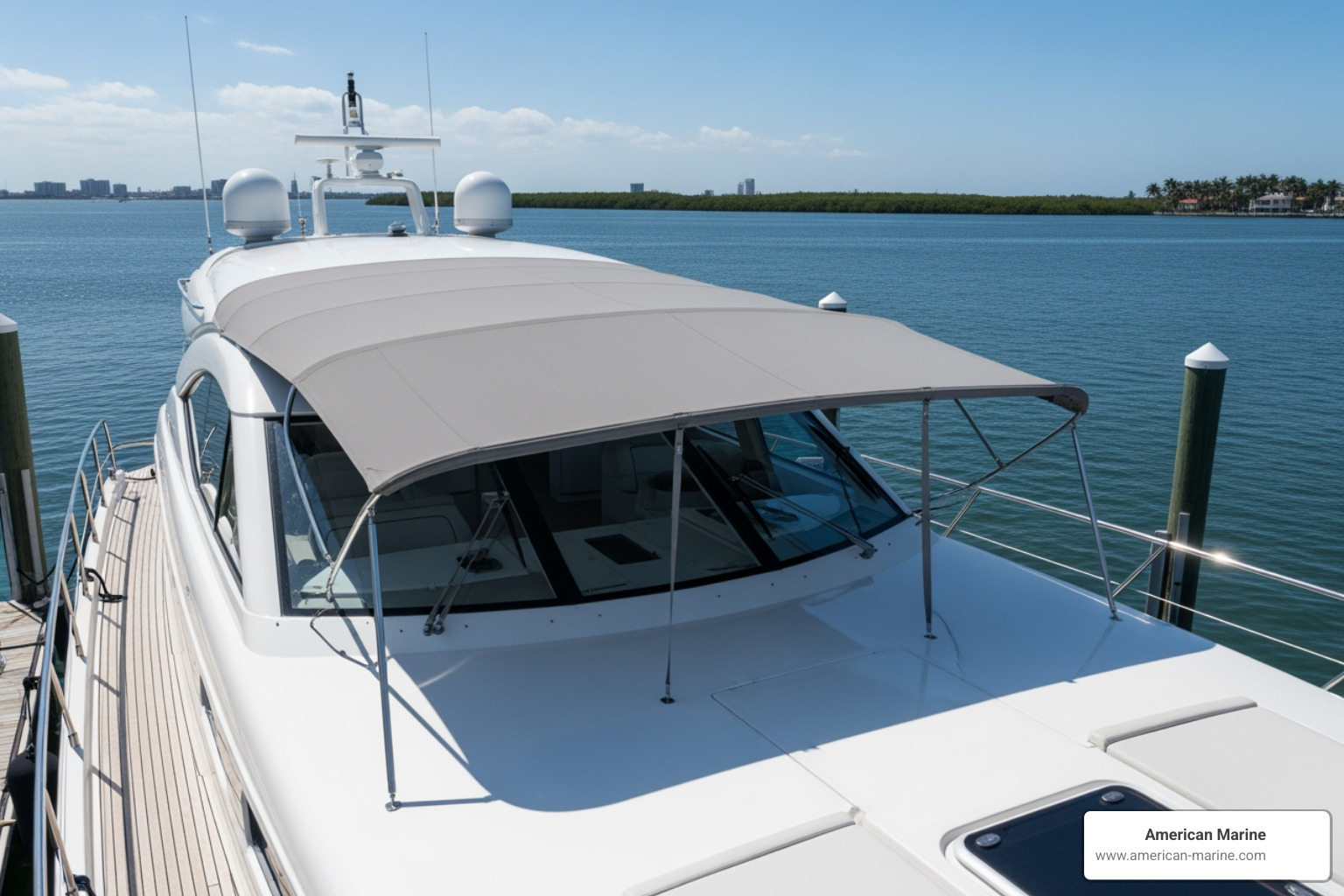
For luxury yachts, the "off-the-shelf" look is unacceptable. We utilize CNC-cut canvas and 3D scanning to create shades that appear as an extension of the vessel's original design. This level of precision is particularly important for Boat Bimini Extension projects where the new bow shade must color-match and align perfectly with existing T-tops or hardtops.
Multi-Functional Bow Enclosures and Tents
On some vessels, the bow shade evolves into a full enclosure. These systems, often called "bow dodgers" or "bow tents," transform an open area into a private cabin.
- Privacy Curtains: Integrated zip-on panels for overnighting.
- Insect Screens: Essential for coastal anchoring in Florida.
- Trackless Designs: Systems that use tension rather than heavy tracks to maintain a "bubble" shape, providing more interior volume without permanent bulk.
These enclosures are highly valued for "sandbar days" or when additional sleeping quarters are needed for crew or guests. Learn more about these configurations in our article on Boat Bimini Top with Full Enclosure.
Frequently Asked Questions about Bow Sun Protection
Can bow shades be used while cruising at high speeds?
Standard portable bow shades are generally limited to speeds under 5 mph and wind speeds below 20 mph. For high-speed cruising, only custom-engineered, reinforced frameworks should be used, and even then, the captain must ensure that the shade does not create a blind spot or excessive lift that could compromise vessel handling.
What are the best materials for heat reflection on a yacht bow?
Materials with a patented reflective topside coating are superior for heat management. These fabrics can reflect up to 75% of UV heat. Marine-grade acrylics are also highly recommended for their breathability, which allows heat to escape rather than being trapped against the deck.
How do professional installers avoid fiberglass damage during mounting?
We use a "drill-and-fill" method. This involves taping the area to protect the gelcoat, drilling the mounting holes, and sealing the exposed fiberglass core with marine-grade epoxy. This prevents water intrusion and delamination, ensuring the structural integrity of the bow remains intact for the life of the vessel.
Conclusion
A boat sun shade for bow is a critical component of onboard comfort, especially in the intense UV environment of South Florida. Whether you are managing a refit in Fort Lauderdale or outfitting a new build in Miami, the priority should always be precision and material quality.
At American Marine, we specialize in the 3D measurement and CNC fabrication of custom canvas solutions that meet the rigorous standards of the yachting industry. From Broward County to West Palm Beach, our team provides the technical expertise required to protect your vessel and its passengers from the elements.
If you are planning a project and require a solution that balances aesthetics with operational durability, we invite you to explore our specialized Bimini Shades and discuss how a custom-engineered bow shade can enhance your vessel's utility.