
How Custom Marine Upholstery Is Specified and Fabricated for Motor Yachts in South Florida
Custom marine upholstery on a motor yacht or superyacht is an engineering project as much as a fabrication one. In South Florida's high-UV, high-salt environment, material specification determines whether a cushion system performs for 7–10 years or fails within two seasons. Foam selection, fabric type, thread specification, and substrate material all have documented performance implications in South Florida's conditions — and the correct specification differs by application zone on the vessel. This guide covers how professional custom marine upholstery is specified, measured, and fabricated for large vessels in South Florida.
Engineering Durability: Materials for the Marine Environment

For vessels operating in South Florida, material selection is the most critical decision in the fabrication process. Standard upholstery fabrics are designed for static, climate-controlled environments. Custom marine upholstery on motor yachts and superyachts must survive constant UV bombardment, salt spray, and sustained humidity — conditions that destroy residential and automotive upholstery within a single season.
Marine-grade vinyls from manufacturers like Spradling and Morbern are treated with antimicrobial coatings to prevent bacterial staining and mold growth. For applications where a textile feel is preferred over vinyl — salon seating, owner's cabin, guest areas — Sunbrella Marine solution-dyed acrylic fabrics lock color into the core of the yarn, ensuring it does not fade even after years of exposure on a flybridge or aft deck. For context on how waterproof cushion specification prevents moisture failure, see our article Waterproof Yacht Cushions for Motor Yachts and Superyachts.
| Feature | Open-Cell (Dryfast) Foam | Closed-Cell (Flotation) Foam |
|---|---|---|
| Water Absorption | High drainage — does not trap water | Non-absorbent, water-resistant |
| Primary Use | Cockpit cushions, sun pads, exterior seating | Performance seating, structural applications |
| Airflow | Excellent — prevents mildew | Minimal — high structural support |
| Durability | High — 7–10 years | Exceptional — 10+ years |
Foam Density and Moisture Management
The structural performance of helm seating, salon sofas, and cockpit cushions is determined by the foam core specification. Low-density polyurethane foam flattens within two seasons on a vessel in active South Florida use — the most common failure mode in stock replacement cushions. We specify high-density closed-cell foam for structural seating components and Dryfast open-cell technology for areas with heavy moisture exposure. Dryfast foam features large hexagonal cells that allow water to pass through immediately rather than soaking in — combined with antimicrobial treatment, this eliminates the persistent mildew odor common in older refits. For a detailed breakdown of foam specification by application zone, see our article Marine Cushion Replacement for Motor Yachts and Superyachts.
High-Performance Thread and Hardware
A cushion system is only as durable as its weakest seam. Standard polyester thread degrades under sustained UV exposure — producing seam failure on an otherwise intact cover well before the fabric reaches end of life. We specify SolarFix or PTFE (Polytetrafluoroethylene) thread — chemically inert and UV-stable for the full service life of the fabric. All internal hardware — zippers, snaps, and staples — is specified in 316 stainless steel throughout. Non-marine hardware corrodes rapidly in South Florida's salt air and produces rust staining on new upholstery within a single season.
Custom Marine Upholstery Applications on Large Vessels
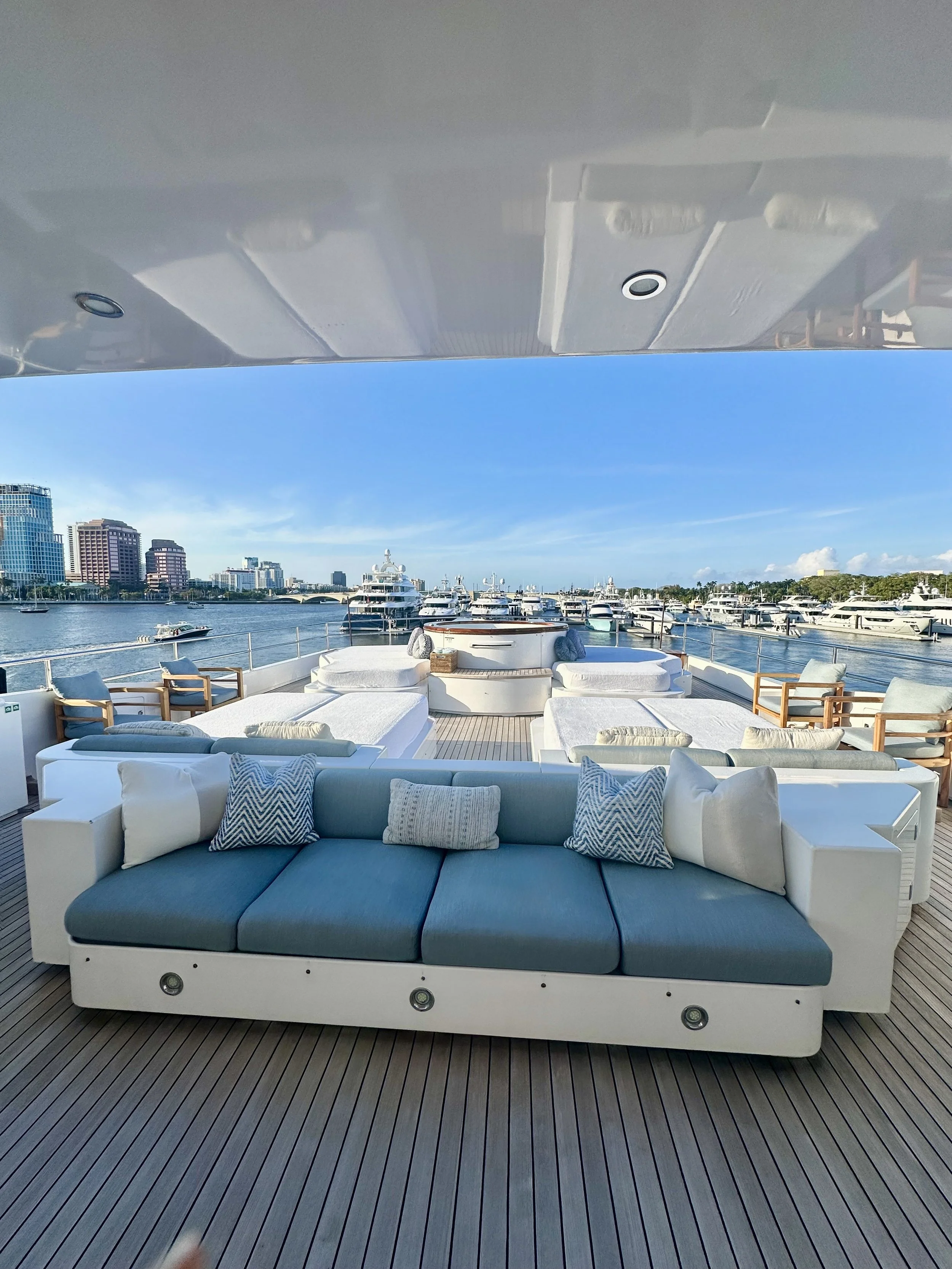
A full-scale refit on a motor yacht or superyacht requires custom marine upholstery across multiple application zones — each with different performance requirements, material specifications, and fabrication considerations. Whether refitting a 60ft motor yacht or a 150ft superyacht, the scope extends well beyond simple seat replacement.
- Helm Seating: Ergonomic rebuilds of captain's chairs and companion seating using multi-density foam for long-range comfort. Correct specification accounts for the UV exposure of open bridge positions and the abrasion from gear and clothing at the helm station.
- Sun Pad Fabrication: Custom-contoured lounging areas for bow and bridge decks — often featuring integrated headrests and drainage-optimized foam specification for South Florida's rain-intensive summer season.
- V-Berth and Cabin Cushions: Precision-cut mattresses and settee cushions engineered to maximize comfort within the vessel's specific geometric constraints. For context on how custom upholstery integrates with the broader interior, see our article Custom Yacht Upholstery for Motor Yachts and Superyachts.
- Cockpit Bolsters: Protective perimeter padding specified for high foot traffic zones and the mechanical stress of active vessel use.
- Modular Systems: Furniture configurations that convert between dining, lounging, and sleeping arrangements — particularly relevant for extended voyage live-aboard layouts on motor yachts with flexible use patterns.
Canvas and Enclosure Integration
Upholstery and canvas work are integrated disciplines on a large vessel refit. A correctly specified interior is protected by equally robust exterior canvas — and the two specifications must coordinate. We integrate upholstery projects with custom bimini tops, T-tops, cockpit enclosures, and full flybridge enclosure systems using Strataglass or Makrolon AR panels. This integrated approach ensures the vessel's interior and exterior systems are specified consistently, rather than treating each as an independent project.
The Technical Workflow: 3D Scanning and Precision Fabrication
Traditional marine upholstery templating relied on physical paper or plastic templates — a process prone to human error and cumulative measurement inaccuracy that produces fit problems on complex vessel geometry. At American Marine, we use 3D ProLiner scanning technology to map the exact contours of every surface — fiberglass, aluminum, or wood structures — digitally. This data drives CAD software where every curve is accounted for before a single yard of fabric is cut. For further context on what this fabrication standard delivers, see our article The Art of Marine Upholstery: Where Form Meets Function on the Water.
On-Vessel Consultation and Assessment
Every project begins with a comprehensive on-vessel visit — assessing existing frames for rot or corrosion, evaluating current upholstery condition, and documenting the project scope with the captain or vessel manager. During this phase, material selection is coordinated to match the vessel's existing design palette and each zone's specific performance requirements. If frames are structurally sound but covers have reached end of life, a targeted cover replacement is sometimes appropriate — though we generally recommend full foam replacement when 3D-patterned covers are being fabricated to ensure the new covers fit the substrate correctly. For context on transformation outcomes, see our article Inside a Yacht Makeover: Transformations with Custom Canvas and Upholstery.
CNC Fabrication and Dockside Installation
Fabrication takes place in our controlled South Florida facility using CNC cutting tables — ensuring that every panel is a precise mirror image of its template, something manual cutting cannot consistently deliver on complex large vessel geometry. Final installation is performed dockside in Broward or Palm Beach County, where every contour is verified and every snap aligns with the vessel's deck hardware before the project is handed over.
Why Custom Specification Outperforms Stock Replacements on Large Vessels
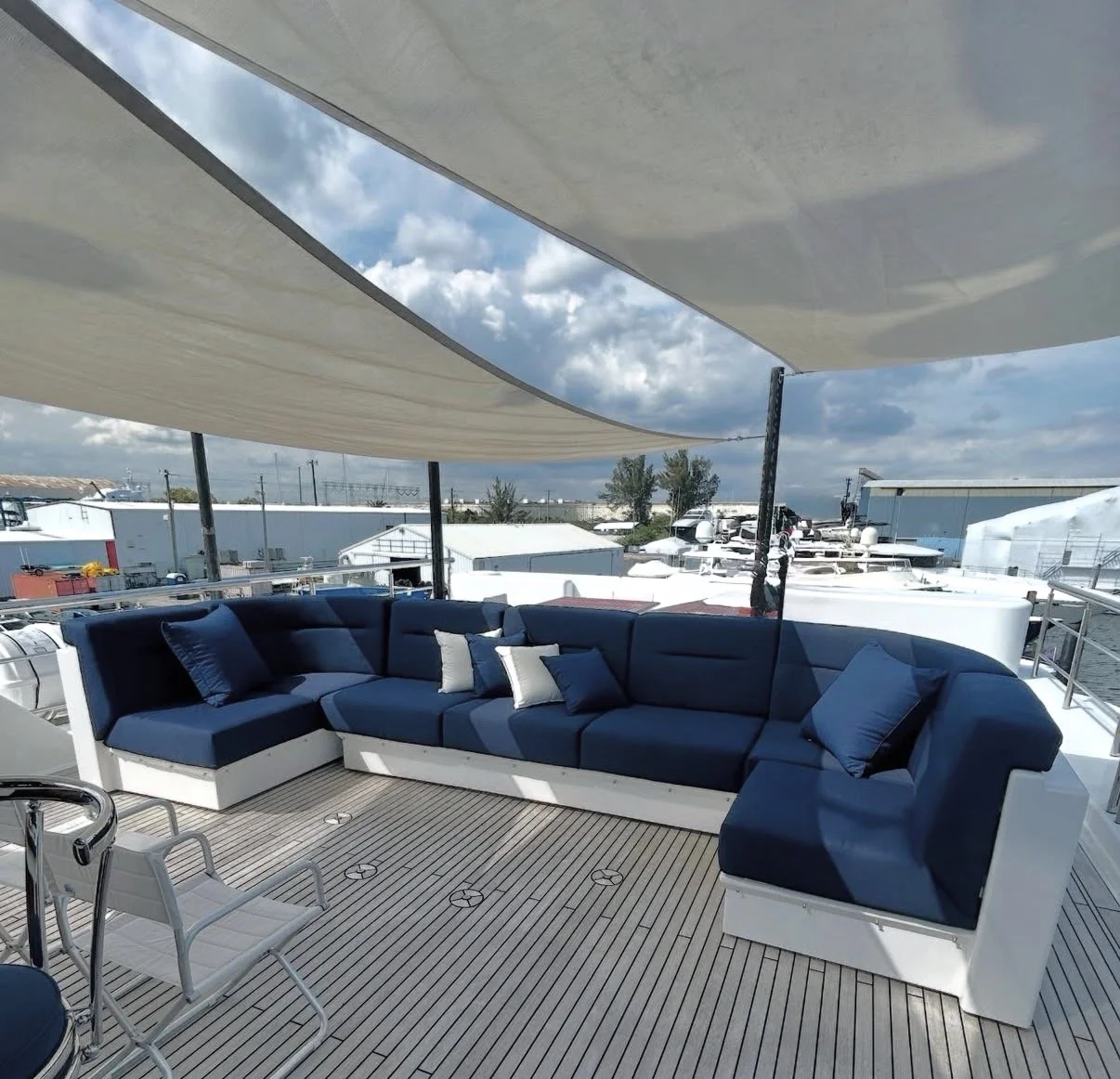
Stock replacement upholstery is available for some production vessels, but it rarely meets the standards required for motor yachts and superyachts where fit precision, material longevity, and design integration are requirements — not preferences. Custom specification delivers:
- Precision Fit: No sagging, bunching, or gaps where moisture accumulates — the fit errors that produce mildew and accelerate fabric deterioration in generic replacements.
- Material Longevity: Correct specification of UV and salt-resistant materials matched to each zone's specific exposure conditions — not a one-material-fits-all approach that over-specifies some areas and under-specifies others.
- Vessel Value: A motor yacht or superyacht with correctly specified, professionally fabricated interior upholstery presents better at survey and commands a stronger market position at sale.
- Ergonomic Optimization: Foam firmness, bolster height, and seating geometry can be specified to the operational requirements of the vessel — particularly relevant for helm stations where the captain's physical comfort directly affects operational safety on long passages. For context on how upholstery contributes to the overall comfort experience, see our article From Deck Chairs to Sun Lounges: Elevating Comfort with Marine Upholstery.
Technology Integration in Custom Marine Upholstery
Custom marine upholstery on superyachts increasingly involves technology integration — embedding functional systems within upholstered elements without compromising the visual finish:
- Hidden Speaker Systems: Audio transducers mounted behind fabric panels for a seamless appearance with no visible hardware.
- Charging Integration: USB-C and wireless charging pads built into armrests and bolsters — practical on vessels where guests and crew need device charging accessible from seating areas.
- Climate-Controlled Seating: Inductive heating systems for enclosed and semi-enclosed seating on vessels operating in cooler conditions or air-conditioned environments.
Selecting a Provider for Custom Marine Upholstery
For motor yachts and superyachts, the selection criteria for a custom marine upholstery provider are more specific than for smaller vessel work. Key evaluation points:
- Documented portfolio of completed projects on vessels of comparable scale — 60ft and above
- Explicit material specification by brand and grade — not vague references to "marine-grade materials"
- 3D digital patterning capability — manual templating on complex large vessel geometry produces fit errors that require costly on-site adjustment
- Clear workmanship warranty (typically 3 years) and materials with manufacturer UV warranty (up to 7–10 years depending on product)
- Refit coordination experience — ability to work within yard schedules at South Florida's major facilities
Maintenance and Durability in South Florida
South Florida is one of the most demanding marine environments for upholstery materials anywhere in North America. The combination of high UV index and sustained salt air means that even correctly specified custom marine upholstery requires a consistent maintenance protocol to reach its rated service life.
Routine Care Protocol
- Fresh water rinsing: Salt crystals act as abrasives — intensifying UV damage and abrading fabric fibers at the micro level. Rinsing with fresh water after every use prevents accumulation before crystallization occurs.
- pH-neutral cleaning products only: Bleach and harsh degreasers strip plasticizers from marine vinyl — producing premature cracking that cannot be reversed. Use pH-neutral marine soap throughout.
- Protective covers: Breathable canvas covers on primary upholstery during extended dockside periods reduce cumulative UV load significantly — extending service life without adding maintenance complexity.
Extending Service Life
Vinyl conditioner with UV blockers applied every few months maintains material suppleness and adds an additional UV protection layer. For solution-dyed acrylic fabrics, periodic application of a fabric sealant (303 Fabric Guard) maintains water repellency as the fabric ages. For broader canvas and upholstery care guidance, see our article Canvas Care Tips Every Yacht Owner Should Know.
Frequently Asked Questions
How long should correctly specified marine cushions last in South Florida?
With professional fabrication in correctly specified materials and a consistent maintenance protocol, 7 to 10 years is a realistic service life expectation in South Florida's conditions. The primary variables are UV exposure level — covered vs. uncovered at the dock — and maintenance consistency. Vessels with active use patterns where cushions are regularly rinsed and properly stored during lay-up periods consistently reach the upper end of this range.
What is the difference between open-cell and closed-cell foam?
Open-cell Dryfast foam allows water to pass through immediately — the correct exterior specification for cockpit cushions and sun pads in South Florida's rain-intensive summer season. Closed-cell foam is buoyant and non-absorbent — the correct specification for structural seating applications and any application where flotation is a relevant safety consideration. The correct specification depends on the application zone, not on a general preference for one type over the other.
Why is 3D scanning the correct approach for large vessel upholstery?
Manual templating relies on physical materials that stretch, compress, and shift during handling — producing cumulative measurement errors that compound across a large vessel with multiple application zones. 3D scanning captures the vessel's exact geometry as a digital dataset with sub-millimeter accuracy. This eliminates the fit problems that require multiple on-site adjustment sessions on complex vessel geometry — and the digital template is archived for future replacement fabrication without remeasuring the vessel.
Conclusion
Custom marine upholstery on a motor yacht or superyacht in South Florida is a technical specification exercise as much as a fabrication one. Material selection, foam specification, thread and hardware standards, and 3D precision measurement all determine whether the finished system performs at its rated service life or requires premature replacement. Correct specification — matched to each zone's actual exposure conditions and use pattern — is what produces results that hold up through South Florida's operating season.
American Marine fabricates custom marine upholstery for motor yachts and superyachts across Fort Lauderdale, West Palm Beach, and Miami. If you're planning an upholstery project on a vessel 40ft or above, schedule a dockside assessment and we'll evaluate your vessel's specific requirements and recommend the correct specification for each application zone.