
Smooth Sailing: A Step-by-Step for Marine Headliner Replacement
When a Sagging Headliner Becomes an Operational Problem

Marine headliner replacement is the process of removing deteriorated cabin ceiling fabric and installing new, marine-grade material — restoring both the structural integrity and aesthetics of a vessel's interior.
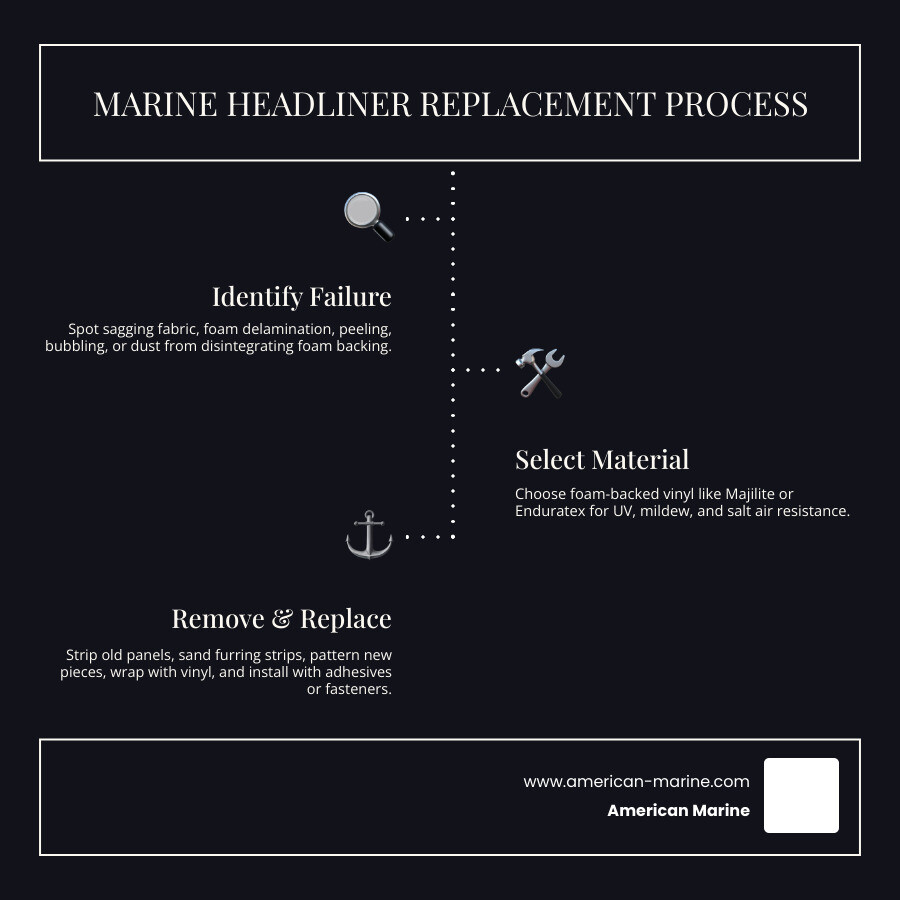
Quick overview of the marine headliner replacement process:
- Identify the failure — sagging fabric, foam delamination, peeling, or bubbling
- Select the right material — foam-backed vinyl (Majilite, Nauga Soft, Enduratex) suited to marine conditions
- Remove old panels — strip headliner fabric, sand furring strips, address any moisture damage
- Prepare and pattern new panels — cut to fit, insulate, wrap with new vinyl
- Install and finish — attach with hook-and-loop fasteners or tack strips, apply hidem trim for clean seams
A headliner that's pulling away from the cabin ceiling isn't a cosmetic nuisance — it signals deeper problems. Foam backing breaks down over time, especially in the heat and humidity of South Florida. Salt air accelerates delamination. UV exposure degrades adhesive bonds. What starts as a small bubble or lifted edge can spread across an entire cabin ceiling within a season.
On a 40-foot-plus yacht, that kind of interior failure is visible to every guest, crew member, and charter client who steps below deck. It also compromises the cabin's acoustic comfort and thermal insulation — two things that matter on a vessel used for extended passages or overnight stays.
The good news: a properly executed headliner replacement, done with the right materials and methods, restores the cabin to a standard that holds up — even in the demanding conditions of South Florida boating.
I'm Jeremy Bottau, owner of American Marine and a specialist in marine canvas and upholstery for luxury yachts and superyachts throughout South Florida. Marine headliner replacement is one of the most detail-intensive interior services we handle, and getting the material selection and installation method right the first time is what separates a clean, lasting result from a job that fails again within two seasons. This guide walks through exactly how to do it correctly — from identifying the signs of failure to choosing the right materials and deciding when professional fabrication is the smarter call.
Identifying the Need for Marine Headliner Replacement
The first sign of a failing headliner is often a subtle "flutter" when the air conditioning kicks on or a faint dusting of orange particles on your countertops. This dust is actually the original foam backing disintegrating. In the high-humidity environment of Miami and Fort Lauderdale, the adhesive bonds and foam structures in older headliners typically have a lifespan of 10 to 20 years before the heat and salt air cause them to fail.
Common indicators that a Marine headliner replacement is overdue include:
- Peeling and Sagging: Fabric pulling away from the edges or drooping in large sections.
- Bubbling: Small pockets of air trapped behind the vinyl, often caused by localized adhesive failure.
- Delamination: The fabric separating entirely from its foam backing or the backing separating from the fiberglass hull.
- Staining: Water spots from old leaks that have since been repaired but left the overhead looking "nasty" and unhygienic.
Beyond aesthetics, a failing headliner impacts acoustic comfort. Quality foam-backed materials act as sound absorbers, dampening the drone of generators and engines. Furthermore, the headliner provides essential thermal insulation, keeping the South Florida sun from turning your cabin into an oven. When the foam fails, you lose these climate-control benefits.
For a professional upholstery assessment — including helm seats, leaning posts, and cockpit seating — American Marine serves marinas and yacht clubs throughout South Florida. Request a consultation at american-marine.com/contact-us. You can also explore more about our Marine Upholstery services to see how we handle complete interior refits.
Selecting Premium Materials for Longevity and Aesthetics
Choosing the right fabric is the most critical decision in the replacement process. You want a material that looks like high-end leather but behaves like a technical textile.
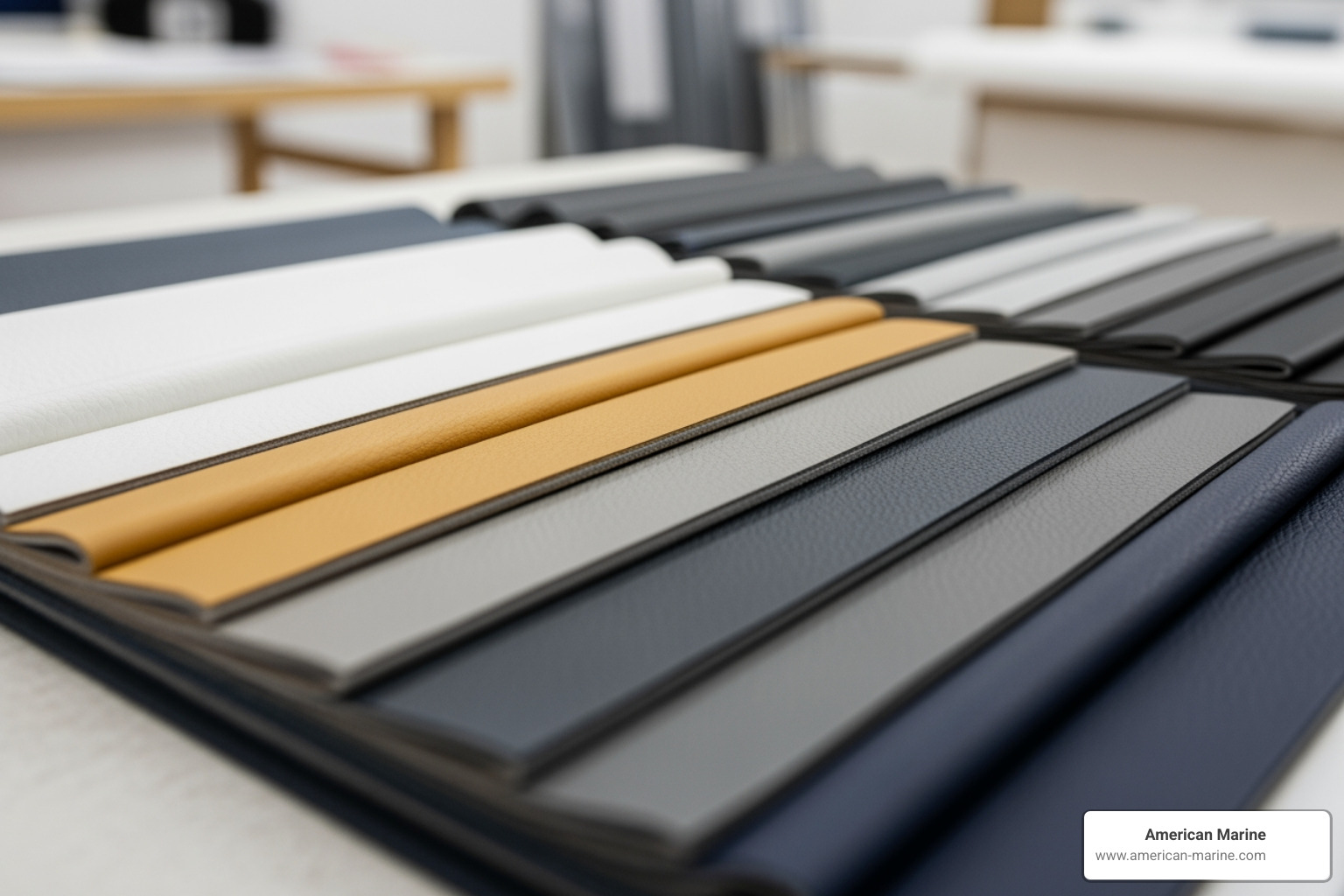
- Foam-backed Majilite: Often considered the gold standard for luxury yachts, Majilite provides a sophisticated aesthetic with exceptional durability. It is frequently endorsed for its "yacht quality" finish and superior breathability, which helps prevent mold growth behind the panels.
- Nauga Soft Vinyl: This is a fantastic choice for cabin interiors because it offers the look and feel of real leather but with superior tear strength. It is UV and weather-resistant, making it ideal for the South Florida climate.
- Enduratex Marine Upholstery Vinyl: This heavy-duty material is a workhorse in the industry. Technical specs for Enduratex include a 54" width, 21 oz weight per linear yard, and a thickness of .55 mm. It features UV-stabilized pigments rated for 500 hours and a cold crack resistance down to -10 degrees F. You can view Enduratex color swatches and technical specs to find the perfect match for your vessel.
When evaluating materials, prioritize mildew resistance and UV stabilization. Even though the headliner is inside the cabin, the ambient humidity in Broward County and the sun streaming through portlights will test any material. We discuss these choices further in our article on The Art of Marine Upholstery: Where Form Meets Function on the Water.
Execution of the Marine Headliner Replacement Process
The actual labor of Marine headliner replacement is often described by DIYers as "the hard part" because it involves working overhead in cramped spaces. The process begins with the careful removal of old panels and hardware.
- Panel Removal: Start by removing dome lights, speakers, and trim. If the headliner is attached to removable plywood or Luan panels, gently pry them down. If it was stapled directly to furring strips (common in older Hatteras or Chris-Craft models), you’ll need to pull hundreds of staples.
- Surface Preparation: Once the old material is off, you must sand the furring strips or panel boards to remove every trace of old, crumbly foam and dried glue. A wire brush and vacuum are your best friends here.
- Adhesive Application: Use a high-heat contact cement or a dedicated marine spray adhesive like 3M. It is vital to use a high-heat version; standard adhesives will soften and fail the first time your boat sits in the July sun at a Miami marina.
- Attachment Methods: While some headliners are stapled, many modern yacht refits use hook-and-loop fasteners (industrial Velcro). This allows for easy removal in the future if you need to access deck hardware bolts or wiring.
For those looking for a budget-friendly approach, some have found ways How to replace a headliner for less than $50, though this usually applies to smaller automotive-style shells rather than complex yacht interiors. For a more comprehensive look at repairs, see our Marine Uphstery Repair Guide.
Step-by-Step Process for a Professional Marine Headliner Replacement
To achieve a result that looks like it came from the factory (or better), follow these professional steps:
- Patterning: If your old panels are warped or rotted, use Dura-Skrim patterning material to create exact templates. American Marine uses 3D digital patterning for this stage to ensure a precision fit.
- Insulation: Before the new panels go up, install thin foam or radiant barrier insulation between the furring strips. This significantly improves cabin climate control.
- Vinyl Stretching: When wrapping a panel, spray adhesive on both the board and the vinyl. Wait for it to become tacky, then work from the center outward to avoid wrinkles. Leave about 6 inches of extra material on all sides to allow for a secure wrap-around and stapling on the back.
- Finishing Touches: Use tack strips to create sharp creases between sections. Finish the seams with hidem trim (a color-matched binding that hides staples) to provide that "Bristol condition" look.
For more on total cabin upgrades, read our guide on Boat Interior Renovation.
Evaluating Professional vs. DIY Marine Headliner Replacement
The decision to tackle a Marine headliner replacement yourself or hire a professional often comes down to the complexity of the vessel and your tolerance for overhead labor.
The DIY Challenge: Replacing a headliner is physically demanding. You are working against gravity, often in high heat, with adhesives that have a short "open time." If you misalign a large piece of vinyl, you may ruin the material and have to start over. Furthermore, sourcing professional-grade tools like upholstery staplers and high-volume spray guns can add to the cost.
The American Marine Advantage: At American Marine, we utilize 3D digital patterning to measure your cabin. This technology captures every curve of the hull and every obstruction with millimeter precision. The result is a set of panels that fit perfectly the first time. We also offer cloud-based template storage, meaning if a panel is ever damaged in the future, we can re-fabricate it using the stored digital file without having to return to your boat for new measurements.
Whether your boat is docked at Lauderdale Marine Center, Rybovich Marina, or Bahia Mar, professional installation ensures the job is done in days rather than weeks of DIY struggle. If you are searching for Marine Upholstery Repair Near Me, consider the long-term value of a precision-cut system.
Cost and Quality Factors in Marine Headliner Replacement
Cost is influenced by material choice and the state of the underlying structure. If the furring strips are rotted or the Luan panels have water damage, the labor increases significantly. Professional services provide a level of long-term durability that is hard to replicate with off-the-shelf spray cans.
High-value vessels in South Florida deserve materials like Majilite or premium Enduratex, which maintain their value during resale. We specialize in these Custom Yacht Interiors, focusing on finishes that withstand the rigors of the Atlantic.
Frequently Asked Questions about Boat Headliners
What causes a boat headliner to sag or delaminate?
The primary culprit is the breakdown of the foam backing. Over 10–20 years, heat, humidity, and the "pumping" action of wind while underway cause the foam to turn into a fine powder. Once the foam loses its structural integrity, the vinyl fabric has nothing to hold onto and begins to sag.
How do you clean and maintain a new marine headliner?
Most modern vinyl headliners like Nauga Soft or Majilite can be cleaned with a soft cloth and a mild solution of soap and water. Avoid harsh chemicals or "magic" sponges that can abrade the surface. Regularly wiping down the headliner helps prevent the buildup of salt crystals and soot from diesel exhaust.
Can individual headliner panels be replaced without a full refit?
Yes. One of the benefits of a panel-based system (especially those using hook-and-loop fasteners) is that you can replace a single stained or damaged panel without disturbing the rest of the cabin. American Marine frequently handles partial replacements for captains who need to address localized damage.
Conclusion
A successful Marine headliner replacement transforms a tired, sagging cabin into a bright, modern, and quiet sanctuary. By selecting premium materials like foam-backed Majilite or UV-stabilized Enduratex and following a disciplined installation process, you ensure your vessel remains in peak condition for years to come.
American Marine provides the South Florida yachting community with precision-cut, 3D-measured solutions that eliminate the guesswork of traditional upholstery. From our bases serving Fort Lauderdale, Miami, and West Palm Beach, we deliver the craftsmanship required for luxury yachts and superyachts.
If your interior is showing signs of age, don't wait for the foam to start falling. Explore our Marine Upholstery options today. To schedule measurement and installation of a custom bimini or shade system in Fort Lauderdale or South Florida, contact American Marine at american-marine.com/contact-us.