
The Ultimate Guide to Marine Grade Seating and Comfort
Why Serious Yacht Owners Are Rethinking Custom Boat Seating
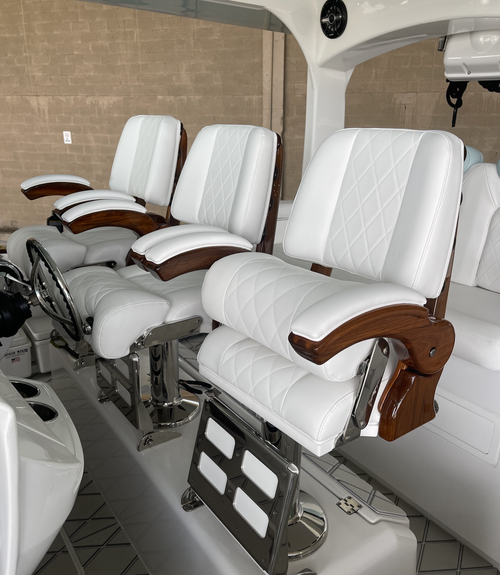
Custom boat seating is one of the highest-impact upgrades you can make to any vessel — combining comfort, durability, and aesthetics in a way that standard factory seats simply cannot match.
Quick answer: What makes custom boat seating worth it?
| Factor | Standard Seats | Custom Boat Seating |
|---|---|---|
| Fit | Generic dimensions | Built to your vessel's exact geometry |
| Materials | Entry-level vinyl | Marine-grade UV/salt-resistant fabrics |
| Comfort | Basic padding | Ergonomic foam, lumbar support, suspension |
| Aesthetics | Limited options | Full color, fabric, and finish control |
| Longevity | 3-5 years typical | 7+ years with premium materials |
| Features | Fixed | Reclining, heated, modular, tech-integrated |
For owners of larger yachts and superyachts, the difference is not cosmetic. It is structural, functional, and — on long passages — a genuine safety consideration.
Standard seating is designed around average boats and average use. Your vessel is neither. Irregular deck geometry, demanding marine conditions, and extended time on the water all require seating engineered specifically for the task.
The materials matter. The fit matters. The hardware matters. And getting any one of these wrong means replacing everything far sooner than you should.
I'm Jeremy Bottau, owner of American Marine and a marine industry professional with deep experience delivering precision-crafted custom boat seating solutions for luxury yachts and superyachts across South Florida. In this guide, I'll walk you through everything — from materials and fabrication standards to installation, maintenance, and what to expect from a professional refit project.
Engineering Performance in Custom Boat Seating
When we discuss custom boat seating for high-performance vessels and large yachts, we are moving beyond simple aesthetics. True marine seating is an exercise in mechanical engineering. On the water, your body is subject to constant motion, vibration, and impact. Standard seating often fails to mitigate these forces, leading to operator fatigue and physical strain.
Professional-grade helm seating incorporates advanced suspension systems designed to absorb the shocks of choppy water. These systems often feature a 6-degree pitched seat bottom, which provides a more natural sitting position when the vessel is underway. Integrated lumbar support is another critical element, using high-compression foam to relieve back pain during extended voyages.
For a deeper look into how these elements harmonize, explore The Art of Marine Upholstery Where Form Meets Function on the Water.

Advanced Features of Custom Boat Seating
Modern custom boat seating offers functionality that standard off-the-shelf units cannot provide. We focus on features that enhance the utility of the vessel:
- Flip-up Bolsters: These allow the captain to transition seamlessly between sitting and standing while maintaining support.
- Adjustable Headrests and Reclining Functions: Essential for comfort during long transits.
- Integrated Technology: High-end builds often include USB charging ports, heated or cooled surfaces, and even integrated speakers.
- Water Drainage Systems: Quality marine seats use removable cushions or specialized inner channels to ensure water does not pool, preventing mold and internal foam degradation.
For more on these high-end specifications, see our page on custom yacht upholstery.
Specialized Applications for Large Vessels
For vessels 60 feet and larger, seating must often serve multiple roles. We specialize in modular convertible systems where furniture can transform from a formal dining arrangement to a lounging area or a sun pad.
- Corporate Charter Layouts: Designed for high traffic and maximum durability without sacrificing a premium feel.
- Therapeutic and Accessible Design: Customizing seat heights, firmness, and grab-rail integration for owners with specific physical requirements.
- Multi-Generational Layouts: Creating zones that accommodate everyone from young children to elderly guests safely.
You can learn more about these versatile configurations in From Deck Chairs to Sun Lounges Elevating Comfort with Marine Upholstery.
Marine-Grade Materials and Fabrication Standards
The South Florida environment is one of the harshest on earth for upholstery. Between the intense UV index in Miami and the high salt concentration in Fort Lauderdale, materials that are "water-resistant" simply won't cut it. We use materials engineered for 7+ years of service in these specific conditions.
Key material standards include:
- UV-Resistant Vinyl: Prevents cracking and fading under direct sunlight.
- CoolTouch™ Technology: A specialized finish that allows darker colors to remain significantly cooler than standard vinyl, even in the midday sun.
- Antimicrobial Foam: Essential for preventing the "musty boat smell" caused by mold and mildew growth inside the cushion.
For those looking for specific foam replacements, you can view custom cut foam dimensions and specifications.
Selecting Fabrics for Custom Boat Seating
The choice of fabric defines the tactile experience of your vessel. We prioritize manufacturers who provide long-term warranties and proven marine performance:
- Sunbrella Marine: The industry standard for acrylic fabrics, known for breathability and colorfastness.
- Spradling Vinyl: Offers a leather-feel finish with extreme abrasion resistance.
- Ultrafabrics: A premium polyurethane option that provides a soft, luxury interior feel while remaining salt-water durable.
Our marine upholstery fabric guide provides a detailed comparison of these options.
Foam Density and Comfort Engineering
Comfort is determined by what’s inside. We utilize multi-layer "Flex-Foam" systems, often incorporating gel-infused layers for cooling. When fabricating large sun pads or bench seating, we work with solid foam sheets up to 76" x 82" to minimize seams. While 6-inch thickness is standard for high-end comfort, we can achieve up to 8 inches through precision gluing processes to provide a residential-quality feel on the water.
If you are dealing with existing damage, consult our marine upholstery repair guide.
Precision Measurement and Installation for Refit Projects
The most common failure in custom boat seating is a poor fit. Traditional manual measuring often misses the subtle curves and irregular angles of a yacht's fiberglass. At American Marine, we utilize 3D scanning and ProLiner technology to create a digital twin of your vessel's seating area.
This data is fed directly into CNC cutting machines, ensuring that every panel and foam piece fits with millimeter precision. This process eliminates the "forced fit" common with hand-cut upholstery, which leads to premature seam failure.
Explore our full range of marine upholstery services to see this technology in action.
Sizing and Fitting Custom Boat Seating
Irregular deck shapes and tight cockpit spaces require creative engineering. Digital templating allows us to optimize space, ensuring that new seating doesn't impede traffic flow or access to hatches. We also utilize custom mounting adapters to ensure that new seats can be securely fastened to existing pedestals or bulkheads without the need for destructive modifications to the vessel.
For smaller vessels or specific cockpit needs, refer to our guide on sailboat cockpit cushions.
Installation and Hardware Integration
The longevity of custom boat seating depends heavily on the hardware. We use 316-grade stainless steel and powder-coated aluminum to prevent corrosion.
- Gas Spring Assists: Used for heavy folding seats or lid access.
- Anti-Rattle Protection: Nylon bushings and precision-fit hinges ensure a quiet ride even in heavy seas.
- One-Handed Operation: For folding mechanisms that allow you to clear the cockpit quickly for fishing or docking.
If your existing hardware is failing, read more about boat upholstery repair.
Maintenance and Longevity of Marine Upholstery
Even the highest-quality custom boat seating requires proper care to reach its full lifespan. The golden rule of marine upholstery is to clean "seam-to-seam." Circular rubbing can create water rings and damage the fabric's protective coating.
- Cleaning: Use a mild soap solution (1/4 cup mild soap per gallon of lukewarm water).
- Mold Prevention: If mildew appears on surface dirt, a solution of 1 cup bleach and 1/4 cup mild soap per gallon can be used on Sunbrella fabrics (always check manufacturer specs first).
- Rinsing: Thoroughly rinse with fresh water to remove all soap residue, which can attract more dirt if left behind.
- Drying: Always allow cushions to air dry completely before covering or storing.
For more protection strategies, see our boat seat covers protection tips.
Protecting Your Investment
Beyond cleaning, physical protection is your best defense. UV-resistant covers are a mandatory investment for any custom boat seating project. These covers block the sun, rain, and environmental pollutants that degrade vinyl and foam over time.
- Seat Covers: Essential for protecting the "investment" when the boat is not in use.
- Vinyl Patch Kits: Useful for immediate, temporary repairs to prevent moisture from entering the foam.
- Seasonal Storage: If the vessel is being stored for the off-season, remove cushions and store them in a climate-controlled environment.
Our boat seat covers guide covers the different types of protection available.
Frequently Asked Questions about Custom Marine Seating
What is the typical lead time for custom seating projects?
Currently, the industry standard for custom boat seating is approximately 4 weeks. This timeline includes the design consultation, 3D measurement, material sourcing, and fabrication. While "ready-to-ship" generic seats can arrive in 48 hours, they rarely provide the fit or durability required for luxury vessels.
How do custom seats improve safety on the water?
Safety is improved through better "containment." Custom bolsters and contoured seat bases keep the operator and passengers securely positioned during high-speed maneuvers or in rough conditions. Furthermore, suspension systems reduce the impact on the spine, preventing long-term injury.
What factors influence the cost of custom boat upholstery?
Several factors impact the final investment:
- Vessel Size: Larger yachts require significantly more material and labor.
- Material Selection: Premium fabrics like CoolTouch™ or high-end Ultrafabrics increase the cost but provide better longevity.
- Hardware Complexity: Integrated gas springs, custom pedestals, or electronic adjustments add to the total.
- Accessibility: If the installation requires significant disassembly of the vessel's interior, labor costs will reflect the complexity.
Conclusion
At American Marine, we understand that for owners in Miami, Fort Lauderdale, and West Palm Beach, a yacht is more than just a boat—it is a precision machine. Your custom boat seating should reflect that level of engineering. By combining 3D-measured accuracy with the highest-grade marine materials, we ensure that your vessel remains a sanctuary of comfort and safety.
Whether you are managing a full refit or simply upgrading your helm seating, our team is ready to provide the technical expertise your project demands.